Kapitel 1
When Women Lead the World: A Letter to the Future
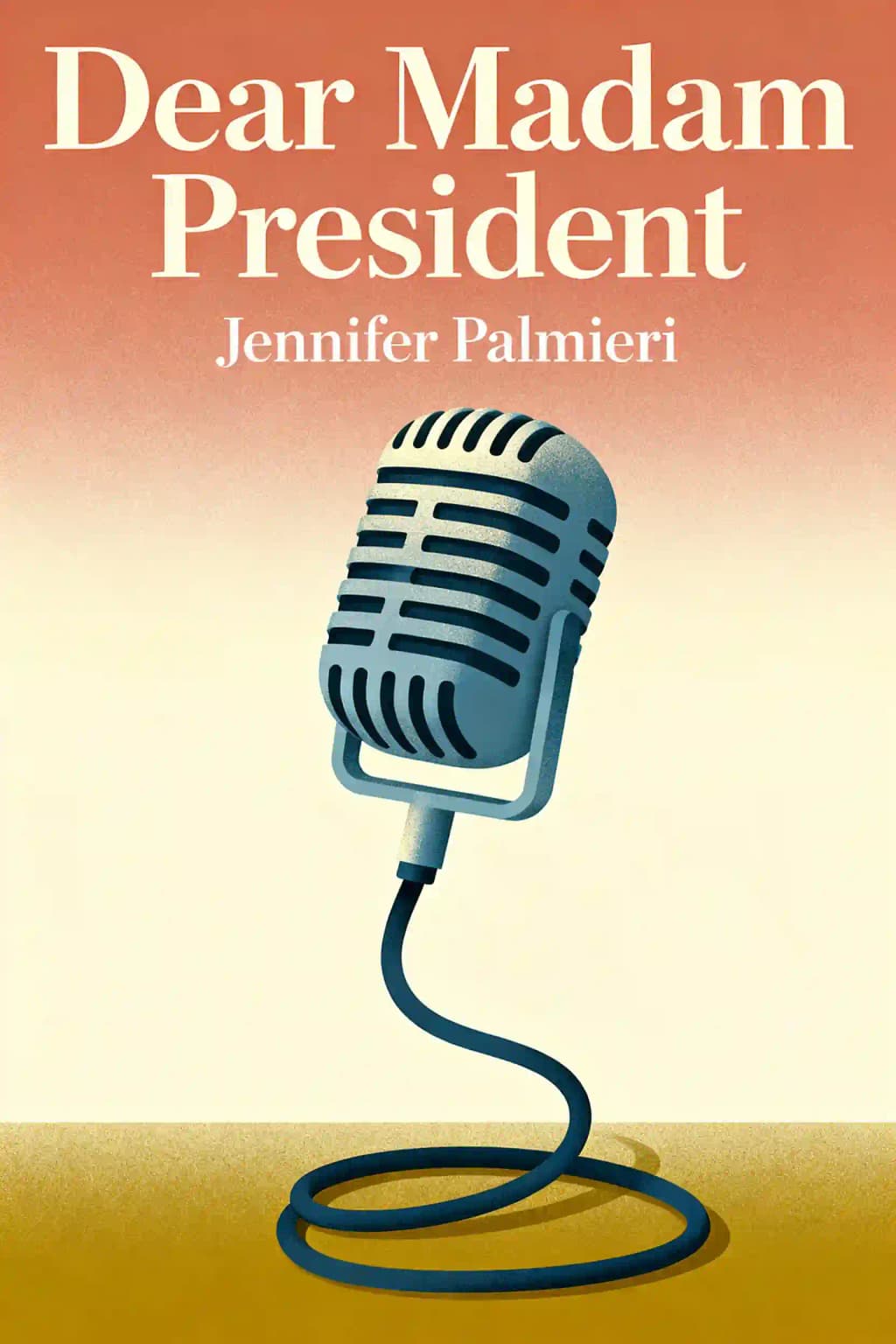
Hillary Clinton's mother was born on the very day Congress gave women the right to vote. Not her grandmother. Not her great-grandmother. Her mother. That's how recent women's political empowerment truly is in America. When Jennifer Palmieri joined Clinton's 2016 presidential campaign as Communications Director, she didn't fully grasp this historical context. She thought electing the first woman president would be easier than electing the first Black president. She was wrong. "Dear Madam President" emerged from the ashes of that campaign as a roadmap for the woman who will eventually break America's highest glass ceiling. The book became an instant bestseller, endorsed by figures ranging from Malala Yousafzai to Shonda Rhimes, who called it "a guidebook for future generations of female leaders." More than a post-mortem of a failed campaign, it's a forward-looking manifesto for how women can lead differently-creating leadership in our own image rather than trying to fit a mold designed by and for men.
Kapitel 2
The Day After the World Exploded
I want to tell you what that day after felt like. It felt like a movie scene you would never see-where the bomb isn't defused, where the world explodes.
Waking up at the Peninsula New York hotel at 7 a.m. on November 9, having slept just two hours, I felt suffocating silence. Like being hurled into a black hole, disconnected from the world. I couldn't imagine even speaking to other campaign staff, as if we were all tumbling in isolation, without gravity or orientation.
The fear wasn't attached to anything specific yet. And the failure-we were supposed to save America, and we let her blow up. I remembered President Obama jokingly pointing at me just 36 hours earlier: "Do not mess this up!" A different universe, a different lifetime.
I tried to give hope a chance, wondering if perhaps we might win through recounts or in the electoral college. But I couldn't feel real hope. This new post-explosion world seemed permanent.
I thought of Hillary with devastation. She had entered the race with reluctance, felt unease throughout, while we kept assuring her everything would be fine. She could feel all the forces-seen and unseen-lining up against her.
Then my thoughts turned to my sister Dana in Dallas, approaching death from Alzheimer's. Just days before, I had called to say goodbye from Hillary's hold room at a Beyonce concert. Though doctors thought death was imminent, my sister Lisa had bet Dana would make it to Election Day. Now it's Wednesday morning, and she's still alive.
For days I'd compartmentalized-Dana in one mental space, the campaign in another. Election Day had brought overwhelming unease, partly from suppressed campaign anxiety demanding its due, partly from fear of the void that would follow. After twenty months of this harrowing campaign and three years in the Obama White House, I feared the crushing depression that had followed my 2004 campaign experience.
Despite all the spectacle of our final rallies with the Obamas, Springsteen, and others, I couldn't enjoy it. Whatever glory came would be Hillary's hard-earned victory, not mine. My own satisfaction had already come days earlier during a quiet motorcade ride in Pittsburgh, listening to my "Staff Walk On" playlist alongside the Allegheny River. In that sparkling fall moment, I savored what I had learned about myself-that my sense of accomplishment comes not from celebrations or accolades, but from knowing I've done my best.
Hillary loses, Dana persists. In this new world where the unimaginable happens daily, I've found myself more solid. The anxiety about my post-campaign value vanished the night of November 8. We had survived the explosion, and I realized that after the trappings of campaigns and the West Wing are stripped away, all I need for value is to put my best effort into something meaningful.
Kapitel 3
Nothing Draws Fire Like a Woman Moving Forward
The afternoon after Hillary's concession speech at the New Yorker hotel, supporters and reporters kept lamenting, "Where was this Hillary during the campaign? Why didn't we see this side of her when it mattered?"
I just nodded and smiled wistfully, thinking: Of course you loved her concession speech. That's what you think is acceptable for a woman to do-concede.
Had I never left the Obama White House to join her campaign, I would have asked the same question, studying the transcript to find what made this speech more appealing than her campaign rhetoric. But the difference wasn't in her words-it was in what she represented. No longer an ambitious woman pushing to be president, but a gracious loser putting country above self. That's a role we're comfortable seeing women in.
When I first joined Hillary's campaign, I didn't think electing the first woman president would be particularly difficult. We had already elected our first Black president, which seemed more challenging in America. I knew I owed gratitude to baby boomer women like Hillary who broke barriers, but I thought women were on track now.
I was wrong on two counts. First, I didn't appreciate the historical significance. Second, I didn't recognize that the "stuff" hanging around Hillary stemmed from her being a woman. I thought the attacks were just what happens to politicians who survive decades in public life. But she drew more ire than her husband-that should have been a clue.
"Move forward, draw fire"-a joke between Secret Service agents on Hillary's detail when managing bureaucratic disagreements. It always made me laugh because it was true on the campaign side too. Not an optimal political strategy, but sometimes the only way forward. Women are particularly uneasy with drawing fire, which is unfortunate, because nothing draws fire like a woman moving forward.
Since her Wellesley commencement speech landed her on Life magazine's cover as the female face of the baby boomer generation, Hillary has been challenging norms-the "lady lawyer" governor's wife who kept her name and outearned her husband, the presidential candidate's wife with her own career who wouldn't "stay home to bake cookies," the First Lady working in the West Wing tackling healthcare, the first woman senator, presidential candidate, secretary of state, and nominee. She constantly stepped outside women's traditional confines, confounding us because there was no model to compare her to.
Most Americans believed Hillary could do the job of president. The hurdle was accepting a woman's ambition to be in charge. Male candidates never hide ambition, but Hillary's made voters uneasy. This unconscious gender bias fueled the disturbing refrain: "I'm fine with a woman being president, just not this woman."
Our polling showed Hillary's ambition needed to be expressed as "in service to others"-otherwise it was off-putting. People loved that she worked for Obama after losing to him in 2008. See? Not selfish! Hillary embraced this framing, knowing she couldn't change historic sensibilities about women's roles in one campaign.
Kapitel 4
When You're In The Room, You Have a Responsibility to Speak
I have been privileged to gain entry to some of the world's most powerful rooms-the Oval Office, the prime minister's study at Chequers, Number 10 Downing Street, the German chancellor's office, the Blue House in Seoul, the Imperial Palace in Tokyo, even the Kremlin. I am indebted to the generation of women who fought to secure my place in those rooms, and I speak up on their behalf and for women who have yet to gain access, because I don't want this privilege to go to waste.
On your path to the Oval Office, you'll need to know you belong there. In the Clinton White House, I felt privileged to be "in the room," but in Obama's White House I learned it wasn't just privilege but responsibility to speak up. President Obama would specifically ask for opinions from those who hadn't spoken-often women-not to be nice, but because he genuinely wanted to know what they thought. "You are in the room. Speak up," he once told a female colleague. "There is no other room."
I overcame self-doubt by accepting that while others might be better qualified for my role, I was the one in the room now, and I owed it to all women who fought for my right to be there to make the most of it. When you reach the Oval Office, surround yourself with voices that represent the entire country, and ensure each one speaks up. They're there for a reason, and their voices are essential.
The email controversy during the campaign was a box we could never escape. The goalposts kept moving-first establishing it was legal, then explaining why she did it, then admitting it was a mistake. When a reporter asked if she owed the American people an apology, I realized: They don't want an apology. They want a confession to a crime she didn't commit.
TSAHIJDL: "There's something about her I just don't like." The same thing people said 25 years ago, before any controversy. Flying back from Florida after the Comey letter, I joked with Hillary about our four opponents: Trump, Putin, Assange, and Comey. It's no coincidence the first woman nominee faced unprecedented opposition from four men with personal vendettas.
By October, the campaign felt like a Batman movie-both candidates from Gotham, Trump as lead villain with Putin and Assange as sidekicks, Comey as the ambiguous Catwoman character, Obama as Commissioner Gordon, with the fate of the world at stake. I feared violence before the election, half-joking to Hillary that we were "upsetting the cosmic natural balance by seeking to upend the patriarchy."
Kapitel 5
It's Your World and You Can Cry If You Want To
On election night, when I told Huma Abedin that Trump would likely win, she just nodded-the same stoic nod we'd given throughout the campaign to absorb bad news. Never blanching, never showing emotion. "I can handle this. I can handle anything."
This nodding is how women have adapted to succeed in a man's world-a toxic brew of proving toughness while maintaining a woman's sense of duty. We feel compelled to be superwomen, fulfilling traditional expectations while adding our aspirations on the side. Men built the professional world with rules comfortable for them, and women have tried to follow these local customs-being obliging, calm, diligent, and emotionally controlled.
But it's not a man's world anymore. It's our world now, and we should change how the game is played. What if I hadn't just nodded during the campaign but actually objected? We'll never know what beneficial qualities we're stifling by following outdated behavioral rules.
The Harvard postmortem is where defeated campaigns are expected to be gracious losers-particularly the female staff. I had reluctantly attended, not wanting to be gracious to this particular team given how they had beaten us. During the forum, the Trump team gloated and taunted us. When asked about Steve Bannon joining the Trump campaign, I couldn't hold back. All my prepared thoughts came flying out through misty eyes with a shaking voice. The press called it a "shouting match" where I "choked up"-three strikes against me: no grace, accusations of racism, and tears.
But I don't regret it. I spoke truth about something I cared about. In the Clinton White House, my office was known as "the crying room" where staff could release stress through tears. Both men and women used it without stigma. A woman can be both strong and emotional-I cry when moved or frustrated, and I'm great in a crisis. Let us see your tears sometimes. It will help normalize the practice for women everywhere.
Kapitel 6
Leading Through Crisis Requires Both Head and Heart
In my career, I've weathered countless political storms-from Whitewater and Clinton's impeachment to the HealthCare.gov crash and Russian election interference. These crises can destabilize a White House without proper leadership. The key is balancing a cool head with a warm heart.
During the HealthCare.gov website failure in October 2013, I felt enormous pressure as White House communications director to fix the devastating press coverage. Despite our efforts to highlight success stories, nothing worked. After one meeting, President Obama pulled me aside to acknowledge that "the press isn't going to get better until the site actually works." His understanding relieved my stress and helped me develop a realistic management plan.
When the Trayvon Martin verdict sparked outrage in 2013, Obama recognized he needed to speak for the African American community. He shared personal experiences of racism-how he could have been Trayvon, how white women crossed streets to avoid him, how security guards followed him in stores. Sitting in the Oval Office with the Emancipation Proclamation and MLK bust behind him, I knew I was witnessing history.
Hillary demonstrated remarkable composure during the FBI email investigation reopening just before the 2016 election. When we broke the news to her on the plane, she simply nodded with a slight smile: "Yes, I knew we weren't done." Beyond her public poise, she showed tremendous heart in private, comforting a devastated Huma Abedin and keeping our team focused without complaint. Looking back, we should have listened more to what Hillary's heart was telling her during this time.
Hillary's instincts were right about addressing the email controversy. While the campaign team wanted to move on after briefly addressing it, Hillary sensed voters needed to hear her perspective. We insisted on focusing on "issues people care about" instead, but the email story dominated news coverage anyway. Our attempts to change the subject were perceived as avoidance. Trust both your head and heart during crises-they'll help steer the ship to safety.
Kapitel 7
Let Your Battle Scars Show What We Can Survive
Presidents visibly age in office-it's practically a national pastime to observe how the job transforms their appearance. While this will pose a special challenge for you as our first female president (the "pink tax" of extra time for hair and makeup won't disappear), I hope you'll let your battle scars show. They'll demonstrate what you've endured and what we can survive.
I've always embraced my own facial lines. The wrinkles between my eyebrows from the Clinton White House years tell a story of wisdom gained through stress. When I discovered these "elevens" could be removed, I refused-they're badges of experience I want the world to see.
My fiftieth birthday, one week after the 2016 election, was spent in my sister Dana's hospice room in Dallas. Despite her Alzheimer's, Dana still recognized me and even managed to say "thank you" when I told her I was staying an extra day. I played music we'd loved throughout our lives-America, Boz Scaggs, Dan Fogelberg, and finally Sara Bareilles's "Brave," which had become Dana's anthem. Though communication was difficult, I could still see her essence: "I see you in there," I'd tell her, and she'd nod back. These were the most meaningful moments we ever shared.
Older women's faces comfort me-they connect us to times most can't remember. Their lines reveal what they've lived through. I hope my weathered face provides similar comfort to my niece and nephews. Our presidents' faces should likewise show not just the burden of office but their love and concern for our country. Your battle scars will tell us you've been looking out for us-that our dreams and challenges mean something to you.
Kapitel 8
Don't Search for Your Role in His Story-Write Your Own
The future is female. The past was, too-it's just that no one thought it important enough to record. Women have always been vital to America's history, yet we're barely mentioned in history books. From the Revolutionary War's Molly Pitcher to the code-breaking women of World War II, countless female contributions have been minimized or erased. Our founding documents were all written by white men, while figures like Abigail Adams, who famously urged her husband to "remember the ladies," were sidelined. Imagine how different our country would be if women had equal input in crafting the Constitution or Bill of Rights.
Hillary Clinton didn't believe her life story was interesting enough to captivate voters. Unlike Marco Rubio launching his campaign at Miami's Freedom Tower to tell his family's compelling refugee story, or Ted Cruz emphasizing his father's escape from Cuba, Hillary would make history herself as the first woman president. But Americans easily connected with Bill Clinton's narrative (born in Hope, Arkansas, lost his father before birth, pulled himself up from poverty) and Barack Obama's story (representing hope and unity as our first Black president, raised by a single mother). Both fit recognizable American dream templates that voters had seen before.
Hillary's story didn't fit the traditional narrative. She grew up middle-class in Park Ridge, Illinois, without the remarkable struggles Americans typically identified with. She was a Goldwater Girl turned progressive, a Yale Law graduate who chose public service over corporate law, and a First Lady who refused to simply serve tea. There wasn't anything in our history to compare to Hillary-that's what happens when you're making history. We often don't appreciate groundbreaking moments in real time because they don't match our existing templates.
Throughout the campaign, Hillary received endless contradictory advice about her speaking style-project strength but don't be shrill, show passion without shouting, appear strong yet vulnerable, be "authentic" but also presidential. As Hillary noted, no one could name a single woman leader on the world stage who "does it exactly right." Angela Merkel was too stoic, Theresa May too rigid, Julia Gillard too aggressive. Women seeking power can't win playing by man-centric rules that were never designed for them in the first place.
After the election, Hillary wrote "What Happened" despite critics saying she should stay quiet and fade away. Eventually her story was heard on her own terms, not filtered through political consultants or media narratives. Her struggles with double standards, implicit bias, and breaking the ultimate glass ceiling are now part of America's history-part of our collective story. And when future women run for president, whether it's Elizabeth Warren, Kamala Harris, or someone we haven't met yet, their stories will be something we recognize because Hillary Clinton helped write that chapter first.
Kapitel 9
Even When You Lose, Refuse to Be Defeated
During a tense debate prep session in September 2016, I reminded Hillary of her remarkable resilience. After twenty-five years of attacks-emails, eleven-hour Benghazi testimony, FBI investigations, WikiLeaks, a grueling primary-she was still standing. "Madam Secretary, do not see all these attacks and get discouraged. Look at them and marvel at how frustrated these Republicans are that they can't take you down. Think about what a miracle it is that you are still standing."
Whether you're defeated is your choice. Defeat means cowering when attacked, giving up the fight, losing hope. Hillary never cowered, never stopped fighting for issues she cared about. She lost the election but refused to be defeated.
Hillary's approach to tough times is simple yet powerful: get up every day, focus on what needs doing, do your best, then get up the next day and do it again.
Elizabeth Edwards exemplified this spirit. My close friend and wife of John Edwards, she lived with "enormous ambition on a small scale," creating magic in the lives of family and friends. After losing her sixteen-year-old son Wade in a car accident, Elizabeth described her mind as a chalkboard wiped completely clean. She deliberately chose what to put back on it-having two more children who brought her joy.
Elizabeth later endured cancer and public infidelity. She "stood in the storm, and when the wind did not blow her away, she adjusted her sails." She howled into the wind too-feeling pain is part of standing in the storm. What matters is what you choose after the storm passes.
In December 2010, Elizabeth called to tell me she'd stopped cancer treatments and would die soon. Despite this devastating news, she shared happy updates about her daughter Cate's engagement. I visited her one last time, finding her at peace with death, knowing she would see Wade again. Before I left, she asked me to share a final message with her admirers. The next day, she posted: "I have found that in the simple act of living with hope, and in the daily effort to have a positive impact in the world, the days I do have are made all the more meaningful and precious."
Kapitel 10
We Are Bound Together, Now We Need to Unite
This story ends where it started, election night 2016-a national reckoning long in the making. It's a cautionary tale about Americans being bound together even when not united.
The upheaval America experienced-9/11, two wars, the Great Recession, demographic shifts, inequality, technological revolution, climate change-created the perfect conditions for our current reckoning. I've accepted that the days of predicting politics are over, and that's how it should be. A small number of Washington insiders shouldn't control our democracy. That paradigm needed to topple.
I shake my head when political friends talk about returning to "normal" or controlling national messaging. That world has already blown up. The rebirth must come from the ground up. Visiting states across America during the campaign, I saw upheaval everywhere, but I remain hopeful because I see a unifying thread: all frustrated Americans believe our country could be better, that America wasn't living up to her values.
Though ideologically divided, everyone expected better of this country-common ground upon which to build. Our pain can't stay isolated; eventually we all feel it because we're connected. The charge now is to move from understanding we're bound together to choosing unity. To ensure this alienation doesn't take hold again, you must be a president for all Americans, listening to everyone's concerns. Sounds like a good job for a woman.
Women aren't just running for office in record numbers now-they're winning. In politics, business and art, women are creating their own game. Having survived that unprecedented scene where the world exploded after all, we can write our own happy ending. From now on, we decide what's possible. This movie ends with women running the world.