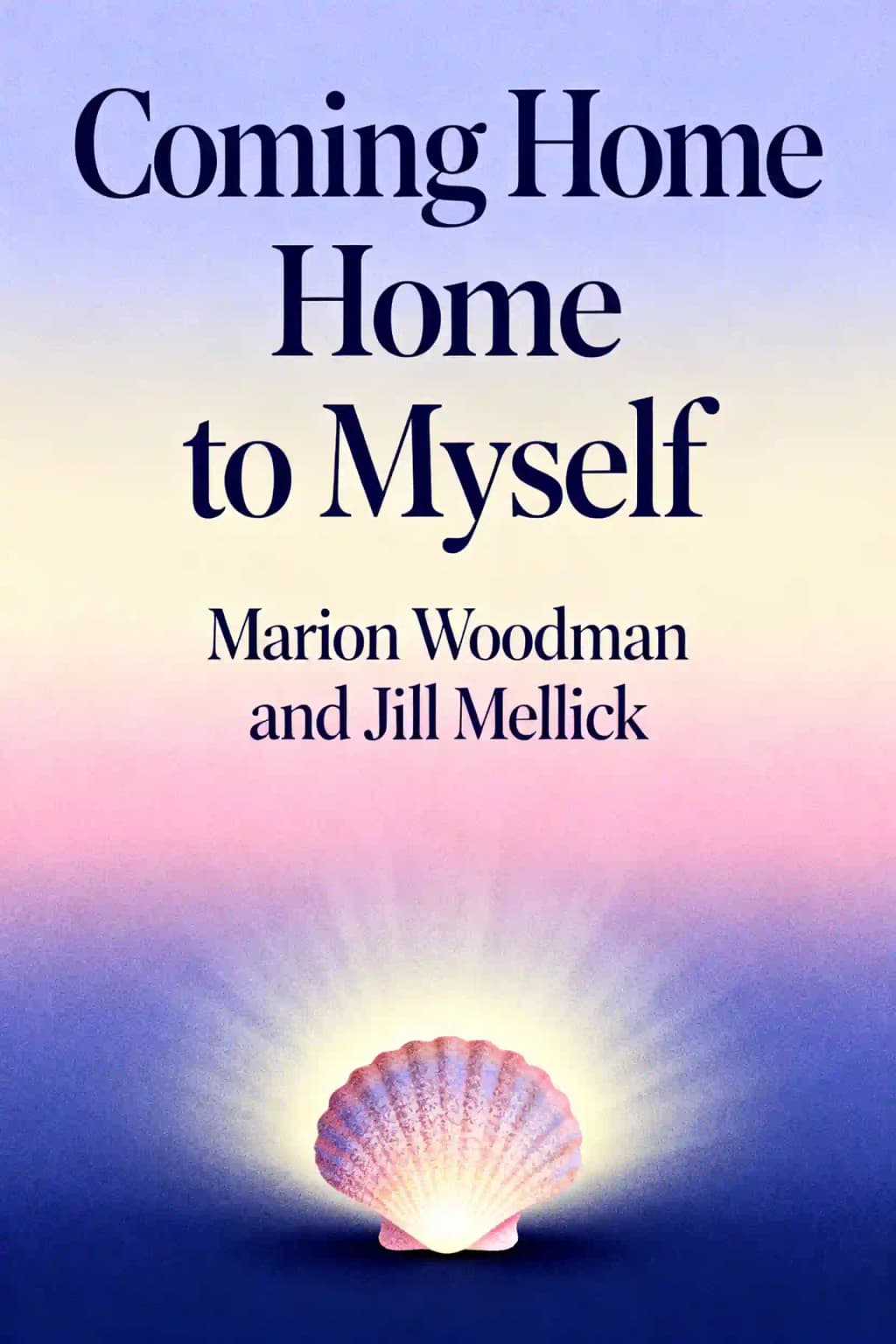
Kapitel 1
The Wisdom of Marion Woodman: Finding Our Way Home to Ourselves
Oprah Winfrey once called Marion Woodman's work "life-changing," and countless women across generations have found themselves transformed by her insights. As a Jungian analyst who dared to challenge patriarchal structures long before it was fashionable, Woodman's work on feminine psychology has influenced everyone from bestselling author Glennon Doyle to spiritual teacher Marianne Williamson. Her books have sold millions of copies worldwide, yet what makes her work truly revolutionary is how she bridges psychological theory with lived experience, bringing the sacred feminine back into our collective consciousness when we need it most. Through poetic language that reads like a prayer, Woodman invites us to reconnect with our bodies, reclaim our authentic voices, and remember the wisdom we've always carried within.
Kapitel 2
The Journey Begins: Finding Meaning Through Words
Marion Woodman began journaling at twelve years old, driven by an innate need to find meaning in her experiences. Though she initially sacrificed a microscope for the poetry of words, the scientist in her never disappeared-she simply learned to observe with what she calls "a thinking heart." Her professional journey took an unexpected turn when her thesis on eating disorders garnered surprising interest, leading to her first book, "The Owl Was a Baker's Daughter," despite her natural introversion and fear of publication.
As her work evolved through titles like "Addiction to Perfection" and "Leaving My Father's House," Woodman discovered recurring patterns in dreams that revealed profound truths: healing addiction requires reconnecting body and soul. Throughout her exploration, a divine feminine presence consistently emerged as the crucial link-sometimes appearing as Buffalo Woman, sometimes as the Black Madonna or Sophia. This presence wasn't merely theoretical but transformative, showing how we might create space for healing body, soul, and spirit as new feminine and masculine values emerge free from patriarchal distortion.
The book itself was conceived at dawn when Jill Mellick, while checking a quote from Marion's work, heard an inner voice declaring someone should gather Marion's essential insights into one publication. Women often reported finding exactly what they needed by randomly opening Woodman's books. When Mellick extracted powerful images from "Addiction to Perfection," they naturally demanded line breaks for contemplation, allowing the melody lines in Woodman's orchestral prose to "sing a capella." Though initially doubtful, Mellick found herself quoting these adapted lines in therapy sessions, with clients remembering and whispering them for days afterward.
This collaboration emerged as they shopped at Whole Foods, simultaneously putting milk in their cart and imagining this book-perfectly embodying the meeting of body and soul that lies at the heart of their work. Their partnership became a delightful conjunction of shared passions: love of language, writing histories, Jungian practice, and respect for metaphor's healing power.
Kapitel 3
The Body's Wisdom: Our Forgotten Intelligence
Our bodies hold wisdom we've been taught to ignore. Research confirms that mind and body form an intricate intelligence network, with our bodies storing cellular memory and guidance that our conscious minds often override. As Woodman emphasizes, "a body whose wisdom has never been honored does not easily trust," comparing it to an animal with a crazy trainer that learns crazy habits.
The tragedy of modern life is that we've become disconnected from this intelligence. We listen to a cat with more precision than our own bodies, ignoring signals that something is wrong long before our conscious mind catches up. Our greatest gift-our physical form-is "pregnant with wisdom you do not hear, grief you thought was forgotten, and joy you have never known."
Body work is soul work. The imagination serves as the bridge between body and soul, with healing power emerging when images are taken into the body on our breath to connect with our life force. Without this connection, we remain fragmented, living primarily in our heads while our bodies cry out for attention.
Woodman urges giving your body an hour a day, because without that commitment, "there's nothing your body can tell you." This isn't about exercise in the conventional sense, but about conscious embodiment-learning to inhabit your physical self with awareness and respect. When we begin this practice, we often encounter resistance, pain, or emotion stored in our tissues. These aren't obstacles but doorways to deeper understanding.
Women particularly suffer from body disconnection in a culture that objectifies female bodies while simultaneously teaching women to transcend physicality. The result is a profound split-being in a body without truly inhabiting it. Healing requires reclaiming this territory not as something to perfect or control, but as the sacred ground of our existence.
Kapitel 4
The Addictive Search for Wholeness
Addiction extends far beyond substances to anything that dominates our lives at the cost of well-being-perfectionism, work, approval, worry. When addicted, we become powerless, engaged in unconscious repetitions that seem meaningful but prove empty. We're possessed by drives that override all else, obsessively seeking through ritual what isn't tangibly obtainable: peace, love, wholeness.
"We are all addicts," Marion writes, experiencing ourselves "as emptiness swinging in empty space between spirit and matter, located nowhere." This emptiness drives us toward compulsive behaviors that temporarily fill the void but ultimately leave us more depleted. The addict becomes trapped in a cycle of seeking fulfillment through means that can never satisfy the soul's true hunger.
Woodman illustrates this through powerful stories-a man's relationship with alcohol, a young woman's rigid list-making (scheduling even "spontaneity"), another woman's ritualistic binge eating. These compulsions reflect our yearning for conscious femininity, for connection to something deeper than the material world or social approval.
What makes addiction so insidious is that it masquerades as spiritual practice. The rituals of addiction-whether counting calories, achieving perfect performance, or seeking the next high-substitute for genuine spiritual connection. They provide structure and meaning in a world where authentic meaning feels elusive.
Yet "illness or addiction can be the pathway to the feminine side of God." By asking, "What is my addiction trying to tell me?" we begin to recognize these patterns as distorted attempts to provide ourselves what we truly desire. The healing comes through metaphor, which "can heal" by linking spirit and matter, reconnecting the fragmented parts of ourselves.
Recovery requires more than willpower or behavioral change. It demands reconnection with the body's wisdom and the soul's truth. Only when we learn to receive nourishment directly from life itself-rather than through addictive substitutes-can we break free from the cycle of compulsion and emptiness.
Kapitel 5
The Tyranny of Perfection: When Standards Become Soul-Crushing
While high standards and duty are laudable, perfectionism becomes destructive when we deem ourselves unacceptable unless we meet impossible standards. We forget that being human means being flawed-even fine art contains imperfections. In some Eastern cultures, artists deliberately introduce flaws to avoid competing with divine perfection.
Perfectionism ravages a woman's body, spirit, relationships, and self-respect, while duty without love becomes soul-withering. Marion warns, "As long as we try to transcend ourselves, reach for the sky, pull away from ground and into spirit, we are heroes carved in stone." Instead, she advises, "Do not try to transform yourself. Move into yourself. Move into your human unsuccess. Perfection rapes the soul."
The pursuit of perfection creates a particularly insidious form of self-betrayal. We become our own worst critics, constantly measuring ourselves against standards no human could meet. This inner tyrant drives us relentlessly, allowing no rest, no celebration, no acceptance. The perfectionist lives in perpetual disappointment with herself and others.
Woodman illustrates this through a personal story of intellectual overcompensation, when her analyst wisely suggested she "take my animus for a good drink." This masculine driving force within her had become rigid and demanding, needing relaxation and humanity rather than further striving.
Living by ideals leaves us "constantly plagued by a sense of unreality" because "perfection does not allow for feeling" and "massacres the feminine." Our culture pulses with this pressure of perfection, turning us into objects designed for high efficiency rather than humans capable of weeping or singing our own songs.
The antidote isn't lowering standards but embracing our humanity. When we accept our flaws and limitations as part of what makes us real, we paradoxically become more effective, more creative, and more alive. We discover that our imperfections often contain our greatest gifts-the crack where the light gets in, as Leonard Cohen might say.
Eventually, we must face that we are not God. This humbling realization doesn't diminish us but liberates us to be fully human-messy, complex, limited, and gloriously real.
Kapitel 6
Reclaiming Projected Power: Finding What Was Never Lost
We often look elsewhere for what we already possess, projecting onto others qualities we cannot acknowledge in ourselves. We invest people, institutions, and things with attributes that might indeed be theirs but are also our own. We attribute flaws to others we need to recognize in ourselves, credit others with qualities we cannot see in ourselves, and turn to institutions and leaders for answers that can only come from within.
This projection creates toxic dynamics where one partner feels perpetually inadequate ("not good enough, not beautiful enough, not smart enough") while the other feels trapped by impossible demands. Similarly, a mother identified solely with motherhood must have children who remain dependent, who "eat what she gives them to eat" because "when there's a full breast, somebody has to drink"-forcing children to remain children rather than becoming themselves.
Every time we reclaim our projected energies, we become more whole and present. This reclamation isn't always comfortable-it means acknowledging both our strengths and weaknesses, our light and shadow. It means recognizing that what irritates us most in others often reflects disowned aspects of ourselves.
For women particularly, reclaiming projected power means confronting generations of conditioning that taught us to see strength, wisdom, and authority as existing outside ourselves. We've been trained to look to fathers, husbands, bosses, experts, and institutions for validation and direction rather than trusting our own knowing.
The journey of reclamation involves asking difficult questions: Where have I given away my power? What qualities do I admire in others that I've failed to recognize in myself? What judgments about others reveal my own shadow? As we answer these questions honestly, we begin gathering the scattered pieces of our authentic selves.
This doesn't mean becoming self-sufficient in an isolated sense. Rather, it allows us to enter relationships from wholeness rather than need, to love others for who they are rather than what they can provide, and to stand in our own authority while remaining open to genuine connection.
Kapitel 7
Unmasking the False Self: The Courage to Be Authentic
While roles and masks are necessary parts of life, they become harmful when they conflict with our values, health, or true nature-or when we identify completely with them. Some masks fit better than others; some we outgrow; others never fit at all. Often childhood survival roles replace our authentic selves, leaving us with pervasive weariness, depression, or emptiness despite outer success.
Marion writes of the veils that hide reality: hypocrisy, sentimentality, distraction. She speaks of aging and the desire to live authentically: "I want me. Just me. I won't pretend. I want to live before I die." Sentimentality particularly robs us of genuine feeling, making us "pity those who really feel" while betraying true relationship.
Children not loved for who they are learn only to please others rather than expand through experience. Deep rage emerges from this denial of self: "Nobody ever saw me. Nobody ever heard me. As long as I can remember, I've had to perform." But there's relief in shedding these masks: "What a relief to be human instead of the god or goddess my parents imagined me to be or I imagined them."
The journey toward authenticity isn't about dramatic rebellion or selfish indulgence. It's about discerning which aspects of our personality are genuine expressions of our essence and which are adaptive strategies we developed to survive difficult circumstances. This discernment requires both compassion and courage-compassion for the child who needed these masks and courage to live without them now.
For many women, the false self revolves around being "nice," "good," or "helpful"-qualities that earn approval but may smother authentic expression. The mask of perfection, competence, or selflessness can become so convincing that we forget it's not our true face. We may excel at meeting others' expectations while having no idea what we actually want or need.
Removing these masks doesn't happen all at once. It's a gradual process of allowing ourselves to feel authentic emotions, express unpopular opinions, set boundaries, and make choices based on inner guidance rather than external approval. Each small act of authenticity builds upon the last until we find ourselves standing in our own truth-vulnerable, imperfect, and gloriously real.
Kapitel 8
Finding Your Voice: The Courage to Speak Your Truth
Finding one's voice means giving truthful expression to personal experience, regardless of whether it meets others' standards. Self-doubt, fear of judgment, and lack of confidence often silence our authentic expression, with the strongest silencing force coming from within.
Marion describes a powerful dream where a woman finds a starving bird in a black box-a forgotten part of herself that "only wanted to sing my song." This image captures the tragedy of voice suppression-the vital, singing part of ourselves locked away and starving for expression.
Our authentic voice emerges only when we discover and love "the goddess lost within our rejected body" because "without our body we cannot speak truthfully." A life truly lived "constantly burns away veils of illusion" and "what is no longer relevant," gradually revealing our essence "until, at last, we are strong enough to stand in our naked truth."
This transformation often shocks others who expected us to remain unchanged. Marion warns that unexpressed rage must find release or it will manifest as illness, while fear of anger often leads us to emotional freezing where "feeling is frozen" and "the heart is closed."
Even when Medusa appears to "turn our creativity to stone," we must keep insisting, "Your voice is not mine." Marion cautions that before claiming to be true to yourself, be sure which voice you're following. She recommends daily writing to separate real from unreal, and promises that "if you travel far enough, one day you will recognize yourself coming down the road to meet you."
Finding your voice isn't just about speaking up in meetings or standing up to authority figures. It's about discovering what you truly have to say-your unique perspective, wisdom, and creative expression. This discovery process often begins with listening inward, noticing what moves you, what brings tears to your eyes, what makes your heart beat faster.
For women especially, reclaiming voice means confronting generations of silencing-both external and internalized. It means recognizing how we've been taught to doubt our perceptions, qualify our statements, and defer to others' expertise over our own knowing. It means learning to trust the wisdom of our bodies and emotions as valid sources of information.
The journey to authentic expression isn't always comfortable. Speaking truth may disrupt relationships, challenge established systems, or reveal aspects of reality others prefer to ignore. Yet the alternative-remaining silent when our souls long to speak-extracts a far greater cost in physical illness, emotional suffering, and spiritual disconnection.
Kapitel 9
The Sacred Feminine: Embodied Wisdom in a Disembodied World
The Black Madonna embodies the sacred feminine in her most earthly, material form-the intersection where sexuality meets spirituality. Long rejected by patriarchal systems, her energy now erupts in our world "demanding conscious recognition." She represents nature impregnated by spirit, presiding over fertility, sexuality, and childbirth. She accepts her body as a chalice for spirit and stands for the redemption of matter itself.
The Black Madonna manifests in many forms-sometimes weeping, sometimes austere, sometimes cutting through our "daily madness" with fierce humor. When she appears in dreams, she might cradle us against her heart, offering a love we've never known before. Other times, she shows strict discipline as part of her love, knowing what she fights against.
In one powerful dream image, the Black Madonna enters a kitchen, munching carrots, and demands to know where the dreamer's pearls are. When the dreamer cannot find them upstairs, the Madonna reveals she found them discarded in a ditch-"You weren't taking care of them... I won't bring them back again. Next time it's up to you." This represents how feminine wisdom and value (the pearls) have been neglected and must now be consciously reclaimed.
Alongside the Black Madonna, Sophia personifies feminine wisdom within certain Christian traditions-a wisdom rooted in experience and compassion rather than abstract thought. She "thinks with her heart" and values "not the presence of power but the power of presence." Her wisdom grows organically within each cell, embracing both beauty and horror in her love as she "dances in the flames."
Sophia serves as the bridge between divine and human, the stillness at the center of chaos, "the eye of the hurricane" without whom "there is no dance." She craves movement, breath, touch and creation-"body opening to spirit, illumination rising from icy waters."
Marion shares a humorous personal story about preparing for a speech when everything went wrong: clothes returned from hotel cleaning with a ripped hem, struggling with needle and thread in a bathroom while bleeding instead of meditating-"And I could hear Sophia laughing." This illustrates how Sophia's wisdom embraces life's messy imperfections.
Marion encourages us to call upon this wisdom regardless of the name we use: "Call her Sophie, Call her Anna, Call her Buffalo Woman... But call her." She reminds us not to get caught in terminology debates about God/Goddess or other dualities, but simply to invoke this transformative feminine wisdom that turns "opposition into paradox."
Kapitel 10
The Crone's Wisdom: Earned Through Living
The Crone embodies the wise elder woman who has earned her wisdom through life's hardships, not merely through age. Having navigated "one crossroads after another," she reaches a place of surrender where personal demands no longer matter. This makes her "a perfect mirror" with "no reason to persuade you to do anything or to be anything other than what you are."
The Crone acts as a "tuning fork" in any environment-because she remains true to her own feelings, she "rings a true tone that resonates with others." Her honesty comes from having nothing left to lose and no games left to play. She brings others into a space "where outer conflicts dissolve and you can experience your essence."
The Crone wields a sword that "cuts with love"-"a well-honed golden blade and a silver handle." Her wisdom allows her to separate "irrelevance from essence," wasting neither time nor energy on superficialities. Strong enough to "hold the container in which men can experience their hidden rage without destroying themselves or others," she takes life "with Sophia's proverbial grain of salt" and "can smile at the divine comedy."
However, Marion warns: "If the Crone hasn't lived through her own crossroads, don't trust her. She'll want power." True detachment for the Crone "is not indifference"-it means she has lived and suffered deeply enough that she can now "draw back and see with her heart."
This wisdom isn't available through shortcuts or intellectual understanding alone. It comes through living fully, making mistakes, experiencing loss, and allowing these experiences to transform rather than embitter us. The Crone has faced her shadow, integrated her masculine aspects, and made peace with her limitations. She no longer needs to prove herself or compete for recognition.
In a youth-obsessed culture that devalues aging, the Crone represents a radical alternative-the woman who grows more powerful, more authentic, and more herself with each passing year. Rather than fighting age or hiding from it, she embraces the liberation that comes with no longer needing to please or impress others.
The Crone's wisdom is desperately needed in our world. She offers perspective that cuts through hysteria, clarity that dissolves confusion, and compassion that transcends judgment. Her presence reminds us that growing older can mean growing into our fullest, truest selves-if we have the courage to face our crossroads honestly and learn their lessons well.
Kapitel 11
Dreams as Messengers: The Soul's Nighttime Wisdom
Dreams are messengers between the creative unconscious and consciousness, speaking in images, symbols, and metaphors. They exist beyond time and space restrictions, and are best understood through the fluidity of the arts-movement, poetry, myth, and visual expression-rather than verbal analysis alone.
Dreams keep us in touch with our soul and our place in creation, restoring us through their wisdom. They give us images for our personal lives and for the earth, and though integrating these images takes time in meditation, once we've seen with new eyes and heard with new ears, we can't go back.
Our dreams disturb in order to illumine, operating with a symbolic logic closer to poetry than prose. Symbols in dreams carry multiple meanings that open and open over time. Dreams connect us to the eternal, and by writing them down and working with them, we discover their astonishing wisdom about past, present, and future.
Working with dreams requires patience and humility. We must approach them not as puzzles to solve but as living communications from parts of ourselves we rarely access in waking life. Dreams speak a language of image and emotion that our rational minds often struggle to translate.
Marion suggests recording dreams immediately upon waking, before the conscious mind can rationalize or forget them. Even fragments are valuable-a color, a feeling, a single image might contain profound wisdom. Over time, patterns emerge across multiple dreams, revealing themes and messages our souls are working to communicate.
Dreams often compensate for our conscious attitudes, showing us what we're missing or denying. If we're overly rational in waking life, our dreams may flood us with emotion. If we're too accommodating, dream figures might express rage or set boundaries. These compensatory dreams help restore balance to our psyches.
Beyond personal insight, dreams connect us to collective wisdom. Archetypal figures-the wise old woman, the divine child, the wounded healer-appear in dreams across cultures and throughout history. When these figures visit our dreams, they bring universal wisdom tailored to our individual circumstances.
By honoring our dreams as valid sources of guidance, we open channels between conscious and unconscious aspects of ourselves. This integration leads to greater wholeness, creativity, and authentic living. As Marion reminds us, dreams disturb in order to illumine-their disruption serves our deeper awakening.
Kapitel 12
The Inner Marriage: Finding Wholeness Within
When we depend on our partners to make us whole, we're setting ourselves up for trouble. Sooner or later, we'll feel betrayed, hate the dependence, or become the betrayer ourselves. True wholeness comes from within.
The first time we fall helplessly in love, we're actually in love with our own projected image. After many such projections, we recognize they are all alike at their core-we have been falling in love with ourselves all along. Instead of seeking completion from another, we must recognize that masculinity and femininity exist within both men and women.
In relationship, each person needs fully developed masculine and feminine aspects to make things flow. By holding our divinity within, we can truly love another human being, walking parallel paths rather than holding each other up.
This inner marriage-the union of opposites within ourselves-is the foundation of spiritual birth, just as biological birth requires a union of opposites from which the sacred child is born.
While qualities like receptivity, resonance, loving presence, process, paradox and intuition have traditionally been associated with feminine spirituality, their complementary qualities-initiative, directedness, discernment, analysis, decisiveness, purpose and mental clarity-have been linked to masculine spirituality. To become whole, integrated individuals, we must develop graceful ways to move between these "feminine" and "masculine" qualities, allowing these apparent opposites to work together synergistically rather than remaining in opposition.
The journey toward inner wholeness often begins with recognizing where we're imbalanced. Many women have developed strong masculine qualities to succeed in a patriarchal world while neglecting their feminine wisdom. Many men have suppressed feminine qualities like vulnerability and receptivity while overemphasizing masculine attributes like control and rationality. Healing requires honoring both aspects within ourselves.
This inner marriage doesn't happen once and for all but requires ongoing attention and care. Like any relationship, it involves communication, respect, and balance. We learn to let our masculine aspect protect but not dominate our feminine wisdom, while our feminine aspect nourishes but doesn't overwhelm our masculine strength.
When this inner balance is achieved, our outer relationships transform. No longer seeking completion from partners, we can truly see and appreciate them for who they are. We become capable of love that enhances rather than completes, that celebrates rather than needs, that grows rather than clings.