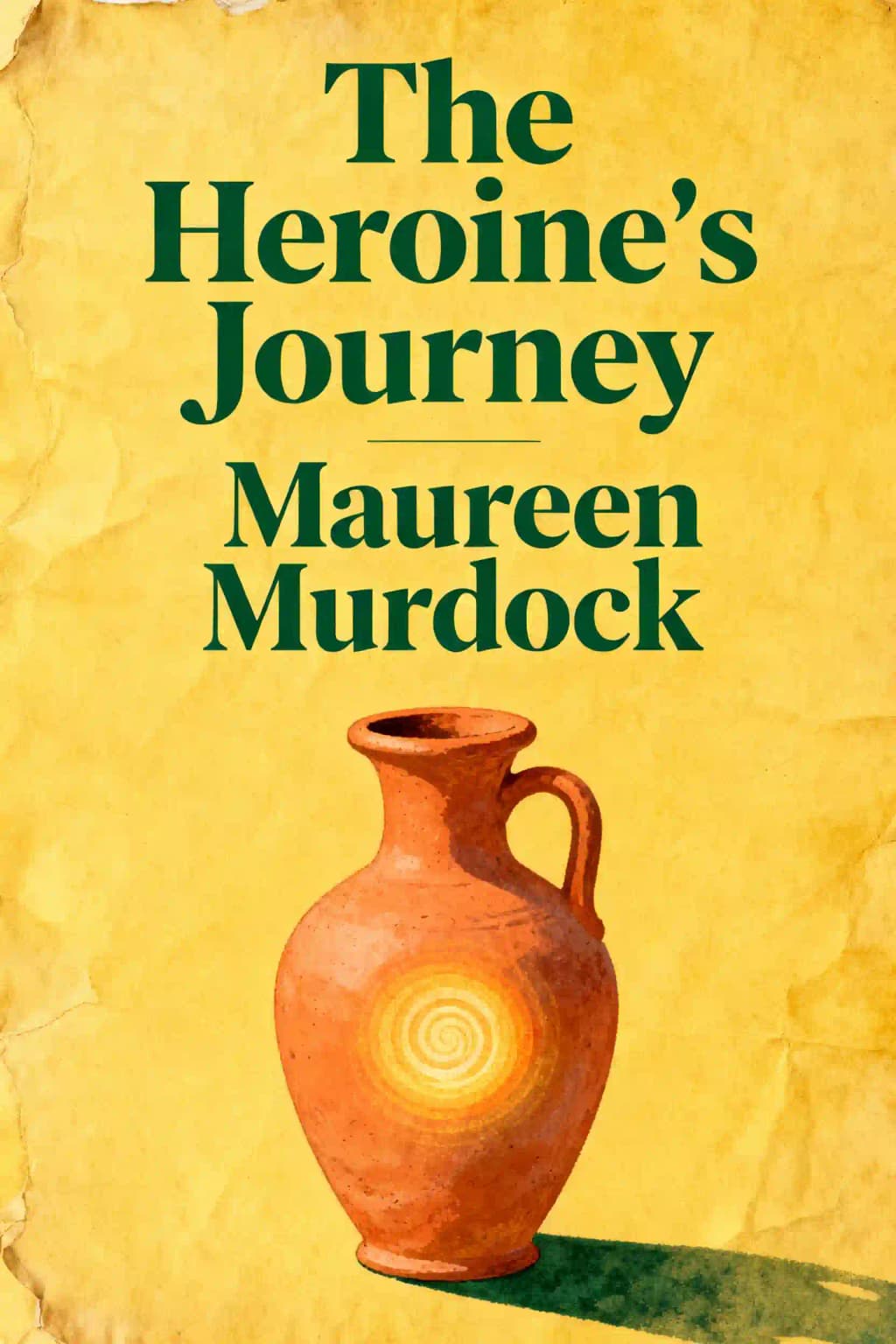
Kapitel 1
The Quest for Wholeness: Reclaiming the Feminine Self
In a world that still views success through a masculine lens, Maureen Murdock's groundbreaking work offers a revolutionary perspective. While Joseph Campbell famously told her "women don't need to make the journey" because they're already "there," Murdock recognized this answer fundamentally misunderstood women's experience. Her response-this powerful psychological roadmap-has resonated with countless women for over three decades, becoming required reading in women's studies programs worldwide. Even Oprah Winfrey has praised it as "a book that changed how I see myself." What makes this work so enduring is its recognition of a profound truth: women's psychological development follows a different path than men's, one that involves both embracing and transcending traditional gender roles on the journey to authentic selfhood.
Kapitel 2
Separation from the Mother: The Journey Begins
The heroine's journey begins with separation from the feminine-both literally from one's mother and symbolically from feminine qualities our culture devalues. In our androcentric society, women learn early that to succeed, they must reject what's perceived as weak, passive, or traditionally feminine.
Consider Mary Lynne, who entered women's college determined to study mathematics-deliberately rejecting traditionally feminine subjects. "I wanted to prove myself to my father as good as the son he always wanted," she explains. "I had a superior attitude toward other women; I wanted to think like a man." Only approaching her forty-second birthday did she realize how identifying with masculine values had affected her self-concept, leading her to devalue other women and set standards demanding everything worthwhile be "difficult, concrete, and quantifiable."
This separation from the mother is particularly intense for daughters who must differentiate from someone fundamentally like themselves. Many transform their mothers into vengeful, devouring figures they must reject to survive-projecting this shadow onto their actual mothers rather than seeing the cultural forces that shaped their mothers' lives.
The rejection extends to women's bodies as well. As girls enter puberty, mothers may reject or envy their daughters' emerging sexuality, while fathers often withdraw from their changing bodies. This creates a dangerous split between body and mind that inhibits spiritual development through bodily awareness. When women ignore bodily signals that something "doesn't feel right," they disconnect from their intuition-their internal compass.
Women who felt rejected by mothers-through adoption, illness, depression, or alcoholism-experience deep "unmothering" and continuously seek what they never had. They may function perpetually as "daughters" looking for approval from mothers incapable of giving it. When women feel alienated from their mothers, they typically reject the feminine and seek recognition from fathers and patriarchal culture, drawn to male power and authority.
Kapitel 3
Identification with the Masculine: Playing by Men's Rules
Despite the women's movement's successes, our culture still values masculine-defined positions, with male norms becoming the standard for leadership, autonomy, and success. Many high-achieving women become "daughters of the father," seeking approval from their first male model.
Research shows successful women often had fathers who nurtured their talents and made them feel worthy of respect. These fathers took active interest in their daughters' lives and encouraged interest in professional pursuits, politics, sports, or arts. A girl's relationship with her father helps her see herself reflected through his eyes, measuring her competence against him and other men.
The author shares her personal experience idolizing her father, an advertising executive she saw as godlike. Though he encouraged her education, he discouraged her interest in advertising, saying it was "no place for girls." She could confide in him but realized years later he had abandoned both her and her mother "to do important things in the world."
When a woman breaks with traditional feminine roles, she begins the hero's journey, seeking masculine allies and role models. These may be fathers, teachers, managers, institutions, or even male-identified women who've succeeded by playing by masculine rules. While seeking male validation can help women transition from maternal fusion to independence in a patriarchal society, it becomes damaging when a woman believes she exists only through male definition.
When fathers are absent, indifferent, or negative toward daughters, they deeply wound a woman's sense of self, leading to perfectionism or paralyzed development. Women with negative paternal messages about women in business struggle to sustain success despite strong educational backgrounds. Fearing female inferiority, they become addicted to perfection, overcompensating and overworking because they are different from men.
Little girls learn early which games earn their father's approval-whether acting smart, cute, or seductive. A father's warmth and playfulness are crucial to healthy sexual development, while dominance or criticism can destroy it. Women like Loretta, who couldn't get her sportscaster father's attention, often seek paternal approval through relationships with men who resemble their fathers, only to discover they're trying to fill the void of paternal rejection.
Kapitel 4
The Road of Trials: Battling Inner and Outer Dragons
The heroine leaves home's safety to journey through hills, valleys, forests and labyrinths in search of her true self. Along this path, she encounters obstacles that test her resolve and cunning. Her task is to find her own voice and destiny, confronting both external obstacles (academic requirements, career advancement) and internal dragons of self-doubt, fear, and indecisiveness.
Though dependency is a normal developmental stage for all children, girls aren't encouraged toward independence like boys are. Instead, they're trained to anticipate others' needs while expecting their own needs will be met without asking. When a woman must request that her needs be addressed, she's labeled "demanding" or "needy." Many women sacrifice their autonomy to bolster their partner's ego, believing relationships require their relative weakness.
Society's denigration of feminine qualities leads women to devalue themselves, operating from a myth of inferiority. Women look at successful men-even those less intelligent or creative than themselves-and internalize the cultural message that "male is better" and women have value only in relation to men and children. This creates a pattern of deficit thinking: "If I just do more...if I try harder...if I get that degree...then I'll be okay."
In the myth of romantic love, women search for father/lover/savior figures to solve all their problems. They believe "If I find the right man, I'll be happy" or "If I'm with a powerful man, I'll have power too," avoiding discovering their own path. Men comply by promising to protect women from taking their own heroic journeys. Society trains women into a state of expectancy, whispering "You are not enough on your own."
The myth of Psyche and Eros illustrates a woman's journey from illusory to true love. When Psyche lights a lamp to see Eros while he sleeps, she challenges male supremacy. Though abandoned after her disobedience, Psyche begins her own heroic journey through increasingly difficult trials. After completing her tasks, Eros wipes away her deadly sleep and takes her to Olympus to become a goddess. They marry as equals, producing a daughter named Pleasure. Psyche has transcended romantic illusion through her own hard work, achieving true partnership rather than dependence.
Kapitel 5
The Illusory Boon of Success: The Superwoman Trap
After transcending her conditioning through the road of trials, the heroine achieves what appears to be success. Whether through academia, corporate advancement, or independent achievement, she builds a world based on her decisions. Unlike her mother, she defines herself through her own accomplishments rather than through her relationships. She juggles career, marriage, children, and personal goals with apparent mastery.
The superwoman cult of the 1980s promised women they could "have it all"-fulfilling careers, equal marriages, and joyous motherhood. Many heroines became superwomen in reaction to their mothers' experiences with the feminine mystique of the 1950s. These mothers, lacking choices about careers or childbearing, became dependent on husbands and wielded power through family control-what Betty Friedan called "maternal machismo." Unfortunately, in trying not to be like their mothers, many young women adopted male standards of production and achievement, placing feminine values of relationship and caring second to goal achievement.
When feeling discomfort or emptiness, the heroine tackles new challenges-another degree, a more prestigious position, a geographical move-to soothe her feelings with achievements. The adrenaline rush of accomplishment masks her deep pain of "not being enough." In reaction to her mother's dependence, she drives herself to be more independent and self-sufficient than any man. She can't say no, tries to be everything to everyone, and ignores her need for care.
When the unconscious masculine takes control, a woman feels that nothing she does is ever enough. Her inner driver constantly pushes her toward the next task, devaluing whatever she's currently doing. She feels perpetually inadequate, responding from a place of internal lack.
The heroine discovers true success when she sacrifices false notions of the heroic and acknowledges her human limitations. By finding the courage to be limited and realize she is enough exactly as she is, she discovers one of the journey's true treasures. She can finally say, "I am not all things... and I am enough," becoming real, vulnerable, and receptive to spiritual awakening.
Kapitel 6
The Awakening: When Success Feels Empty
Women who've achieved marketplace success often find these victories have exacted a heavy toll on their health and emotional well-being. Despite mastering skills and gaining independence, many experience a profound weariness and uncertainty about next steps. They don't want to retreat to domestic life, but feel something essential is missing.
Many describe feeling "out of sync" with themselves-a spiritual emptiness that manifests physically through illness, insomnia, or reproductive issues. One development officer describes "crying from the inside out" through unexplained bleeding, while others mourn the loss of creativity, physical connection to nature, and female community.
Women who burn out trying to fill male roles become scorched to their inner core. Psychologist Marti Glenn describes losing one's "inner fire" when the soul's flame is no longer fueled and the long-held dream dies. Old patterns no longer fit, the new way remains unclear, and darkness prevails. Nothing holds meaning, and a woman loses her sense of identity.
This creates a profound sense of betrayal by both personal and cultural forces that promised rewards for being "good" and trusting masculine thinking. The ordered world cracks open, leaving her terrified but determined to take her life into her own hands rather than remain a victim.
The myth of Iphigenia powerfully illustrates paternal betrayal. When Agamemnon's fleet was becalmed at Aulis before sailing to Troy, a seer declared he must sacrifice his daughter Iphigenia to appease the goddess Artemis. Torn between love for his daughter and allegiance to his brother and men, Agamemnon deceived Iphigenia by summoning her with the promise of marriage to Achilles. Iphigenia's betrayal by her father represents the broader betrayal of the feminine by the masculine-a daughter's trust destroyed by a father who valued power and conquest above love.
When women reject the governing patriarchal voice, they experience complex emotions simultaneously. There's emptiness from not measuring up to expected career advancement, fear of disappointing others, yet strength in self-protection and listening to one's authentic voice. The challenge becomes learning how to simply be rather than do. "Being is not a luxury; it is a discipline," requiring courage to silence external voices and hold tension until new forms emerge.
Kapitel 7
The Descent to the Goddess: Finding the Lost Feminine
The descent to the goddess represents a woman's spiritual initiation-a journey to the underworld triggered by profound loss. Unlike men's spiritual journeys that move upward toward light, women's initiations require moving downward into the depths of being.
This underworld journey brings confusion, grief, alienation, rage and despair where a woman feels "naked and exposed, dry and brittle, or raw and turned inside-out." In the timeless darkness of the underworld, there are "no easy answers... no quick way out." To others, a descending woman appears preoccupied, sad, and inaccessible, often entering "voluntary isolation" seen as madness by family and friends.
Women find themselves not by "moving up and out into the light like men, but by moving down into the depths." Artist Patricia Reis describes spending four years in this process, deliberately separating from "the male world" to find her "own feminine ground." This sacred journey, often misdiagnosed as depression requiring medication, allows women to reclaim parts of themselves lost when rejecting the mother.
The author poetically describes her personal descent as a search for lost pieces of herself, asking "What did I lose being a father's daughter, trying to please and achieve?" She encounters symbolic "blind heads of the mothers" begging to be reunited with their bodies, whispering "Take back the dark."
The myth of Demeter and Persephone represents the essential female tragedy of separation between mother and daughter. When Persephone was abducted by Hades while gathering flowers, Demeter searched frantically for nine days, eventually learning Zeus had sanctioned the abduction. In her grief, she caused the earth to become barren until Zeus agreed to Persephone's return. This myth symbolizes a woman's journey from maiden consciousness through initiation into deeper self-knowledge, where breakdown becomes breakthrough.
The myth of Inanna's descent to the underworld serves as another powerful metaphor. As Inanna descends, she is stripped at each of the seven gates, representing the shedding of false identities that may have served in the upper world. She confronts Ereshkigal, Queen of the Underworld, who represents woman's dark side-the rage and fury left unexpressed while trying to please patriarchal figures. After three days, Inanna is rescued through empathy-creatures who simply witness Ereshkigal's pain without trying to fix it.
Kapitel 8
Reconnecting with the Feminine: Body, Spirit, and Community
After a woman severs her identity as a spiritual daughter of the patriarchy, she experiences an urgent longing to reconnect with the feminine-whether the Goddess, the Mother, or her inner girl-child. She seeks to develop aspects of herself that went underground during her heroic quest: her body, emotions, spirit, and creative wisdom.
The sacred connection between body and soul was severed with the overthrow of the Mother Goddess. When humanity began worshiping in churches rather than in nature, we lost our "I-Thou" relationship with the earth and forgot the sanctity of all living beings. In earlier times, women's bodies were revered as sacred vessels-their menstrual cycles, pregnancy, and menopause were considered awesome mysteries containing wisdom.
Men have attempted to control women's sexuality for centuries to protect patrilineal descent. Ancient goddess figures celebrating female genitalia have been systematically defaced by conquering tribes and Christian priests. Women have lost their connection to the sacred power of their sexuality, which was once honored for its life-giving properties when spirit and body were considered one.
Catherine, raised in strict Irish Catholicism, experienced transformative dreams about the chalice, a pre-Christian feminine sacred symbol. In a final dream, she saw her body as the chalice itself and heard "This is my beloved daughter in whom I am well pleased." Awakening vibrating with energy, she created art of a vibrant chalice and realized: "I embodied spirit; my body and my blood. I was the Goddess embodied... God or Goddess is not separate from me; I embody Her."
The descent into one's depths stirs up long-buried emotions. Women have filled their lives with "important busyness" to avoid confronting these feelings. When a woman removes the mask she presents to "collective fathers"-being nice, polite, compliant-she discovers rage about sacrificed time, confusion about betrayals, and sadness for self-abandonment.
When returning from the underworld, women yearn for maternal comfort and nurturing. The Tewa Pueblo people tell of Grandmother Spider who guides people emerging from darkness, warning them to uncover their eyes slowly, cautioning against quarrels and weapons, and teaching them to plant corn. She embodies the compassionate, instructive feminine that helps us care for ourselves without getting caught in domination.
Kapitel 9
Healing the Mother/Daughter Split: Reclaiming Wholeness
The most painful stage of the heroine's journey involves healing the mother/daughter split-the separation from one's feminine nature. Despite developing heroic masculine qualities valued by society and surviving multiple descents to the underworld, many women still carry wounds from this fundamental separation.
Many women never felt deeply mothered despite being loved. The author's mother struggled to accept her adventurous, creative spirit, trying to contain what couldn't be contained. This led to rejecting the feminine as smothering and dangerous while identifying with her father, separating from her own feminine power. Many women share similar stories of being told to work hard, produce, please others, and ignore feelings, with no expectation that life could be enjoyed.
Our internal relationship with our mother becomes integrated into our psyche as the "mother-complex," affecting our most permanent feelings about ourselves. James Hillman explains that this complex shapes how we feel about our bodies, our fears and guilts, our capacity for love and intimacy, our psychological temperature, and our patterns of relating.
Women who've experienced mother wounds often find healing in divine ordinariness-seeing the sacred in each mundane act like washing dishes or weeding gardens. During this reclamation of the inner feminine, many identify with Hestia, goddess of the hearth and center of home.
Women today are healing the feminine split by reaching out to other women, naming their sacred experiences, honoring Gaia, and undergoing female rites of passage through gatherings and vision quests. In nature, women find restoration in the arms of Gaia, the original Mother, whose generous bosom reminds us of our fertility and cyclic nature.
Many women invoke Grandmother as guide to the mysterious feminine realms. Like Hecate or Grandmother Spider, she embodies insight, wisdom, strength and nurturance often missing from daily life. Myths organize our chaotic experience into meaningful patterns. Women uninitiated into feminine mythology by mothers or grandmothers must develop their own relationship with the inner feminine.
Women today dream of strong, nurturing female figures who embody power without domination. Many encounter large, powerful dark-skinned women who nurture and recreate them. These dark feminine figures bring messages of renewal and authentic power.
Kapitel 10
The Sacred Marriage: Integrating Masculine and Feminine
The wounded masculine within us needs healing through reconnection with the feminine. Like the Fisher King in the Grail legend whose wound wouldn't heal, our psyches remain wounded until we recognize our pain and ask "What ails thee?" We've become alienated from the "inarticulate source of meaning"-the feminine, the Goddess, the Grail.
The unrelated masculine manifests as an environmental and psychological disaster. Within each of us lives this tyrannical element that denies our feelings, body, dreams and intuition. The only way to heal this imbalance is through consciousness-facing and naming our shadow tyrant requires "courage, compassion, humility, and time."
The dream message "The return trip home to the feminine is when we release machisma" reveals the need to let go of the "lone ranger" warrior archetype. Machisma represents the feminine version of machismo: "I can tough it out; I'm strong; I don't need help; I can do it alone." While a strong ego is necessary for individuation, we need relationship with the positive inner masculine-the Man with Heart who supports with compassion and strength.
The sacred marriage (hieros gamos) unites all opposites, helping woman remember her true nature. This marriage of ego and self allows one to accept both feminine and masculine aspects. As June Singer writes, "the goal of the masculine principle is perfection and the goal of the feminine principle is completion." Perfection excludes imperfections, while completion embraces everything-good and evil, hope and despair.
The tale of "Gawain and Lady Ragnell" portrays the healing of wounded masculine and distorted feminine archetypes. Despite Lady Ragnell's hideous appearance, Gawain willingly marries her to save King Arthur. After their wedding, Ragnell transforms into a beautiful woman, explaining she was bewitched for defying her stepbrother. When Gawain grants her sovereignty to choose for herself, the spell breaks completely. Their sacred marriage represents the union of equals where the feminine's sovereignty is honored and the masculine shows compassion and wisdom.
When a woman experiences the sacred marriage within, she dreams of meeting divine masculine figures or animal allies in deeply symbolic unions. The heroine who completes this inner marriage becomes "Mistress of Both Worlds," able to navigate daily life while listening to the depths, bringing wisdom to transform the world.
Kapitel 11
Beyond Duality: The Circle of Life
We live in a dualistic culture that values polarities-an either/or mentality that separates and stratifies. Matthew Fox explains that the sin behind all sin is dualism: separation from self, the divine, others, and nature. This dualistic thinking treats others as objects to control or dominate. Our psyche is marred by these divisions between mind/body, women/men, spirit/matter, creating hierarchies that enable oppression.
The split between women and men may have roots in property rights and procreation, but has been widened by religious and political systems. Genesis 3:16 was not divine decree but patriarchal propaganda. Western religion has encouraged blaming women for the world's evils while excluding them from equal voice in spiritual, political, and economic matters.
The circle is inclusive, not exclusive. The symbol of the feminine is the circle-exemplified in the womb, vessel, and grail. Women tend to cluster, valuing connection and relationship. They've always gathered in circles, facing one another as colleagues without hierarchical authority.
Many religions recognize the dual nature of the divine, where even supremely feminine or masculine divinities were androgynous. The Gnostic Gospels provide evidence that Jesus spoke of God the Mother and God the Father. By 200 CE, virtually all feminine imagery for God disappeared from mainstream Christianity, though until then women held positions of power in the Church.
The early Celtic Christians embraced a unique form of spirituality that integrated with their tribal culture. Unlike Roman Christianity, the Celtic version emphasized direct individual experience over doctrine, encouraged sensuality as bodily wisdom, and maintained a non-hierarchical community structure where authority resided within the group. Women held equal positions beside men, with figures like St. Brigit serving as abbess of Kildare.
The heroic quest has evolved beyond seeking external validation to mining the silver and gold within oneself. Today's heroine must use discernment to cut away ego bonds to the past, release resentment toward mother, put aside blame of father, and face her own darkness. Through meditation, art, poetry, play, ritual, relationship, and connecting with earth, she illuminates these shadowy spaces. As weavers, creators, healers, lovers, alchemists, protectors, divers, and artists, women remember who they are and heal the split within themselves and culture.