Chapter 1
When Gods Ask for Pet-Sitters, Expect Chaos
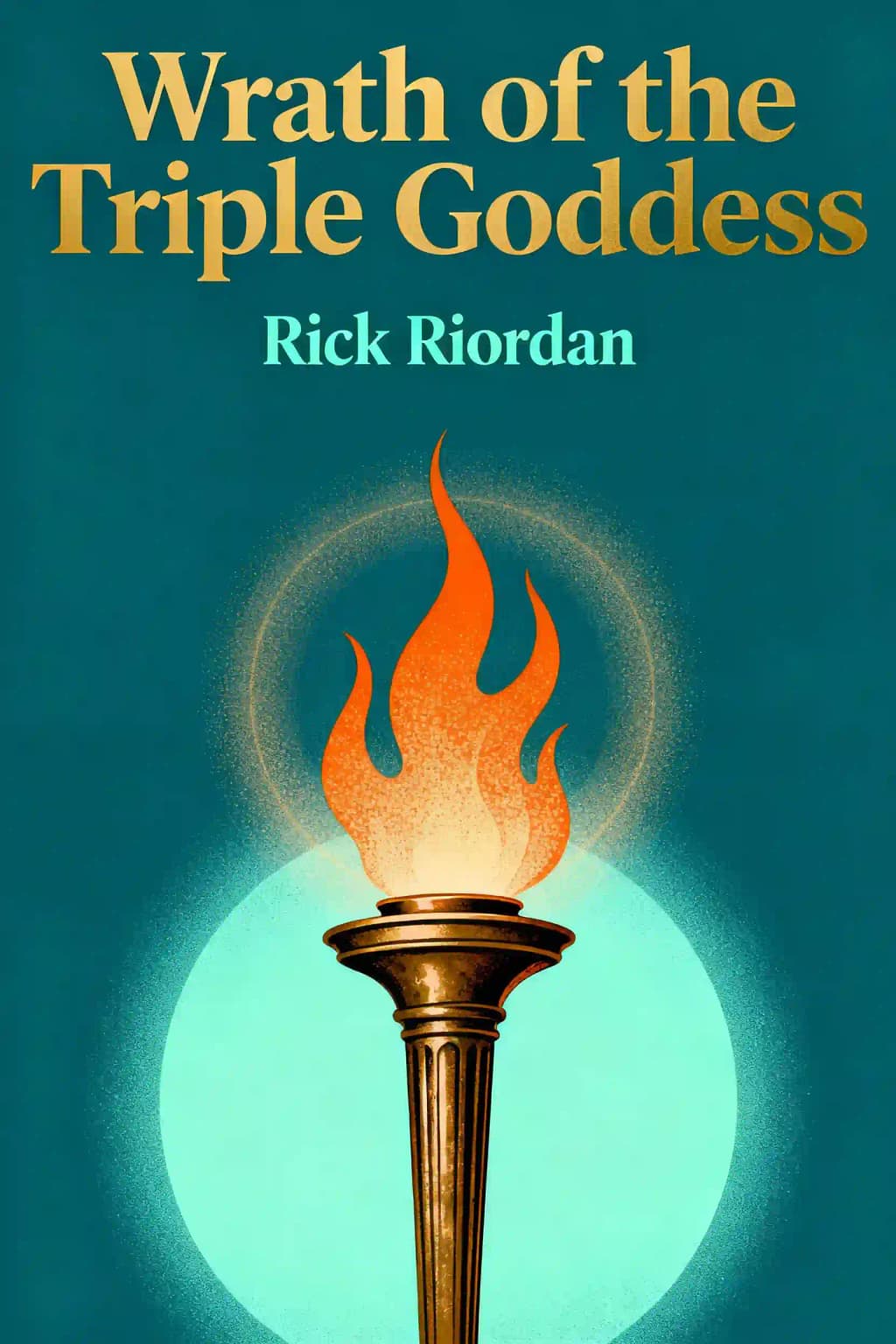
October used to be Percy Jackson's favorite month-crisp air, colorful leaves, and three blissful weeks without mythological trouble. But when you're the son of Poseidon, peaceful streaks never last. The book has become a cultural phenomenon since its release, with readers across generations embracing Percy's adventures. It's been featured on numerous "Best Fantasy Books" lists and has become required reading in many schools' mythology curriculum. Even celebrities like Lin-Manuel Miranda have cited the Percy Jackson series as influential in their creative journeys. The continuing popularity of Riordan's work speaks to our enduring fascination with mythology reimagined for modern times-and this installment delivers exactly what fans have been craving: more Percy, more gods, and more hilariously dangerous situations.
Chapter 2
The Triple Goddess and Her Peculiar Pets
When Hecate, goddess of magic and crossroads, summons Percy to the principal's office, his peaceful senior year instantly derails. She reveals she's blocked other gods from contacting him-ruining his chances at easy recommendation letters for New Rome University-because she needs a pet-sitter for her hellhound and polecat while she goes trick-or-treating for Halloween weekend.
"Halloween was created just for me," she insists with classic god-level narcissism. When Percy hesitates, Hecate transforms into her triple goddess form-Maiden, Mother, and Crone-then into three animal heads-horse, lion, and hound-threatening to devour those who waver before her. The terrifying display leaves Percy with no choice but to accept.
Hecate's mansion in Gramercy Park is an optical illusion built from weathered tombstones, with gargoyles on the roof and skeletal white bushes in the fog-covered yard-a perfect haunted house. Inside, Percy and his friends Annabeth and Grover meet Hecuba, an enormous hellhound, and Gale, a flatulent polecat with impressive handshaking skills.
The pet care instructions are absurdly complex. Hecuba requires forty colorful "Medicinal McNuggets" daily despite her obvious reluctance, and her kibble looks like smoking rocks that smell like hot asphalt. Gale's feeding routine is even more disturbing-chicken carcasses hanging from meat hooks that she rockets up to, burrows inside, and bursts through with bloody teeth and chicken-fat-coated fur. "She eats breakfast and dinner this way," Hecate explains proudly, reminding them that "playing with your food" is important.
Before departing for Tokyo Disneyland's "Spooky Boo!" parade in her honor, Hecate warns them never to use her crossed torches except in extreme emergencies. As she disappears in a swirl of black soot, her pets stare at them with gleaming eyes that clearly say: "Mom is gone. Now the fun begins."
Chapter 3
When Magical Pets Go Missing
The first day of pet-sitting proceeds reasonably well, though it quickly becomes apparent that these aren't ordinary animals. Hecuba, the hellhound, displays a particularly frantic walking style that has Percy, Annabeth, and Grover sweating profusely as they're dragged through Manhattan's crowded streets. The massive black dog seems to have supernatural strength, pulling them through busy intersections and around corners with such force that their shoulders ache. Pedestrians leap out of their way, though the Mist probably makes them see something less alarming - perhaps an overenthusiastic Great Dane.
The bizarre bathrooms Hecate magically created in the mansion provide constant reminders they're in a goddess's domain. One bathroom features a ceiling toilet completely defying gravity, leading to some awkward attempts at use. Another contains metal fixtures that deliver unexpected ice-cold showers and chain mail towels that feel like being dried with medieval armor. Each room seems designed to make even the simplest tasks feel like a mythological challenge.
Everything unravels when Grover, left alone with the pets during what should have been a quick supply run, succumbs to an irresistible temptation. The forbidden strawberry milkshake experiment - clearly labeled "DO NOT TOUCH" in ancient Greek - proves too alluring for the satyr's notorious appetite.
Returning to the mansion, Percy and Annabeth find a scene of catastrophic proportions. Windows are shattered from within, their glass scattered across the lawn like diamond dust. Heavy wooden doors hang from broken hinges, blown outward by some massive force. Blue smoke billows from broken vials, carrying an odd scent of burnt caramel and ozone. Inside, their carefully arranged campsite is smoldering, furniture reduced to splinters and stuffing. The grand staircase is littered with tufts of fur and mysterious pink strawberry-scented splatters that seem to pulse with their own light.
The kitchen presents an even more horrifying spectacle. Magical stews are splattered across every surface, their contents still bubbling and morphing. Acidic goo eats through floor tiles, creating swiss cheese patterns in the marble. Every appliance looks like it's been through a monster attack - which, in a way, it has. In the midst of this chaos lies Grover, grotesquely enlarged into a mountain of fur with hooves the size of trash can lids pointing toward the ceiling, his face swollen beyond recognition.
After being revived with some emergency nectar, Grover tearfully confesses to his moment of weakness with the experimental milkshake. But the missing pets present an even graver concern - both Hecuba and Gale have vanished in the chaos. With Hecate scheduled to return in just two days, Percy faces what seems like an impossible task - locate and return two powerful magical creatures before the goddess discovers their negligence and exercises her divine right to incinerate them all.
The stakes are particularly high because these aren't simply pets but transformed beings with complex and tragic histories. Hecuba carries the weight of ancient Troy's fall, having once been its proud queen before the Greeks destroyed her city and Hecate transformed her into a hellhound. Gale's story is equally poignant - a talented witch who faced persecution from fearful humans until Hecate transformed her into a polecat as her only chance for survival. Understanding these histories becomes crucial to tracking them down - these aren't animals acting on instinct alone, but intelligent beings with deep emotional wounds and complicated relationships to both the mortal and divine worlds.
Chapter 4
Finding Family Among the Lost
Percy summons his own hellhound, Mrs. O'Leary, to track Hecuba's scent through Manhattan. The search leads to an unexpected discovery-a trembling hellhound puppy in a trash pile, about fifty pounds with matted black fur, cherry-red eyes, and a nasty cut across his back. The poor thing can only bark "NOPE!" which apparently means both no and yes. Mrs. O'Leary immediately abandons their Hecuba-hunting mission to help this orphaned pup.
Percy slowly gains the puppy's trust with treats until he crawls into his lap. Naming him "Nope," Percy carries him back to Gramercy Park, knowing that while this doesn't solve their Hecuba and Gale problem, helping a puppy is always the right thing to do.
Meanwhile, Annabeth researches Hecuba and Gale's human origins in Hecate's library, discovering disturbing clues about the mansion's past. A display case containing broken children's glasses with the initials SEJ deeply unsettles Percy, connecting to strange visions he's been having of a blue glowing child on a bicycle.
When Percy visits his mother at the Cracked Teapot cafe, she reveals the truth-the child in his visions was her childhood self. As a girl who could see through the Mist, her family made her wear glasses, thinking something was wrong with her vision. One day while riding past Hecate's mansion, she encountered the goddess, who broke her glasses and told her, "You arrived too late. Move along. Find another life."
This revelation connects to another discovery-Hecate once ran a magic school in the mansion until 1914, when it closed after students began taking sides during wartime, escalating from arguments to violence. The goddess refused to intervene, then blamed others when everything fell apart. Percy realizes the mansion's foundation has been cracking since she closed the school, and their missing pets are symptoms of deeper problems.
Chapter 5
Magical Perfume and Dangerous Transformations
The search for Gale leads Percy and Grover to a perfume shop in Manhattan where they encounter Silbe, a naiad from Circe's Island seeking revenge for what happened when Percy and Annabeth freed the pirates who destroyed her home years ago. Silbe attempts to paralyze Percy with an expensive "Spellbound" perfume, but Grover cleverly stalls for time, allowing them to turn the tables and capture her.
With two more naiads to face, they visit a Halloween costume shop where Annabeth transforms into a Roman noblewoman while Percy and Grover become her gladiator bodyguards. At "Scents Forever," they find Gale chained in a laboratory basement, forced to locate ingredients while being stung by metallic bee automatons whenever she slows down.
When the confrontation turns violent, Phaedra drinks a potion and unleashes "BEAST BREATH" on them-transforming Annabeth's head into a barn owl's, Percy's arms into octopus tentacles, and Grover's goat legs into human ones. As the laboratory begins collapsing, Percy stays behind to convince Gale to help them find an antidote.
In a moment of connection, Percy touches Gale with his tentacle and experiences her past-seeing her persecution as a witch and understanding that Hecate transformed her not as punishment but as protection. After freeing her, they frantically mix ingredients while the laboratory crumbles around them, creating just enough antidote for three doses.
In a touching moment of sacrifice, Gale refuses the final dose, preferring to remain an immortal polecat rather than become human again. She only asks that Percy keep his promise about convincing Hecate to give her a proper alchemy lab with assistants-a small recognition of her talents and identity that she's long been denied.
Chapter 6
Ghosts of the Past and Present
With both pets recovered but the mansion still in ruins, Percy and his friends face a desperate choice-use Hecate's forbidden crossed torches to summon ghosts who can repair the damage before the goddess returns. Annabeth devises a plan to summon Peter Stuyvesant's ghost from Saint Mark's Church cemetery, believing his spirit is woven into the city's roots and perfect for overseeing supernatural house repairs.
After applying protective goo to their wrists and necks, they venture into the night. At the cemetery, Annabeth summons the ghosts with blue-white torches, but dozens of shadowy forms rise around them-Peg-Leg Pete himself and countless other spirits thinking in multiple languages, all wanting to tear them apart.
Despite their hostility, Annabeth commands them to follow her, with Hecuba and Nope herding them like border collies. But after just one block, her strength begins to fail. Percy takes over, wrapping his hands over hers on the torch handles and ordering the spirits to follow him to Gramercy Park.
When they finally reach the mansion, they command the ghosts to fix the house. The spirits sweep inside in miniature tornadoes, clearing broken glass, repairing furniture, and mending the cracked tombstones. But when they attempt to dismiss the ghosts by crossing the torches, Percy collapses from exhaustion, dropping his torch.
The ghosts rush in, ready to feast on their souls, but Annabeth positions herself between Percy and the dead, holding both torches. Yet the spirits don't disappear-they rage through the front yard and street, possessing Halloween decorations, trash, and even actual living people. Stuyvesant himself possesses a police officer, revealing himself as Hecate's son with a centuries-old grudge.
Chapter 7
The Battle for Gramercy Park
As the possessed horde descends upon Gramercy Park, Percy and his friends find themselves in a chaotic struggle against an army of the supernatural. The trash zombies lumber forward with surprising speed, their makeshift bodies held together by ancient magic, while costume spirits flit through the air like deadly confetti. Percy swings Riptide in precise arcs, careful to avoid injuring the possessed humans who stumble through the fray with vacant eyes. Annabeth fights beside him, her bronze dagger glinting in the moonlight as she calculates each strategic move.
Grover works his environmental magic, his reed pipes playing an enchanting melody that draws confused mortals away from danger. The tune weaves through the park, compelling civilians to suddenly remember urgent appointments elsewhere. Meanwhile, Hecuba and Nope employ their unique brand of crowd control - the hellhound using her massive bulk to carefully pin down possessed humans while the small pug delivers surprisingly effective "healing kisses" that temporarily break the spirits' hold. From the mansion's fountains, the moray eels emerge like liquid missiles, surrounded by protective sheaths of water as they snap at ghostly forms. But despite their efforts, the spirits simply dissipate and reform, seemingly endless in their assault.
The tide turns when a familiar van - emblazoned with "Delphi Strawberry Service" in fading letters - screeches to a halt at the park's edge. Their forgotten Halloween party guests emerge like a cavalry of mismatched heroes. Connor Stoll leads the charge in his orange prison jumpsuit, wielding celestial bronze through the bars of his prop handcuffs. Behind him, Clovis stumbles out in cloud-printed pajamas, already emanating waves of drowsiness. Harley's homemade Iron Man suit sparks and whirs with actual Hephaestus-cabin modifications, while Valentina Diaz glides into battle in a 1920s flapper dress that somehow stays immaculate.
The reinforcements prove devastatingly effective. Clovis's supernatural drowsiness spreads through the possessed mortals like a gentle wave, dropping them safely into deep slumber. Valentina's vintage pearl necklace transforms into a deadly projectile weapon, each bead exploding with bursts of celestial energy. Argus appears particularly magnificent in his historically accurate Amelia Earhart costume, using his hundred eyes to track multiple threats at once. In a stunning display of strength, he manages to lift Stuyvesant's ghostly horse completely off the ground, leaving the spectral steed pawing helplessly at empty air.
With their friends occupying the spiritual army, Percy and Annabeth focus on their torches - ancient artifacts that resist being brought together like opposing magnets. The air crackles with tension as they force the flames closer. When the torches finally cross, the resulting explosion of energy is both beautiful and terrifying - a wave of white-hot power that ripples outward in concentric circles, dissolving the spirits like morning mist. Peter Stuyvesant's ghost is the last to fade, his centuries-old anger finally melting away as Clovis's peaceful aura embraces him.
The celebration that follows feels earned but subdued, tempered by exhaustion and relief. The Apollo cabin sets up an impromptu performance space, their celestial bronze instruments gleaming in the restored park lights. Connor produces snacks that he swears he "definitely didn't steal," while the nymphs and satyrs demonstrate dance moves that seem to defy several laws of physics. The moray eels perform an surprisingly coordinated line dance in their water bubble before returning to their tank with dignified splashes. Hecuba joins in by howling a surprisingly melodic accompaniment to "Single Ladies," while Nope - in a marked improvement from his usual behavior - manages to make new friends without a single bathroom-related incident.
Chapter 8
Confronting the Triple Goddess
Hecate makes a dramatic entrance at dawn, blazing through a fiery portal that scorches the mansion's marble floors. Her three-headed beast form is a startling sight - each head adorned with elaborate face paint and wearing identical Nixon masks, an oddly modern touch for an ancient deity. Glowing jack-o'-lantern buckets dangle from her massive paws, overflowing with an impossible amount of Halloween candy that seems to defy gravity as it cascades endlessly without depleting.
Her piercing gaze immediately locks onto Nope, who's attempting to make himself invisible behind Annabeth's legs. All three heads speak in perfect synchronization, their voices overlapping in an otherworldly chorus that makes the windows vibrate. The goddess's surprise at learning about Hecuba's adoption is evident - all three heads tilting at precisely the same angle, her multiple sets of eyes widening in genuine astonishment at her traditionally fierce hellhound's maternal transformation.
The interaction between goddess and puppy unfolds with unexpected tenderness. Nope, gathering his courage, approaches her with tiny tentative steps, his tail tucked but wagging hopefully. Hecate's expression softens across all three faces as she reaches down with ancient hands that have wielded world-changing magic to scratch behind his ears. The moment is promptly punctuated by Nope's nervous bladder christening the antique carpet - a decidedly mortal response to meeting a deity.
Grover's translation of Nope's puppy-speak reveals the young hellhound has decided to call her "Third Mom," which Hecate misinterprets with visible emotion. All three faces show touching vulnerability as she assumes he means "Triple Mom," a reference to her tripartite nature. The goddess's usually stern demeanor momentarily cracks, revealing a glimpse of loneliness beneath her powerful exterior.
Her inspection of the mansion is thorough and slightly terrifying, with each head observing different angles simultaneously. The recommendation letter she presents to Percy is comically brief - written on ancient parchment that smells of brimstone, it states simply "I recommend Percy Jackson for things" followed by a signature so elaborate it continues onto three additional scrolls.
When Percy insists on sharing their week's adventures, Hecate's threat of incineration seems only half-hearted. Her attention is caught by his passionate argument about her pets needing more freedom. Percy, showing remarkable bravery for someone addressing a goddess who could turn him into a hamster, makes his case for reopening her magic school. He points to literal cracks in the mansion's foundation - physical manifestations of the metaphorical fractures in her current system. His insight about her pets - former humans transformed through various circumstances - needing purpose rather than mere containment strikes a chord.
Though her initial reaction is predictably fierce - the room temperature spikes and shadows writhe on the walls - Hecate's anger gives way to contemplation. She grants Percy a boon for bringing Nope into her unusual family, and for the first time in centuries, seriously considers changing her ways.
Chapter 9
Finding Roots While Spreading Branches
The aftermath brings unexpected joy. Eudora, Percy's Nereid guidance counselor who once worked at Hecate's school, literally melts into a puddle of water before reforming when Percy tells her the goddess plans to reopen the school and rehire her as admissions director. She promises to get Percy into "ALL the colleges!" though he reminds her he only needs New Rome.
At a family dinner with Annabeth, Grover, and Grover's girlfriend Juniper, Percy reflects on his journey. His mother asks thoughtful questions about dryad diets, showing her typical sensitivity. This makes Percy consider his own eating habits as Poseidon's son-he eats fish without guilt since they're not particularly conversational, though he avoids consuming the smarter sea creatures like octopuses, dolphins, sharks, and manta rays, which he notes are "geniuses" at physics.
When conversation turns to Percy's potential move to California with Annabeth, Juniper wisely observes that their roots are right here with this family, no matter where they go. Percy realizes she's right-they wouldn't be leaving anything behind, just spreading their branches.
The story beautifully balances supernatural adventure with deeply human concerns about belonging, identity, and growth. Percy's journey from reluctant pet-sitter to advocate for both animals and spirits mirrors his larger transition from teenage demigod to young adult finding his place in the world. By understanding the needs of creatures others have forgotten or imprisoned, he discovers something essential about himself-that true heroism lies not just in defeating monsters, but in recognizing the humanity in all beings, even those who appear monstrous at first glance.
For dessert, Annabeth kisses Percy, which is better than any candy corn-a sweet reminder that amid gods and monsters, it's the connections we forge that matter most.
Chapter 10
Healing What's Broken Through Understanding
Throughout the adventure, Percy discovers that Hecate's mansion isn't just physically damaged-it's spiritually fractured by past traumas and unresolved conflicts. The broken glasses in the display case, the defunct school exhibits, the imprisoned pets with human origins-all point to a goddess who responded to disappointment by shutting down rather than rebuilding.
Percy's greatest achievement isn't defeating ghosts or recapturing magical creatures, but helping Hecate see what she's lost through isolation. By bringing Nope into her household-a new family member who accepts her triple nature without fear-Percy shows her that growth requires risk and openness to change.
This theme resonates throughout the story. Gale chooses to remain a polecat not because she fears transformation, but because she's embraced her new identity while still wanting recognition for her talents. Hecuba adopts Nope because, despite her tragic past, she still has capacity for maternal love. Even the ghosts of New York find peace not through vengeance but through finally being acknowledged and released.
Percy himself stands at a crossroads as he prepares for college and adult life. His mother's revelation about her own encounter with Hecate years ago offers perspective-sometimes the paths not taken lead to greater happiness than we could have imagined. Sally Jackson has no regrets about missing her chance at magical education because it led to Percy's birth and their extraordinary life together.
As Percy tells Eudora, he's learned to leave people "in a better place than you found them"-a simple philosophy that proves more powerful than any magical incantation. By understanding others' needs rather than imposing his own solutions, Percy demonstrates a maturity that transcends his demigod abilities. In a world of gods who rarely change their ways, Percy's greatest power may be his very human capacity for growth, empathy, and forgiveness.