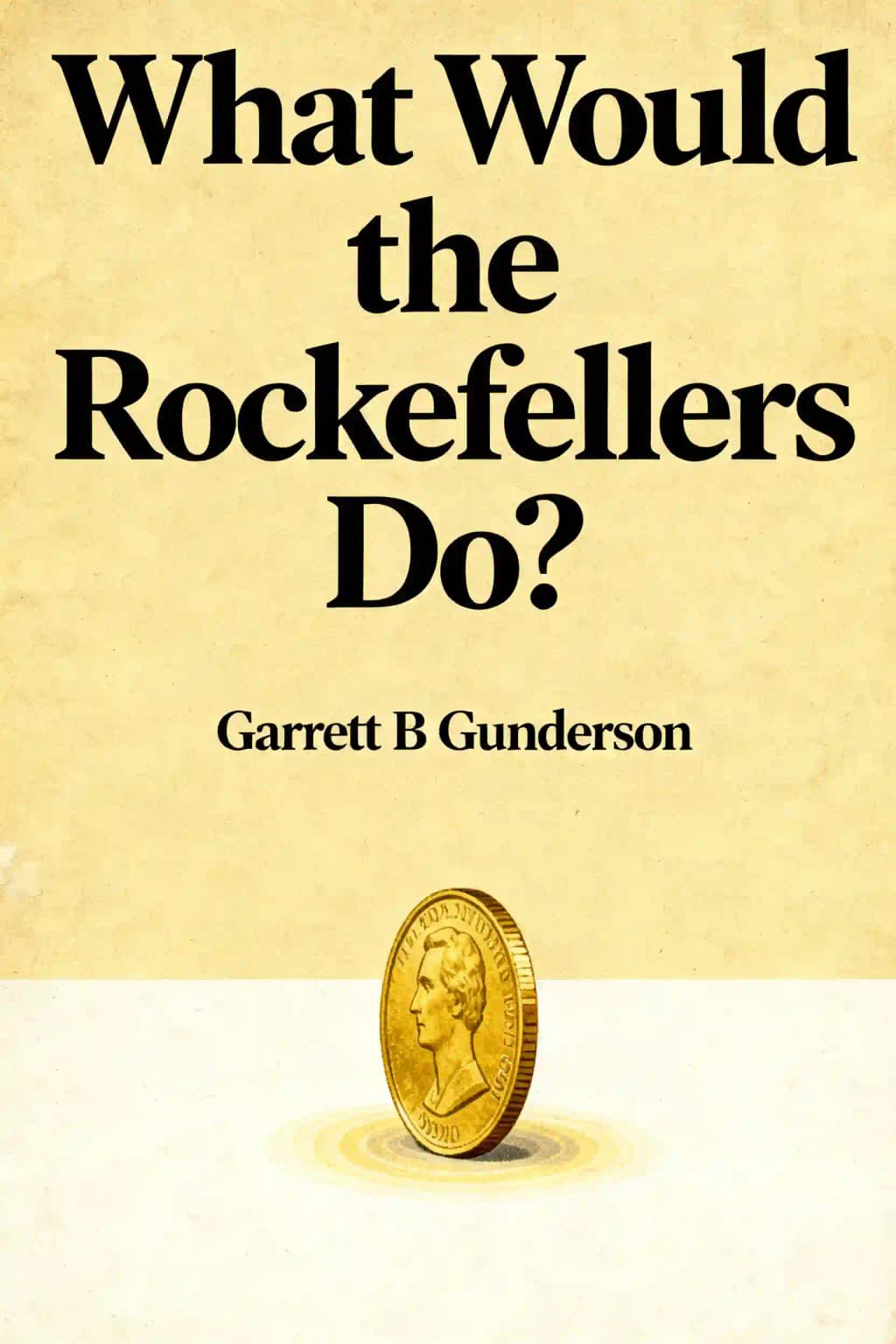
What is What Would the Rockefellers Do? by Garrett B. Gunderson about?
What Would the Rockefellers Do? by Garrett B. Gunderson reveals how ultra-wealthy families like the Rockefellers preserve and grow wealth across generations using strategic financial systems. The book introduces the "Rockefeller Method," which centers on establishing family banks, using Cash Flow Insurance (overfunded Whole Life insurance policies), and creating trusts to protect assets. Gunderson contrasts the Rockefellers' enduring legacy with the Vanderbilts, who squandered over $250 billion within a few generations, demonstrating why systematic wealth management matters.
Who is Garrett B. Gunderson and why did he write this book?
Garrett B. Gunderson is a New York Times bestselling author, financial strategist, and founder of Wealth Factory who helps people achieve financial independence. Coming from a fourth-generation coal mining family, Gunderson overcame a scarcity mindset to build financial expertise. He wrote What Would the Rockefellers Do? after receiving numerous requests for practical wealth-building strategies and discovered insights from someone who worked with the Rockefeller family, validating his approach to creating generational wealth without creating "spoiled trust fund babies".
Who should read What Would the Rockefellers Do?
What Would the Rockefellers Do? is ideal for parents wanting to create a lasting financial legacy, entrepreneurs building first-generation wealth, and anyone interested in strategic wealth preservation. The book benefits readers who want to move beyond traditional "buy term and invest the difference" advice and learn how wealthy families actually manage money. Whether you're starting with $50 monthly or managing significant assets, Gunderson's strategies apply to various income levels, making it accessible for those committed to long-term family financial planning.
Is What Would the Rockefellers Do? worth reading?
What Would the Rockefellers Do? is worth reading if you're interested in alternative wealth-building strategies beyond conventional financial advice. The book provides practical frameworks like Cash Flow Insurance and family banking that wealthy families actually use, not theoretical concepts. However, it challenges popular financial gurus like Dave Ramsey and Suze Orman (dedicating an entire chapter to this), so readers should approach with an open mind. The book's emphasis on value creation, legacy planning, and avoiding mistakes that destroyed fortunes like the Vanderbilts' makes it valuable for serious wealth-builders.
What is the Rockefeller Method explained in the book?
The Rockefeller Method is a three-part wealth preservation system that centralizes family wealth through trusts and a family bank, uses overfunded Whole Life insurance policies to create liquidity and tax advantages, and emphasizes passing both financial assets and family values to future generations. Unlike traditional investment approaches, this method focuses on creating a personal banking system where family members can borrow against their policies while still earning interest. The Rockefellers have maintained wealth for six generations using this coordinated financial management approach, proving its effectiveness for long-term legacy building.
What is Cash Flow Insurance according to Garrett B. Gunderson?
Cash Flow Insurance is an overfunded Whole Life insurance policy that functions as both a savings vehicle and personal banking system. Rather than using insurance solely for death benefits, this strategy allows policyholders to access cash value through loans while the policy continues earning interest, creating dual benefits. Gunderson designed this approach to increase financial liquidity, provide tax advantages, and safeguard wealth beyond traditional savings accounts. The concept challenges conventional "buy term and invest the difference" wisdom, positioning permanent life insurance as a wealth-building tool rather than just protection.
How do I set up a family bank like the Rockefellers?
Setting up a family bank involves three key steps: creating a trust structure that acts as a centralized lending institution for descendants, funding it with overfunded Whole Life insurance policies that provide liquidity and growth, and establishing a board of trustees to oversee borrowing for education, business ventures, or emergencies. The family bank allows members to borrow from the trust while keeping wealth within the family system rather than paying interest to external banks. This approach requires proper design and alignment with family values to ensure it empowers rather than spoils future generations.
What mistakes did the Vanderbilt family make that destroyed their wealth?
The Vanderbilt family lost over $250 billion (in today's money) within a few generations due to extravagant spending, lack of financial discipline, and failure to implement systematic wealth preservation strategies. Despite Cornelius Vanderbilt's hope that heirs would grow the fortune, they lacked a coordinated approach to managing inheritance, leading to steady wealth depletion. What Would the Rockefellers Do? uses this cautionary tale to illustrate why having wealth without a preservation system fails, contrasting it with the Rockefellers' six-generation success through trusts, family values, and strategic financial management.
How does What Would the Rockefellers Do? respond to Dave Ramsey and Suze Orman?
What Would the Rockefellers Do? dedicates Chapter 8 specifically to addressing criticisms from popular financial personalities like Dave Ramsey and Suze Orman, who typically oppose Whole Life insurance. Gunderson challenges their "buy term and invest the difference" philosophy by demonstrating how the wealthy actually use permanent insurance as a wealth-building tool. The book includes an appendix comparing optimally-funded Whole Life against term insurance strategies to support its position. This section is crucial for readers who've been influenced by mainstream financial advice and need evidence-based reasoning for alternative approaches.
What other wealthy families used strategies similar to the Rockefellers?
What Would the Rockefellers Do? highlights that the Kennedy family and Walt Disney also employed similar wealth preservation systems involving trusts, strategic insurance use, and coordinated family financial management. These families understood that creating wealth differs from preserving it, requiring deliberate structures rather than hoping heirs will manage money wisely. Gunderson demonstrates that generational wealth isn't exclusive to billionaires—the principles of centralized wealth management, family values, and strategic insurance apply at various wealth levels. The book reveals these aren't secrets but proven strategies anyone can adapt with proper planning and implementation.
What is the Family Constitution concept in What Would the Rockefellers Do?
The Family Constitution, covered in Chapter 13, is a documented framework of family values, financial principles, and governance rules that guide wealth management across generations. This living document ensures that family wealth serves to empower rather than spoil descendants by establishing clear expectations, borrowing guidelines, and contribution requirements. The constitution works alongside the family bank and trusts to create accountability and purpose beyond mere financial inheritance. Garrett B. Gunderson emphasizes that passing on values matters as much as passing on assets for creating a lasting legacy that benefits society.
How does What Would the Rockefellers Do? compare to Killing Sacred Cows?
What Would the Rockefellers Do? provides the practical implementation strategies that Garrett B. Gunderson's earlier bestseller, Killing Sacred Cows, lacked. While Killing Sacred Cows philosophically challenged financial myths and pointed out problems in conventional wisdom, readers wanted actionable steps. This book delivers specific strategies like Cash Flow Insurance, family banking systems, and trust structures that anyone can begin with as little as $50 monthly. Together, they form a complete framework: Killing Sacred Cows deconstructs harmful money beliefs, while What Would the Rockefellers Do? constructs alternative wealth-building systems based on how the ultra-wealthy actually operate.