Chapter 1
The Undistracted Life: A Revolution Against Modern Distractions
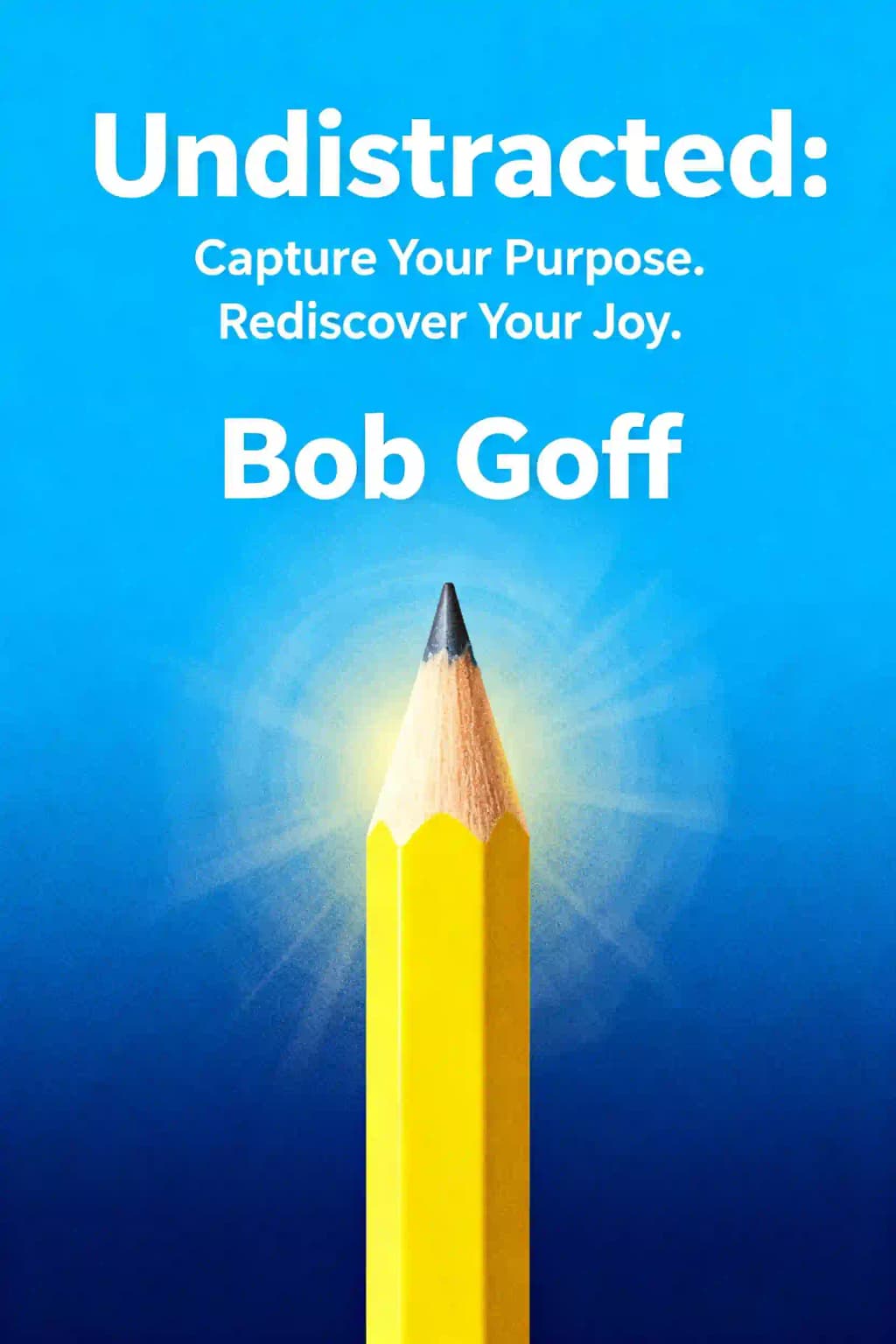
In a world where the average person checks their phone 96 times daily and loses 2.1 hours to digital distractions, Bob Goff's "Undistracted" arrives as a timely antidote to our scattered attention. This New York Times bestseller has found champions in everyone from business leaders seeking productivity to spiritual seekers craving authentic connection. Oprah Winfrey reportedly keeps a copy on her nightstand, while Tim Ferriss has praised its practical wisdom. Beyond self-help circles, the book has sparked a movement of "distraction detoxes" across college campuses and corporate retreats. What makes this book revolutionary isn't just its diagnosis of our distraction epidemic, but its prescription: a life recalibrated toward purpose and joy through intentional presence. As Goff puts it, distraction isn't merely an inconvenience-it's the silent thief of our most meaningful existence.
Chapter 2
The Minefield of Modern Distractions
Distraction is like wandering into a minefield when you think you're safely on the perimeter. Bob Goff learned this literally while visiting Kurdistan, throwing rocks into what he thought was a minefield before realizing he might actually be standing in one. This physical danger parallels the psychological dangers we face daily-we all find ourselves in hazardous mental territories thinking we're safe, led there by thousands of unnoticed distractions that steal our joy and purpose. The seemingly harmless act of checking our phones first thing in the morning can trigger a cascade of diversions that derail our entire day.
These distractions come in countless forms: comparing ourselves to others on social media, financial pressures, insecurities about our appearance or abilities, and even good things like career advancement that pull us away from who God intended us to be. The average person now spends over three hours daily on social media, constantly measuring their life against carefully curated highlight reels of others. Work emails flood our evenings, Netflix autoplay steals our nights, and endless notifications fragment our attention into tiny, ineffective pieces. Even our attempts at productivity-multiple browser tabs, concurrent projects, and constant multitasking-often become sophisticated forms of distraction.
The solution sounds simple but requires tremendous discipline: become captivated by something bigger and better-your faith, family, and purpose. Goff demonstrates this through small daily rituals, like singing terrible songs to his wife Sweet Maria every morning as a declaration of his priorities, reminding himself what truly matters before the day's distractions begin. He advocates for creating "attention anchors"-deliberate practices that ground us in what's important. This might mean having device-free dinners, dedicated prayer times, or scheduled periods of deep work where all notifications are silenced.
This book isn't filled with random facts or fables but stories that point toward living more truthfully. We don't need more information to find purpose and kindness-we need firmly seated faith, good friends, and trustworthy reminders. When we're laser-focused and clearheaded, we discover our purpose and experience more joy. The undistracted life isn't about perfect productivity but about presence-being fully engaged with what matters most rather than constantly divided between competing priorities. It's about making conscious choices about where we direct our attention, understanding that our focus shapes our reality and ultimately determines the quality of our relationships, work, and spiritual life.
The path to an undistracted life requires regular audit of our time and attention. Goff suggests practical steps like keeping a distraction diary to identify patterns, establishing clear boundaries with technology, and creating sacred spaces-both physical and temporal-where we can reconnect with our core values and relationships. The goal isn't to eliminate all distractions but to build resilience against them and develop the discernment to distinguish between meaningful engagement and empty activity.
Chapter 3
The Heart Reset: Dying to Distraction
Sometimes we need a complete reset to break free from distraction's grip. Goff experienced this literally when his heart began beating erratically-up to 220 beats per minute, a dangerous condition that could have been fatal. After numerous tests, including EKGs, stress tests, and consultations with multiple specialists, they determined the only solution was to temporarily stop his heart and restart it with an electric jolt - a procedure called cardioversion. This physical reset powerfully mirrors what Jesus said following Him would require: dying to ourselves to live more fully, letting go of our old patterns to embrace a new way of being.
Most people settle for safe, distracted lives rather than becoming the new creations God promises we can be. They scroll endlessly through social media, binge-watch Netflix, or stay busy with meaningless tasks instead of pursuing their true calling. We each need to discover what makes our hearts beat with joy rather than dysfunction - whether that's teaching, creating art, serving others, or building communities - and be willing to change everything if necessary. Our hearts were meant to beat together in harmony, not the same monotonous rhythm. If you want to dazzle heaven, stop being distracted by trying to be like everyone else and embrace your unique purpose.
In our lifetime, we get about 2.5 billion heartbeats-a finite resource that deserves careful stewardship, both physically and spiritually. Don't stress it out with unimportant distractions like endless meetings, toxic relationships, or pursuing success at the expense of significance. Goff has chosen to be available rather than merely productive, which is why his phone number appears in all his books - a radical commitment to genuine connection over efficiency. He believes we'll be known for our opinions but remembered for our love, as demonstrated through intentional presence and authentic relationships.
Taking detailed notes during conversations and while reading books helps capture insights before distractions wipe them out. Many influential people throughout history were dedicated notetakers - from Leonardo da Vinci to Thomas Edison to Anne Frank. Their journals and notebooks became treasuries of wisdom and inspiration. Without regular reflection and documentation, our lives become like morning mist that vanishes without leaving a trace. We should aim to pair the wisdom we gather through careful observation and note-taking with childlike faith and wonder, creating a legacy of undistracted purpose, selfless love, and unselfish pursuits that impact generations to come.
The practice of regular reflection - whether through journaling, prayer, or quiet contemplation - helps us stay focused on what truly matters. It allows us to examine our hearts, adjust our course, and ensure we're investing our limited heartbeats in things that will outlast us. By deliberately choosing presence over productivity and connection over convenience, we can break free from the tyranny of distraction and live lives of meaningful impact.
Chapter 4
Breaking Free from Self-Made Prisons
Goff regularly visits prisons like San Quentin not as an inmate but as a friend, following Jesus's example. Despite the intimidating environment of barbed wire and armed guards, he teaches classes there with about 150 inmates. When one student named Kevin called to tell him he'd been released, Kevin's first realization was simply "I've got pockets!" This seemingly small observation carried profound meaning-we all have pockets, and what we put in them (regrets, resentment, hurts) can become huge distractions.
During one class session, Goff asked the men what they needed to get off their chests. After hearing about cellmate conflicts and family estrangements, one man who had maintained his innocence for eighteen years finally admitted his guilt. In that moment of honesty, he became the freest person Goff had ever met. Shame, envy, bitterness, and pride keep us behind walls we've constructed, while an accepting community offers the jailbreak we need.
We're all conflicted beings, pushed by our insecurities and pulled by anything that helps us avoid looking insecure. Like Peter Pan chasing his shadow, we're often detached, distracted, and frantic while trying to appear composed. We need friends like Wendy who can sew us back together, helping reconnect us with our true selves. The most refreshing people are those who've given themselves permission to be exactly who they are, who've ditched insecurity for God's acceptance.
Modern cynics are unlike the ancient ones who lived simply and sought virtue. Today's cynics are like snipers who elevate themselves and take potshots at others. When cynics offer you their dark invitation, hand it right back. Choose optimism, look for virtue, and surround yourself with people focused on Jesus rather than controlling others. God designed your life for freedom, not prison. Level your wings, gain altitude, keep your eye on the compass, and point toward what matters most.
Chapter 5
The Deliberate Choice of Joy
In aviation, pilots use acronyms like GUMPS (Gas, Undercarriage, Mixture, Propeller, Seat belts) to organize critical pre-landing decisions. The key is maintaining a "quiet cockpit"-avoiding external distractions that can lead to tragedy, as in Kobe Bryant's fatal crash. Our lives mirror this challenge: we make approximately 35,000 decisions daily, from mundane choices to life-altering ones about where to live, whom to marry, and what jobs to take. Yet surprisingly, most of us never consciously decide to be happy.
Children, who make only 10% of the decisions adults make, demonstrate the "childlike faith" Jesus praised. Watch a child with Legos-they're completely present and undistracted, lost in creative joy. Most adults hope to find happiness at home but aren't there enough to experience it, settling for proximity rather than presence with loved ones.
We can reclaim our joy through simple reconnections-playing catch (without answering phones), sitting around fires having real conversations, and recognizing the urgency of time passing. The days are long but the years are short. Because Goff men tend to die at similar ages, Bob keeps a countdown clock of his estimated remaining days. Far from morbid, this practice transforms his priorities-fewer arguments, less scrolling, more rainbows, waterfalls, and sunsets. When your real life becomes this rich, artificial distractions lose their power.
The "I'll be happy when..." trap keeps us deferring joy. Instead, we should declare "I will look for joy" without qualifiers. People filled with joy accomplish more than those without it, expressing kindness and empathy that the world desperately needs. Mean people distract everyone around them, wasting energy better spent living the big lives Jesus promised.
Track your time honestly on a paper plate "pie chart" and make changes accordingly. Declare independence from distractions that no longer serve you-if America could break up with England in 36 sentences, you can break up with your distractions in a dozen.
Chapter 6
Finding Strength in Perceived Weakness
Goff's reputation as an underperformer began early when he was kicked out of kindergarten after being mistakenly identified as a child prodigy and transferred to a school for gifted children. His mother's disappointment when he returned home that day-"I'm so disappointed"-set the tone for years to come. His second attempt at kindergarten was successful, though his only notable achievement was throwing crayons farther than anyone else.
In elementary school, he was placed with the "dumb kids and troublemakers" under the intimidating Mr. Ramos. This pattern of mediocrity continued through high school, where counselors never considered him "college material." His parents' disappointment compounded with each poor report card. Rather than pursuing academic subjects, he filled his schedule with shop classes-metal, auto, electrical, and wood. His only goal was to meet the minimum requirements for graduation, or preferably slightly less.
Mr. Hodgkins, his wood shop teacher, was a gruff but kind man who always wore plaid shirts and had only three fingers on his right hand. When teaching students to use the table saw, he warned them about keeping their fingers away from the blade, his missing digits serving as a powerful reminder of what could happen. His failure didn't make him less trustworthy-it made him more so. Despite his mistake, he continued teaching and sharing his love of woodworking.
This lesson stayed with Goff: we all fail, sometimes publicly and painfully. Our failures don't disqualify us-they remind us of our need for grace. What matters is what we believe about ourselves afterward. Will we abandon our purpose because of setbacks, or see them as part of our growth? God doesn't measure us by our achievements or failures but loves us as He loves His Son. When we live on purpose, distractions lose their power, and we cultivate a community that reminds us of our potential rather than judging our mistakes.
Chapter 7
Your All-Access Pass to Purpose
At a sold-out concert venue, Goff made a transformative discovery when he realized his ordinary-looking ticket was actually an all-access pass, granting him unrestricted entry to every area of the arena. From backstage to the front row, from the sound booth to the VIP lounges - every door would open for him. This revelation mirrors a profound spiritual truth: God has given each person unlimited access to explore and fulfill their purpose. The only position unavailable is center stage, which Jesus rightfully occupies as the author of our faith.
Faith, at its core, isn't meant to be complicated or mysterious. Like that all-access pass, we simply need to show up and claim what's already been given to us. This requires developing two essential qualities: boldness to step forward and a fundamental shift in mindset. We must shed the notion that someone else controls our access to joy, purpose, or fulfillment. When people begin living with this kind of boldness, it often creates discomfort in others who witness someone brave enough to challenge the status quo and tear down the artificial barriers between life-as-it-is and life-as-it-could-be. This journey isn't without obstacles - you'll encounter confusion, face disappointment, and need to actively unlearn limiting beliefs often planted by cynical voices saying things like "You're not smart enough" or "You don't have what it takes."
The story of Vesta Stoudt perfectly illustrates what happens when someone fully claims their access pass. Working in a World War II ammunition factory, she noticed a critical flaw in how ammunition boxes were waterproofed, putting soldiers' lives at risk. When her immediate supervisors dismissed her concerns and solution, she didn't let their rejection define her limits. Instead, she boldly wrote directly to President Franklin D. Roosevelt, explaining her idea for a waterproof, strong adhesive tape. This act of courage led to the invention of what we now know as duct tape, a product that has saved countless lives and is used by millions worldwide.
This all-access pass extends beyond physical locations or career achievements - it's about embracing the full spectrum of possibilities in your life. You have divine permission to pursue your most beautiful and ambitious ideas, to deepen your relationships with both God and others, and to transition from careers you're merely capable of into ones that truly ignite your passion. The pass allows you to explore new ministries, start businesses, write books, create art, or whatever else God has placed in your heart. Your mere existence - this one precious life you've been given - serves as the only credential you need. Remember, the all-access pass isn't just about going places; it's about becoming fully who you were meant to be, without limitation or distraction. It's about living in the freedom to explore every door God opens, knowing you have permission to enter.
Chapter 8
Navigating Life's Open Waters
Sailors use waypoints-intermediate points that help chart progress toward longer-range goals. Near land, waypoints might be lighthouses or distinctive coastlines, but on open sea, sailors rely on latitude and longitude coordinates. These fixed points prevent drifting amid the vast ocean. Consider your life's waypoints as all the things you've been aiming toward-jobs, relationships, possessions-and what you want to pursue with your remaining days.
Being undistracted means staying the course with things that will outlast you. Rather than vaguely aiming to "live a good life," chunk it into smaller goals. Have conversations about what constitutes a purposeful, joy-filled life, then make one or two moves in that direction daily. Don't get distracted by empty productivity. Activity can deceive you into believing you're making progress when you're not. Trade frenetic busyness for a worthy destination, clarity of direction, and joy for the journey.
We often fail to recognize that Jesus is already in the room with us, just as Goff once sat with actor Jim Caviezel (who played Jesus in The Passion of the Christ) for an hour without realizing who he was. Throughout history, people missed recognizing Jesus-in the synagogue, at a wedding, on the cross, at the empty tomb, and on the road to Emmaus.
Jesus isn't hiding. He told us exactly where to find Him: with the hungry, thirsty, sick, estranged, naked, and imprisoned. When we're distracted by what's happening around us, we overlook what God could be doing within us. We need to reconnect our faith with action. The average person lives about 27,375 days. How will you spend yours? We'll become what we do with our love. Find Jesus as your starting and ending points, establish reliable waypoints between, and realize He's already in the room-probably waiting on you.
Chapter 9
Boundaries Without Barriers
Despite living a relatively quiet life, Goff's books and social media presence have attracted some unwelcome attention. People have triangulated his address from descriptions in his books, leading to disturbing encounters. One morning he found a stranger sitting on his back porch who immediately claimed, "I'm not a stalker." Another time, someone called him while watching through his window, commenting on the blue shirt he was wearing.
These uncomfortable encounters happen when he travels too. Once on a flight, he opened his eyes to find someone had placed a laptop on his lap-a fan who recognized him from a church talk and was attempting to FaceTime his girlfriend with him as an unwitting special guest. In another incident, someone staked out the Dallas airport waiting for him, pretending to be his arranged ride.
These encounters taught him about boundaries. We need them, but they shouldn't become barriers. Build walls with doors, moats with drawbridges. Total isolation isn't the answer. Even pastors and celebrities need to remain accessible while protecting their privacy. Balance availability with boundaries that safeguard your joy and purpose.
The same principle applies to our relationship with Jesus. Many of us "stalk" Jesus-memorizing verses and Bible stories without taking action. We become professors rather than practitioners. Knowledge without equal portions of action is just stalking. We need to spend more time doing what Jesus told us to do than merely talking about it.
When people ask where to start serving others, Goff tells them it doesn't matter-just begin somewhere. People living purposeful, joy-filled lives act first and ask questions later, knowing that elaborate planning can become a distraction. Find what you trust most and put wheels on it. Be discerning about who you let in, and don't forgo developing a genuine relationship with Jesus while sorting through life's distractions.
Chapter 10
The Power of Words: Weapons or Gifts
Our words can function like weapons or gifts, depending on how we use them. Goff illustrates this through several stories, including one about a mock sea battle where one ship accidentally loaded live ammunition, causing injuries. This serves as a metaphor for how our words can unintentionally cause damage. Jesus taught that our words overflow from our hearts, revealing what's beneath the surface.
To discipline himself, Goff implemented a "$500 per criticism" rule-the approximate cost of a plane ticket to Maui-making him consider whether each negative comment was worth the price. Despite this, he describes a confrontation where he lost his temper with judgmental men who cornered him after a conference.
In contrast, he shares how a man named Brad positively influenced him by affirming his punctuality rather than criticizing his lateness. Forty years later, Goff remains punctual because those affirming words called out a better version of himself. Words have incredible staying power-they can wound for decades or heal for a lifetime.
During his work in Iraq, where Love Does opened schools for Yazidi children displaced by ISIS, Goff pinned a medal on a young girl and declared "You are the hope of this country," demonstrating how our words can speak courage and destiny into others. He challenges readers to speak words of truth and beauty to those around them, seeing people as God sees them rather than being distracted by negativity.
When visiting Kurdistan in northern Iraq, he met with Peshmerga soldiers preparing to liberate Mosul from ISIS. Despite expecting sophisticated military technology, he found their battle plan consisted of a sandbox with plastic army figures. This becomes a metaphor for God's simple plan for us: our words can liberate the best in ourselves and others when they come from hearts free of cynicism and hatred.
Chapter 11
Failure Events, Not Identities
In January 2018, an employee at the Hawaii Emergency Management Agency mistakenly sent a statewide alert about an incoming ballistic missile during a training exercise, causing widespread panic. While the unnamed employee was fired, Goff sent them a job offer. His reasoning: "I didn't want him to think he was a failure just because he had failed." This crucial distinction-that mistakes and failures are events, not identities-forms a central theme in living undistracted.
We tend to remember our failures more than successes and allow them to define us. To illustrate this point, Goff lists famous people who experienced significant failures before achieving success, including Thomas Edison, Bill Gates, Walt Disney, Milton Hershey, Einstein, Michael Jordan, and J.K. Rowling. He acknowledges his own failures-wrecking his airplane, damaging relationships, prioritizing work over family, and losing money in business ventures.
Goff shares a personal story of falling down stairs while holding his infant son Adam. In that split-second, he instinctively tucked his son safely between the wall and stair while taking the full impact himself-a metaphor for how Jesus protects us by taking our punishment. Our failures don't define us; they simply remind us we are His. No matter how spectacularly we fail, our worth to God never diminishes.
When we're distracted by our failures, we miss seeing what God is doing in our lives. The key is to process these experiences differently-not as terminal judgments on our worth but as temporary setbacks in our journey. By reframing failure this way, we can move forward with purpose rather than remaining paralyzed by past mistakes.