Chapter 1
When Hockey Towns Collide: A Tale of Loyalty, Violence, and Redemption
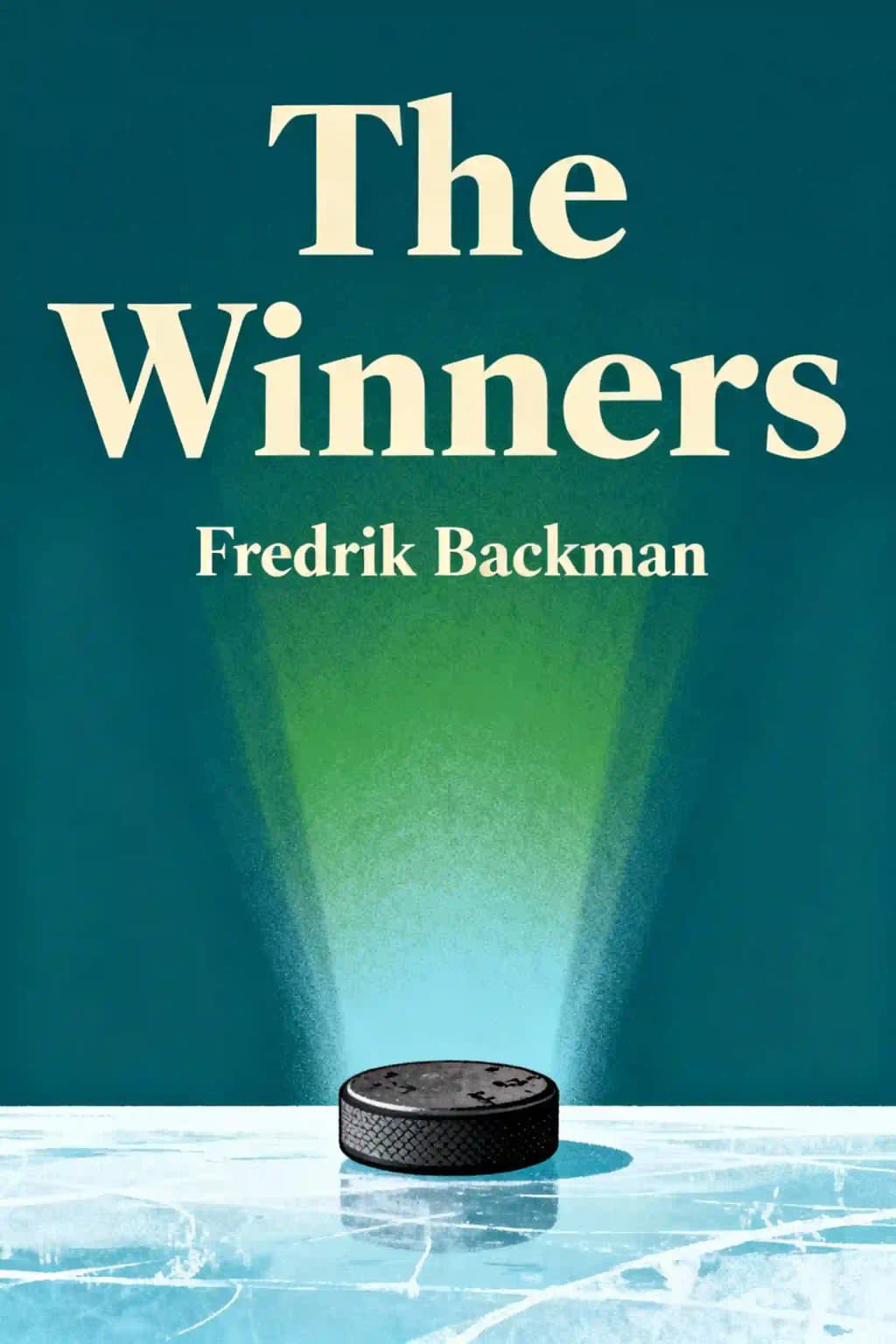
In the depths of the Swedish forest, two small hockey towns-Beartown and Hed-have been locked in rivalry for generations. Fredrik Backman's "The Winners," the final installment in his Beartown trilogy, has captured readers' hearts worldwide, selling over 10 million copies across 40 languages. The novel has been praised by The New York Times as "a testament to the power of community" and counts celebrities like Reese Witherspoon among its devoted fans. What makes this book so compelling is how it transforms a simple hockey rivalry into a profound exploration of human nature-showing how tribal loyalties can both sustain us and destroy us. As Backman himself noted in interviews, "I never wrote about hockey; I wrote about people who happen to love hockey." This sentiment resonates with readers far beyond the sports genre, explaining why this trilogy has become a cultural touchstone for discussing community, identity, and the invisible threads that connect us all.
Chapter 2
The Price of Being Born in a Hockey Town
Everyone who knew Benjamin Ovich-Benji to his friends-sensed he wouldn't get a happy ending. We hoped desperately, of course, because love makes us naive dreamers. But boys like Benji don't die old and peaceful; they die young and violently. Their stories are brief and brutal.
Two small towns, Beartown and Hed, exist deep in the Swedish forest, connected by a winding road and divided by generations of hatred symbolized by their green bear and red bull emblems. The rivalry runs deeper than sports-it's about identity, about who they are at their core. What would you be without your hometown? Who would you become if stripped of the place that shaped you?
Two and a half years before our story begins, Maya Andersson was raped by hockey star Kevin Erdahl-though people now only refer to it as "the scandal." The aftermath affected political decisions, moved money between towns, and sparked violence. When the dust settled, Kevin's family left, as did Maya (to study music) and Benji (who sought answers in darkness and alcohol). Beartown Hockey nearly collapsed until new factory owners and politician Richard Theo provided funding.
Now, a terrible storm approaches the forest, bringing with it a reversal of fortunes. Beartown rises while Hed declines, their hockey clubs mirroring the towns' trajectories. The storm will devastate both communities, reminding them that despite their hockey pride, nature remains more powerful than human rivalries. But it's not just the physical storm that threatens them-it's the storm of violence brewing between neighbors who once considered each other family.
"To truly understand people in hockey towns," the narrator tells us, "you must know their worst capabilities." This isn't just a story about hockey-it's about how the places we're born determine who we become, for better or worse. It's about the lottery of place and how desperately we cling to the identities our hometowns give us, even when they bind us rather than lift us up.
Chapter 3
Heroes in the Storm: Ordinary People Facing Extraordinary Challenges
When the violent windstorm hits, it reveals both the best and worst of human nature. Hannah, a midwife from Hed, receives an emergency call about a woman in labor trapped in the forest. Despite the dangerous conditions, she prepares to help, following her husband Johnny's advice to find someone who knows the forest well.
Instead of finding the man she seeks, Hannah encounters his eighteen-year-old daughter Ana, who offers to drive her father's pickup truck into the forest despite having no license. The unlikely pair-a determined midwife and a bold teenager-set out into the violent storm to save a woman in labor. Their journey is perilous, with trees snapping around them and debris hurling against the windshield, yet Hannah's voice remains calm and reassuring throughout.
Meanwhile, fourteen-year-old Matteo cycles through Beartown as the storm intensifies, invisible to those around him. Home alone while his parents are abroad, he flees his darkened house, hoping someone might notice and help him. But everyone is preoccupied with the approaching storm. He nearly collides with Hannah and Ana's vehicle-a near-miss that represents how thin the line is between remaining invisible and becoming unforgettable.
In Beartown, fireman Johnny spends the night watching over his four sleeping children-Ture (youngest), Tess (eldest), and middle sons Tobias and Ted. He periodically checks their breathing, experiencing the overwhelming worry that comes with parenthood. For the first time, he fully understands what his wife feels whenever he's away: "What am I going to do if you don't come home again?" The physical ache of loving his children so deeply makes him bend over gasping for breath.
When Hannah and Ana finally reach the stranded couple, the baby arrives but something is wrong. Hannah detects a problem and whispers to Ana about getting the truck closer. The panicked father grabs Hannah's arm, prompting Ana to instinctively punch him. Hannah then gravely informs him they need to get to the hospital immediately. As they speed through the forest, Ana casually mentions her boyfriend Vidar died in a car accident two years earlier, adding ironic tension to their perilous journey.
These ordinary people-a midwife, a teenager, a fireman, a lonely boy-become heroes during the storm, not because they have superpowers, but because they choose to act when others might turn away. Their courage in the face of nature's fury reminds us that heroism often comes in quiet moments of decision rather than grand gestures.
Chapter 4
The Weight of Leaving: Maya's Journey Away from Trauma
Maya Andersson, now living in the capital city, has spent two years reclaiming pieces of her childhood that Kevin's assault took from her. The city's anonymity offers freedom, allowing her to be defined by what she's done rather than what happened to her. Yet she carries the weight of Beartown wherever she goes.
Walking through a park, Maya is reminded of her childhood friend Ana and life in Beartown, where she learned harsh wilderness lessons and the local code of "SDS"-shoot, dig, silence-a reminder of how the town handles problems that authorities shouldn't know about. Years earlier, Ramona, the bartender, had warned Maya about "predators needing to be dealt with" after Maya witnessed men with shovels. Only later did Maya realize Ramona was wrong-it wasn't predators people eliminated but problems. After Maya was assaulted by Kevin, many in town treated her as the problem they wished would disappear.
Now, taking a shortcut through a dark park, Maya suddenly realizes she's being followed. Gripping the knife Ramona gave her before she left Beartown, Maya plans to slash at her pursuer's hands. She screams with rage, memories of Kevin flooding back-his breath, his grip, and later his fear when she held a rifle to his head. But her "pursuer" turns out to be a terrified thirteen-year-old girl running from bullies. After helping the girl, Maya breaks down blocks away, overwhelmed by memories of her rape.
Though her classmates wouldn't understand, she desperately calls Ana repeatedly, finally texting "Pick up! I need you!"-a message she'll soon regret when she learns what's happening back home. Maya's journey shows how trauma follows us even when we try to outrun it, how the places we leave never truly leave us. But it also shows her strength-how she's fighting to reclaim her life piece by piece, refusing to let Kevin's actions define her forever.
"I'm trying to become someone new," she tells a friend. "Someone nothing happened to." But the truth is more complex-Maya isn't becoming someone new so much as rediscovering who she was always meant to be, before violence interrupted her story.
Chapter 5
The Heart of the Town: Ramona's Legacy
The Bearskin pub serves as Beartown's unofficial center, where Ramona tends bar with her trademark gruffness. It's said bad news travels faster than good here, though Ramona dismisses this as simply reflecting the town's declining population. Hockey provides the rare moments of celebration in this hardscrabble place.
The pub itself reveals everything about the town's character-positioned between factory and ice rink, walls covered with hockey photos, some players like Benji practically living there while others like Amat never entering. Ramona, tough but compassionate, reserves special affection for life's underdogs.
After Holger's death from cancer years ago, Ramona stopped attending hockey games due to her failing lungs, but the young men in black jackets who considered the Bearskin their second home helped her by shopping and supporting her. When she nearly died in the fire that destroyed the original pub, these same men rallied around her.
Teemu and his brother Vidar had found refuge at the Bearskin from their troubled home life, with Ramona becoming a surrogate mother. When Vidar died in a car accident the same night as the pub fire, both Ramona and Teemu were devastated, finding meaning only in hockey and their arguments about it.
As the storm rages, Ramona goes to bed clutching Holger's photograph. That same night, a pregnant woman gives birth to a baby they'll name Vidar, after a boy both Ana and Ramona loved. Meanwhile, Ramona dies peacefully in her sleep at the Bearskin. At her funeral, so many green scarves will cover her grave that her name becomes invisible-though everyone knows who she is anyway.
Ramona's death creates a void in the community that reveals how essential she was-not just as a bartender, but as a keeper of secrets, a surrogate parent, and the heart of Beartown itself. Her funeral brings together people who might otherwise never speak, temporarily healing divides that the storm has created. But without her stabilizing presence, old wounds between Beartown and Hed begin to reopen, setting the stage for renewed conflict.
Chapter 6
The Prodigal Sons: Benji and Amat's Returns
Two years after leaving Beartown, Benji returns home upon hearing of Ramona's death. Now twenty and two years removed from hockey, he's deliberately lost himself, destroying himself in countless ways while discovering unexpected freedoms. Despite his self-destruction, he's never considered returning home, which now feels like another planet entirely.
His homecoming is bittersweet-his sisters and mother welcome him with the same mix of scolding and overwhelming love, while the dogs bark with joy, recognizing "all that's best in him" despite the rumors that have circulated about him being "a disappointment" who "gave up hockey and moved away because he was a coward."
Meanwhile, Amat, once destined for NHL greatness, has fallen from grace. After his injured wrist worsened during Beartown's championship run, Amat erupted in fights and lashed out with cruel words about his teammates' limited futures compared to his NHL prospects. Isolated and bitter, he stopped playing, claiming injury, and missed the final games.
When Peter Andersson visited to warn Amat he'd likely be drafted late in the NHL draft, Amat rejected his advice. A mysterious man named Lev arranged for Amat to attend the draft in America, even sending a new dishwasher with a note: "Not a gift! Tell your mom you're buying it with your first NHL wages."
At the draft, Amat discovered Lev couldn't enter America due to his criminal record. After waiting alone all day, Amat was surprisingly interviewed by scouts from a top team. When draft day came, Amat watched over 200 players get selected while he sat alone, undrafted. He finally realized Lev had been attempting to profit from him, expecting payment from whichever club drafted him.
Now, after months of isolation and depression, Amat begins running again and reaches out to his friend Bobo with a simple text: "I need help." Their reunion required no apologies-Bobo immediately welcomed him back with humor about Amat's weight gain. Though Amat considered calling the coach, his shame about his physical condition held him back. Instead, he went running again, repeating to himself: "If you want to achieve what no one else can, you have to do what no one else wants to do."
Both Benji and Amat return to Beartown as changed men, seeking redemption in different ways. Their stories intersect when Benji witnesses Amat hesitating outside the ice rink with his hockey bag, afraid to return to training. Benji offers him a ride, and delivers an unexpected confession: "I've never seen anyone play hockey like you... I can't bear having to live the rest of my life wondering how good you could have been if you hadn't given up." This moment of vulnerability between two broken men offers a glimpse of hope-that perhaps they can help each other heal, even if complete redemption remains elusive.
Chapter 7
The Invisible Threads of Corruption
Beneath the surface of Beartown's hockey success lies a web of financial corruption that threatens to unravel everything. The political decision to renovate Beartown's ice rink instead of Hed's was orchestrated by a small "interested party" led by Tails, who manipulated local politicians with a dubious survey claiming Beartown's rink faced "imminent" collapse. Now as the storm rages, Hed's neglected rink collapses while Beartown's stands firm-setting the stage for renewed conflict between the towns.
When Kira, Peter's wife and a successful lawyer, meets with Tails, he pushes two sets of accounts across the table and asks for her discretion. His plan is clear: make Beartown Hockey elite again by convincing the council to shut down Hed Hockey and invest in Beartown instead. When Kira examines the files, she's shocked to discover the club is on the brink of financial collapse despite the factory's sponsorship.
Tails defensively explains that their inclusive programs-the girls' team, preschool skating, social projects-are luxuries they can't afford without a winning A-team generating sponsor money. "Everyone wants to eat meat, but no one wants to work in an abattoir," he says, before showing Kira the second folder containing "all the things no one else is allowed to see."
As Kira examines the files more closely, she discovers a complex web of embezzlement, tax evasion, and corruption involving the hockey club, local businesses, and the council. When she discovers her own company listed as a sponsor without permission, she realizes Tails wants to use her as a figurehead to legitimize the club. Worst of all, she learns Peter unwittingly signed illegal documents for a training facility that hasn't been built, potentially facing prison.
Meanwhile, the local newspaper's editor-in-chief and her father investigate these financial irregularities. They discover hundreds of thousands in unexplained funds, potential money laundering through consultancy firms, and a mysterious "training facility" purchase with missing documentation. If their suspicions prove true, people like Peter Andersson could face prison.
Richard Theo, a cunning politician, orchestrates a brilliant maneuver to neutralize the investigation. He arranges for the newspaper's parent company to sponsor Hed Hockey, compromising the editor's impartiality. When she confronts her father, he admits he abandoned their investigation after receiving documents from Theo about council corruption. Her father defends his decision, explaining that Theo is "properly dangerous" with powerful connections who could destroy her career.
The corruption storyline reveals how sports, politics, and business intertwine in small towns, creating systems where everyone is compromised to some degree. It asks difficult questions about the price of success and whether the ends justify the means when the alternative is watching your community die.
Chapter 8
The Parallel Tragedies of Maya and Ruth
While Maya's story of sexual assault and its aftermath forms the backdrop of the Beartown trilogy, another girl's parallel tragedy emerges in "The Winners"-that of Ruth, Matteo's sister, whose death drives the novel's climactic violence.
Ruth fled her oppressive religious family but felt guilty for leaving her younger brother Matteo behind. She had found her only friend in Beatrice, another girl from church who shared her rebellious spirit. Together they experienced brief teenage freedom before Ruth became the target of vicious rumors after a party in Hed.
When Ruth reported her rape to police, they questioned why she hadn't reported earlier and seemed skeptical when she admitted to taking drugs and having sex with her attacker multiple times after the initial assault. Her parents made it worse-her mother called her a "fantasist" and "junkie" while her father warned the boy could sue them for defamation. The police suggested she return when she was more "together," but she never did.
After the assault, Ruth's life spiraled-her attacker sent threatening messages, stalked her, and forced her to have sex repeatedly by blackmailing her with photos. When rumors about Maya reporting Kevin spread through school, Ruth saw how everyone called Maya a liar and a whore. Realizing she had to escape, Ruth disappeared as soon as she turned eighteen.
For two and a half years, she actually laughed and had fun, replacing "every rotten little piece of herself" until she became a new person. But one night at a party, drugs took her-her heart stopped suddenly on the dance floor, and she died before hitting the ground.
Matteo never thought of his sister as dying-only as being killed. After finding Ruth's diary and learning what drove her away, he planned three graves: one for Rodri (her rapist), one for Mumble (who failed to help Ruth), and one for himself.
The parallel stories of Maya and Ruth highlight the crucial difference that support systems make in the aftermath of trauma. Maya had parents who believed her, friends who stood by her, and a community that eventually rallied around her. Ruth had none of these things-her parents blamed her, she had no friends to support her, and the community ignored her suffering. Their divergent fates underscore a painful truth: justice and healing aren't distributed equally, but depend heavily on privilege, family support, and community response.
Chapter 9
The Price of Silence: When Violence Begets Violence
The narrative reaches its critical moment when Matteo, a grieving fourteen-year-old brother, confronts those he holds responsible for his sister Ruth's tragedy at the ice rink. In the ensuing chaos, Benji demonstrates extraordinary courage by intervening to protect others, but loses his life in the process. The situation ends when Ana's father, acting to prevent further loss of life, is forced to take decisive action.
This chain of events stems from earlier moments of inaction and fear. Mumble, a witness to Ruth's assault by Rodri, found himself paralyzed by threats and coercion. Rodri first attempted to involve Mumble in his planned assault, then forced him to remain as a lookout through intimidation. Following the incident, Rodri ensured Mumble's continued silence through further threats of false accusation.
The story deliberately contrasts Mumble's response with Amat's earlier actions regarding Maya's assault by Kevin. Amat's decision to speak up forced community acknowledgment, though the narrator reflects that praising Amat's exceptional courage obscures an uncomfortable truth: most people, like Mumble, remain silent out of fear and self-preservation.
This examination of collective responsibility extends throughout the community. Town rivalries intensify through escalating retaliatory actions. The poisoning of Sune's dog Bang (Matteo's unrevealed act) triggers a chain of hostile exchanges between Hed and its rival town, culminating in public confrontations at sporting events.
The narrative illustrates how conflict propagates not just through direct actions but through collective passive acceptance-through willful blindness, rationalization of wrongdoing, and maintained silences. Hannah's observation about defensive weapons leading to further armament perfectly captures this escalating cycle: "Now they just think that they have to get pistols too."
The tragic conclusion finally compels both communities to recognize their shared responsibility in enabling this cycle of hostility. Benji's memorial service, attended by residents of both towns, takes place in the open air. The community's decision to surround his resting place with newly planted trees-creating a future forest-symbolizes hope for healing and renewal in a place where he found his greatest peace.
Chapter 10
Redemption Through Community: Rebuilding After Tragedy
In the aftermath of Benji's death, the community begins the slow process of healing. Bobo, Amat, and the A-team players help by gathering children to play hockey everywhere-in the rink, on the lake, between apartment blocks. Big City joins them, transforming from a notorious loner into a leader who helps others.
Peter reveals to Amat his vision for building a small ice rink in the Hollow-not grand like the council's planned facility, but a classic "ice box" where neighborhood children could train. Peter suggests they could gather friends and local workmen to help build it, maybe even start the Hollow's own team someday. Amat takes a picture of the empty gravel lot, saying he'll show it to future kids "when they have their own ice rink here and are taking it all for granted." Peter dreams that one day this place will be known as "the Cathedral," though few will remember why.
Kira decides to leave her corporate practice to start a smaller firm where young lawyers like Tess can help assault victims. She wants to create a place that keeps fighting for justice, reminding everyone that "girls aren't the problem" and that Kevin "wasn't the last man."
The epilogue follows the characters' lives in the years following Benji's death. Johnny consults Peter about raising his talented hockey son Ted, who eventually becomes an NHL captain crediting his leadership skills to his home. Amat makes it to the NHL, with both towns celebrating his first goal. The Ovich sisters run "Benji's" pub and welcome young billiards players. Ana receives driving lessons for her birthday and discovers her potential future as a helicopter pilot with Hannah's support.
Ruth and Matteo's parents devote their lives to charitable work, building a children's home where they imagine hearing their children's laughter each morning. Years later, their house fills with new life as a young family moves in. Benji's mother finds solace in her grandchildren, while Alicia divides her time between three homes, including Sune's where she keeps a puppy.
Alicia becomes a world-class hockey player who honors Benji's memory before every game by reaching out as if he's beside her. The story concludes by revealing that all the interconnected tales have been leading to Alicia, who will make Beartown feel like winners again-because she's the bear from Beartown.
Through these acts of rebuilding-both physical structures like the ice rink and social bonds like Kira's law firm-the community finds redemption not by forgetting the past but by creating a future that honors those they've lost. The narrative suggests that while we cannot eradicate evil, which grows even in the best of us, we have love to cope with it-and the courage to keep building something better from the ruins of tragedy.