Chapter 1
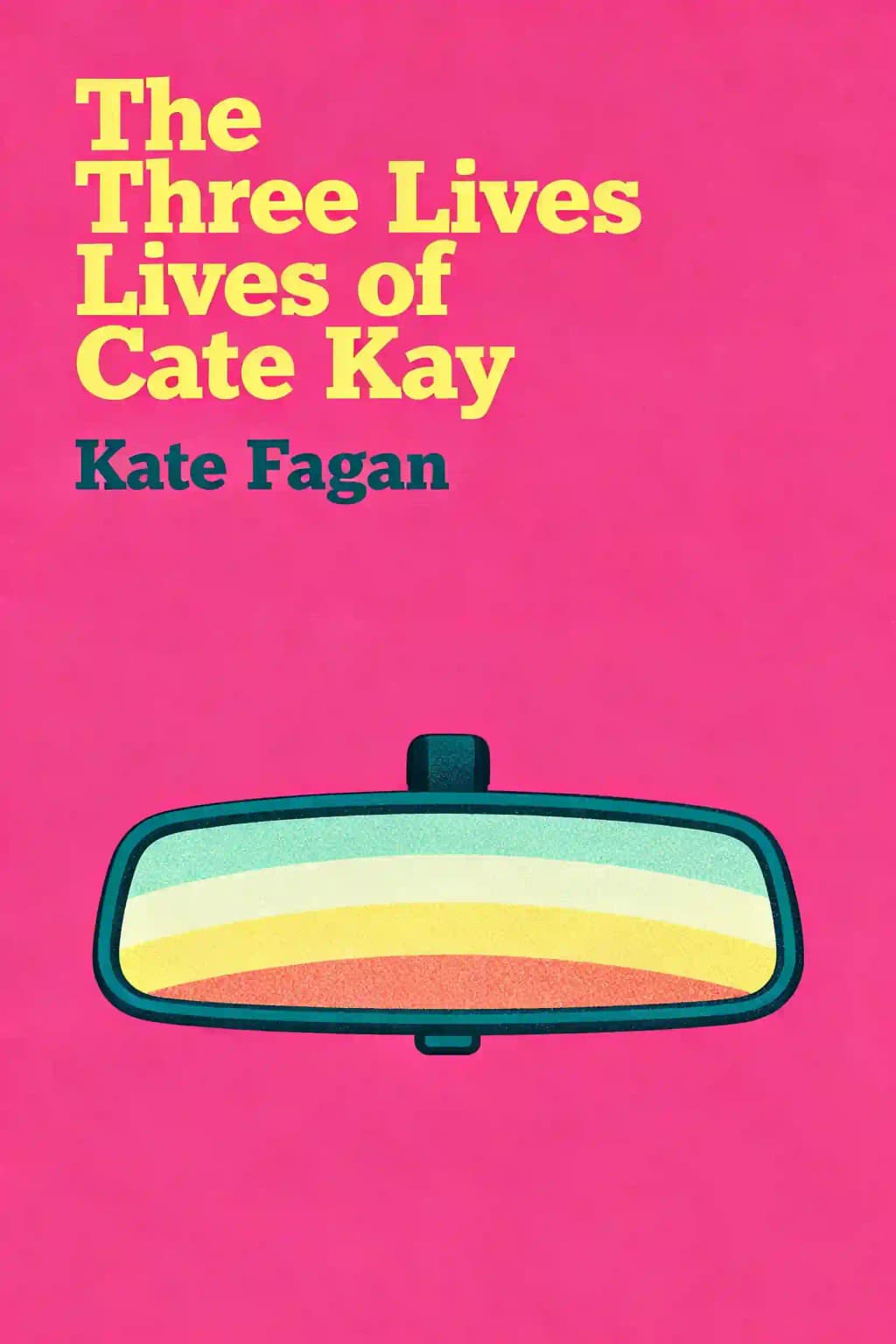
When Fiction Becomes Reality: The Three Lives of Cate Kay
In the quiet town of Bolton Landing, a young girl named Anne Marie Callahan wore her Tom and Jerry shirt for a month straight without her mother noticing. This seemingly small detail becomes the first thread in an intricate tapestry of identity, love, and redemption that spans decades. Kate Fagan's "The Three Lives of Cate Kay" isn't just a novel about a mysterious author-it's a profound exploration of how we create and recreate ourselves, sometimes at terrible cost to those we love most. The book has garnered praise from literary critics and celebrities alike, with Reese Witherspoon featuring it in her book club and calling it "a breathtaking meditation on identity and forgiveness." Its cultural impact extends beyond literary circles, sparking conversations about authenticity in an age where reinvention has become commonplace. As we follow the protagonist through her three distinct identities-Anne Marie, Annie, and finally Cass/Cate Kay-we confront the universal question: can we ever truly escape our past, or does it inevitably catch up to us?
Chapter 2
The Power of Childhood Friendship and Identity Formation
Anne Marie Callahan's transformation into "Annie" begins at age nine when she meets Amanda at theater camp. This friendship becomes the foundation of her identity, with Amanda calling her "Annie" instead of the hated "Anne Marie" that her mother uses like a scold. Their bond transcends ordinary friendship, becoming what Annie calls "an art form." While Anne Marie's home life consists of a converted motel and a wine-tipsy mother who barely notices her, Amanda provides the attention and validation she craves.
The dynamics of their relationship are beautifully illustrated through small, telling moments. When Amanda explains that good fashion means making "your outside match how you feel on the inside," Annie struggles to understand this concept of authentic self-expression. Later, at Goodwill, Amanda spots a canvas tote bag reading "THE STRAND NYC: 18 MILES OF BOOKS" and declares it perfect for Annie's quick-witted, book-loving personality. Though Annie can't afford even its one-dollar price tag, Amanda buys it with her four quarters, understanding Annie's embarrassment without needing explanation.
Their relationship has an uneven power dynamic from the beginning. Amanda is seventy-three days older, always hitting milestones first and "reporting back." When they turn sixteen, Amanda takes her driver's test immediately while Annie waits anxiously outside. After passing, Amanda suggests going to Tommy's party instead of Annie's planned mixtape listening session. This pattern of Amanda leading and Annie following becomes central to their relationship, though Annie secretly harbors ambitions beyond their partnership.
The friendship is complicated by unspoken romantic feelings. During a moonlit drive home from the party, Annie plays a carefully crafted mixtape including a Sarah McLachlan song that captures her complex feelings for Amanda. Years later, at junior prom, Annie confesses "I really, really love you" with unmistakable meaning, only to have Amanda gently return her hands to her own heart-a kind but clear rejection.
This formative relationship establishes the pattern that will follow Annie throughout her life: intense attachments, unspoken feelings, and the constant search for identity through the reflection of others' perceptions.
Chapter 3
The Accident and Its Aftermath: A Defining Moment
The pivotal moment that reshapes all the characters' lives occurs in 2000, when Amanda and Annie, now high school graduates, take a boat to an unexplored island with an abandoned house. Despite Annie's protests, Amanda attempts to ride a zip line running from a tree platform over an empty pool. When the base breaks free, Amanda falls headfirst into the pool, suffering a catastrophic injury that leaves her conscious but unable to move or speak, only able to blink and shed tears.
Annie's response to this tragedy becomes the defining moral failure that haunts her for years. After calling 911, she panics and abandons Amanda, walking to her car instead of returning to her injured friend. Her last meaningful words to Amanda were "Can you feel this?" The answer was no. This moment of crisis reveals Annie's character flaw-when faced with overwhelming responsibility and guilt, she runs.
The aftermath of the accident creates ripples through multiple lives. For Amanda, the injury results in Incomplete Quadriplegia, affecting all limbs but her legs more severely than her arms. She spends brutal months in rehab followed by years of physical therapy with Janet, who helps her regain some function. Amanda measures the distance between herself and Annie constantly, creating mental maps placing her in different locations, drawing invisible lines connecting them.
For Annie, now calling herself Cassandra Ford (Cass), the accident becomes the catalyst for her first identity transformation. She flees to Plattsburgh where she finds work at a cafe and begins sleeping in her car. The guilt she carries is described as "infected, feverish." When she meets Sidney Collins, a law student, she finally breaks down and reveals her story, though under the false belief (planted by Sidney) that Amanda died from complications after the accident.
This section of the narrative explores the moral complexity of Annie's choice and its consequences. While her abandonment of Amanda is inexcusable, the author creates empathy by showing Annie's overwhelming shame and regret. The accident becomes the fulcrum upon which the entire story pivots-every relationship, every decision, and every identity shift that follows can be traced back to this moment of crisis and failure.
Chapter 4
The Birth of Cate Kay: Writing as Redemption and Escape
In the aftermath of the accident, Annie transforms herself into Cass Ford and moves to New York with Sidney Collins. There, she begins writing what will become "The Very Last," a novel about two friends separated by disaster-one loving the other in a way that wasn't returned in the same measure. Significantly, she makes the disaster in her novel enormous "so no one could be blamed for their separation," revealing her need to absolve herself of guilt through fiction.
Writing becomes both Cass's escape and her way of processing her trauma. She describes clicking her pens compulsively until the springs fly out, and infusing Amanda into her book, "needing somewhere to put all the little details I loved about her." The novel features excerpts from "The Very Last" by Cate Kay, about two young reporters broadcasting after a nuclear blast in New York, finding themselves outside their favorite coffee shop called Spot-a clear parallel to her real-life experiences with Amanda.
The discovery of Cass's manuscript by literary agent Melody Huber marks another turning point. Melody, recently fired from Eloquence agency, takes home the final slush pile as her "going-away present." When she reaches Cate Kay's submission, she's immediately struck by the name and completely hooked by the first sentence: "With time, Samantha Park would become a legend." This chance encounter leads to the publication of what will become a cultural phenomenon.
The success of "The Very Last" transforms Cass's finances overnight, turning her modest barista income into "accounts with many digits." Everything is in her new legal name, Cass Ford, though Sidney's law firm handles all the backend details. Sidney creates the entire Cate Kay world-contracts, bank accounts, NDAs-all untraceable to Cass, establishing complete control over her literary creation and, by extension, over Cass herself.
The birth of Cate Kay represents both redemption and further escape for Annie/Cass. Through writing, she processes her guilt and grief over Amanda while simultaneously creating yet another identity to hide behind. The novel becomes wildly successful precisely because it contains the raw emotional truth of her experience with Amanda, transformed into fiction. Ironically, the very thing that brings her success and a new life is built upon the foundation of her greatest moral failure.
Chapter 5
Hollywood Calling: Ryan Channing and the Promise of Love
The narrative takes another turn when Ryan Channing, a rising Hollywood star, is cast in the film adaptation of "The Very Last." Ryan is immediately drawn to the character of Persephone rather than Samantha, and becomes fascinated with the mysterious author Cate Kay. After reading a scene that convinces her the author must be queer, Ryan demands to meet her, eventually writing a personal letter that leads to Cass staying at her Los Angeles home for a week.
Their meeting is electric. Ryan describes Cass as "effortlessly cool" with her "suede Pumas, faded leather jacket, and messy bun," while Cass is struck by Ryan's "slightly asymmetrical features" and "apparent lack of vanity." What begins as a professional consultation quickly evolves into a profound connection. They spend their days "ordering in, lounging by the pool reading, and talking late into the night over wine," sharing intimate stories and developing a deep bond.
The relationship represents a potential healing for both women. For Cass, it offers the possibility of genuine love without the complications of her past. For Ryan, who struggles with the artifice of Hollywood and feeling "delusional" as a movie star, Cass represents authenticity and real connection. Their conversations touch on what Cass calls "cosmic bigness"-that unnamed longing they both feel with "no known cure."
Their physical relationship begins when Ryan finally knocks on Cass's door in the middle of the night. The scene is described with tender intimacy: "I entered to find her on the left side of the bed, one leg flung over the covers. She lifted the blanket for me, and I lay down facing her." Their connection is portrayed as transcendent, with Cass later reflecting that "nothing compares to this first night with Ryan."
However, their relationship is threatened by outside forces. Sidney, jealous of their connection, orchestrates a reporter calling Cass about her true identity, making her believe Ryan has betrayed her. When paparazzi appear during their final dinner together (actually called by Ryan's agent Janie), Cass flees back to New York, believing Ryan has set her up. This misunderstanding separates them for years, with both carrying the wound of what might have been.
The Ryan-Cass relationship represents the possibility of redemption through love, but also demonstrates how the past continues to haunt Cass, making her quick to assume betrayal and ready to run when threatened-the same pattern that began with Amanda.
Chapter 6
The Weight of Secrets: How Lies Shape Lives
Throughout the narrative, secrets and lies create profound consequences for all the characters. Sidney's lie to Cass about Amanda's death shapes the entire trajectory of Cass's life for over a decade. When she finally discovers the truth in 2013, Cass is devastated: "I kept replaying the scene with Sidney telling me Amanda was dead. I searched for the lie I should have spotted-in her eyes, her words-but couldn't find it."
Amanda lives with her own set of painful truths. She knows Annie abandoned her, yet still loves her deeply. When she discovers "The Very Last" and realizes Annie has taken their private moments and published them for the world, she's shattered: "Reading wasn't just reading-it was remembering. Annie had taken our private moments and published them for the world." Yet even in her anger, she writes letters to "Cate Kay," maintaining a connection to Annie despite her betrayal.
Ryan's public persona represents another form of deception. As a closeted actress, she agrees to fake-date her male costar Johnny for publicity, despite being interested in women. This decision costs her a potential relationship with Sarah, a barista, who leaves her a note declining to see her due to the "drama." Years later, Ryan finally comes out in Vanity Fair, mentioning she'd been in love once and had written a love letter that was rejected-a veiled reference to Cass.
The narrative suggests that secrets, while sometimes necessary for survival, ultimately prevent authentic connection. It's only when the characters begin to reveal their truths that healing becomes possible. This theme reaches its climax when Jake Fischer, a journalist who had been paid off by Sidney years earlier, decides to make amends by writing a letter to Cass explaining what really happened. This leads to Sidney finally relinquishing control over Cate Kay's identity and sending Cass the documentation about her literary creation, including information about a P.O. box for fan mail she'd never known about.
When Cass discovers letters from Amanda in this fan mail, the truth finally emerges: Amanda is alive. This revelation shatters Cass's understanding of her past and creates the possibility for reconciliation. The weight of secrets that has shaped their lives for over a decade finally lifts, allowing for authentic connection and the potential for healing.
Chapter 7
Reconciliation and Redemption: Coming Full Circle
The novel's emotional climax occurs when Annie returns to Bolton Landing to find Amanda. Driving on the Northway, she feels "a complex emotion no English word could capture." When she finally locates Amanda at the school where she now teaches theater, the moment is electric: "When she spotted me leaning against the back wall, she paused mid-sentence, the energy between us electric."
Their reunion is understated yet profound. After Amanda's students finish their scene, she turns to Annie and nods at the key lime pie in her lap: "So, we gonna eat that or what?" This simple question encapsulates their ability to reconnect despite everything that has happened. Amanda later notes, "I hadn't had a slice of key lime pie since Annie left. It was even better than I remembered, and we shared a piece every night that first week."
The reconciliation extends beyond Annie and Amanda. Ryan, having learned the truth about what happened in Los Angeles years earlier, travels to Bolton Landing to find Cass. The novel ends with all three women working together on the Broadway production of "The Very Last"-Ryan directing, Amanda playing Samantha in the third act, and Annie moving forward with new writing projects.
During Annie's first-ever book event at the Strand (a meaningful full-circle moment given the tote bag Amanda had once tried to buy her), she spots Ryan slipping in late, joining Amanda at the back of the room. When asked why she named her book "The Very Last," Annie explains the publisher chose it, not her. When pressed about her original title, she looks at Ryan and Amanda-"the women who were my world"-and decides, "Actually, I think I'm going to keep that one for myself."
This ending suggests that redemption is possible, not through erasing the past but by confronting it honestly and making amends. Annie has come full circle, returning to her original identity while integrating the experiences of her other selves. She has found a way to be whole by reconnecting with the people she loves and by continuing to create, now from a place of authenticity rather than escape.
The novel ultimately argues that while we cannot undo our mistakes, we can acknowledge them, seek forgiveness, and create new stories-both literally and figuratively-that honor the truth of our experiences and relationships.
Chapter 8
The Power of Storytelling: Fiction as Truth and Healing
At its core, "The Three Lives of Cate Kay" is a meditation on storytelling itself-how we craft narratives about our lives, how fiction can reveal deeper truths than fact, and how stories can both wound and heal. Annie's creation of "The Very Last" serves multiple purposes: it's her confession, her way of processing trauma, her means of keeping Amanda alive, and ultimately her path to success and a new identity.
When Amanda first reads the book, she sees it as a betrayal-Annie has taken their private moments and shared them with the world. Yet over time, she comes to see it differently: "That night, staring at The Very Last on my bedside table, I saw it transforming from the embodiment of my anger into a lifeline to my best friend." The book becomes a connection between them when direct communication is impossible.
The novel also explores how stories can reveal hidden truths. When Ryan reads "The Very Last," she immediately senses that the author must be queer based on a particular scene. This intuition leads her to seek out Cass, creating the possibility for their relationship. Similarly, Amanda recognizes Annie in the book through specific details only she would know, eventually decoding the pseudonym "Cate Kay" as a reference to their private joke about "Cate with a K."
The meta-narrative extends to how the characters perceive themselves. Annie plays different roles throughout her life-the sidekick to Amanda, the protegee to Sidney, the muse to Ryan-before finally finding her authentic voice. Ryan struggles with the artifice of Hollywood, feeling that being a movie star is "like being a person, except delusional." Amanda must redefine herself after her injury, finding new purpose in teaching theater to students.
In the final scene at the Strand, Annie refuses to reveal her original title for "The Very Last," choosing to keep that one piece of her story private. This decision represents her growth-she no longer needs to share everything to be validated, nor does she need to hide everything to feel safe. She has found the balance between revelation and privacy that allows for authentic connection.
The novel suggests that storytelling is not just about what we reveal, but about how we integrate our experiences into a coherent narrative that allows us to move forward. Annie's journey from fragmentation to wholeness parallels her development as a writer-from using fiction as escape to using it as a means of confronting and accepting her truth.
Chapter 9
The Complexity of Love: Beyond Romance to Deeper Connection
While "The Three Lives of Cate Kay" contains romantic elements, it presents love as something far more complex than romance alone. The relationship between Annie and Amanda forms the emotional core of the story-a bond that transcends traditional categories. As children, they were best friends; as teenagers, Annie harbored unrequited romantic feelings; as adults separated by tragedy, they maintained a connection that eventually led to reconciliation.
Amanda's reflection captures this complexity: "Annie had been in love with me for years, but instead of letting her go, I'd done just enough to keep her with subtle affection." This acknowledgment of her own role in their complicated dynamic shows the maturity she's gained through suffering. Similarly, Annie comes to understand that her feelings for Amanda were always more complex than simple romance-they were about belonging, identity, and finding her place in the world.
The novel also explores different kinds of love through other relationships. Sidney's controlling love for Cass is contrasted with Ryan's more generous affection. Sidney describes building "the entire Cate Kay world-the contracts, bank accounts, NDAs-all untraceable to Cass," thinking that "securing her privacy would unlock her love." In contrast, Ryan offers Cass space to be herself, sharing intimate conversations and creating a relationship based on mutual understanding rather than dependency.
Family love appears in various forms throughout the narrative. Patricia Callahan's relationship with Annie transforms from neglect to genuine concern after she achieves sobriety. Amanda's sister Kerri provides unwavering support despite her complicated feelings about Annie. Even Ryan's agent Janie acts as a surrogate family member, approaching their relationship "with loyalty and protection, like an older sister would."
The most profound expression of love in the novel may be forgiveness. Amanda's willingness to forgive Annie for abandoning her demonstrates extraordinary compassion. When Annie finally returns to Bolton Landing, Amanda doesn't berate her or demand explanations-she simply asks about the pie, creating space for their relationship to begin anew. Similarly, Annie must forgive herself for her past actions before she can truly connect with others.
By the novel's conclusion, love is presented not as a simple emotion but as a complex, ongoing practice of showing up, being honest, and choosing connection even when it's difficult. When Annie is asked what advice she'd give her younger self, she answers: "I'd tell her that only love will fill the black hole-that it's the only thing worth chasing." This insight represents the culmination of her journey from running away to coming home, both literally and emotionally.
Chapter 10
Finding Authenticity in a World of Reinvention
The search for authenticity runs throughout "The Three Lives of Cate Kay," as characters struggle to align their external identities with their internal truths. Annie's transformation from Anne Marie to Annie to Cass to Cate Kay and back to Annie again represents this journey in its most explicit form. Each identity shift serves a purpose-escaping her mother's neglect, fleeing her guilt over Amanda, creating a successful literary career-but none provides the wholeness she ultimately seeks.
Ryan faces a similar struggle in the artificial world of Hollywood. As a closeted actress, she's forced to present a false version of herself to the public, even fake-dating a male costar for publicity. When she finally comes out in Vanity Fair, it represents a step toward authenticity, though she notes that it didn't make her "any more real to people, just a different kind of icon." True authenticity comes not from public declarations but from honest connections with those she loves.
Amanda's journey toward authenticity takes a different form. After her injury, she must redefine herself entirely, finding new ways to express her identity when her body no longer responds as it once did. Her work with physical therapist Janet focuses not on some distant goal but on what she wants to accomplish "today"-a philosophy that emphasizes living authentically in the present rather than chasing an idealized future self.
The novel suggests that authenticity isn't about finding some pure, unchanging core self, but about integrating all aspects of one's experience into a coherent whole. When Annie returns to Bolton Landing, she doesn't discard her experiences as Cass or Cate Kay-she brings them with her, enriched by what she's learned through each identity. Similarly, Amanda doesn't deny the reality of her injury but incorporates it into her new life as a theater teacher.
In the final scene at the Strand bookstore, Annie stands before an audience as both herself and Cate Kay, no longer hiding behind pseudonyms but also not completely separating herself from her literary creation. This integration represents true authenticity-not the rejection of past selves but their incorporation into a more complete identity.
The novel ultimately argues that authenticity isn't about never changing; it's about changing for the right reasons-growth rather than escape, integration rather than fragmentation, connection rather than isolation. Annie's journey comes full circle not because she returns to being exactly who she was before, but because she finally brings all parts of herself together in one place, with the people who know and love her completely.