Chapter 1
When Childhood Nightmares Come to Life
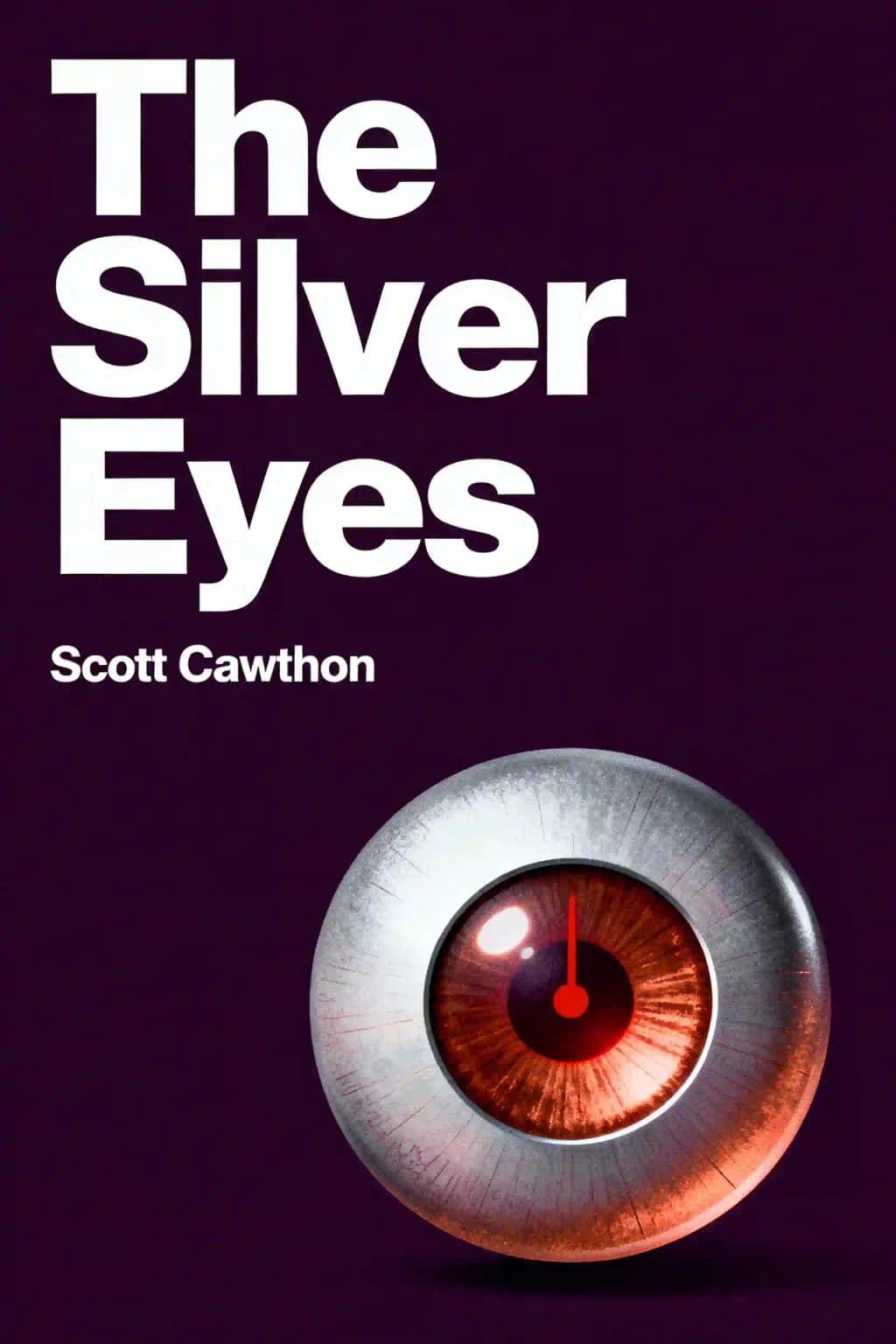
Five Nights at Freddy's: The Silver Eyes has transcended its origins as a novel based on a video game to become a cultural phenomenon. This haunting tale of animatronic horror has captivated millions, with the book series selling over 10 million copies worldwide. What began as Scott Cawthon's indie game has evolved into a multimedia empire spanning books, films, and merchandise. The Silver Eyes particularly resonates with readers for its psychological depth, exploring themes of childhood trauma and loss beneath its horror veneer. Even celebrities like Ariana Grande and Markiplier have publicly praised the series for its intricate storytelling. As we step into the abandoned Freddy Fazbear's Pizza alongside Charlie and her friends, we're not just entering a haunted restaurant-we're exploring the shadowy corridors of memory, grief, and the terrifying line between what's alive and what only pretends to be.
Chapter 2
Returning to Hurricane: Confronting the Past
Ten years after leaving Hurricane, Utah, Charlotte "Charlie" returns for a scholarship ceremony honoring her childhood friend Michael. The small town remains frozen in time, including her father's house-untouched since she left at age seven following his suicide. Inside, Charlie rediscovers her father's mechanical creations: Theodore the rabbit who speaks in her father's voice, Stanley the unicorn that runs on tracks, and Ella, an unsettling doll that emerges with a teacup. These once-beloved toys now seem sinister in the fading light, with Theodore appearing sickly, Stanley's smile resembling a skull, and Ella watching her with unblinking eyes.
Outside, Charlie finds strange tripod marks and a metal elbow joint, triggering memories of her father's workshop. She recalls watching him build Stanley while trying to ignore a twisted metal skeleton with silver eyes hanging in the corner-a recurring image that will haunt her throughout the story.
At a local diner, Charlie reunites with her childhood friends: Jessica, now a fashionable New Yorker; Carlton, still in Hurricane but eager to leave; and John, her childhood crush who has become a published writer. Their conversation inevitably turns to Freddy Fazbear's Pizza, causing an awkward silence. When Charlie mistakenly recalls Freddy as yellow instead of brown, it troubles her deeply-a hint that her memories may not be entirely reliable. Despite Carlton's warning that the site is now just construction, Charlie suggests they visit Freddy's, suddenly eager to confront what remains of her past.
This homecoming represents more than nostalgia-it's Charlie's first step toward confronting the traumatic events she's spent a decade trying to forget. The mechanical toys in her father's house symbolize the uncanny valley between living and non-living that will become increasingly significant as the story unfolds. Her friends, too, serve as connections to a past she's tried to leave behind, each carrying pieces of shared history that will help complete the puzzle of what really happened at Freddy Fazbear's Pizza.
Chapter 3
The Mall That Swallowed Freddy's
Charlie and her friends arrive at what was once Freddy Fazbear's Pizza to find an enormous, abandoned concrete and glass structure-a failed mall project that never opened. Armed with a police-issue flashlight from her aunt's emergency kit, Charlie leads her friends around the perimeter. John seems particularly disturbed by the complete erasure of Freddy's, touching the concrete wall and muttering, "It's gone." For Charlie, it feels like a violation that someone has removed all physical traces of a place so significant in her memories.
When Jessica suggests going inside the building, Charlie agrees with surprising enthusiasm. They find entry through windows accessible via mounds of construction materials. Inside, they discover an abandoned mall with an atrium featuring metal benches and plastic tables under a glass ceiling showing stars. The space feels eerily sterile-a place that never sustained life.
Their exploration reveals architectural inconsistencies suggesting something hidden within the mall's walls. Behind a heavy shelf, they find a rusted metal door leading to the preserved remains of Freddy Fazbear's Pizza-children's drawings on yellowing paper, checkered tablecloths on dining tables, and chairs arranged as if patrons had just stepped away momentarily. In the darkness ahead, Charlie sees familiar eyes staring back at them: the animatronic figures from her childhood.
The animatronics stand tall on stage: Bonnie the bright blue rabbit with his red bass guitar and matching bow tie; Chica the Chicken with her "LET'S EAT!" bib and disturbing cupcake; and between them, Freddy Fazbear himself, microphone in paw, wearing a black bow tie and top hat, frozen mid-song with bright blue eyes.
As they explore further, they reach Pirate's Cove, a small stage with drawn curtains and an "OUT OF ORDER" sign. When Jessica climbs onto the stage to peek behind the curtain, John claims to hear music box sounds that the others can't detect. The moment grows tense until Carlton crashes pots in the kitchen, startling everyone and breaking the spell.
The discovery that Freddy's wasn't demolished but entombed within the mall creates a perfect metaphor for Charlie's own buried memories. Like the restaurant, her trauma hasn't been resolved-merely covered up with new construction that never quite succeeded in erasing what came before. The preserved state of the restaurant, frozen in time like a macabre museum exhibit, mirrors how childhood trauma can remain pristine in memory while the person around it continues to grow and change.
Chapter 4
Reconnecting with the Past
After their adventure, Charlie and Jessica return to their motel room, where they begin to bond through casual conversation. Jessica reveals her dream of becoming an archaeologist, surprising Charlie who had assumed she'd pursue fashion. Charlie confesses her lack of direction compared to her friends who seem to have clear goals. Their conversation shifts to Michael's memorial, with both admitting they try not to dwell on the past.
The next morning, they're joined by Marla, another childhood friend, and her eleven-year-old half-brother Jason. Charlie's connection with Marla had remained stronger than with the others, as she appreciated Marla's positive nature and persistent friendship despite distance.
Later, Charlie and John explore her childhood home, where she instinctively stops him from entering the woods, recalling her father's warnings. At a tree in the yard, they reminisce about a childhood moment when six-year-old John tried to kiss Charlie during hide-and-seek, only to be interrupted by her father. Inside her father's workshop, Charlie finds it mostly empty-the robots, blueprints, and materials gone-though her father's toolbox remains mysteriously polished and maintained.
This triggers a vivid memory of her father unveiling three gleaming animatronic figures: a rabbit, a bear, and a frightening one with a metal clamp for a mouth. John then reveals a crucial secret: the night Michael disappeared, he saw another mascot-a yellow bear, not Freddy-standing near their table while everyone watched the malfunctioning animatronics on stage. When they looked back, both Michael and the mascot were gone. John describes the eyes behind the costume as "dead...whatever was behind them had died long ago."
These reconnections with friends and places from her past begin to stir Charlie's suppressed memories. The contrast between her current life-directionless and temporary-and her childhood-filled with her father's creations and close friendships-highlights how much she's lost. John's revelation about the yellow bear creates the first concrete link between their childhood trauma and the mysteries they're now uncovering, suggesting that what happened to Michael might be connected to the strange animatronics Charlie's father created.
The polished toolbox in the otherwise empty workshop suggests someone has been maintaining a connection to Charlie's father-a detail that will become significant as the story unfolds. These seemingly small reconnections are gradually rebuilding the foundation of memory that Charlie will need to confront the full truth about her past.
Chapter 5
Return to Freddy's: When Toys Come to Life
The group decides to explore Freddy's again, this time joined by Marla and her brother Jason. Inside the abandoned restaurant, they discover a hidden control room beneath the stage. When Jason flips a switch, they're shocked to find the electricity still works. Through buttons in the control room, they can control Bonnie and Chica's movements, making them perform simple actions, though they can't figure out how to make Freddy move.
While exploring the arcade, Jason notices something disturbing-the children's drawings on the walls seem to be moving, telling a story: a child sitting alone, Bonnie appearing behind the child, Bonnie snatching the child, and finally the child screaming. Jason experiences a terrifying hallucination where pages fall from the walls, turning blood-red and weighing him down.
Meanwhile, Charlie accidentally stumbles behind the curtain on the smaller stage, where she comes face-to-face with Foxy, an animatronic she recognizes as the "misshapen thing" from her father's workshop. As she waits for John to find her, Foxy suddenly moves, slashing her arm with its hook. Despite the bleeding cut, Charlie insists she's fine and refuses to go to the hospital.
This second visit to Freddy's marks a turning point where the passive, abandoned restaurant begins to show signs of malevolent life. The functioning electricity and controllable animatronics create a false sense of security-these are just machines that can be manipulated with buttons and switches. But Jason's hallucination and Foxy's attack shatter this illusion, suggesting something supernatural at work.
The moving drawings Jason witnesses serve as a miniature version of the tragedy that occurred at Freddy's-children lured and captured by the seemingly friendly animatronics. His experience foreshadows the revelations to come about the murdered children and their connection to the animatronics.
Charlie's encounter with Foxy connects directly to her childhood memories of her father's workshop, confirming that these aren't just random animatronics but creations she has a personal history with. Her refusal to seek medical attention for her injury reflects her determination to confront her past rather than retreat from it, even as that past literally draws blood.
Chapter 6
Uncovering Buried Memories
Charlie and John decide to explore Charlie's past further, driving to a nearby town called New Harmony based on a fragment of a song her parents used to sing. During their drive, Charlie opens up about living with her aunt, describing her life as temporary despite having another year of school. When John asks if she ever sees her mother, Charlie admits she doesn't, feeling exhausted by the thought.
In New Harmony, Charlie discovers train tracks partially buried in the dirt, following them to a cluster of trees hiding a dilapidated building. John finds a battered sign reading "Fredbear's Family Diner"-Charlie's father's first restaurant. Inside the abandoned building, Charlie experiences vivid flashbacks, eventually remembering the horrifying moment when a person in a yellowish-brown rabbit costume with human eyes abducted her twin brother Sammy from a closet where they were hiding.
After this tragedy, the restaurant closed, they moved to a new house, and her mother left soon after, leaving Charlie with a father whose love for her was tinged with unbearable sadness. Charlie had trained herself to forget her brother's name, though deep inside she knew it: Sammy.
Finding a twisted piece of metal-a spring lock-triggers another memory of her father warning her and Sammy never to touch these dangerous mechanisms in the animal costumes. These spring locks, Charlie recalls, could snap back into place with deadly force if triggered.
This journey to New Harmony represents the most significant breakthrough in Charlie's repressed memories. The discovery that she had a twin brother who was abducted explains the profound sense of loss that has haunted her throughout her life. It also contextualizes her father's behavior-his creation of toys that spoke with his voice, his warnings about the woods, and ultimately his suicide-as responses to the trauma of losing his son and then his wife.
The spring lock mechanism introduces a crucial element of danger associated with the mascot costumes. These suits, designed to function both as animatronics and as wearable costumes, contain deadly mechanisms that can turn the costume into a death trap. This detail will become vitally important as the story reaches its climax.
The revelation about Sammy's abduction by someone in a rabbit costume creates a direct link between Charlie's personal tragedy and the disappearances at Freddy Fazbear's Pizza, suggesting that the same perpetrator might be responsible for both crimes.
Chapter 7
The Night Guard's Sinister Secret
After returning to the motel, Charlie and John agree to keep their discoveries about Fredbear's secret from the others. They meet their friends for dinner before heading to Freddy's again, where they encounter Dave, the night guard. Despite his unsettling appearance and behavior, Charlie suggests he join their exploration. Dave agrees, having known about the hidden entrance all along.
The group introduces themselves to Dave, who lets them enter Freddy's. Charlie feels uneasy about Dave following behind her, sensing something off about him. Inside, Dave reveals he knows more about the restaurant than he initially let on, explaining how the mall was built around Freddy's but never succeeded because of the restaurant's dark history.
When they reach the control room, Dave demonstrates unexpected knowledge of the animatronics' controls, making them dance in coordinated sequences. Charlie grows increasingly suspicious, whispering to John that Dave must have been there before, noting how familiar he is with the controls. Dave's disheveled appearance, intense stare, and unsettling behavior make Jessica uncomfortable as he shows off his knowledge of the restaurant's "special occasion" programming features.
Suddenly, Bonnie begins malfunctioning, his movements becoming increasingly erratic despite attempts to control him. When Carlton tries to find an off switch, Bonnie's arm breaks free and knocks him off the stage. All the animatronics begin moving in fitful, hysterical ways as the lights pulse in nauseating colors and the speakers emit bursts of static with an inhuman growling beneath.
The group realizes Dave has disappeared. While searching for him, Jason sees Bonnie moving between rooms despite the animatronic still being visible on stage. Following the rabbit to Pirate's Cove, Jason witnesses what appears to be Carlton being grabbed by a yellow-furred Bonnie and dragged away.
Away from the group, Dave moves with purpose through the restaurant. Using keys from his security uniform, he unlocks the restaurant's office and opens a closet. His demeanor changes completely-his back straightens, his hollow chest expands with confidence. With an unsettling smile, he reaches out to touch yellow fur hidden inside.
Dave's introduction marks the emergence of the human villain behind the supernatural events at Freddy's. His knowledge of the restaurant and the animatronics immediately sets him apart from an ordinary security guard, while details like the twin half-moon scars on his neck hint at a deeper connection to the restaurant's dark history.
The malfunctioning animatronics create chaos that allows Dave to separate from the group and carry out his plan to abduct Carlton. The yellow Bonnie costume Jason witnesses connects directly to Charlie's memory of her brother's abduction by someone in a similar costume, suggesting Dave might be the same perpetrator who took Sammy years ago.
Dave's transformation when alone reveals his true nature-the slouching, awkward security guard persona is just a disguise for someone confident, purposeful, and deeply connected to Freddy Fazbear's Pizza. His familiarity with the restaurant's systems and his possession of the yellow rabbit costume implicate him in both the current events and the historical tragedies associated with Freddy's.
Chapter 8
The Hunt for Carlton
The group flees through the abandoned mall corridors, no longer concerned about stealth or discretion. As they reach the parking lot, Charlie suggests someone should stay behind for Carlton, but Marla insists they all leave to find help. In town, they find Officer Dunn and convince him to return to the mall with them. Upon arrival, they discover the door they had previously entered is now heavily chained and padlocked, appearing as if it had been that way for years.
When Jason insists that Bonnie has taken Carlton, Officer Dunn becomes skeptical. He calls Carlton's father, Clay Burke, who arrives and suggests Carlton is playing a prank on them. Clay invites them all to his house to wait for Carlton's return. As they settle into his spacious home, they wonder if they've truly been victims of an elaborate joke.
The next morning, Clay makes pancakes for everyone while they await Carlton's return. When Carlton's mother Betty arrives, she's alarmed to learn her son is missing. Unlike Clay, who believes it's just another of Carlton's pranks, Betty takes the situation seriously, especially after learning it involves Freddy Fazbear's. She insists this is different-Carlton would never joke about Freddy's because of his connection to Michael, his best friend who disappeared there. As tensions escalate, Clay accidentally reveals he saw Michael's blood streaked across the floor. Betty demands Clay call for help immediately, convinced Carlton is in real danger.
Meanwhile, Officer Dunn returns to Freddy's to investigate. Inside, he discovers a cabinet containing a yellow Bonnie costume. Suddenly, the costume lunges at him, breaking his arm and pinning him against the wall. The rabbit-suited attacker produces a knife and stabs Dunn in the chest. As consciousness fades, Dunn glimpses human eyes peering from within the costume's hollow sockets-the last thing he sees before death.
Charlie and John explore her childhood home for answers. In her father's bedroom, Charlie finds a photo album containing pictures that confirm her twin brother Sammy existed. While sorting through fallen papers from her father's bookshelf, they discover a photograph showing her father in the yellow Freddy costume standing next to someone wearing a yellow Bonnie suit with a visible human eye. Realizing this might connect to Jason's mention of a "yellow rabbit," they decide to head to the library to investigate further.
At the library, Charlie and John discover a crucial detail in the microfilm archives-a newspaper article showing that Charlie's father co-owned Fredbear's with someone they recognize. Their research is interrupted when a frantic Marla bursts in, announcing that her brother Jason has disappeared and likely returned to Freddy's.
Meanwhile, Carlton regains consciousness to find himself trapped inside a mascot costume, his arms pinned to his sides by an internal framework. Dave reveals himself by removing the head of his yellow rabbit costume, appearing transformed with a new, menacing vitality. Carlton realizes with chilling certainty that Dave is responsible for what happened to Michael. Dave explains that Carlton is wearing a special spring-lock suit designed by Charlie's father Henry, which will kill him slowly and painfully if he moves enough to trigger the locks.
The hunt for Carlton reveals the true extent of Dave's malevolence. Officer Dunn's murder demonstrates Dave's willingness to kill to protect his secrets, while Carlton's imprisonment in the spring-lock suit shows his sadistic nature and familiarity with the deadly mechanisms Charlie's father designed.
The photograph Charlie and John discover creates a crucial connection between Charlie's father and the person in the yellow Bonnie suit-suggesting her father may have known his son's abductor. The newspaper article further confirms that Charlie's father had a business partner at Fredbear's, implying this partner might be Dave himself.
Jason's disappearance forces the group back to Freddy's, setting up the final confrontation with both Dave and the supernatural forces inhabiting the animatronics. The revelation that Dave was responsible for Michael's disappearance connects the current events to the historical tragedies, confirming that the same perpetrator has returned to continue his crimes.
Chapter 9
Final Confrontation: Spirits Unleashed
The group searches for a way into Freddy's to find Jason. They locate a trapdoor in the hallway ceiling that leads to a crawl space above the restaurant. They navigate through the cramped space between Freddy's roof and the mall ceiling, eventually dropping through a skylight into a storage closet filled with animatronic parts.
Charlie leads them to Pirate's Cove, where Marla and Lamar find Jason hiding under the monitors in a control room. Meanwhile, Charlie discovers Carlton trapped in an animatronic suit rigged with deadly spring locks. Using her knowledge of the mechanisms, she carefully disables the neck locks and frees Carlton just as the springs violently snap shut. Carlton reveals that Dave put him in the suit and shares a horrifying truth: the missing children were brought to this room years ago and placed inside suits. Carlton points to a yellow Freddy costume in the corner, mentioning "Michael" and implying the children's bodies are still inside the suits.
As the group tries to escape, they find themselves hunted by the animatronics. Freddy Fazbear stalks them methodically, his eyes glowing red and playing a tinny music box tune. Chica illuminates them with harsh yellow beams from her eyes. Foxy targets Jason specifically, then turns on Charlie when she diverts his attention. Charlie becomes trapped between arcade machines as Foxy methodically destroys each one to reach her, his hook slashing at her repeatedly until John arrives to help her escape.
In the main dining room, they find themselves surrounded by all four animatronics-Freddy, Bonnie, Chica, and Foxy. As the group prepares for their final stand, a strange apparition appears-a yellow Freddy costume that Charlie recognizes from her father's diner. The group hears whispers in their minds, and Carlton identifies the presence as "Michael." The animatronics suddenly stop their attack, and the group realizes the murdered children's spirits are inhabiting the machines, not attacking but protecting them.
Suddenly, Clay Burke breaks through the sealed entrance with a sledgehammer. As they begin to leave, Dave reappears in the yellow rabbit costume and grabs Charlie by the throat, threatening to kill her. When Clay agrees to his demands, Charlie seizes the moment to trigger the spring locks in Dave's costume, causing the animatronic mechanisms to impale him from within. The animatronics drag Dave's body away as the yellow Freddy vanishes, and the group finally escapes the nightmare of Freddy Fazbear's Pizza.
The final confrontation reveals the dual nature of the threat at Freddy's-both the human killer (Dave) and the supernatural presence of the murdered children's spirits inhabiting the animatronics. The revelation that the spirits are not malevolent toward Charlie and her friends but are seeking justice against their murderer transforms the animatronics from monsters into tragic figures.
Charlie's knowledge of the spring-lock mechanisms, inherited from her father, allows her to defeat Dave using his own weapon against him. This poetic justice-the killer being killed by the same type of device he used to murder children-brings the story full circle. The animatronics dragging Dave's body away suggests the spirits have claimed their vengeance and perhaps found some measure of peace.
The appearance of the yellow Freddy as a supernatural entity distinct from the other animatronics suggests a special significance to this particular costume-possibly connected to Michael specifically or to Charlie's father's attempts to communicate from beyond death.
Chapter 10
Finding Closure: The Ghosts of the Past
As dawn breaks, the group emerges from Freddy Fazbear's into the morning light. Despite Charlie's insistence that she's fine, her blood-soaked clothes tell a different story. She decides against getting stitches for her wounds-she wants the scars to remain as proof that everything that happened was real.
Back at Carlton's house, they gather in the living room around a lit fireplace. When Jessica asks what happens next, Clay explains he must return to Freddy's to retrieve Officer Dunn's body, but asks Charlie what she thinks should happen. Charlie firmly states she wants it all to be over, though Jessica protests that people should know the truth about the murdered children. Clay promises to give Officer Dunn and the children proper burials, calling in favors to handle it quietly, believing the children need rest.
The next morning, the group begins to separate. Charlie and John, whose bus leaves later, decide to spend a few more hours together. When John asks if they'll ever see each other again, Charlie can only answer "maybe," feeling the weight of their shared trauma. Suddenly compelled, Charlie drives them to the cemetery where her father and brother are buried. Standing before the plain, small headstones, she feels oddly numb, then recalls a precious memory of laughing with her father behind Fredbear's, watching a crow together in a moment of pure connection.
The conclusion brings Charlie full circle in her journey of confronting the past. Her decision to keep her scars rather than have them treated symbolizes her acceptance of what happened-both recently and in her childhood-as part of her identity rather than something to be erased or hidden.
The group's decision to keep the events at Freddy's private, allowing the murdered children to rest in peace, reflects a mature understanding that some truths serve no purpose if exposed. This contrasts with their earlier desire to uncover the mysteries of the past, suggesting they've learned that not all discoveries bring healing.
Charlie's visit to her father and brother's graves represents her final act of reconnection with her past. The memory of laughing with her father-a rare moment of joy amid the tragedy of their lives-suggests that even within the darkest stories, there are moments of genuine human connection worth preserving.
The open-ended nature of Charlie and John's goodbye, with only a "maybe" about seeing each other again, reflects the uncertain future facing survivors of trauma. They've been changed by their experiences, and whether those changes will bring them closer together or push them apart remains to be seen.
The story ends not with complete resolution but with the suggestion that Charlie has finally integrated her fragmented memories into a coherent narrative of her life-one that acknowledges the horror and loss she's experienced while also preserving the moments of love and connection that give meaning to her survival.