Chapter 1
A Legal Thriller That Changed the Game
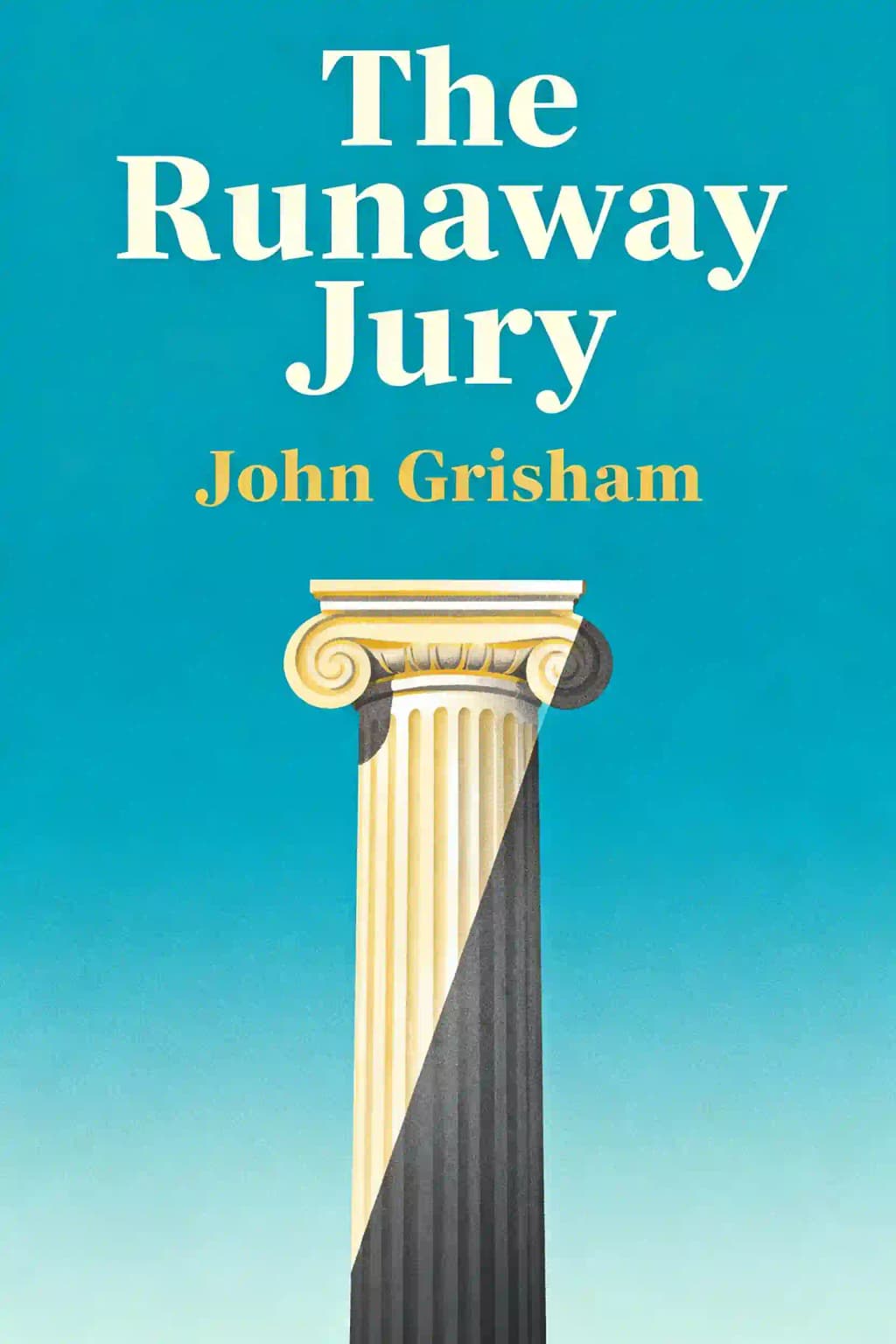
John Grisham's "The Runaway Jury" captivated readers worldwide when it debuted in 1996, selling over 2.8 million copies in its first year alone. The novel's brilliant exploration of jury manipulation struck such a chord that it became Tom Cruise's favorite book that year, with the actor reportedly carrying it everywhere during his "Mission: Impossible" press tour. When adapted to film in 2003 starring John Cusack and Gene Hackman, the story was reimagined with a gun manufacturer as defendant instead of a tobacco company-a testament to how Grisham's premise could translate across different controversial industries. Perhaps most remarkably, the book's release coincided with the real-life $206 billion settlement between tobacco companies and 46 states, leading many legal scholars to credit Grisham with helping shape public perception of the tobacco industry's accountability.
Chapter 2
The Perfect Insider: Nicholas Easter's Calculated Game
Nicholas Easter isn't your typical juror. From the moment jury selection begins in Biloxi, Mississippi, for the landmark tobacco trial of Wood v. Pynex, he captures the attention of both sides with his composed demeanor and articulate responses. Living in a deliberately sparse apartment with cardboard boxes for drawers and a mattress on the floor, Easter has created the perfect temporary existence. His living space is a masterclass in impermanence - everything carefully chosen to suggest transience while revealing nothing of substance about its occupant. His apartment appears as though he might leave town at any moment - which is exactly his plan.
What the tobacco defense team doesn't initially realize is that Easter has participated in jury selection for tobacco cases before, under different names in different states. His current identity is as meticulously constructed as his apartment, with a fabricated college background and carefully printed questionnaire responses designed to confuse handwriting analysts. Each detail of his background has been crafted to withstand casual scrutiny while containing just enough inconsistencies to make deeper investigation frustratingly inconclusive. When Rankin Fitch, the intimidating jury consultant for the defense, orders his team to investigate Easter, they find troubling inconsistencies but can't quite piece together the puzzle. His employment history shows gaps that can't be explained, and references that check out superficially but leave investigators with nagging doubts.
Easter's brilliance lies in his sophisticated understanding of jury psychology and group dynamics. He positions himself as knowledgeable and helpful, offering assistance to Herman Grimes, a blind juror, and creating strategic alliances with key jury members. His support of Grimes isn't just altruistic - it establishes him as compassionate while giving him a legitimate reason to guide another juror's movements and decisions. When lunch doesn't arrive on time one day, Easter executes a perfectly calculated move: he slips out of the courthouse, finds Judge Harkin dining at an upscale restaurant, and confronts him about the hungry jury. This bold move establishes Easter as the jury's champion and creates his first power base within the group, while demonstrating to both legal teams his ability to influence events from within the jury box.
Behind Easter's carefully constructed facade lies a deeper motivation that drives his every action. He works in seamless coordination with a mysterious woman named Marlee, who approaches both the defense and plaintiff's teams with cryptic messages and precise predictions about Easter's behavior. Their synchronized operation suggests a level of planning that goes far beyond opportunistic jury tampering - this is a meticulously orchestrated long game with stakes higher than anyone realizes. Every move is choreographed, from Easter's initial jury selection responses to his gradual assumption of leadership within the jury. His apparent randomness masks a precise strategy, while Marlee's outside machinations create a pincer movement that leaves both legal teams increasingly off-balance and vulnerable to manipulation.
Chapter 3
The Puppet Master: Rankin Fitch and the Art of Jury Manipulation
Rankin Fitch embodies corporate power at its most ruthless and sophisticated. Described as perpetually angry with a meticulously trimmed goatee and expensive tailored suits, his very presence causes rooms to freeze. His cold, calculating demeanor reflects decades of protecting Big Tobacco's interests at any cost. Working for "The Fund," a secret tobacco industry slush fund that leaves no paper trail, Fitch has successfully defended eight previous tobacco trials using whatever means necessary - from intimidation to blackmail to elaborate psychological manipulation.
Fitch's operation represents the pinnacle of modern jury manipulation. He rents an abandoned five-and-dime store in Biloxi, transforming it into a state-of-the-art command center with wall-to-wall surveillance monitors, computer stations, and detailed dossiers on every potential juror. The facility operates 24/7, staffed by ex-military personnel, private investigators, and behavioral psychologists. His team conducts exhaustive background checks that go back decades, employs round-the-clock surveillance teams, and even breaks into jurors' homes to plant listening devices and gather intelligence. In one particularly invasive operation, Fitch obtains confidential medical records on seven jurors through an intricate web of pressure tactics involving insurance companies and doctors - demonstrating both his reach and his complete disregard for privacy laws.
"Know thine enemy" is Fitch's operating principle, and he applies it with surgical precision. When he discovers that juror Rikki Coleman had an abortion during college - a secret she's carefully guarded from her conservative husband for twenty years - he sees it not just as leverage but as a psychological weapon. Similarly, when he learns that Lonnie Shaver works as a middle manager for a regional grocery chain, Fitch orchestrates a complex corporate takeover, arranging for a tobacco-friendly corporation to purchase the chain. This gives them direct influence over Shaver's career prospects, salary, and future - a perfect example of Fitch's long-term strategic thinking.
Fitch's methods extend to elaborate schemes that showcase his mastery of psychological warfare. He deploys fake FBI agents who pressure Hoppy Dupree, husband of juror Millie, with fabricated legal troubles involving tax fraud and money laundering. These agents, actually former law enforcement officers on Fitch's payroll, execute a carefully choreographed intimidation campaign. The message is brutally clear: vote for the defense, or your husband goes to prison. When Millie tearfully confides this pressure to Nicholas Easter during a lunch break, she unwittingly reveals Fitch's tactics to the very person orchestrating an even more sophisticated counter-scheme.
Despite his ruthlessness and decades of experience, Fitch finds himself increasingly outmaneuvered by the mysterious duo of Marlee and Easter. When Marlee calls with eerily precise predictions about Easter's clothing choices or specific jury behaviors, Fitch is both impressed and deeply unsettled. As the trial progresses, their cat-and-mouse game escalates into a high-stakes battle of wits, with Fitch desperately trying to uncover Marlee's true identity while she dangles the promise of a defense verdict for the right price - $10 million. For the first time in his career, Fitch faces opponents who seem to be playing his game better than he does.
Chapter 4
The Case: David vs. Goliath in the Courtroom
The Wood v. Pynex trial represents a watershed moment for tobacco litigation. After sixteen successful defenses against lawsuits claiming cigarettes cause lung cancer, the tobacco companies face a particularly threatening case in Mississippi. Celeste Wood, widow of Jacob Wood who died from lung cancer after decades of smoking, has the backing of eight major tort firms who've specifically chosen Mississippi for its favorable tort laws and potentially generous Biloxi juries.
Wendall Rohr, the plaintiff's flamboyant lead attorney, makes a theatrical entrance in his distinctive attire-gray checkered sports coat, white vest, and paisley bow tie-clearly playing to the local crowd. His strategy unfolds methodically, beginning with Jacob Wood's video deposition recorded shortly before his death. Propped up in a hospital bed with oxygen tubes, Wood appears gaunt and frail as he testifies about his smoking history and failed attempts to quit.
Rohr's star witnesses deliver devastating testimony. Dr. Milton Fricke explains how tobacco smoke irritates the mucous membrane and damages the respiratory system. Dr. Hilo Kilvan presents compelling evidence showing smokers of three packs daily (like Jacob Wood) faced twenty-five times greater lung cancer risk than non-smokers. Most dramatically, Lawrence Krigler, a former Pynex employee, testifies about developing a tobacco with one-third the nicotine of regular tobacco, only to have his research deliberately buried by the company. He reveals seeing a secret memo from the 1930s proving tobacco companies knew nicotine was addictive and deliberately maintained high levels for profit.
The defense, led by the seasoned Durwood Cable, counters with attractive expert witnesses who argue that cigarettes are a matter of consumer choice. D. Martin Jankle, Pynex's CEO, testifies that cigarettes might not be addictive and that smokers choose to smoke, comparing cigarettes to alcohol, butter, and sugar. Dr. Denise McQuade, a beautiful psychologist, argues that advertising permeates culture and naturally reaches unintended audiences-children see tobacco ads just as they see beer commercials, but this doesn't mean they're targeted.
As the trial progresses, the stock market watches closely. Pynex shares drop almost four points following Krigler's testimony, while financial analysts speculate about the potential industry-wide impact of a plaintiff's victory. With billions of dollars at stake, the courtroom becomes a battleground not just for Jacob Wood's legacy, but for the future of an entire industry.
Chapter 5
The Sequestered Jury: Pressure Cooker of Human Drama
When Judge Harkin orders the jury sequestered at the Siesta Inn in Pass Christian, thirty minutes from the courthouse, it creates the perfect environment for manipulation. Telephones and mini-bars are removed, a makeshift dining area and "Party Room" are established, and Lou Dell and Willis act as guardians. The jurors feel imprisoned despite not yet seeing their temporary home.
Nicholas Easter, secretly pleased with sequestration, works to build camaraderie among the isolated jurors while strategically voicing complaints about conditions. Within minutes of his arrival, the jurors are on the verge of revolt, with even the disciplined Colonel Herrera complaining. When Gloria Lane informs Judge Harkin that the jury refuses to come to court until speaking with him, he reluctantly capitulates on nearly every demand-allowing censored newspapers, unrestricted phone calls, television access, and even church visits.
The sequestered environment reveals the jurors' true characters. Jerry Fernandez, a car salesman with gambling debts, flirts with Sylvia "Poodle" Taylor-Tatum. Colonel Frank Herrera maintains his rigid military routine, rising at precisely 5:30 AM for fifty pushups and situps before a cold shower. Phillip Savelle spends his lunch break doing yoga under an oak tree, his escorting deputy embarrassed by his chanting. Herman Grimes, the blind juror, loads trial notes into his specialized computer each evening.
Personal visits become particularly revealing. Hoppy attempts to show Millie a fake memo discrediting witness Leon Robilio, but she grows suspicious when he can't explain its source. Derrick visits his girlfriend Angel Weese through her window, contemplating how to monetize her jury vote. Nicholas and Jerry execute a daring plan to breach sequestration, slipping past sleeping guards to visit a casino where Nicholas secretly meets with Marlee.
As days pass, the pressure of confinement and the weight of the case create shifting alliances. Easter strategically approaches different jurors, warning some about tobacco companies' manipulation tactics while encouraging others to see the historical significance of their verdict. The jury becomes its own ecosystem, with Easter gradually establishing himself as the alpha influence.
Chapter 6
The Art of Persuasion: How Juries Really Decide
The deliberation room reveals the true complexity of jury decision-making, where human psychology intersects with legal procedure in unexpected ways. Despite weeks of detailed testimony from scientific experts and mountains of statistical evidence, the jurors' opinions are fundamentally shaped by personal experience, emotional resonance, and complex group dynamics. When Nicholas methodically guides them through the evidence review process, they quickly reach unanimous agreement on two critical points that form the foundation of the case: cigarettes definitively cause lung cancer, and nicotine is powerfully addictive. However, determining appropriate damages proves far more contentious, exposing deep divisions in how jurors interpret personal responsibility and corporate accountability.
The personal stories of individual jurors dramatically influence the deliberation process. Angel Weese's emotional account of being targeted by cigarette advertising when she was just thirteen - with colorful billboards near her school and branded merchandise at local shops - resonates deeply with other jurors. Loreen Duke's present-day anxiety about her fifteen-year-old daughter's new smoking habit adds immediate urgency to the discussion. These personal narratives transform abstract statistics into visceral realities. Meanwhile, Lonnie Shaver, drawing from his business background, consistently argues that while cigarettes are undeniably dangerous, people ultimately choose to smoke and shouldn't be rewarded with damages for their personal decisions. The debate grows increasingly heated as jurors grapple with fundamental questions about corporate responsibility, the nature of addiction, and the moral differences between tobacco and other potentially harmful products like alcohol.
Nicholas demonstrates masterful psychological manipulation in steering the conversation from theoretical liability to concrete damages. His proposal of a one billion dollar verdict - presented as a way to "send a message" to the tobacco industry - initially shocks the room into silence. However, he skillfully frames this unprecedented amount within a historical context, helping jurors envision themselves as agents of social change. Most jurors gradually warm to his argument that such a landmark verdict would finally force accountability on an industry that had never lost such a case in court. Through a secret ballot process designed to reduce peer pressure, they average their proposed damages to $356.9 million, which they strategically round to $400 million to create a more memorable figure.
The transformation of Mrs. Gladys Card proves particularly revealing. Initially troubled by the prospect of awarding such an enormous sum, she ultimately joins the majority after Nicholas carefully explains how the verdict would force the industry to fundamentally change its practices. His persuasive technique masterfully combines appeals to emotion (protecting future generations), logic (detailed financial impacts), and the jurors' desire to be part of something historically significant. "Your names will be forgotten in a month," he tells them, creating a sense of legacy, "but this verdict will be remembered forever."
This intimate portrayal of jury deliberation illuminates how twelve ordinary citizens, despite their sincere intentions to remain impartial, inevitably bring their personal biases, life experiences, and psychological susceptibilities into the jury room. The process reveals both the strength and vulnerability of the jury system - while diverse perspectives can lead to more thorough deliberation, this very human element makes jury manipulation both possible and ethically problematic. The case demonstrates how skilled attorneys can leverage group dynamics, personal stories, and psychological principles to influence seemingly independent decision-making processes.
Chapter 7
The Long Con: Marlee's Ultimate Revenge
While Nicholas orchestrates events inside the jury room, Marlee executes an equally intricate strategy beyond the courthouse walls. She methodically approaches Fitch with a series of cryptic predictions about Easter's jury behavior - predictions that prove so uncannily accurate they cannot be dismissed as mere guesswork. Each correct forecast strengthens her credibility, from anticipating specific jury questions to predicting internal dynamics among the jurors. After establishing herself as a credible player, she presents Fitch with a straightforward yet audacious proposition: ten million dollars wired to an offshore account in exchange for delivering a defense verdict. When Fitch feigns shock at such brazen corruption, Marlee demonstrates her intimate knowledge of "The Fund," his carefully concealed slush fund used for jury manipulation across multiple cases.
The psychological warfare intensifies as Fitch wrestles with the decision. Eventually, driven by desperation and the enormous stakes involved, he authorizes the transfer of funds through a labyrinth of shell companies and offshore accounts. What Fitch fails to recognize, despite his extensive experience in manipulation, is that Marlee has orchestrated an even more sophisticated financial maneuver. Using the transferred funds as collateral, she executes a complex series of short-sells on tobacco stocks worth $22 million, anticipating the market turbulence that will follow the verdict's announcement.
The true brilliance of her plan emerges only after the verdict, when Fitch's investigators finally pierce through layers of false identities to uncover Marlee's true identity as Gabrielle Brant from Columbia, Missouri. The personal tragedy driving her actions becomes clear: both her parents succumbed to lung cancer - her father Peter died when she was fifteen, leaving her to watch helplessly as her mother Evelyn, a respected medieval studies professor, followed six years later. This revelation transforms understanding of her motives from simple financial gain to a deeply personal quest for justice.
Six weeks after the verdict rocks the tobacco industry, Marlee orchestrates one final confrontation, surprising Fitch at an upscale Washington restaurant. In a calculated display of power, she announces her intention to return his $10 million - now unnecessary given her successful market manipulation. She calmly explains her personal motivation while delivering a pointed warning: any aggressive attempts to overturn the verdict will result in exposure of the wire transfers and Fitch's manipulation attempts. "Next time you boys go to trial," she promises with quiet determination, "we'll be there."
This final revelation elevates what appeared to be a sophisticated financial scheme into something far more meaningful: a meticulously planned quest for justice by a daughter who lost everything to the tobacco industry. By engineering a landmark verdict against Big Tobacco while simultaneously profiting from the market's inevitable reaction, Marlee achieves both moral and financial retribution - a perfectly executed revenge that strikes at the industry's legal standing and its bottom line. Her strategy proves particularly effective because it uses the industry's own tactics - money and manipulation - against itself, while ensuring her victory remains legally unassailable.
Chapter 8
The Ethics of Justice: When the System Fails
"The Runaway Jury" raises profound questions about justice in America. When powerful corporations can spend unlimited resources to manipulate juries and escape accountability, is it wrong for individuals to fight back with similar tactics? Easter and Marlee's elaborate scheme-involving false identities, jury infiltration, and market manipulation-is clearly illegal, yet morally ambiguous when viewed against the backdrop of tobacco industry deception.
The novel exposes how the legal system can be corrupted not just through bribery but through sophisticated psychological manipulation. Fitch's operation represents corporate America's dark arts: surveillance, blackmail, and the exploitation of jurors' personal vulnerabilities. When he arranges for Lonnie Shaver's employer to be purchased by a tobacco-friendly corporation, or when he sends fake FBI agents to pressure Hoppy Dupree, he's not technically bribing jurors-he's manipulating the environment around them.
Judge Harkin, despite his best intentions, proves powerless against these sophisticated tactics. His daily warnings about improper contacts and his decision to sequester the jury are no match for determined operatives with millions at their disposal. The court system, designed for a simpler time, lacks the tools to detect or prevent modern jury manipulation.
Perhaps most troubling is how the case highlights the gap between legal and moral culpability. The tobacco companies have won sixteen previous cases not because cigarettes don't cause cancer, but because their legal teams excel at procedural maneuvers and jury selection. When Lawrence Krigler testifies about a secret memo from the 1930s proving tobacco companies knew nicotine was addictive, he exposes not just corporate deception but a fundamental failure of the justice system to uncover truth.
In this context, Easter and Marlee's scheme becomes a vigilante response to systemic failure. Their methods are unethical by conventional standards, yet they achieve what the legal system could not: accountability for an industry that knowingly sold deadly, addictive products while denying their dangers. The $400 million verdict represents not just compensation for Jacob Wood's death, but a reckoning for decades of corporate malfeasance.
Chapter 9
Legacy of Influence: How Fiction Shapes Reality
"The Runaway Jury" did more than entertain - it fundamentally altered how Americans think about jury trials and corporate accountability. Published in 1996 at a pivotal moment when real tobacco litigation was making headlines, Grisham's fictional account helped shape public perception of the industry's tactics and culpability. The timing proved particularly significant as major tobacco companies faced unprecedented legal challenges, with states seeking billions in healthcare cost reimbursements.
The novel's exploration of jury manipulation techniques proved remarkably prescient. In the decades since its publication, jury consulting has evolved into a sophisticated $500-million-per-year industry employing psychologists, statisticians, and social media analysts. Mock trials, focus groups, and demographic profiling - all featured in Grisham's narrative - are now standard practice in high-stakes litigation. Modern jury consultants use artificial intelligence to analyze juror social media profiles and complex algorithms to predict voting patterns, taking the field far beyond what Grisham initially imagined.
Perhaps most significantly, the book challenged readers to consider the fundamental ethics of our adversarial legal system. When justice becomes a commodity that can be purchased by the highest bidder, what recourse do ordinary citizens have? Easter and Marlee's elaborate scheme, while illegal, resonates because it levels a playing field that has been systematically tilted in favor of corporate interests. Their actions, though ethically questionable, highlight the desperate measures people might take when conventional legal channels appear compromised.
The novel's impact extended beyond literature into concrete policy debates about tort reform, jury selection procedures, and corporate accountability. Several states revised their jury selection processes in the years following the book's publication, implementing stricter controls on jury consultant access and expanding voir dire questioning. By dramatizing how powerful interests can manipulate the legal system, Grisham contributed to a growing public skepticism about corporate denials of product harms - skepticism that would later affect industries from pharmaceuticals to fossil fuels. The book's influence can be seen in subsequent litigation against opioid manufacturers, chemical companies, and auto manufacturers.
In the end, "The Runaway Jury" endures not just as a gripping legal thriller but as a profound meditation on justice itself. Through the intertwined schemes of Easter, Marlee, and Fitch, Grisham asks us to consider what happens when formal legal processes fail to deliver substantive justice - and what lengths we might go to in order to right that balance. The answer, like the novel itself, is complex, morally ambiguous, and ultimately deeply human. The book's lasting legacy lies in how it forced readers to confront uncomfortable questions about the nature of justice, corporate power, and individual agency within a system that often seems rigged against the common person.