Chapter 1
A Love That Defies Time and Memory
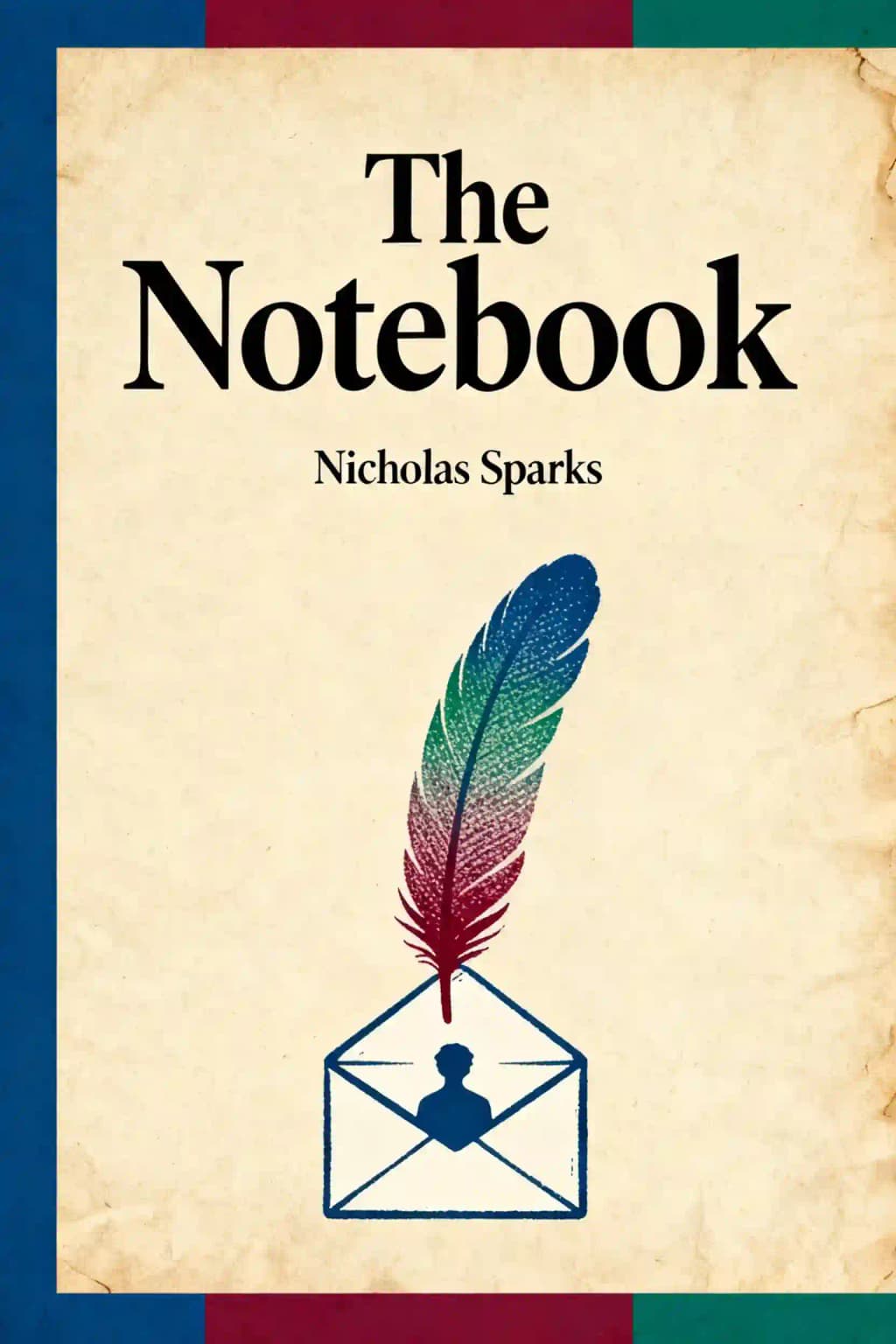
In a world obsessed with fleeting connections, Nicholas Sparks' "The Notebook" stands as a testament to love's enduring power. This tale of Noah and Allie has captivated millions since its 1996 publication, selling over 105 million copies worldwide and inspiring the iconic 2004 film that cemented Ryan Gosling and Rachel McAdams as Hollywood's most beloved on-screen couple. Beyond its commercial success, the novel has become a cultural touchstone, frequently cited as the standard for romantic devotion. What makes this story so compelling isn't just its passionate romance, but its exploration of memory, commitment, and the question that haunts us all: what does it mean to love someone completely, even when everything else fades away?
Chapter 2
The Miracle of Enduring Love
An elderly man sits by a foggy window in a nursing home, clutching a well-worn notebook, its pages yellowed and dog-eared from years of daily readings. He's no extraordinary figure-just a common man who has loved one woman with his entire being, his weathered hands testament to decades of ordinary moments made sacred through devotion. Each morning, following the same routine with unwavering precision, he walks the tiled hallways as nurses whisper, "There he goes again," their voices mixing equal parts admiration and heartache. Before entering the room of a woman who no longer recognizes him, he straightens his tie and practices his smile, preparing for another day of reintroducing himself to the love of his life.
Despite science and odds standing against him, he believes in miracles, not in the grand, dramatic sense, but in the quiet persistence of love that refuses to fade. Reading aloud from the notebook, his voice steady and warm, he shares their story - first dates and family picnics, storms weathered together, children raised, and countless small moments that built a lifetime. He reads hoping that the miracle that has defined his life will once again prevail, that somewhere in the fog of memory loss, a spark of recognition might flicker.
This framing narrative immediately establishes the emotional stakes, creating a powerful testament to love's endurance in the face of devastating loss. What could inspire such devotion? What kind of love survives when memory fails? The power lies in the simplicity of the narrator's commitment-not as obligation, but as the natural expression of a love that transcends recognition, a daily choice to honor what remains when all else falls away. It raises profound questions about identity: Who are we when those who love us can no longer remember our shared history? What remains of a relationship when one half of a couple dwells in perpetual present tense?
The answer seems to lie in the act of remembering itself, in the stories we tell that keep love alive even when cognition falters. Through his daily readings, the elderly man becomes more than just a caregiver - he becomes the keeper of their shared memories, the guardian of their love story. His dedication suggests that true love exists beyond memory, beyond recognition, in the simple act of showing up day after day, holding space for what was and what still is, even if only one person remembers.
Chapter 3
Summer of '32: When Two Worlds Collided
October 1946. Thirty-one-year-old Noah Calhoun sits on the porch of his newly restored plantation home in New Bern, North Carolina. The house, built in 1772, has consumed his savings over eleven months of painstaking restoration. Living alone with his three-legged dog Clem, Noah spends evenings playing guitar, reading Whitman's "Leaves of Grass," and communing with nature. But his thoughts inevitably drift to a summer fourteen years earlier-to a green-eyed girl who changed him forever.
That magical summer of 1932 began at the Neuse River Festival, where Noah first met Allie. They spent those warm months fishing, exploring, dancing, and falling deeply in love. When she left, she took a piece of him that he never fully recovered. Now her ghost haunts every corner of New Bern, despite his tireless work to forget.
Meanwhile, a hundred miles away, Allie sits on her parents' porch, having made a decision she hopes won't lead to regret. Her fiance, Lon, remains unaware of her true reasons for visiting the coast. The contrast between Noah's humble, contemplative existence and Allie's socially prescribed path creates the central tension that drives their story. Their different worlds-his of poetry and nature, hers of social obligations and family expectations-initially brought them together through the magnetism of opposites but ultimately forced them apart through the gravity of class differences.
Chapter 4
The Journey Back to What Was Lost
Allie arrives in New Bern before eleven, checking into a small downtown inn. She spends the afternoon antique shopping-her cover story-before calling Lon to maintain the pretense of a casual shopping trip. Their relationship began in 1942 while she volunteered with wounded soldiers. With his easy charm and confidence, Lon represented security during uncertain times. Now a successful lawyer eight years her senior, he embodies the Southern ideal of accomplishment and family name.
Though she had quietly rebelled against such values in her youth, Allie gradually came to love Lon, accepting his proposal for the security he offered. Yet guilt gnaws at her as she contemplates her secret mission. Her hands shake as she holds a newspaper clipping-the real reason for her journey.
This inner conflict reveals how we often choose paths that offer security over passion, predictability over adventure. Allie's careful preparation-choosing a modest blue dress over a revealing yellow one, applying minimal makeup-shows her awareness that she stands at a crossroads. Her trembling hands betray the magnitude of what she's risking by revisiting the past. Haven't we all wondered about roads not taken, loves abandoned, and whether our choices led us to our authentic selves or merely to comfortable compromises?
Chapter 5
The Man Who Waits
Noah rises at five, kayaks up Brices Creek, then repairs fence posts in the Indian summer heat. During lunch, he watches mullets jumping in the creek, admiring how their instincts remain unchanged through millennia, unlike mankind's ever-evolving nature. His connection to the natural world provides both solace and wisdom-a counterpoint to human complexity.
His life story unfolds through quiet reflection. After his mother's death, Noah developed a severe stutter and was passed between homes until his father saved him, teaching him to work at the timber yard and to read poetry aloud. These formative experiences shaped his character-his love for poetry, his comfort with solitude, his appreciation for nature's rhythms.
Despite athletic success bringing popularity in school, only Allie ever truly touched his heart. When their summer romance ended with her return to Winston-Salem, her wealthy family disapproving of his humble status, he wrote her monthly letters that went unanswered. Eventually, he left New Bern, working first at a Norfolk shipyard, then at a New Jersey scrap yard. Though he dated occasionally, including a two-year relationship with a waitress who noted he seemed to be waiting for someone else, no one replaced Allie in his heart.
Noah's character embodies patience and authenticity-qualities increasingly rare in our instant-gratification culture. His ability to find meaning in simple pleasures-reading poetry on his porch, helping neighbors in need, communing with nature-offers a powerful alternative to our achievement-oriented society. His waiting isn't passive resignation but active hope, maintaining space in his heart for a love he refuses to relinquish.
Chapter 6
When Past and Present Collide
Allie discovered Noah's whereabouts through a newspaper article at her parents' house-a story about his house restoration that left her hands trembling. After three weeks of distraction and solitary walks, she decided to visit New Bern, using wedding stress as an excuse to escape.
Her engagement to Lon Hammond Jr. has dominated social pages for months, with nearly five hundred guests invited to their wedding, including the governor. The spectacle has left her feeling overwhelmed and disconnected from the meaning of marriage itself.
Driving through New Bern, memories flood back as she recognizes landmarks from fourteen years ago-particularly a majestic oak tree where she first fell in love with Noah. She remembers him as strong and weathered, with a musical voice that touched her soul as he read poetry to her, listening to her hopes and dreams.
Finally arriving at Noah's restored plantation house, she sees him watching from the porch. Their face-to-face reunion after fourteen years apart leaves them momentarily speechless. When they embrace, Allie feels dizzy with emotion, momentarily fifteen again, as if she'd finally come home.
This pivotal moment captures the disorienting power of reconnecting with someone who once knew us intimately. The years collapse, and we question whether we've truly changed or merely accumulated experiences around an unchanging core. Allie's physical reaction-feeling "dizzy with emotion"-suggests that our bodies remember what our minds might prefer to forget, that some connections bypass rational thought entirely.
Chapter 7
Conversations by the River
To ease the tension of their reunion, Noah and Allie walk along the riverbank as they once did. Allie deliberately maintains physical distance between them as Noah observes she still possesses the traits he most admired-intelligence, confidence, strength of spirit, and passion. He'd always thought of her as "a living poem."
When Allie reveals her engagement to Lon Hammond Jr., Noah tries to hide his disappointment, asking if Lon treats her well. Her hesitant "yes" and description of him as "a good man" suggest uncertainty beneath her composed exterior. Their conversation continues as they reach the old oak tree that holds special memories-Noah reveals he purchased the property containing the tree because he "couldn't bear to see it turned into kitchen cabinets."
As sunset approaches, Noah asks about her plans. Allie admits she's staying without her fiance's knowledge. When Noah directly asks if she loves Lon, her automatic "yes" carries an uncertain tone. Noah gently takes her shoulders, telling her not to marry Lon unless she's completely sure. Allie insists she's "making the right decision," though her quick response seems defensive.
This exchange reveals how we often convince ourselves of certainties to avoid confronting deeper truths. Noah's direct question-"Do you love him?"-cuts through social niceties to the essential question we sometimes fear to ask ourselves. His advice not to marry unless completely sure reflects wisdom gained through years of reflection. How many relationships continue not because they're right but because we've invested too much to acknowledge they're wrong?
Chapter 8
An Evening of Reconnection
Noah suggests they move forward as friends during Allie's brief visit and invites her to dinner at his house. As Noah fetches crabs from the dock, Allie discovers their old carving-"Noah loves Allie" inside a heart-and feels powerful nostalgia wash over her. Inside Noah's beautifully restored house, they prepare dinner together, moving comfortably around the kitchen in a familiar intimacy that brings back memories.
While the crabs marinate, they sit on the porch with tea and beer, discussing how Noah acquired the house through an inheritance from his former boss. Allie remembers sneaking to visit this house years ago, and how her mother warned her that "sometimes our future is dictated by what we are, as opposed to what we want."
The conversation turns to their past relationship, and Allie confesses she's thought about Noah constantly since that summer. Noah reveals he wrote her letters that she never received. Allie is shocked to learn her mother hid Noah's letters for two years. Though hurt, she tries to understand her mother's misguided protection.
When Noah asks if those letters would have changed things between them, Allie admits she believes they would have. Noah then asks about Lon, and Allie describes him as handsome, successful, and loving, but confesses "there's always going to be something missing"-the kind of love she shared with Noah that summer.
This evening reveals how easily we fall back into patterns with those who once knew us intimately. The comfortable rhythm of cooking together, the candid conversations-these moments suggest that some connections remain intact despite years of separation. Allie's confession about "something missing" with Lon speaks to our human tendency to settle for relationships that meet external criteria while failing to satisfy our deeper emotional needs.
Chapter 9
Nature's Symphony: The Swan Lake
The next day, Noah takes Allie on a surprise canoe trip upriver. Despite approaching storm clouds, she insists they continue with his plans. As they paddle, Allie watches Noah, admiring his muscular physique and natural grace on the water. She reflects on what makes him different-his poetic nature, his ability to savor life more fully than others.
After paddling for about a mile, Noah guides the canoe through a hidden opening and asks Allie to close her eyes. When she opens them, they're in the middle of a small lake completely surrounded by thousands of tundra swans and Canada geese. The birds float so close together that in places she can't see the water, some groups looking like icebergs from a distance.
Breathless at the beauty, Allie sits in silence watching the birds, especially the newly hatched chicks struggling to keep up with the geese. She reaches out to touch the closest birds, feeling their feathers under her fingers, and feeds them bread from Noah's bag, delighting in the experience.
When thunder booms in the distance, they reluctantly leave. Noah explains the swans have likely been displaced from their usual migration by an early blizzard but will find their way back by instinct. As they paddle back, the rain begins-first a light sprinkle, then harder as lightning and thunder approach.
This extraordinary scene functions as both literal experience and powerful metaphor. The hidden lake of swans represents the unexpected beauty that awaits when we venture beyond conventional paths. Noah's knowledge of this secret place shows his deep connection to the natural world that Allie's privileged life has distanced her from. The approaching storm mirrors the emotional turbulence building between them-beautiful, dangerous, and impossible to ignore.
Chapter 10
Passion Rekindled
Back at the house, Noah provides dry clothes for Allie. While he builds a fire downstairs, she changes in his bedroom, feeling a secret thrill at being naked in his room. As the storm rages outside, they sit together on the floor before the fire, sharing bourbon and reminiscing about their past.
Allie confesses that she remembers making love with him most vividly-that he was her first and it was more wonderful than she ever imagined. She reveals that she wrote him a dozen letters after their summer but never sent them, fearing he might have forgotten her or that their connection wasn't as real as she thought.
Noah tells her he's loved her all along, and Allie confesses that he remains the only man she's ever been intimate with. The years of separation dissolve as Noah kisses her softly on the lips. Their passion builds as they begin to undress each other by the firelight, their bodies pressing together in a reunion both physical and emotional.
They make love with exquisite tenderness by the fire, their bodies remembering each other after years apart. Noah's gentle touches awaken Allie's passion completely. They spend the entire day and evening in each other's arms, alternating between lovemaking and lying together watching the flames. Noah recites poetry to her as she listens with closed eyes.
This intimate reunion represents more than physical desire-it's the reconnection of two souls who recognize each other despite years apart. Their lovemaking becomes an act of remembering, of reclaiming a connection that society and circumstance tried to sever. The poetry Noah recites serves as both foreplay and affirmation of their deeper bond-one built on shared sensibilities and mutual understanding, not just physical attraction.
Chapter 11
Choices and Consequences
While Noah and Allie enjoy their reunion, Lon Hammond is driving to New Bern, having realized where Allie has gone and why. Meanwhile, Noah and Allie check the property for storm damage before preparing lunch together, their domestic harmony interrupted by a knock at the door.
Noah opens it to find Allie's mother, Anne Nelson, standing there. She explains that she knew exactly where Allie would be after seeing the newspaper article. Anne reveals she hasn't told Allie's father or anyone else about her whereabouts, but warns that Lon has figured it out and is on his way to New Bern.
In a private conversation with Allie, Anne gives her a bundle of letters-Noah's letters that she had intercepted years ago. She apologizes for keeping them and leaves Allie to make her own decision, whispering, "Follow your heart."
After Anne departs, Allie tells Noah she loves him but feels torn about betraying Lon and disappointing her family. Noah pleads with her to stay, insisting they're meant to be together and that their connection is too rare to throw away. Despite his entreaties, Noah sees in Allie's eyes that she's decided to leave.
They share a final emotional embrace before Allie gets into her car. Noah watches in silent anguish as she drives away, convinced she's gone forever. Driving with tears in her eyes, Allie reaches the inn where Lon is waiting. Before going in, she reads Noah's final letter from years ago-a beautiful, heartfelt goodbye expressing his enduring love. As she enters the inn and sees Lon standing in the lobby, she finally knows what she must do.
This pivotal scene explores the tension between passion and obligation, between following one's heart and honoring commitments. Anne's transformation from obstacle to ally represents the parental realization that protecting children from pain sometimes causes greater harm than allowing them to make their own mistakes. Her simple instruction to "follow your heart" acknowledges that some decisions can only be made by listening to our deepest truths.
Chapter 12
Love Beyond Memory
The narrative returns to the elderly narrator closing the notebook, removing his glasses and wiping his eyes. He has been reading to a woman who stares out the window, not looking back at him. We learn they live at Creekside Extended Care Facility, where they've been for three years, sleeping in separate rooms.
When the woman turns to him after hearing the story, she's crying. She calls it beautiful and asks if he wrote it. He confirms he did. She admits to having heard it before, saying it makes her feel less afraid. When she asks which man Allie finally married, he cryptically answers, "The one who was right for her."
Then comes the heartbreaking revelation when she asks, "Who are you?" He introduces himself as "Duke," though this is clearly not his real name. She apologizes, explaining she feels lost, unable to remember even her own name. He tenderly describes her as "Hannah," telling her she's a lover of life, a creator of happiness, an artist who touched countless souls.
We learn that the woman is Allie, suffering from Alzheimer's disease, and the narrator is Noah, her husband of nearly fifty years. Though she doesn't remember him, they continue to share moments of connection as they watch birds by the water. Noah explains that he's deliberately vague with Allie to avoid causing her pain, having learned that overwhelming her with information about her life only crushes her spirit.
This final revelation transforms everything we've read. The love story wasn't simply about youthful passion but about a commitment that transcends memory itself. Noah's daily reading isn't just nostalgic reminiscence but a desperate attempt to reconnect, if only momentarily, with the woman who no longer recognizes him. His devotion challenges us to consider what love means when stripped of shared history-when it becomes a daily act of reintroduction and renewal.
Chapter 13
The Miracle of Moments
On their forty-ninth anniversary, Noah decides to visit Allie despite rules against nighttime visits. When confronted by a nurse, he simply says, "I miss her." Moved by his devotion, she leaves for "coffee," giving Noah the opportunity to make his difficult journey to Allie's room, taking tiny steps and touching the wall for support.
When he finally reaches her room, he watches her sleeping in the moonlight before sitting on her bed, gently touching her face and stroking her hair. When she stirs and opens her eyes, he expects her usual frightened reaction, but instead, when their lips meet, he feels an extraordinary tingling. Miraculously, she responds, her mouth opening to his kiss. Noah feels transported back in time as Allie whispers, "Oh, Noah... I've missed you."
In this perfect moment of reconnection-the greatest miracle of all-tears stream down his face as Allie begins to unbutton his shirt, slowly, one by one. This final scene captures the essence of the entire narrative: that love exists in moments, not continuity. Noah and Allie's story isn't about unbroken happiness but about finding transcendence in fleeting connections.
The miracle isn't that Allie always remembers-she doesn't-but that sometimes, against all medical probability, she does. Noah's faith in these moments sustains him through the heartbreak of daily reintroductions. His commitment reminds us that love isn't just about grand gestures or passionate beginnings but about showing up day after day, even when recognition fails.
What makes "The Notebook" so powerful isn't just its romantic idealism but its unflinching look at love's challenges. Through Noah and Allie's story, we confront our deepest fears about aging, illness, and loss, while discovering that connection remains possible even when memory fades. Their journey suggests that true love isn't defined by continuous happiness but by the courage to remain present through joy and suffering alike-finding meaning in moments of connection that, however brief, illuminate the darkness of forgetting.