Chapter 1
A Journey of Identity, Memory, and Destiny
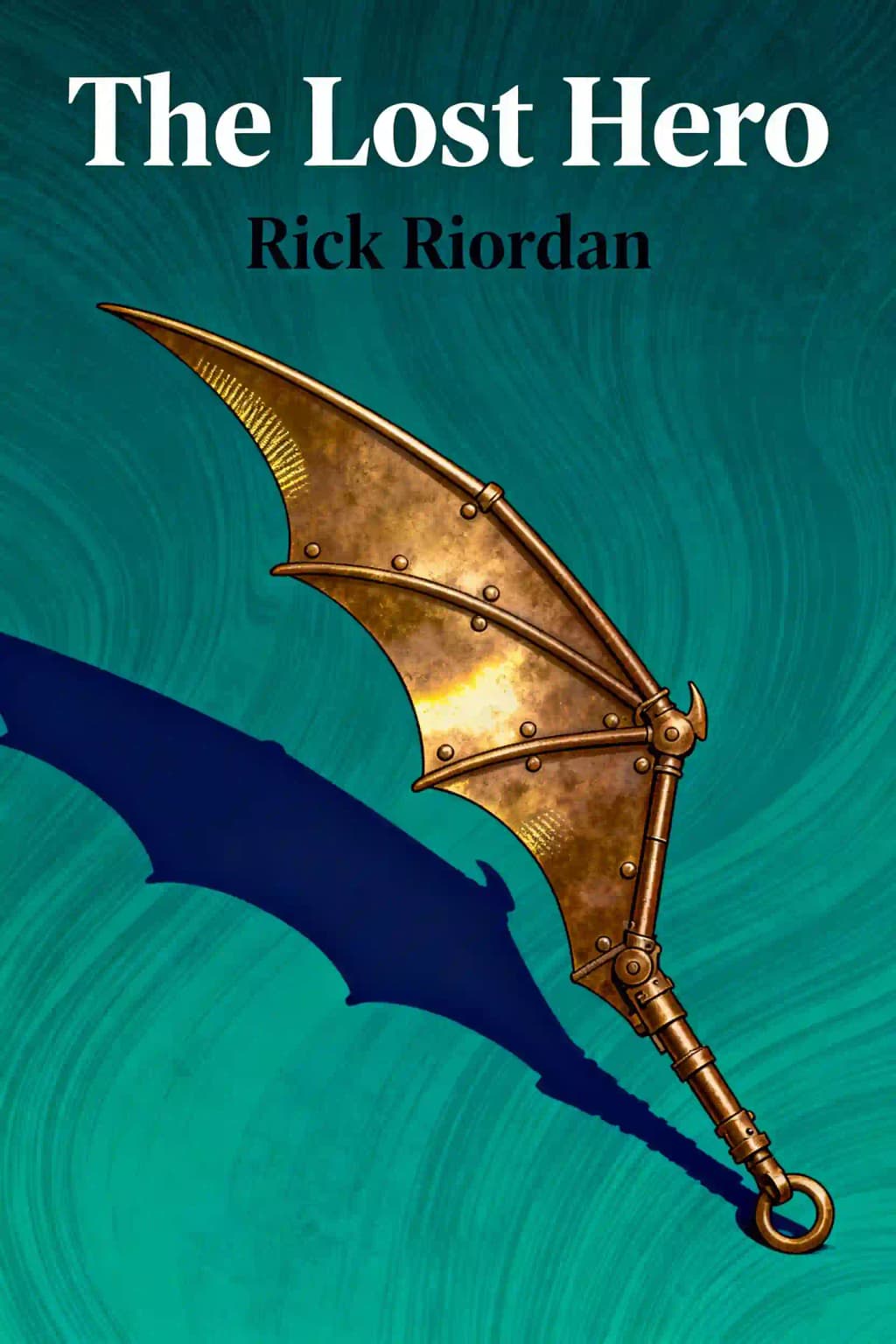
Ever wondered what it would feel like to wake up with no memory of who you are, surrounded by people who claim to know you? This is the jarring reality that launches Rick Riordan's "The Lost Hero," the first installment in his Heroes of Olympus series that took the literary world by storm in 2010. Building on the phenomenal success of his Percy Jackson series (which has sold over 180 million copies worldwide), Riordan crafts a tale that expands his mythological universe in thrilling new directions. The book quickly topped the New York Times bestseller list and remained there for months, captivating both devoted Percy Jackson fans and newcomers alike. Even former President Barack Obama was spotted purchasing the series for his daughters, while celebrities like Lin-Manuel Miranda have cited Riordan's mythological adventures as creative inspirations. What makes this particular adventure so compelling is how it explores questions of identity and belonging through the lens of classical mythology - themes that resonate deeply with readers of all ages as they navigate their own journeys of self-discovery.
Chapter 2
Awakening to Amnesia: Jason's Mysterious Beginning
Jason Grace opens his eyes on a school bus with absolutely no memory of who he is or how he got there. Beside him sits a beautiful girl named Piper who claims to be his girlfriend, while their hyperactive friend Leo insists they're all best friends at the Wilderness School for troubled kids. Their field trip to the Grand Canyon quickly turns disastrous when storm spirits attack, revealing that their coach, Hedge, is actually a satyr protector. During the battle, Jason discovers he can control the air, saving Piper when she falls from the skywalk. He also finds a gold coin in his pocket that transforms into a sword - abilities and items he doesn't remember possessing.
Their rescue arrives in the form of a flying chariot piloted by Annabeth and Butch from Camp Half-Blood. Annabeth seems disappointed, having hoped to find her missing boyfriend Percy Jackson instead. The newcomers learn they're "demigods" - children of Greek gods and mortal parents - and are whisked away to the safety of Camp Half-Blood.
What makes this opening so captivating is how it immediately places us in Jason's disoriented perspective. We experience his confusion firsthand as he grapples with the fundamental question: "Who am I?" The amnesia device isn't just a convenient plot mechanism; it's a powerful metaphor for adolescence itself - that universal experience of trying to figure out your identity and place in the world.
Haven't we all had moments where we feel dropped into situations where everyone seems to know the rules except us? Jason's predicament resonates because it amplifies that common human experience of feeling like an outsider, of questioning whether we truly belong in the spaces we occupy. His journey becomes our journey as readers - piecing together the fragments of who he really is.
Chapter 3
Welcome to Camp Half-Blood: A World of Divine Heritage
Upon arriving at Camp Half-Blood, our three heroes begin to discover their divine parentage. Leo is claimed by Hephaestus, god of blacksmiths and fire, while Piper later learns she's a daughter of Aphrodite, goddess of love and beauty. Jason's heritage remains mysterious, though his knowledge of Roman god names and the strange SPQR tattoo on his arm raise questions among the campers.
The camp itself is a marvel - a sanctuary hidden from mortal eyes with weather-controlled grounds and twenty unique cabins representing different Greek gods. Annabeth explains that demigods are typically claimed by age thirteen when monsters begin noticing them. She also reveals that her boyfriend Percy Jackson disappeared three days earlier - the same night Jason mysteriously appeared.
In a devastating revelation, Piper learns that her memories of dating Jason are false - implanted by the Mist that shields mortals from the magical world. While processing this heartbreak, she receives a disturbing vision in Hera's cabin: the goddess is imprisoned and needs their help. Meanwhile, Leo explores the camp's forges with his new Hephaestus cabinmates, discovering they've been plagued by a curse since the death of their former counselor Beckendorf. When alone, Leo secretly summons flames in his palm, revealing a rare and dangerous ability he's kept hidden.
This section brilliantly expands the mythology Riordan established in the Percy Jackson series while introducing fresh elements. The camp setting serves as a microcosm of society, where each cabin represents different values and temperaments. Through this lens, Riordan explores how our heritage shapes but doesn't define us - a powerful message for young readers navigating their own identities.
The false memories plot point is particularly poignant. Haven't we all experienced the disorientation of discovering something we believed to be true was actually false? Piper's journey forces her to question what's real and what matters when the foundation of a relationship is revealed to be artificial. Yet her feelings remain authentic, raising profound questions about the nature of connection and whether the origin of a relationship matters more than what it becomes.
Chapter 4
Prophecies and Quests: A Divine Mission Unfolds
When Rachel Elizabeth Dare, the camp's oracle, delivers a prophecy about freeing Hera, Jason is chosen to lead a quest. The prophecy mentions "the forge and dove shall break the cage," identifying Leo and Piper as his companions. Their mission: rescue Hera before the winter solstice, just four days away.
Before departing, Jason has a troubling conversation with Chiron, who seems to recognize him but warns his presence could be disastrous. Jason also experiences a vision of a misty woman claiming to be his patron, saying he belongs to her and must free her from prison. When time unfreezes, Jason tells Chiron about the encounter, and they realize the mysterious woman is Hera/Juno in her Roman aspect.
The quest prophecy contains ominous lines: "Child of lightning, beware the earth, The giants' revenge the seven shall birth." This connects to the Great Prophecy that Rachel had begun reciting earlier: "Seven half-bloods shall answer the call. To storm or fire the world must fall-" which Jason shockingly completes in Latin.
Leo prepares for the journey by venturing into the forbidden woods to find and repair the camp's malfunctioning bronze dragon, Festus. Using his fire abilities, he tames the automaton and discovers a hidden bunker filled with ancient blueprints and tools. With Festus as their transportation, the trio sets off north to find Boreas, the North Wind god, who might help them track the storm spirits connected to Hera's imprisonment.
Prophecies in mythology have always represented the tension between fate and free will - are we bound by predetermined destinies or can we forge our own paths? Riordan skillfully plays with this ancient question, showing how prophecies guide but don't dictate outcomes. The characters must interpret cryptic messages and make choices that might fulfill or subvert what's foretold.
What makes this quest compelling is how it intertwines personal and cosmic stakes. Yes, they're trying to prevent a catastrophic awakening of ancient forces, but they're also on individual journeys of self-discovery. Leo must confront his troubled past and unusual abilities, Piper struggles with her identity as both Cherokee and Greek, and Jason searches for his missing memories. The quest becomes a crucible that forces each character to face their deepest fears and insecurities.
Chapter 5
Winds of Revelation: Encounters with Boreas and Medea
The heroes' journey to Quebec brings them face to face with Boreas and his children - the blustering hockey enthusiast Calais, the flirtatious Zethes, and the beautiful but dangerous snow goddess Khione. When Jason accidentally reveals his Roman tattoo, Boreas transforms into his Roman form Aquilon, laughing about "Hera's dangerous game" and directing them to Chicago to find the servant controlling the winds.
Their next stop proves even more perilous when they crash-land in Detroit and encounter Cyclopes who nearly kill them. Leo saves the day using his mechanical skills and fire powers, but they notice something disturbing - the monsters' dust begins reforming immediately after being defeated, something that shouldn't happen according to what they know about monsters returning to Tartarus.
In Chicago, they track storm spirits to a bizarre department store run by the enchantress Medea. Using powerful charmspeak, she manipulates Jason and Leo into nearly killing each other before Piper breaks her spell. Medea reveals she lured Piper's father into a trap and had targeted Leo's mother years ago while in the Underworld. After a narrow escape that destroys the store, they continue their journey with Coach Hedge (whom they rescued from Medea's cages) and the captured storm spirits.
This section brilliantly weaves classical mythology into modern settings. The juxtaposition of ancient beings operating department stores or obsessing over hockey creates a delightful tension between the mythic and mundane. Riordan excels at reimagining ancient myths for contemporary audiences, showing how these timeless stories continue to resonate.
The encounter with Medea particularly stands out as a meditation on manipulation and autonomy. Her ability to control minds through charmspeak raises uncomfortable questions about free will and responsibility. When is persuasion acceptable, and when does it cross into unethical territory? Piper must grapple with these questions as she develops her own charmspeak abilities, wondering if using such power makes her any different from Medea.
Chapter 6
Family Complications: Revelations and Reunions
The quest takes an unexpected turn when the heroes crash-land at King Midas's mansion in Omaha, Nebraska - a gilded palace incongruously planted in the American Midwest. The legendary king, now corrupted and working for the giants, maintains his ancient curse of turning everything to gold. With calculated cruelty, he transforms Piper and Leo into golden statues, forcing Jason to watch his friends become lifeless decorations for Midas's collection. Only through quick thinking and resourcefulness does Jason manage to defeat the greedy king, using freezing rain to neutralize Midas's touch and restore his friends to flesh and blood.
During their recovery in the dense forest, Piper finally breaks down and shares the burden she's been carrying: her father, Tristan McLean - Hollywood's leading action movie star and heartthrob - has been kidnapped by the giant Enceladus. The giant's ultimatum was cruel but simple: either Piper betrays her friends by leading them into a carefully planned trap, or her father dies. The revelation showcases the giants' tactical intelligence, using loved ones as leverage. Rather than responding with the anger or betrayal Piper feared, her friends demonstrate unwavering loyalty, immediately pledging to help rescue her father.
Their moment of solidarity is shattered by the appearance of Lycaon, the first werewolf king, and his pack of savage wolves. The attack seems fatal until the Hunters of Artemis emerge from the shadows, their silver arrows gleaming in the moonlight. The intervention leads to an even more dramatic revelation - their leader is Thalia Grace, Jason's sister whom he can't remember. The reunion triggers fragments of Jason's buried memories: flashes of a young girl with electric blue eyes protecting him from their mother's episodes.
Thalia fills in the painful gaps of their shared history. Their mother was a television actress whose mental stability deteriorated after supposedly losing Jason. She would alternate between claiming Hera had blessed them by taking Jason and raging against the goddess for stealing her son. The truth of Jason's disappearance - that Hera had indeed taken him to train as a Roman demigod - remained hidden for years. Unable to cope with her mother's declining mental state and the grief of losing her brother, Thalia eventually fled home, carrying the weight of her family's tragedy alone.
Riordan masterfully weaves these family dynamics into the larger narrative, showing how parental failures and sibling separation shape identity. The contrast between Piper's relationship with her loving but kidnapped father and the Grace siblings' experience with their unstable mother highlights different forms of family trauma. Yet both storylines demonstrate resilience - Piper's determination to save her father while maintaining her own identity beyond his fame, and the Grace siblings' ability to reconnect despite years of separation and lost memories. Their stories suggest that while family can be a source of deep wounds, it can also offer opportunities for healing and redemption through trust, understanding, and forgiveness.
Chapter 7
Confronting Giants: Battles of Body and Spirit
After parting ways with Thalia, the heroes travel to Mount Diablo in California to rescue Piper's father from Enceladus. The thirty-foot giant with dragon legs offers Piper a terrible choice: betray her friends or lose her father. Refusing to sacrifice anyone she loves, Piper's powerful words momentarily push back the Earthborn monsters summoned by the giant.
In the ensuing battle, Leo commandeers construction equipment to fight the six-armed ogres, while Jason confronts Enceladus directly. After a desperate struggle that shatters Jason's golden javelin, he leaps onto the giant's back, channels a massive lightning bolt, and sends Enceladus falling into a chasm. Though they rescue Tristan McLean, his mind is shattered by the trauma he's experienced.
After getting her father safely on a plane home with Coach Hedge as protection, Piper makes the difficult choice to continue the quest rather than accompanying him. She gives him Aphrodite's memory-erasing potion to spare him the knowledge of gods and monsters, allowing him to heal without the burden of these traumatic memories.
Meanwhile, Jason has been having visions of Hera imprisoned in the Wolf House - an abandoned mansion built by Jack London on sacred ground. They realize this is where Porphyrion, the giant king, is being reborn using Hera's power, and they must free her before sunset on the winter solstice.
This section powerfully explores the concept of sacrifice - not just physical courage in battle, but the emotional sacrifices we make for those we love. Piper's decision to erase her father's memories represents a profound act of love, prioritizing his wellbeing over their newfound honesty. It raises thought-provoking questions about when forgetting might be more merciful than remembering.
The battles with giants also serve as external manifestations of internal struggles. Each hero must overcome not just physical monsters but personal demons - Jason's uncertainty about his identity, Leo's guilt over his mother's death, and Piper's fear of being forced to choose between loyalties. These parallel challenges reinforce the book's theme that the greatest heroism often involves conquering our own limitations.
Chapter 8
The Wolf House: Final Confrontation and Awakening
The heroes arrive at the Wolf House to find Thalia and her Hunters battling an endless wave of monsters that keep reforming. Inside, they discover two spires - one holding the imprisoned Hera and another where the giant king Porphyrion is awakening. Khione, the snow goddess, reveals she orchestrated everything - tricking Hera, whispering to Zeus to close Olympus, and planning to spark war between Greek and Roman demigods.
As monsters attack, Jason tames a storm spirit horse he names Tempest, while Leo confronts Khione with his fire powers - her natural enemy. After defeating the remaining enemies, they race to free Hera before she sinks completely into the earth. Leo uses a circular saw powered by Tempest's electricity to cut through her cage while Piper charm-speaks it to loosen.
Meanwhile, Porphyrion fully emerges - taller than Enceladus, with lima-bean colored skin, green hair braided with weapons, and blank white eyes. Jason distracts the giant by claiming to be a son of Jupiter and consul to demigods, buying time for his friends to free Hera. When they succeed, Hera transforms into her divine form, forcing Porphyrion to retreat and vaporizing all monsters, though Jason nearly dies from exposure to her true form.
Afterward, Hera reveals to Jason that he is Roman - he was given to her service as payment for Zeus's affair with his mother. She left him at the Wolf House to meet Lupa, the she-wolf goddess who trains Roman demigods, before being sent to a different camp than Camp Half-Blood. Though Jason's memories are returning, Hera refuses to reveal this other camp's location, insisting he must find his own way back to unite "two great powers" against Gaea.
This climactic battle masterfully brings together the book's central themes. The Wolf House itself symbolizes the liminal space between Greek and Roman worlds - the perfect setting for Jason to reclaim fragments of his identity. The revelation that Jason belongs to a Roman camp explains his sense of displacement throughout the story and sets up the larger conflict between Greek and Roman demigods that will drive the series forward.
Hera's imprisonment and release carry mythological significance beyond the immediate plot. In Greek mythology, Hera often represented the established order, and her confinement symbolizes the disruption of cosmic balance. Her liberation, while necessary, comes with its own dangers - "death unleash through Hera's rage" as the prophecy warned. This ambiguity reminds us that in Riordan's world, as in ancient myths, even victories come with complications and consequences.
Chapter 9
Revelations and New Beginnings: The Quest's Aftermath
Upon returning to Camp Half-Blood, the heroes share their discoveries with the camp council. Jason explains about the Roman camp and confirms what everyone has suspected: Percy Jackson is there with his memory wiped, just as Jason was sent here - an exchange of leaders orchestrated by Hera to eventually unite the two groups against Gaea.
Leo reveals Bunker 9 to his cabinmates, showing them ancient blueprints for a flying ship called the Argo II, with Festus's head to be repurposed as its masthead. Chiron reluctantly explains that during the American Civil War, demigods fought a parallel conflict between Camp Half-Blood and the Roman camp. The gods separated these groups afterward, using the Mist to prevent them from remembering each other. Now, Leo, Jason, and Piper are among the seven demigods from the Great Prophecy who must sail to Greece to confront the giants in their homeland.
Meanwhile, Piper challenges Drew for leadership of the Aphrodite cabin, promising to restore it to Silena Beauregard's vision of love and beauty rather than mere appearances. Despite Jason's warning about troubling memories from his past, Piper remains optimistic about their relationship, telling him she'd follow him anywhere.
In a final visit, Juno appears to Jason, explaining he must unite the heroes of Olympus and sail to Greece to face the giants. Though terrified of leading demigods into the Great Prophecy, Jason no longer feels alone with friends, a home, and even a patron goddess. She gives him a sheathed gladius before vanishing, symbolizing his acceptance of both his Roman heritage and his new Greek allies.
This denouement brilliantly sets up the larger series while providing satisfying closure to the immediate story. Each hero has undergone significant growth: Jason has begun reclaiming his identity, Leo has found purpose and belonging, and Piper has embraced her heritage and inner strength. Yet their personal journeys are now woven into a greater tapestry - the looming conflict with Gaea and her giants that threatens both mortal and divine worlds.
The revelation about Greek and Roman camps existing separately adds a fascinating historical dimension to Riordan's mythology. It cleverly explains why these two aspects of ancient culture, often treated as interchangeable in popular media, have distinct characteristics and tensions. This cultural divide becomes a metaphor for the divisions we create in our own world - how we separate ourselves into opposing groups despite shared humanity.
Chapter 10
The Power of Identity in a World of Gods and Monsters
"The Lost Hero" is fundamentally a story about identity - how we define ourselves when our memories, relationships, and even our understanding of reality are called into question. Each protagonist faces unique identity challenges: Jason must recover who he was while deciding who he wants to become; Piper must reconcile her Cherokee heritage with her divine parentage while finding authentic connections; Leo must overcome his outsider status and embrace his unusual gifts without being defined by past trauma.
What makes Riordan's approach to mythology so compelling is how he uses these ancient stories to explore contemporary issues. The gods represent timeless aspects of human nature and society, while the demigods navigate the very modern challenge of belonging to multiple worlds simultaneously. This resonates powerfully with young readers navigating their own complex identities across different social contexts.
The book also explores how memory shapes identity. When Jason loses his memories, he doesn't just lose information - he loses his sense of self. His journey reminds us that we are, in many ways, the stories we tell about ourselves. When those stories are disrupted, we must decide which parts to reclaim and which to reinvent.
Perhaps most powerfully, "The Lost Hero" suggests that true heroism isn't about individual glory but about connection and cooperation. The prophecy's emphasis on seven heroes working together foreshadows that no single demigod - Greek or Roman - can face the coming challenges alone. In a world increasingly divided by tribal identities, this message of transcending differences to confront common threats feels particularly relevant.
As the first book in the Heroes of Olympus series, "The Lost Hero" brilliantly expands Riordan's mythological universe while establishing new characters readers will follow through epic adventures. By interweaving personal journeys with cosmic conflicts, Riordan creates a story that entertains while encouraging readers to consider profound questions about identity, memory, and the stories that shape our understanding of ourselves and our world.