Chapter 4
Tragedy and Triumph: The Defining Moments
On August 20, 1983, tragedy struck Auburn's football program when fullback Greg Pratt collapsed during Pat Dye's notorious training test-four timed 440-yard runs in extreme heat and humidity. Despite being carried across the finish line by teammates including Bo Jackson, Pratt died of heatstroke at age twenty. At Pratt's funeral in Albany, Georgia, Jackson, Lionel James, and Coach Dye served as pallbearers. When it was his turn at the open casket, Jackson-tears streaming-took a photo with a disposable camera, something several other Black players did as well.
Despite this devastating loss, the team moved forward, and Jackson's legend continued growing. His most iconic moment came during the 1982 Iron Bowl against Alabama. With Auburn trailing 22-17 and time running out, the Tigers drove to the Alabama 9-yard line. On fourth-and-inches, they called a play they had secretly practiced-"Bo Over The Top." Jackson planted his feet and soared over the line into the end zone, giving Auburn a 23-22 lead that would hold for their first victory over Alabama in nine years.
Jackson's baseball career at Auburn initially took a backseat to football, but when Paul Nix retired as baseball coach after twenty-two seasons, the door reopened for Jackson's return to the diamond. New coach Hal Baird immediately recognized Jackson's extraordinary potential: "He's the only guy I ever saw who made marked improvement day by day. That's how superior physically he was."
Baird, who had pitched in the minor leagues and seen numerous future stars, observed something unprecedented in Jackson: "I saw four or five guys, total, who had the type of power Bo possesses; three or four who could run like he can; and three or four who could throw like he can. But those were twelve different people. It sounds like I'm talking about Superman."
The most legendary moment of Jackson's collegiate baseball career came on April 2, 1985, during Georgia's first-ever night game at Foley Field. Against pitcher Larry Lyons, Jackson connected with a fastball that produced a sound like "a cement truck slamming into another cement truck." The ball rocketed toward left-center, clearing the 85-foot-high center-field light pole and slamming into the light fixture itself while still rising. Neither the center fielder nor left fielder moved a muscle. When Jackson returned to the outfield after the inning, the previously hostile Georgia fans rose in a standing ovation and bowed in unison.
Chapter 5
The Two-Sport Phenomenon Emerges
On June 7, 1982, the New York Yankees selected Jackson in the second round (50th overall) of the MLB amateur draft, a position that drastically understated his true potential. Because of his firm commitment to Auburn University, he fell far lower than his exceptional talent warranted-baseball insiders widely agreed that had he been willing to commit solely to baseball, he would have been the unanimous first overall selection. The Yankees' persistent attempts to reach Jackson proved futile, as Auburn's athletic department representatives had been systematically undermining their efforts for months, strategically whispering that the Yankees organization was rotten to its core and that New York City would "eat a bumpkin like Jackson for lunch." These tactics, combined with Jackson's genuine desire for a college education, effectively ended any chance of him signing with the Yankees.
Four years later, after a stellar college career culminating in winning the 1985 Heisman Trophy as college football's best player, Jackson faced the pivotal decision that would define his professional career. The Tampa Bay Buccaneers selected him first overall in the 1986 NFL Draft, but Jackson's visit to Tampa proved to be a disaster that would alter the course of sports history. The franchise's reputation was in tatters, notorious for its dilapidated facilities, dysfunctional management structure, and an owner, Hugh Culverhouse, widely known for being both miserly and openly bigoted. During what was meant to be a casual recruiting trip while bass fishing with Buccaneers players, veteran linebacker Scott Brantley delivered a brutally honest assessment that resonated deeply with Jackson: "Bo, we'd love to have you. But you do not want to be a Tampa Bay Buccaneer. This place is a fucking joke." The statement confirmed Jackson's worst suspicions about the organization.
When Jackson visited the Kansas City Royals on May 30, initially skeptical GM John Schuerholz suspected they were merely being used as leverage in NFL negotiations, a common tactic among two-sport athletes. In a decisive moment, Schuerholz sat Jackson down in his office and asked directly, "Do you really want to play baseball?" Jackson's response was immediate and genuine, looking him straight in the eye and declaring, "Yes, I do. That's why I'm here." During his workout session, Jackson displayed both his natural talent and confidence during batting practice, noting with a characteristic sly grin that few Royals were hitting home runs: "Not a lot of these guys hitting the ball out of the park, huh? This looks easy." His raw power and athletic ability left the Royals' staff awestruck.
On June 20, Jackson sent shockwaves through the sports world by choosing baseball over football, signing with the Royals for $1,066,000-a substantial sum for a baseball rookie but far less than the Buccaneers' lucrative offer of $4 million over five years. His decision, prioritizing personal satisfaction and long-term health over immediate financial gain, was a revolutionary moment in professional sports that would ultimately pave the way for his unprecedented dual-sport career. This choice, based on personal preference rather than financial calculation, established a pattern that would define his unique career path and challenge conventional wisdom about professional athletics.
Chapter 6
The Legend Grows: Superhuman Feats
Jackson's first taste of professional baseball came with the Double-A Memphis Chicks, where his batting practice sessions became must-see events. Rich Dubee, the team's pitching coach, threw 28 pitches during one session. Nine flew over the outfield wall-not merely slightly over the 398-foot wall, but hitting the scaffolding of Memphis State's practice field beyond center. "He hit balls over the dawn," said Ed Allen, a Chicks outfielder.
After a slow start in Memphis, Jackson's turnaround began with a grand slam against Greenville that measured an astounding 554 feet, clearing the 360-foot fence, 30 rows of bleachers, and 12-foot high signs. His physical feats defied belief: beating out a ground ball to second base, throwing out a runner at home from the right field corner, and changing direction mid-throw to nail a runner at third.
When Jackson joined the Kansas City Royals in September 1986, his raw talent continued to astonish teammates. During batting practice, he nearly hit the scoreboard in center field with a 470-foot blast. On September 14 against the Mariners, Jackson told catcher Jim Sundberg, "Hey, Jim, watch how far I hit this" before launching a 475-foot home run-the longest in stadium history-off Mike Moore.
But baseball was only half the story. After the 1987 baseball season ended, Jackson shocked the sports world by signing with the Los Angeles Raiders to play football "as a hobby." On November 22 against Denver, Jackson provided his first NFL highlight. Taking a pitch from quarterback Marc Wilson, he executed "The Bo Reverse," spinning 360 degrees to freeze linebackers before charging directly into feared safety Mike Harden. Rather than trying to juke, Jackson lowered his shoulder and flattened Harden completely, continuing into the end zone.
His defining football moment came on Monday Night Football against Seattle and trash-talking linebacker Brian Bosworth, who had publicly vowed to shut down Bo Jackson. The result was a nationally televised demolition. Jackson powered through Bosworth's attempted tackle for a touchdown, humiliating the self-promoting linebacker. Jackson finished with a team-record 221 yards on 18 carries in the Raiders' 37-14 victory. As Raiders quarterback Steve Beuerlein observed: "That night, Bo killed The Boz. And then he buried the body."
Chapter 7
The Greatest Year: 1989's Transcendent Season
In 1989, Bo Jackson reached his athletic zenith. During a game against Seattle, he made what became an iconic play: a full-tilt throw from left field that perfectly nailed runner Harold Reynolds at home plate, leaving teammates and opponents in disbelief. The Mariners players crowded around a television monitor to watch replays, with Reynolds watching in stunned silence after approximately fifteen viewings. "I'm telling you right now, the guy is superhuman," Reynolds said.
By July 4, Jackson had 20 home runs and 20 stolen bases at the season's halfway point. When asked if he was pursuing the rare 40-40 milestone, Jackson dismissed it: "To hell with 40-40. You all are more concerned about it than I am."
Meanwhile, Nike faced a challenge with their Bo Jackson endorsement. Despite his athletic brilliance, Jackson was considered boring as a personality-he was quiet, stuttered occasionally, avoided eye contact, and often seemed disinterested in media and fans. Nike's advertising team at Wieden + Kennedy developed a brilliant solution: the "Bo Knows" campaign for their new cross-trainer shoe. The minute-long commercial featured Jackson attempting various sports as stars from each field declared "Bo knows [sport]," culminating with musician Bo Diddley saying "Bo, you don't know Diddley" after Jackson failed at playing guitar.
When Jackson was voted an American League All-Star starter in July 1989, Nike seized the opportunity to debut the commercial during the game. The timing proved perfect when Jackson led off the 1989 All-Star Game with a monstrous 448-foot home run to dead center field off Rick Reuschel. As former President Ronald Reagan provided commentary in the broadcast booth, Jackson's perfect swing sent the ball soaring over the wall, leaving players in both dugouts speechless.
After the baseball season, Jackson returned to the Raiders for more football heroics. On October 29 against Washington, he delivered his most spectacular NFL run-a 73-yard touchdown where he broke multiple tackles with kung-fu-like moves. One week later against Cincinnati, he ran for 159 yards including a 92-yard touchdown. Jackson was averaging an astounding 7.4 yards per carry, prompting the Orange County Register's Steve Bisheff to declare, "Bo Jackson belongs on his own pedestal. Don't put him in the Hall of Fame. Put him in the Louvre."
Chapter 8
The Fall: Injury and the Fight to Return
The end came suddenly. During a playoff game against Cincinnati on January 13, 1991, Jackson took a handoff and burst through a hole created by Marcus Allen's block. After eluding safety David Fulcher with a stutter step, Jackson seemed destined for a touchdown until linebacker Kevin Walker charged from an angle and desperately wrapped his arms around Jackson's torso, sliding down to grab his right calf.
That one-tenth-of-a-second delay when Jackson stutter-stepped around Fulcher gave Walker just enough time to catch up. As Jackson continued forward with Walker hanging onto his calf like a 238-pound anchor, his left leg remained planted in the turf while his body's momentum carried forward. The result was a dislocated hip with severe vascular damage-an injury that would ultimately end his football career and forever alter his baseball trajectory.
Despite the devastating diagnosis, Jackson refused to accept defeat. After the Kansas City Royals released him, the Chicago White Sox took a chance, installing a special $50,000 multidepth hydrotherapy pool (quickly nicknamed "Bo's Pool") in their new Comiskey Park specifically for his rehabilitation. Under trainer Herm Schneider's relentless guidance, Jackson worked harder than ever before-swimming, weightlifting, and stretching constantly.
On April 4, 1992, Jackson underwent hip replacement surgery-an unprecedented procedure for an active professional athlete. Just one week later, defying orders to rest, Jackson attended a Chicago Bulls game with purple crutches at his side. "I was looking forward to this," he said. "I never looked forward to anything in my life. I couldn't wait to get rid of that person with the limp."
Two weeks later, his mother Florence died after battling colon cancer. This personal tragedy could have derailed his comeback, but instead, Jackson channeled his grief into determination. He relocated to Phoenix to train under Mack Newton, a pioneer in physical therapy who had developed his own recovery program after suffering severe injuries in Vietnam.
The program was brutal-"twenty-four hours a day," Jackson recalled. "If you combined all the years I played sports-twenty-three years into one year-that's how hard." By late summer, Jackson was physically stronger than ever. Newton guaranteed the Boston Globe that Jackson would be ready for spring training '93: "You can't even tell which hip it is."
Chapter 9
The Last Folk Hero's Legacy
On April 9, 1993, Jackson delivered a storybook moment when he hit a home run in his first at-bat of the season against the Yankees. The Comiskey Park press box erupted in applause, breaking the unwritten rule of journalistic neutrality. Though his statistics for 1993 (.232, 16 homers, 45 RBI, 106 strikeouts) told the story of a below-average player, his contributions extended far beyond numbers. He became the team's emotional center, offering advice, humor, and perspective to teammates.
Jackson's finest moment came September 27 against Seattle. With the White Sox needing a win to clinch the division, Jackson faced Dave Fleming in the sixth inning with two runners on and two outs in a scoreless game. After taking three balls, Jackson connected with Fleming's hanging changeup, launching a three-run homer that sent Comiskey Park into delirium. The White Sox won 4-2, clinching the American League West title.
After one more season with the California Angels in 1994, Jackson quietly retired from professional sports. Unlike many athletes who struggle with the transition to civilian life, Jackson embraced it. He settled in suburban Chicago with his wife Linda and their three children, pursuing diverse interests from acting to business ventures to charitable work.
When devastating tornadoes hit Alabama on April 27, 2011, killing 238 people and causing widespread destruction, Jackson watched in horror from his home. These were his people suffering in his home state. He had to help. Thus was born "Bo Bikes Bama," an annual charity bicycle ride that has raised over $2.1 million for the Alabama Governor's Emergency Relief Fund.
Today, approaching sixty, Jackson's life is exactly what he wanted: pedestrian and uneventful. He lives comfortably in a large house with his wife of 35 years, has three children and one grandchild, hunts and fishes freely, drives a simple Dodge truck, shovels his own driveway, and grills his own steaks. He watches almost no sports except golf and feels no attachment to his former teams.
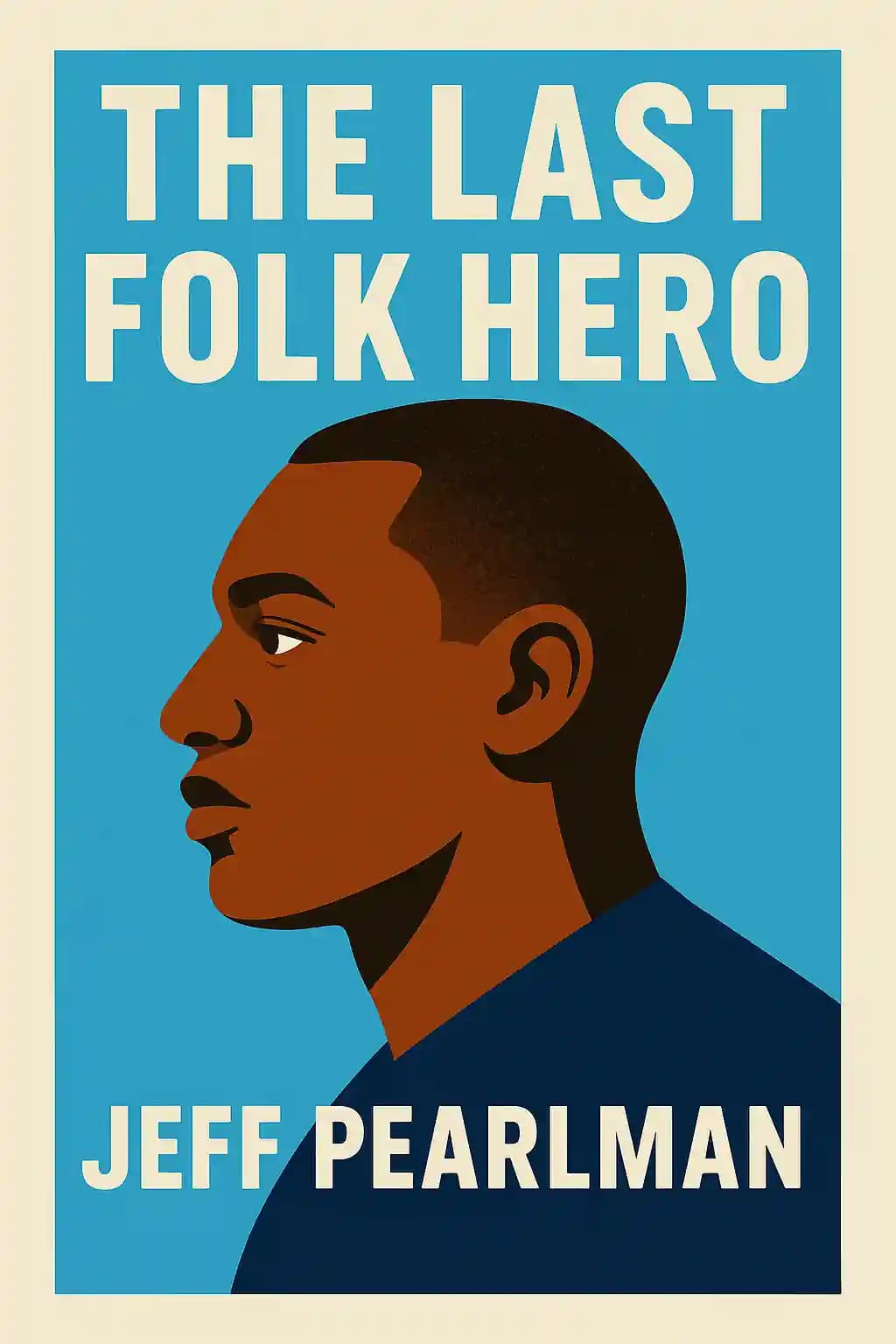
What makes Bo Jackson "the last folk hero" is how he performed feats so spectacular they blur reality and myth, in an era before everything could be instantly verified on social media. His legend lives on not just in highlight reels but in the stories passed down-tales of impossible throws, superhuman strength, and a man who could excel at the highest level in two professional sports simultaneously. In an age of specialized athletes and carefully managed careers, there will never be another Bo Jackson-a true American folk hero whose exploits will be remembered long after the details have faded into legend.