Chapter 1
When Humanity Faces Extinction
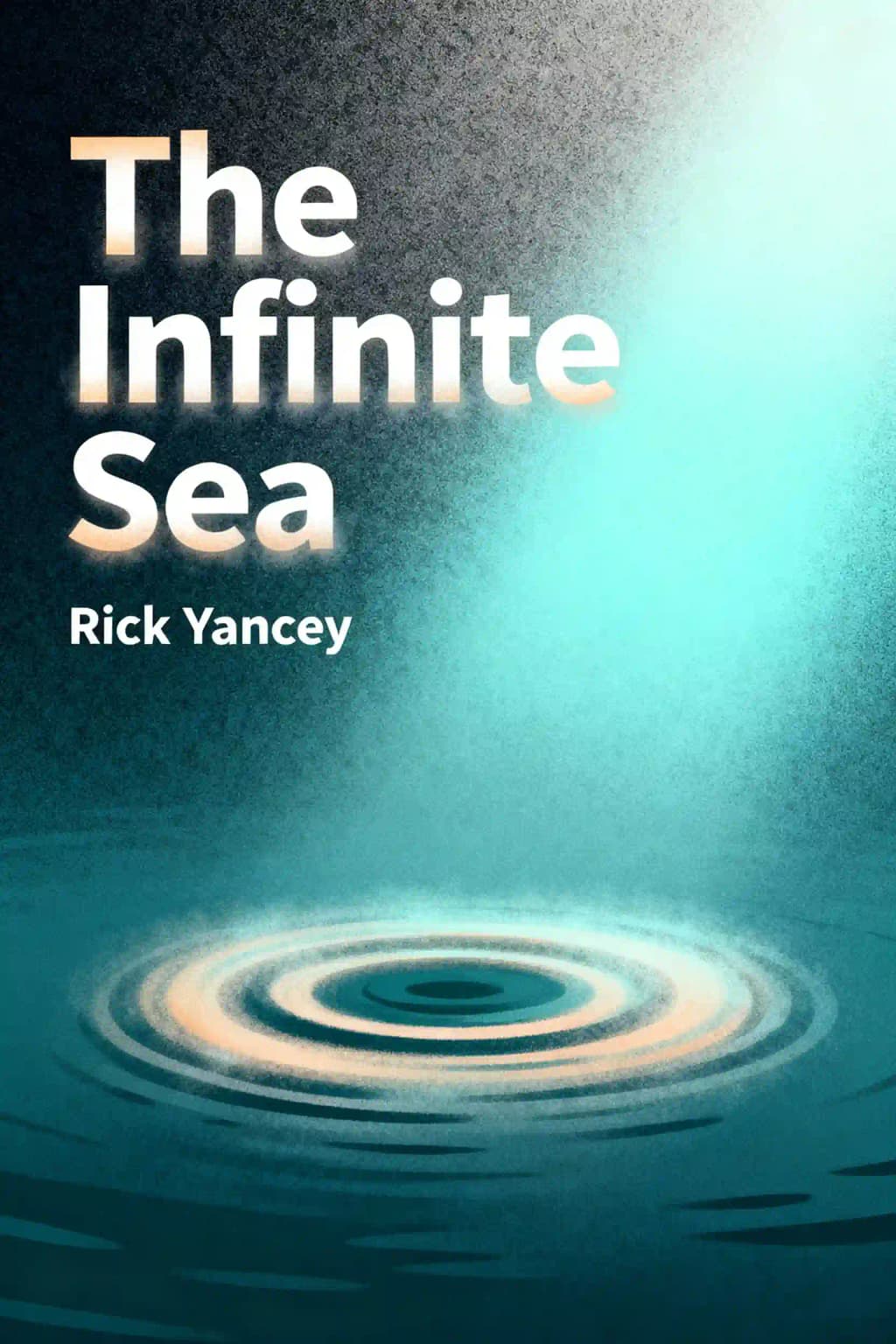
The Infinite Sea by Rick Yancey isn't just another post-apocalyptic young adult novel-it's a cultural phenomenon that redefined the alien invasion genre. Since its release as the second installment in The 5th Wave trilogy, it has captivated millions of readers worldwide, including celebrities like Jennifer Lawrence who called it "unputdownable." The book's exploration of humanity's resilience in the face of extinction resonated so deeply that it helped propel the series to a major film adaptation. What makes this story particularly compelling is how it subverts traditional alien invasion narratives-instead of laser beams and flying saucers, Yancey presents a methodical, psychological decimation of humanity that forces readers to question what it truly means to be human when everything familiar has been stripped away.
Chapter 2
A World Reduced to Ash
The novel opens with a haunting scene that perfectly encapsulates the calculated brutality of the alien invasion. A wheat field, once symbolizing life and abundance, has become a death trap - its golden stalks now serving as camouflage for unspeakable horrors. Seven desperate refugees shelter in an abandoned farmhouse, their faces gaunt from weeks of deprivation, watching the dead sea of grain for threats. The farmhouse itself stands as a bitter reminder of normalcy lost - family photos still hanging on walls, unwashed dishes in the sink, a child's homework forever unfinished on the kitchen table.
When a freezing child emerges from the wheat, stumbling and crying, a woman named Sarah rushes to help despite one man's vehement suspicions. This compassionate instinct - this fundamentally human response that has ensured our species' survival for millennia - becomes her undoing. The child, implanted with a sophisticated CO2-triggered explosive device, detonates when examined closely, vaporizing everyone within a twenty-foot radius. Nothing remains but a scorched circle of earth and scattered belongings.
This opening vignette serves as a microcosm of the entire invasion strategy: exploiting human connection and compassion as weaknesses. The aliens have turned our most noble qualities against us, transforming every act of kindness into a potential death sentence. The wheat field, reduced to scattered ash across barren ground, becomes a powerful metaphor for humanity itself - once thriving and abundant, now systematically destroyed and scattered like chaff in the wind.
The genius of Yancey's approach lies in how he portrays the invasion not as a straightforward military conquest but as a psychological dismantling of humanity. Each "wave" of the attack has been designed not just to kill but to break down social structures and trust. The 1st Wave knocked out electricity, plunging humanity into darkness and chaos, severing our global connections instantly. The 2nd Wave brought devastating tsunamis to coastal cities, wiping out billions in hours. The 3rd Wave unleashed a deadly plague that killed with terrifying efficiency, turning our bodies against us. The 4th Wave inserted "sleeper" agents among survivors, making every friendly face a potential executioner.
Now, in the 5th Wave, the aliens have achieved perhaps their most insidious victory - manipulating children into becoming unwitting weapons against their own species. They've created a world where no one can be trusted - not even a child in need. Every human interaction becomes a calculated risk, every act of mercy a potential death sentence. Survivors must constantly weigh their humanity against their survival instincts, forcing impossible choices that slowly erode their very essence.
This methodical approach forces readers to consider: what happens to humanity when our fundamental connections to each other become liabilities? How do we maintain our essential nature when every human impulse - to help, to trust, to love - could lead to destruction? The wheat field scene sets up these central questions that echo throughout the narrative, making us question whether survival at the cost of our humanity is truly survival at all.
Chapter 3
Survival Among the Ruins
At the heart of the story is a small group of survivors sheltering in an abandoned hotel. Cassie Sullivan, our fierce protagonist, keeps watch while the youngest members of their group-Nugget and Teacup-sleep. Ben Parish (now known as "Zombie") suffers from an infected bullet wound but maintains his characteristic humor. Ringer, pragmatic and distant, prepares to scout potential shelter in nearby caverns.
Their situation is precarious, and tensions run high. Cassie clings to her belief that Evan Walker-a "Silencer" or alien sleeper agent who fell in love with her-survived the explosion at Camp Haven. Ringer remains skeptical, creating friction within the group. Their debate about whether to stay at the hotel (which they've nicknamed "the Walker Hotel" after Evan) or move on reflects their different approaches to survival.
What makes this group compelling is how each character embodies different aspects of humanity's response to catastrophe. Cassie represents hope and connection-she refuses to give up on Evan despite logical evidence that he's dead. Ringer embodies pragmatism and detachment-she focuses solely on survival, dismissing emotional attachments as dangerous luxuries. Ben represents leadership and responsibility-despite his own injuries, he feels accountable for the younger members of the group.
Their interactions reveal how crisis strips people down to their core values. When Ringer leaves to scout the caverns, her parting conversation with Ben is laden with unspoken emotion. He flirts and reminisces about normal life-Twitter feeds and tardy bells-expressing hope that someday students will casually learn about "the alien invasion that killed seven billion people" while complaining about "soggy Tater Tots." This poignant moment highlights how desperately they cling to memories of normalcy while facing a world forever changed.
As Ringer ventures out into the winter night, she reflects on how nature and time will eventually consume everything humans built. This meditation on impermanence underscores a central question of the novel: If humanity is reduced to a handful of survivors, does human civilization still matter?
Chapter 4
The Impossible Choice
Ringer's mission takes a devastating turn when she discovers she's being watched in the silent, snow-dusted woods. After finding a dead 5th Wave soldier, she spots movement through her eyepiece-someone approaching. Unlike Cassie, who once felt guilt after killing, Ringer embraces rage over fear as she prepares to fire.
The tragic irony unfolds when Ringer realizes she's shot Teacup, who had followed her despite explicit instructions to stay behind. This moment crystallizes one of the novel's central themes: in a world designed to destroy human connection, those connections persist-often with devastating consequences. Teacup followed Ringer out of attachment, and now lies bleeding from a gut wound that Ringer knows is fatal.
Ringer faces an impossible choice that epitomizes the moral quandaries throughout the book: should she mercy-kill Teacup to prevent her capture and torture, or risk everything to try saving her? Her internal struggle reveals her humanity despite her attempts at detachment. She remembers telling Zombie that "the minute we decide one person doesn't matter, they've won"-and now finds herself bound by her own principles.
As helicopters approach, Ringer makes a third choice-neither killing Teacup nor abandoning her, but using the dead recruit's tracking implant to make herself appear as "one of them" in their detection systems. This clever subversion represents humanity's greatest strength against the aliens: adaptability and the refusal to accept binary choices.
The scene culminates with Ringer carrying Teacup toward the road as Black Hawks hover overhead. She takes comfort in appearing as "one of them" through their detection systems, unslings her rifle, and prepares to act. This moment of defiance-choosing to fight rather than surrender-embodies the resilient human spirit that persists throughout the novel.
What makes this sequence particularly powerful is how it forces readers to confront uncomfortable questions: What sacrifices are justified for survival? When does pragmatism become inhumanity? Is saving one child worth risking everything? These questions have no easy answers, reflecting the moral complexity of survival in an unforgiving world.
Chapter 5
The Enemy Within
The novel's most chilling revelation emerges through a pivotal conversation between Cassie and Ben about the true nature of their enemy. Ben raises a crucial strategic question that haunts them both: why would technologically superior aliens wait until humans numbered seven billion before attacking? They could have struck centuries ago when humanity was far more vulnerable - lacking modern weapons, communications, and defensive capabilities. This logical inconsistency becomes the first thread that, when pulled, unravels everything they thought they understood about the invasion.
Through careful analysis of the waves' progression, Cassie reaches a devastating conclusion about the Others' true strategy. They're not simply executing an efficient extermination - they're orchestrating an elaborate psychological torture on a global scale. "This isn't about ripping the planet away from us," she realizes with horror. "This is about ripping us." Each wave has been precisely calculated not just for maximum casualties, but for maximum psychological impact: first destroying modern civilization, then triggering devastating natural disasters, followed by a lethal pandemic, and finally turning humans against each other.
This insight fundamentally shifts the entire framework of the novel from a straightforward alien invasion narrative into something far more insidious. The Others aren't merely seeking to claim Earth as territory - they're methodically destroying the very foundations of human society and psychology. By turning children into unwitting bombs and transforming teenagers into soldiers who kill their own kind, they've weaponized our most sacred relationships and corrupted our most fundamental bonds of trust and love.
The depth of this psychological warfare becomes painfully clear through Ben's emotional breakdown. His revelation about Commander Vosch's manipulation - promising to "empty him and fill him with hate" but instead filling him with a perverted sense of hope - demonstrates how the aliens exploit human psychology with surgical precision. They understand that breaking the human spirit requires more than physical violence; it demands the systematic destruction of everything that gives life meaning and purpose.
This existential threat takes physical form in Grace, another "Silencer" like Evan who appears at the hotel. She embodies the perfect infiltrator - devastatingly beautiful and lethal, human in every observable way but fundamentally alien in her core. Her confrontation with Cassie raises the novel's central philosophical question: what truly defines humanity when human bodies can be occupied by alien consciousness? The uncertainty this creates - the inability to trust even our own species - becomes another weapon in the Others' psychological arsenal.
The horror reaches its apex with the revelation of the "messengers" - children transformed into walking bombs through implanted CO2-triggered explosive devices. This represents the ultimate perversion of human connection, turning our instinct to protect children into a weapon against us. The scene where Cassie must defuse such a device in young Megan's throat becomes a haunting metaphor for humanity's precarious position - balanced between survival and self-destruction, where even the slightest misstep could trigger catastrophe. This weaponization of innocence demonstrates how thoroughly the Others understand human psychology - they know that destroying our faith in the sanctity of childhood might be the surest way to eradicate what makes us human.
Chapter 6
Love in the Ruins
Against this backdrop of destruction, the novel explores various forms of love as both vulnerability and strength. Cassie's complicated relationship with Evan Walker stands at the center of this exploration, embodying the delicate balance between trust and survival in a world where nothing is certain. She trusted him despite warning signs because he saved her life and showed her genuine care - moments like his gentle treatment of her wounds and their shared laughter over small discoveries in abandoned houses created an intimacy that felt real despite the surrounding chaos. Even after learning he isn't human - that he's one of "them," beings who downloaded their consciousness into human bodies - she can't fully let go of their connection, which has become as essential to her as breathing.
When Evan reappears at the hotel, severely injured but alive, their reunion is fraught with conflicting emotions that mirror the larger conflict between humanity and its invaders. Cassie is simultaneously drawn to him and wary of him, unable to reconcile his alien nature with his very human love for her. Their stolen moments together - whispered conversations in darkened corridors, fleeting touches that carry both comfort and danger - reveal the complexity of love in a time of war. Their relationship embodies the novel's central question: can authentic connection exist between fundamentally different beings, and at what cost?
Parallel to this is the developing bond between Ringer and Razor, a recruit at the military base where she's taken captive. Their relationship builds slowly through chess games that become a secret communication system and shared stories about their past lives - memories of family dinners, favorite books, and dreams never realized. Each move on the chessboard becomes laden with meaning, a language of their own making. Despite the surveillance and danger surrounding them, they find moments of genuine connection that culminate in physical intimacy, their defiance of the sterile military environment becoming an act of rebellion.
What makes both relationships compelling is how they develop against impossible odds, flowering like rare plants in nuclear winter. In a world designed to destroy human connection, these characters find ways to forge bonds that transcend their circumstances. They share small acts of kindness - a saved portion of food, a warning whispered in passing, a gentle touch when no one's watching. Even knowing these connections might be temporary or dangerous, they choose them anyway - perhaps because connection is what makes survival meaningful in a world stripped of humanity.
The power of these relationships is demonstrated in the sacrifices they inspire. Evan returns to the hotel despite his injuries to help Cassie and the others escape, knowing it might mean his death or worse - recapture by his own kind. Razor ultimately sacrifices himself to free Ringer from her obligation to Teacup, choosing love over self-preservation in a moment that defines his humanity. These acts of self-sacrifice stand in stark contrast to the calculated destruction orchestrated by the aliens, suggesting that love - in its various forms - might be humanity's most powerful weapon against extinction. Through these relationships, the novel suggests that our capacity to love, even in the face of annihilation, is what truly makes us human.
Chapter 7
The Truth Behind the Invasion
The novel's most shocking twist unfolds through Ringer's harrowing captivity under Commander Vosch, revealing layers of deception that challenge everything the survivors believed about their reality. After her capture, Ringer endures extensive experimentation that introduces her body to the mysterious "12th System" - a revolutionary technology comprising microscopic robots that fundamentally alter human capability. These nanobots transform her into something beyond human, dramatically enhancing her strength, speed, and healing abilities while maintaining her consciousness and identity.
During her imprisonment, Commander Vosch engages Ringer in a series of philosophical discussions that probe the nature of their conflict. His most penetrating question challenges the basic logic of the invasion: Why would an advanced alien civilization, capable of interstellar travel and sophisticated technology, resort to relatively primitive methods like EMPs, plagues, and human sleeper agents? As he points out with clinical precision, such beings could easily annihilate humanity with "a very, very big rock" - a simple asteroid directed at Earth. This seemingly straightforward observation becomes the first crack in the facade of the alien invasion narrative.
Through a combination of brutal interrogation sessions, enhancement procedures, and careful observation, Ringer gradually uncovers a truth more terrifying than any alien invasion. The supposed alien consciousness downloaded into human bodies doesn't exist. Instead, she discovers an elaborate program - a pre-programmed psychological construct implanted before birth, lying dormant until activation during puberty. The "others" never invaded because they never existed in the first place.
This revelation fundamentally reframes the entire conflict. The enemy isn't an external alien force but humanity itself - specifically, a subset of humans programmed from birth to believe they're alien entities. These individuals carry out their "cleansing" mission with absolute conviction, though even they don't fully comprehend their ultimate purpose. The deception runs so deep that many of the perpetrators genuinely believe in their alien nature, making their actions all the more terrifying.
The twist forces readers to grapple with profound questions about human nature and identity. The capacity for systematic violence and betrayal exists within human DNA - no external force required. The alien invasion narrative serves merely as an elaborate justification for genocide, a framework that allows humans to distance themselves from their own atrocities.
Vosch's pointed question about his own humanity becomes the central philosophical dilemma: "Am I human?" he asks, to which Ringer can only respond with the chilling observation: "If you are human, there is no hope." This devastating conclusion suggests that humanity's potential for self-destruction might be inseparable from its nature - that our capacity for calculated cruelty and emotional detachment exists alongside our ability to love and connect, two sides of the same human coin.
Chapter 8
The Price of Endurance
Throughout the novel, characters face impossible choices that test the limits of their humanity - choices that strip away pretense and reveal the raw core of what makes us human. Poundcake - a silent, stoic member of the group - embodies this theme in his final sacrifice. His backstory reveals a boy who stopped speaking after losing his family during the plague, carrying only the weight of his failures and a stale cake that earned him his nickname. The trauma of watching his mother succumb to the virus while he remained helplessly silent shaped him into someone who communicated through actions rather than words.
When confronted by Grace in the hotel, mortally wounded and facing certain death, Poundcake makes a choice that defines true heroism in this broken world. The moment crystallizes everything about his character - his loyalty, his strength, and his understanding that sometimes survival comes at an unbearable cost. He triggers the explosive device recovered from Megan, sacrificing himself to destroy Grace and save his friends. His final act speaks louder than any words he could have uttered in life, transforming his silence from a symbol of trauma to one of profound sacrifice.
Similarly, Razor's sacrifice for Ringer represents the price of maintaining humanity in an inhuman situation. Their relationship develops gradually through small moments of connection - shared looks, quiet conversations, and mutual understanding in a world that has forgotten what understanding means. After developing a genuine connection with her, he shoots Teacup - not out of cruelty, but to sever Ringer's "chain" and free her from Vosch's manipulation. His last words - "You're free" - before being killed himself encapsulate the novel's bittersweet message about freedom in a world of constraints. The choice destroys him physically but preserves his humanity.
These sacrifices aren't portrayed as noble or glorious - they're desperate acts by damaged people trying to preserve something worth preserving in a world that seems determined to strip away everything of value. The Latin phrase "Vincit qui patitur" ("He conquers who endures") becomes a motif throughout the novel, suggesting that victory might not mean traditional triumph but simply the ability to endure while maintaining one's humanity. This endurance manifests not just in physical survival but in the preservation of compassion, loyalty, and the capacity for sacrifice.
This theme reaches its culmination when Ringer, enhanced beyond human limitations but still fundamentally human in her choices, crashes through a window to escape Vosch after Razor's sacrifice. As she falls through the air, she experiences a moment of perfect freedom - not from the constraints of gravity, but from the constraints of manipulation and control that have defined her existence. The fall becomes a metaphor for the price of freedom: sometimes we must let go of everything to preserve what matters most. Her enhanced body might survive the fall, but it's her human heart that truly endures.
Chapter 9
Hope in the Infinite Sea
The novel concludes with Cassie observing the five survivors of their group-"gray ghosts" in the woods at dawn. Megan and Sam sleep, Ben silently grieves, Dumbo searches for food, and Cassie herself remains filled with anger. They've lost much, but they've survived.
When Evan impossibly returns despite his injuries and the hotel explosion, his reunion with Cassie across a metaphorical divide represents the novel's final statement on humanity's resilience. As they acknowledge their respective injuries and Cassie decides to go to him, we see that connection persists despite everything designed to destroy it.
Cassie's reflection that "the world ended once and will end again, but the world always comes back" encapsulates the novel's complex message about hope. It's not an easy, comforting hope that promises everything will be fine. Rather, it's a hard-won recognition that endings and beginnings are part of an eternal cycle, and that humanity-in some form-endures.
The title "The Infinite Sea" takes on multiple meanings in this context. It refers literally to the ocean that swallowed coastal cities during the 2nd Wave, but metaphorically to the vast emptiness left after civilization's collapse. Most profoundly, it represents the infinite depth of human experience-our capacity for both tremendous cruelty and remarkable compassion, for destruction and creation, for despair and hope.
In this infinite sea of possibility, the characters choose to swim rather than sink. They choose connection over isolation, action over surrender, humanity over survival at any cost. And in doing so, they suggest that even in a world where seven billion people have died, where children have been turned into weapons and trust has been systematically destroyed, something essentially human remains-something worth fighting for.
As readers, we're left to consider what we would preserve of our humanity if everything familiar were stripped away. Would we, like Cassie, cling to connection? Like Ringer, embrace pragmatism but refuse to abandon principles? Like Evan, sacrifice ourselves for those we love? The novel offers no easy answers, only the profound suggestion that asking these questions is itself a fundamentally human act.