Chapter 1
When Love and Secrets Intertwine
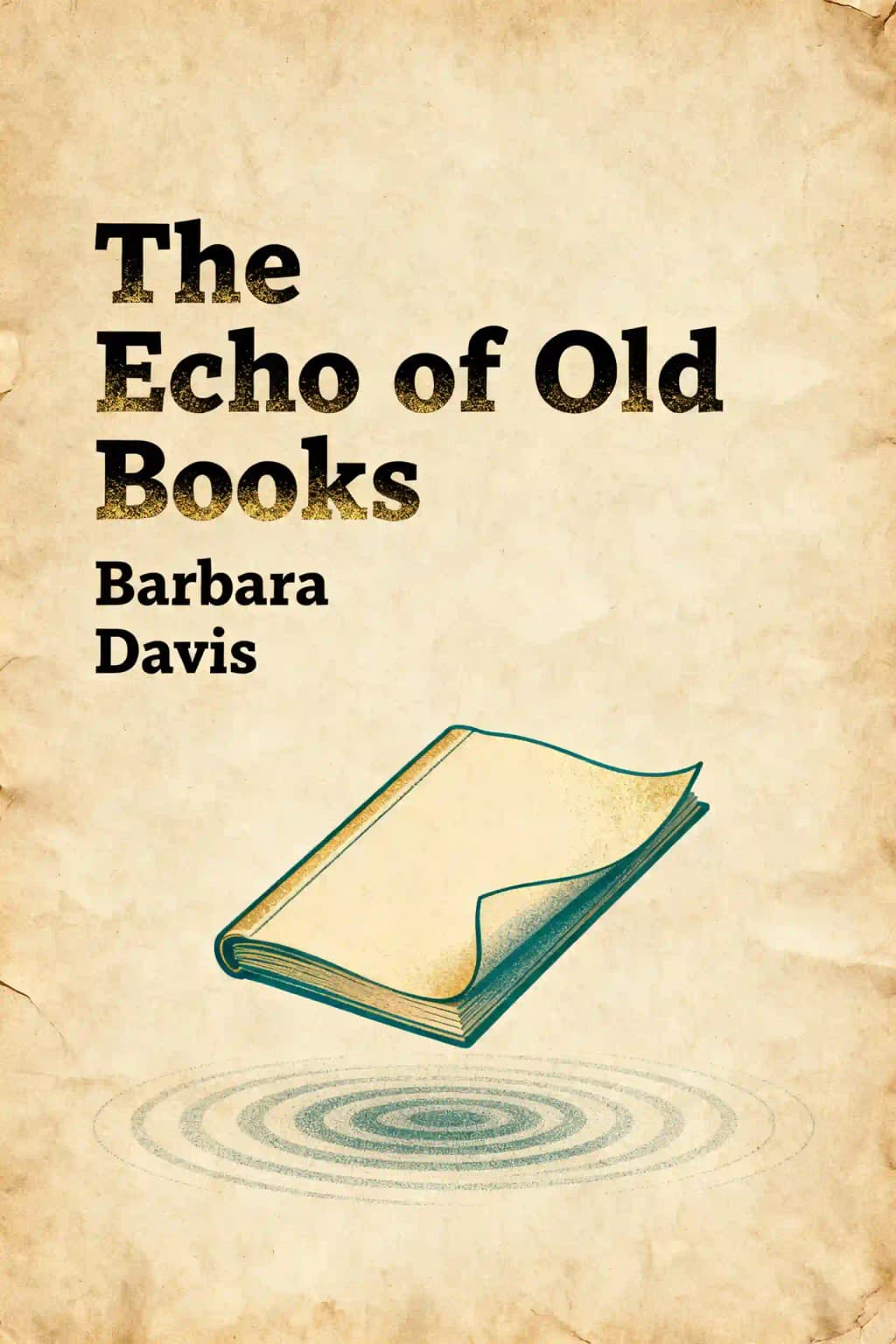
The Echo of Old Books by Barbara Davis has captivated readers since its release, earning praise from literary critics and becoming a book club favorite across the country. This haunting tale of love, betrayal, and redemption resonates deeply with anyone who has ever felt the weight of the past. Reese Witherspoon featured it in her book club, praising its "mesmerizing exploration of how books connect us across time." The novel's unique premise-a bookseller who can sense emotional imprints left on books-has sparked fascinating discussions about the personal histories we leave behind on the objects we cherish. Davis herself has shared that the concept came from her grandmother's belief that "books remember who reads them," a sentiment that has struck a chord with bibliophiles everywhere.
Chapter 2
The Gift of Emotional Echoes
Ashlyn Greer possesses an extraordinary gift - psychometry, the ability to sense emotions imprinted on books by their previous owners. This rare talent first manifested when she was twelve, seeking refuge in a dusty corner of Blackwell's Used Books during one of her parents' explosive arguments. The moment her fingers brushed against a weathered copy of "Jane Eyre," she felt an overwhelming surge of comfort and hope - emotions left behind by a previous reader who had found solace in its pages. The shop owner, Frank Blackwell, a gentle soul with kind eyes and ink-stained fingers, recognized something special in her reaction and encouraged her to develop this gift rather than fear it, setting her on a path that would eventually lead to owning her own rare bookstore, "An Unlikely Story."
Books have always represented safety and predictability to Ashlyn, unlike her turbulent childhood with an angry father whose moods shifted like storm clouds and a depressed mother who retreated further into silence with each passing year. Each book she touched offered a unique emotional fingerprint - some radiating joy, others whispering melancholy, but all providing an escape from her home life. After losing both parents - her mother to untreated breast cancer that she'd hidden until it was too late, and her father to suicide just months later - books became her sanctuary from the whispers and pitying stares of their small town. Her unusual gift earned her the cruel label "freak" in high school, particularly after she accurately described the heartbreak contained in Sarah Mitchell's diary, but she's gradually come to embrace it as an integral part of her identity.
On a rain-soaked September afternoon in 1984, while hunting through musty boxes at "Yesterday's Treasures," a vintage boutique in Portsmouth, New Hampshire, Ashlyn discovers two remarkable volumes. The first is a first edition of Ishiguro's "The Remains of the Day" with a poignant inscription about honor and duty that resonates with deep admiration and respect. The second, more intriguing find is a beautiful leather-bound book titled "Regretting Belle" with no author, publisher, or copyright information - only a bitter inscription written in an elegant but angry hand: "How, Belle? After everything... how could you do it?"
Unlike other books that immediately reveal their emotional echoes to her touch, this one remains stubbornly silent until opened, when it suddenly releases powerful masculine emotions of heartbreak, betrayal, and a love so intense it makes her fingers tingle. The mysterious book appears to be expertly bound in deep brown Moroccan leather with marbled blue boards and gilt edges, but contains no identifying information beyond its cryptic title. This discovery marks the beginning of Ashlyn's journey into the past lives of two people whose passionate love story ended in mutual accusations of betrayal - a mystery that will challenge everything she understands about her gift and the nature of truth itself.
Chapter 3
A Tale of Two Books, Two Perspectives
After bringing "Regretting Belle" back to her shop, Ashlyn becomes captivated by its contents. The book opens with a powerful inscription addressed to someone named Belle: "How, Belle? After everything... how could you do it?" The narrative begins on March 27, 1953, in New York, with the writer explaining this was originally intended as a cathartic letter that grew too long. The writer expresses deep regret about Belle, calling her "the capital error of my life."
The story flashes back to August 27, 1941, at the St. Regis Hotel ballroom, where the narrator attended an engagement party for Belle, a society "princess." As a British writer without pedigree, he was there as the guest of Goldie, a newspaper owner with a reputation for keeping "a stable of young men." The narrator spots Belle across the room, stunning in a teal silk dress with silvery-grey pearls hanging down her bare back. Their eyes meet, creating an unexpected connection that would change both their lives forever.
Despite the book's powerful emotional impact, Ashlyn can't find any information about "Regretting Belle" through her network of professors, rare-book dealers, and librarians. Her search takes an unexpected turn when her friend Kevin brings her another similarly bound book titled "Forever, and Other Lies." Like "Regretting Belle," it lacks author and publisher information, but its emotional echo feels completely different-cold and cutting rather than hot with hostility. Most significantly, she realizes the echoes are feminine.
Comparing the inscriptions in both books reveals they form a conversation-"Regretting Belle" asks "How, Belle? After everything... how could you do it?" while "Forever, and Other Lies" responds "How??? After everything-you can ask that of me?" These two books present the same love story from opposing perspectives, each author believing they were the one betrayed.
Chapter 4
A Forbidden Romance in Pre-War America
As Ashlyn alternates between reading both books, a captivating love story emerges against the backdrop of pre-World War II America. Belle is the daughter of a wealthy, influential businessman engaged to Teddy, a match arranged by her father for business purposes. The male narrator, who calls himself "Hemi" (short for Hemingway), is a British writer working for a newspaper owned by a woman nicknamed "Goldie."
Their initial meeting at Belle's engagement party sparks an immediate attraction despite their verbal sparring. Belle reveals herself to be "a Bronte girl" while he prefers Dickens for his social commentary on "the haves and have-nots." A week later, they meet again at a dinner party where their conversation becomes increasingly suggestive as they discuss horse breeding using deliberate double entendres.
This chance encounter leads to Belle inviting Hemi to her father's stables in the Hamptons. During their visit, Hemi suggests naming an unnamed chestnut filly "Belle's Promise," revealing that "Belle" is the private name he's given her since their first meeting. The atmosphere becomes charged with attraction as he admits he's been thinking about her. Despite her protests that they're strangers, their connection deepens as they sit on stools by the stable door, rain creating an intimate cocoon around them.
Belle reveals hidden parts of herself-her childhood love of poetry, writing poems about caged birds and maze-like traps, dreams of becoming like Elizabeth Barrett Browning. She explains how her father destroyed her notebooks when he discovered her "Sappho phase" writings, calling them "smut" and ending her creative pursuits. The tension builds until Hemi approaches and kisses her, and Belle surrenders completely, thinking "This is what it's supposed to be like."
Their forbidden romance blossoms into stolen moments at Rose Hollow farm and Hemi's apartment. They develop elaborate routines to meet secretly-Belle fabricates shopping trips while Hemi takes long lunches, risking his boss Goldie's suspicion. As winter approaches, their conversations grow increasingly complex, touching on politics, class differences, and Belle's engagement to Teddy.
Chapter 5
Secrets, Lies, and Hidden Identities
As their relationship deepens, both Belle and Hemi reveal painful parts of their pasts. Belle shares memories of her French mother Helene, who she describes as "like a fine piece of porcelain-beautiful but not meant to be handled every day." She reveals her mother had "an episode" at one of her father's dinner parties, was sent to a sanitarium, and died a year later without Belle getting to say goodbye.
What Belle doesn't initially share-but later reveals in her book-are more intimate details about her mother. She describes cherished moments spent in her mother's room smelling of lilies and French soap, looking through a hidden photo album with French captions that showed her mother's life before marriage. After her mother's hospitalization, the album mysteriously disappeared, as if her mother "had been erased."
Belle's mother's depression began after her sister's birth, worsened after her brother's, and spiraled terribly after they "dragged poor Ernest from the pond." When Belle was born-"a daughter rather than the replacement son"-her mother suffered another bout of "baby blues" and never recovered. The final breakdown came during an important dinner with investors when her father locked her mother in her bedroom. Shortly after, her mother was committed to Craig House "for a rest," and a year later, on Christmas Eve, they received news of her suicide.
Meanwhile, Hemi has his own secrets. He eventually confesses to Belle that their meeting wasn't accidental-he came to write a story about her father and needed access to his world. Despite his initial intentions, he admits, "I do love you, Belle. I have since that first night." Though he intended to end things, he couldn't walk away: "You're the answer to a prayer I never thought to pray-and a threat to all my plans-but I'm not strong enough to walk away."
Their relationship faces increasing challenges as Belle continues to wear Teddy's engagement ring while creating excuses to be with Hemi. When confronted about a newspaper announcement of her upcoming June wedding to Teddy, Belle insists she had nothing to do with it, blaming her sister Cee-Cee for giving the information to the paper without her consent. She explains that the marriage is part of a business merger her father is engineering with Teddy's family.
Chapter 6
The Devastating Truth
The most shocking revelation comes when Hemi discovers the truth about Belle's mother. Her mother was French Jewish, with the maiden name Treves-her father a wine merchant's son and her mother a rabbi's daughter. Belle's father had hidden this fact and institutionalized her mother not due to mental illness but because he was ashamed of her heritage as his political ambitions grew. The Hebrew words and prayers Belle's mother taught her were her way of secretly sharing her heritage.
Belle learns her mother's death wasn't an accident-after two suicide attempts, her father had paid a janitor to leave a utility knife in her room, ensuring she would succeed the third time. Despite Hemi's insistence that he'd abandoned the story for her sake, Belle feels utterly betrayed that he used her mother's tragedy for a newspaper story. She tells him she can't trust him anymore and leaves, refusing to answer when he asks if she'll meet him at the station the next day as they had planned to run away together.
In Belle's account, she describes slipping out before breakfast the next day, taking the Chrysler to meet Hemi and begin their new life together. At his apartment, she finds her suitcase inside but Hemi gone-bureau empty, bathroom cleared out. The landlord informs her Hemi "flew the coop" last night, claiming he was "off to cover the war." Devastated by his apparent betrayal, she leaves her carefully packed suitcase behind.
Three days later, Belle discovers the devastating truth-Hemi has published an expose in the New York Weekly Review with her parents' wedding photo and the headline "GRUESOME ASYLUM DEATH RAISES FRESH EYEBROWS." The article reveals her father's anti-Semitism, her mother's Jewish heritage, and includes photos of Belle and her sister Cee-Cee. In Belle's mind, Hemi has betrayed her completely.
Chapter 7
Unraveling the Mystery
As Ashlyn becomes increasingly invested in Belle and Hemi's story, she throws herself into researching their true identities with growing determination. Working alongside her tech-savvy friend Kevin and Ruth Truman-a veteran librarian with an encyclopedic knowledge of local history-she methodically pieces together fragments of the past. Their breakthrough comes when they uncover detailed information about Goldie Spencer, a fascinating newspaper heiress who inherited the Spencer Publishing Empire after losing her parents in a tragic shipwreck off the coast of Maine in 1920.
The archived articles paint a vivid portrait of Goldie's transformation. Early photographs show a platinum-haired socialite in beaded flapper dresses, notoriously caught in a police raid at the Golden Slipper speakeasy in 1922. But by the mid-1920s, she had evolved into a formidable publishing force, using her newspaper platform to champion women's rights, labor reforms, and other progressive causes that many mainstream publishers wouldn't touch. Her editorials on workplace discrimination and reproductive rights sparked particular controversy.
The investigation takes an unexpected turn when Kevin discovers a weathered envelope tucked between the pages of "Murder at Midnight"-one of the mystery novels-bearing Richard Hillard's Manhattan address. Though Richard has passed away, Ashlyn manages to track down his son Ethan, a history professor at Columbia. Initially dismissive, Ethan explains he simply cleared out his father's extensive library after his death, paying little attention to individual volumes or their contents.
However, Ethan's academic curiosity eventually gets the better of him. After examining family records and consulting with elderly relatives, he confirms that Belle was actually his great-aunt Marian Manning-a revelation that transforms their understanding of the story. The stern patriarch of the Manning family, Martin Manning, had built his fortune in steel manufacturing but ruled his family with an iron fist. His younger daughter Corinne-Ethan's grandmother-was the dutiful Cee-Cee from the letters, while Marian emerged as the family rebel.
The most stunning revelation comes when Ashlyn and Ethan pore over a crumbling family scrapbook found in his grandmother's attic. They uncover a yellowed newspaper clipping from The New York Times, dated February 7, 1950. The article details how Marian Manning, after three years working with displaced persons in post-war France, had returned to New York with two Jewish orphans she'd adopted from survivors of the Dachau concentration camp-Zachary, age 7, and his sister Ilese, 5. The article notes the Manning family's shock at this unilateral decision, quoting anonymous sources about the "scandal" of bringing refugee children into such a prominent family. Photographs show Marian defiantly descending the gangplank of the SS America, holding the hands of two solemn-faced children.
Chapter 8
The Truth Revealed
Through Ethan's well-placed connection in Marblehead's social circles, Ashlyn and Ethan secure a meeting with Marian at her magnificent Cape-style house perched high on the rocky coastline. The home - with its weathered shingles and panoramic windows facing the Atlantic - speaks to decades of refined living. Though now in her eighties, Marian retains the striking features and graceful bearing that Hemi so vividly captured in his passionate prose. Her silver hair catches the afternoon light as she welcomes them into her book-lined study.
Over tea served in delicate bone china cups, Marian finally illuminates the mystery of the two books' presence in Richard's study. She explains that Hemi - maintaining proper social distance - had sent his book to Richard (whom she affectionately refers to as "Dickey") to forward to her. Months later, she followed the same discreet path in reverse, entrusting her response to Richard for delivery back to Hemi.
The conversation takes an unexpected turn when Marian reveals "Hemi's" true identity: Hugh Garret, now a literary giant whose novels regularly top bestseller lists. Her voice carries a note of lingering hurt as she describes how she believes he betrayed her confidence by publishing their private story under the pen name Steven Schwab. Ashlyn, drawing on her literary research, gently suggests that Schwab might have been a real person rather than a pseudonym - though Marian seems unconvinced.
As the afternoon progresses, Marian proudly shares stories about her children's remarkable achievements. Zachary has become an internationally acclaimed violinist, performing with prestigious orchestras worldwide. Ilese has carved out an impressive academic career as a professor, balancing her scholarly work with raising three daughters. Then comes the most poignant revelation: the children came into Marian's life through her friendship with their mother, Johanna Meitner, an Austrian Jewish refugee who had fled Europe's gathering storms. When Johanna died shortly after giving birth to Ilese, she made Marian promise to raise both children as her own - a deathbed request that Marian honored with unwavering devotion.
Later, at a local bookstore, Ashlyn and Ethan browse through Hugh Garret's extensive bibliography. As Ashlyn studies the author's photograph on a recent dust jacket, she feels the shock of recognition pulse through her: Garret's distinctive features - those mesmerizing blue eyes, sensual mouth, and sharp bone structure - are mirrored precisely in Zachary's face. The resemblance is too striking to be coincidental. This discovery illuminates why Zachary bears no physical resemblance to his sister Ilese, and explains Marian's careful evasions when discussing certain aspects of the past. The truth becomes clear: Zachary must be Hemi's - Hugh Garret's - biological son, a secret preserved through decades of careful silence.
Chapter 9
The Final Revelation
In a tense meeting over coffee, Marian finally opens up to Ashlyn about her children's reaction to learning their true parentage. Zachary's decision particularly touched her - despite his natural curiosity, he declined to meet his biological father, Hemi, citing an unwavering loyalty to their family unit. His primary concern centered on his sister Ilese's feelings, worried that forging a relationship with his birth father would create an emotional divide between them since Ilese had no father figure to turn to. The maturity of his decision brought both pride and relief to Marian, who privately wasn't prepared to face the complexities of reintegrating Hemi into their lives after his perceived betrayal decades ago.
The story's crucial revelation unfolds at an elegant Children's Welfare Network fundraising event in downtown Boston. Despite her initial reluctance, Marian agrees to share a drink with Hemi in a quiet corner of the venue. The conversation quickly turns confrontational as Hemi produces a weathered envelope from his jacket - a letter he's preserved for forty years, believing it represented Marian's final words to him. As Marian unfolds the familiar paper, her world shifts dramatically. The words before her are unmistakably those she had written to Teddy, not Hemi, in a completely different context.
This discovery triggers a cascade of realizations. Her sister Corinne, always the family's secret keeper, had deliberately switched the letters while helping Marian pack for college. The letter actually intended for Hemi contained just five simple words: "I'm coming. Wait for me." This revelation illuminates how a single act of deception shaped multiple lives - Marian spent decades believing Hemi had callously abandoned her and betrayed her family's trust by publishing damaging exposes, while Hemi lived with the pain of thinking Marian had dismissed their love due to their different social standings.
When Marian shares this truth with Hemi, his reaction proves unexpectedly cold. He casually mentions that he now splits his time between New York and Boston, revealing that his presence at the event wasn't through Ashlyn's invitation as Marian had assumed. His skeptical response to her explanation - a slight shake of his head, a dismissive wave of his hand - suggests he's either unable or unwilling to accept this new version of their shared history. His apparent disbelief cuts deep, leaving Marian to realize that sometimes even truth, when revealed too late, loses its power to heal old wounds. The weight of forty years of misunderstanding hangs heavy between them, a reminder that some bridges, once burned, cannot be fully rebuilt.
Chapter 10
Books as Bridges Across Time
Throughout this captivating story, books serve as vessels carrying emotional truths across decades, functioning as silent witnesses to human experience. Ashlyn's unique ability to sense the emotional echoes left on books becomes a powerful metaphor for how the written word connects us across time and space. When she touches a book, she experiences not just the story within its pages, but the raw emotions of everyone who has ever held it - their joy, heartbreak, hope, and despair seeping through the worn pages and dog-eared corners.
The two mysterious volumes - "Regretting Belle" and "Forever, and Other Lies" - function as time capsules preserving the raw emotions of their authors. These books contain more than just words; they hold secrets, confessions, and unspoken truths that have waited decades to be discovered. Through marginalia, dedication pages, and even coffee stains, these volumes tell stories beyond their printed text, creating an intricate web of human connection that spans generations.
As Ashlyn helps unravel the mystery of Belle and Hemi's ill-fated romance, she begins to heal from her own painful past. Her journey parallels Marian's in many ways - both women experienced profound betrayals and abandonment, yet found ways to rebuild their lives through literature and connection. For Marian, this meant creating a new identity and family through adoption and humanitarian work, using her experiences to help others find their way through darkness. For Ashlyn, it means opening herself to the possibility of love again through her growing relationship with Ethan, while learning that some books, like some hearts, need to be read more than once to truly understand their meaning.
The Echo of Old Books reminds us that the stories we tell about our lives - whether in published books, private journals, or whispered confidences - shape our understanding of the past and influence our future. Sometimes these narratives contain misunderstandings and half-truths that can only be resolved by confronting what's been left unsaid. Each dogeared page, handwritten note, and coffee stain tells its own story, creating a tapestry of human experience that connects readers across time and space.
In the end, it's not just the books themselves but the human connections they foster that offer the possibility of redemption and healing. Through shared stories, whether printed or personal, we find common ground with strangers across centuries and continents. Books become more than mere objects - they transform into bridges spanning the gaps between hearts, healing old wounds, and creating new possibilities for understanding and connection.