Chapter 4
The Deadly Partnership: Finding Strength in Companionship
After recovering from a combat injury, Mila is tasked with training new snipers. Among the recruits is K.A. Shevelyov, a quiet Siberian she'd previously noticed reading War and Peace in the trenches. Taking him on a nighttime sortie, they meticulously prepare hidden positions and wait patiently until dawn. When the enemy stirs, they systematically eliminate Romanian officers, with Mila scoring sixteen kills from seventeen shots while Shevelyov manages twelve.
Afterward, she notices his hands trembling from nervous tension-a natural reaction she still experiences herself. They share vodka and cigarettes, discussing the intimate nature of sniper work where you see your targets' faces. Unlike artillery or machine gunners who kill at a distance, snipers must look directly at their targets, making the psychological burden uniquely heavy. Impressed by his composure and skill, Mila asks him to be her partner. He agrees, introducing himself as Konstantin Andreyvich-Kostia-becoming her "shadow, my other half."
Their partnership evolves into a profound bond based on mutual trust and complementary skills. During a quiet night, they discuss their beliefs-Kostia trusts in "books and friends" while Mila believes in "knowledge to light the path for humankind" and her rifle "to protect humankind when we lose that path." Their partnership deepens with his promise: "You lead us down the path, I'll have your back."
This relationship illustrates how warfare creates intimate bonds between soldiers that transcend conventional relationships. As snipers, Mila and Kostia depend on each other completely-one watches while the other sleeps, one spots while the other shoots. They develop an almost telepathic connection, anticipating each other's movements and thoughts. This partnership becomes Mila's emotional anchor amid the chaos of war, providing stability and trust in an environment where both are scarce commodities.
The depth of their connection is revealed when Mila is wounded and Kostia visits her in the hospital with a new Mosin-Nagant rifle he's carefully preparing to her specifications. Though their relationship remains professional, the tenderness with which he cares for her equipment-an extension of herself-speaks volumes about his devotion. When he briefly takes her hand in a moment of vulnerability, Mila gently refuses the advance, unwilling to risk their critical battlefield partnership for romantic entanglement. This moment highlights her pragmatic approach to relationships during wartime-the mission must come first.
Chapter 5
Love Amidst Destruction: Finding Humanity in Hell
As the war intensifies, Mila meets Lieutenant Leonid "Lyonya" Kitsenko, an intelligence officer who initially mistakes her for a civilian when they encounter each other at a banya (bathhouse). Their subsequent reunion on the battlefield sparks an unexpected romance that provides Mila a brief respite from the horrors of war.
Unlike many men who are intimidated by her deadly reputation as "Lady Death," Lyonya sees beyond her sniper persona to the woman beneath. When he calls her the "prettiest hedge" he's ever met (referring to her camouflage skills), she bursts out laughing-a rare moment of genuine joy amid the constant danger. Their relationship deepens as he shows interest in her life beyond her kill count, asking about her son Slavka and her academic pursuits.
In a poignant conversation, Lyonya paints a beautiful picture of their potential future: him working as an electrician in Moscow while she completes her dissertation, sharing morning tea with jam, and him playing hockey with Slavka. This vision of normalcy becomes a talisman for Mila, something worth surviving for beyond the immediate goal of defeating the enemy.
Their relationship culminates in a passionate night in his dugout, where Lyonya proposes marriage. Though Mila hesitates to discuss the future, preferring to focus on the present moment of feeling alive, their bond deepens. The fragility of wartime romance is brutally demonstrated when Lyonya is mortally wounded and dies in Mila's arms despite her desperate pleas and promises to marry him immediately.
His death devastates Mila, leaving her temporarily unable to function as a sniper-her hands tremble too much to shoot. In a raw moment of grief at Lyonya's grave, she confesses to Kostia her fear: "I'm going to get you all killed." Kostia, sharing her grief with tears in his eyes, responds simply, "Then we die like Lyonya. We die like soldiers." Their shared mourning creates yet another layer of connection between them, as they support each other through the loss of someone they both loved.
This section of the novel powerfully illustrates how love can flourish even in the most hostile environments. The intensity of wartime relationships-compressed by the constant presence of death-creates profound connections that might take years to develop in peacetime. Mila's experience with Lyonya reminds readers that even the most hardened warriors remain fundamentally human, with the same needs for connection, tenderness, and hope for the future.
Chapter 6
The Unexpected Friendship: Eleanor and Lyudmila
In August 1942, Mila finds herself in Washington D.C. as part of a Soviet delegation seeking American support for opening a second front against Nazi Germany. Initially uncomfortable with the publicity and skeptical of American frivolity while her countrymen die, Mila faces condescending questions from journalists about lipstick, baths, and even her underwear. When asked if she could see the faces of the men she killed, she responds with quiet dignity, explaining that Americans live far from the war's devastation while her country bleeds under German occupation.
This candid response catches the attention of Eleanor Roosevelt, who recognizes in Mila not a "granite-hard Soviet superman" but a war-weary soldier with a profound sense of duty. Despite their vastly different backgrounds, the two women form an unlikely bond that transcends political and cultural divides.
Their friendship deepens after a canoe accident at the Roosevelts' Hyde Park estate leaves Mila soaking wet. In the First Lady's private quarters, Mrs. Roosevelt lends her pajamas and personally hems them. When she notices the battle scar on Mila's back, her compassionate response breaks through Mila's carefully maintained defenses, resulting in tears and a motherly embrace. Their conversation about women's roles in society reveals surprising commonalities in their perspectives despite coming from opposing political systems.
Eleanor becomes Mila's guide through the complex landscape of American politics and media, helping her navigate press conferences and public appearances with greater confidence. Under the First Lady's mentorship, Mila transforms from an awkward, defensive soldier into an effective ambassador for Soviet resilience. At her Chicago speech, abandoning her prepared remarks, Mila delivers a challenge that electrifies the crowd: "Gentlemen, I am twenty-six years old. At the front, I have already eliminated 309 fascist soldiers and officers. Don't you think, gentlemen, that you have been hiding for too long behind my back?"
The friendship between these two remarkable women demonstrates how personal connections can transcend geopolitical tensions. Eleanor sees in Mila a kindred spirit-another strong woman navigating a male-dominated world while remaining true to her principles. For Mila, Eleanor represents a different kind of strength-not the physical endurance required on the battlefield, but the diplomatic skill and moral courage needed to effect change through influence rather than force.
Through their relationship, both women gain new perspectives. Mila glimpses an America beyond the stereotypes of capitalist excess, while Eleanor gains deeper understanding of the Soviet sacrifice in the war effort. Their friendship becomes a microcosm of the larger Allied cooperation-imperfect but necessary in the face of fascist aggression.
Chapter 7
The Assassin's Shadow: Danger in Washington
While Mila navigates her American tour, a sinister plot unfolds in the background. A professional marksman with mysterious connections has been tasked with assassinating President Roosevelt and framing the Soviet sniper for the murder. This shadowy figure, who adopts multiple identities including "William Jonson," stalks Mila throughout her journey, studying her movements and leaving threatening notes in her pockets.
Initially dismissive of Mila as a propaganda creation rather than a genuine sniper, the marksman gradually realizes his error as he observes her tactical awareness and battlefield habits. After watching her perfect performance at a Chicago shooting competition, he reluctantly admits she's "the real deal," noting her professional handling of firearms and constant environmental scanning.
The assassin's plan takes an unexpected turn when he encounters Mila's estranged husband Alexei, who has accompanied the Soviet delegation. Recognizing Alexei's jealousy and resentment toward his famous wife, the marksman manipulates him into becoming an unwitting accomplice. Their conspiracy comes to a head during the delegation's farewell dinner at the White House, where the assassin positions himself in the gardens with a Mosin-Nagant rifle-the same type Lady Death uses-planning to shoot President Roosevelt, then kill Mila and stage it as an assassination-suicide.
The plot represents more than just a personal threat to Mila or the President-it symbolizes the fragility of the Allied cooperation and the powerful forces opposed to Soviet-American collaboration. The marksman's employers remain deliberately vague, suggesting connections to American industrialists or political factions who view Roosevelt's support for the Soviet Union as betrayal.
In a moment of sniper's intuition, Mila recalls something crucial about "William Jonson"-in Chicago, he had held his cigarette cupped in his palm like a sniper, despite his seemingly poor marksmanship at the demonstration. This realization sends her rushing toward the western side of the lawn, grabbing a small paring knife from a server's tray as she moves instinctively toward the threat.
The ensuing confrontation showcases Mila's combat skills as she fights the assassin hand-to-hand before pursuing him to Rock Creek Park. There, drawing on all her sniper training, she creates a clever decoy using her fur coat stuffed with leaves and driftwood, adorning it with her diamonds to catch the moonlight. When the marksman falls for the trap, Mila completes her sniper's countdown and takes her shot, killing him cleanly through the right eye.
This dramatic sequence illustrates how Mila's battlefield experiences have prepared her for threats in unexpected contexts. The skills that made her deadly on the Eastern Front-patience, tactical thinking, and precise shooting-prove equally valuable in protecting an American president on his home soil, demonstrating the universal nature of courage and competence regardless of nationality or gender.
Chapter 8
The Final Confrontation: Facing the Past
After eliminating the would-be assassin, Mila faces an unexpected threat when Alexei appears with a gun. Her ex-husband, consumed by jealousy of her fame and resentment at her independence, attempts to kill her. The bullet grazes her ear instead of hitting her eye, and Mila takes cover behind a rotted tree stump, realizing this is yet another battle for survival.
This confrontation represents Mila's final reckoning with her past. Alexei symbolizes everything she has fought to overcome-the controlling relationship that diminished her, the traditional gender roles that limited her potential, and the emotional abuse that undermined her confidence. Now, with her ex-husband literally trying to eliminate her, Mila must defeat not just a physical threat but the psychological shadow he has cast over her life.
Understanding she faces a different kind of enemy, Mila employs psychological warfare rather than just marksmanship. She taunts Alexei, striking at his deepest insecurities and mocking how she's achieved the fame he always craved. She reminds him that history will remember her name, not his-the ultimate insult to his narcissistic personality. When his anger makes him break cover, she fires three shots, killing him.
This moment represents Mila's complete liberation from her past. As she later reflects, she feels no guilt for killing Alexei, only relief that he's finally gone. The man who once made her jump for documents she needed, who called her "kroshka" (bread crumb) to suggest she was something easily discarded, has been permanently removed from her life. His death symbolizes the final breaking of patriarchal control over her destiny.
Upon returning to her hotel room, Mila finds Kostia waiting. He silently helps her out of her ruined clothes and warms her shivering body, demonstrating the contrast between Alexei's controlling behavior and Kostia's supportive partnership. While examining items taken from the assassin, Mila discovers a gold signet ring with diamond chips that she believes belonged to President Teddy Roosevelt. Seeing it as a sign, she places it in Kostia's hand and asks him to marry her when they return to Moscow-taking control of her romantic future just as she has taken control of her professional life.
Chapter 9
Coming Full Circle: The Return Home
Two months after the dramatic events in Washington, Mila finally returns to Soviet soil, disembarking from a B-24 Liberator bomber at Vnukovo airfield. What was meant to be a one-month tour has stretched to four-a lifetime of experiences compressed into a short period that has transformed her yet again.
As the delegation lands, Mila sees her mother waiting, and beyond her, her son running toward her. In this moment, she releases Kostia's hand and sprints forward, shedding all her personas-Lady Death, famous sniper, propaganda figure-becoming simply a mother reuniting with her child. She falls to her knees in the snow, embracing her ten-year-old son and weeping unashamedly.
This emotional homecoming brings Mila's story full circle. The woman who once promised her son "I will be your papa and your mama both" has fulfilled that vow in ways she could never have imagined. She has protected him and countless other Soviet children by helping to halt the Nazi advance. She has secured American support for the Soviet war effort through her unlikely friendship with Eleanor Roosevelt. And she has preserved her own humanity despite the dehumanizing experience of war.
The epilogue, set fifteen years later in October 1957, provides a glimpse of Mila's post-war life. Now 41 with graying temples, she welcomes Eleanor Roosevelt to Moscow with a warm embrace that bridges the years and growing Cold War tensions. We learn that Mila's son graduated with distinction from Moscow University's law faculty, fulfilling the academic promise she had hoped for him. Rather than returning to combat after the American tour, Mila became a sniper instructor, training over two thousand women sharpshooters who contributed to the Soviet victory.
She later fulfilled her dream of becoming a historian, working as a research assistant in the Soviet Navy fleet history section before retiring due to her old war wounds. Kostia, now her husband with iron-gray hair but still "lean as wire," makes a brief appearance with their Russian terrier puppy-evidence of the domestic happiness they've built together despite the trauma they both carry from the war.
Though Mila still suffers from nightmares and drinks too much, she and Kostia support each other through their war traumas. Her official kill count remains 309, but she knows the true number is 311-a secret she'll take to her grave. This final detail underscores how Mila has reclaimed her narrative, choosing which parts of her story to share with the world and which to keep private, the ultimate act of self-determination for a woman whose life was so often dictated by forces beyond her control.
Chapter 10
Legacy of the Diamond Eye: History Through a Sniper's Scope
Kate Quinn's "The Diamond Eye" does more than tell the remarkable story of one Soviet woman sniper-it challenges Western perceptions of both female capability and Soviet contributions to World War II. Through Lyudmila Pavlichenko's journey from academic to deadly sniper, the novel illuminates how ordinary people rise to extraordinary circumstances when defending their homeland.
The book's exploration of Mila's psychology offers a nuanced portrait of combat's effects on the human spirit. Unlike stereotypical depictions of snipers as cold-blooded killers, Mila approaches her deadly work with the same methodical precision she applies to her academic research. Her kills are not motivated by bloodlust but by duty-each German soldier eliminated potentially saves countless Soviet lives. Yet she never becomes desensitized to taking human life, maintaining her humanity even as her kill count rises.
The friendship between Mila and Eleanor Roosevelt represents a fascinating historical footnote that Quinn expands into a central theme. Their unlikely bond transcended the political divisions of their nations, demonstrating how personal connections can bridge ideological chasms. Through Eleanor's eyes, American readers gain a new perspective on the Soviet war effort-not as the actions of faceless communist soldiers, but as the desperate struggle of individuals protecting their homes and families.
Perhaps most significantly, "The Diamond Eye" highlights the often-overlooked Soviet practice of deploying women in combat roles during WWII. While American women were limited to support positions, approximately 800,000 Soviet women (5% of military personnel) served in direct combat. Mila's story represents thousands of female snipers, pilots, tank drivers, and infantry soldiers whose contributions have been minimized in Western historical accounts.
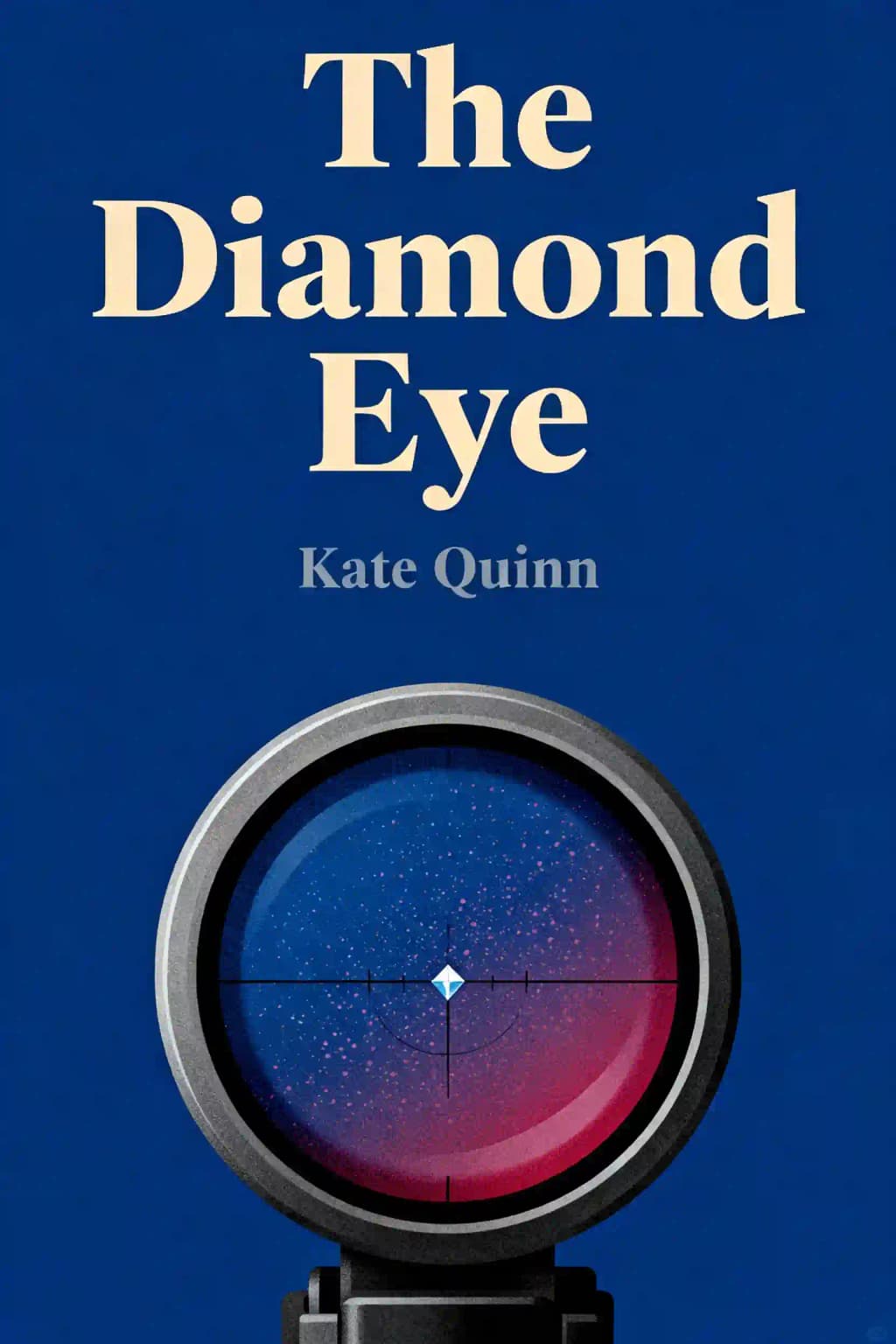
The novel's title-"The Diamond Eye"-refers both to the precision of Mila's marksmanship and her ability to see clearly through the fog of war and propaganda. Like a diamond, she is transformed by immense pressure into something brilliantly hard yet multifaceted, capable of reflecting light from unexpected angles. Her story reminds us that history often looks different when viewed through alternative perspectives-particularly those of women who have traditionally been relegated to footnotes rather than featured as protagonists.
Through Lyudmila Pavlichenko's extraordinary journey from library shelves to deadly precision on the battlefield, Quinn invites readers to reconsider their understanding of courage, patriotism, and the universal human capacity for both terrible violence and profound love-sometimes within the same heart.