Chapter 1
A Twisted Web of Obsession and Deception
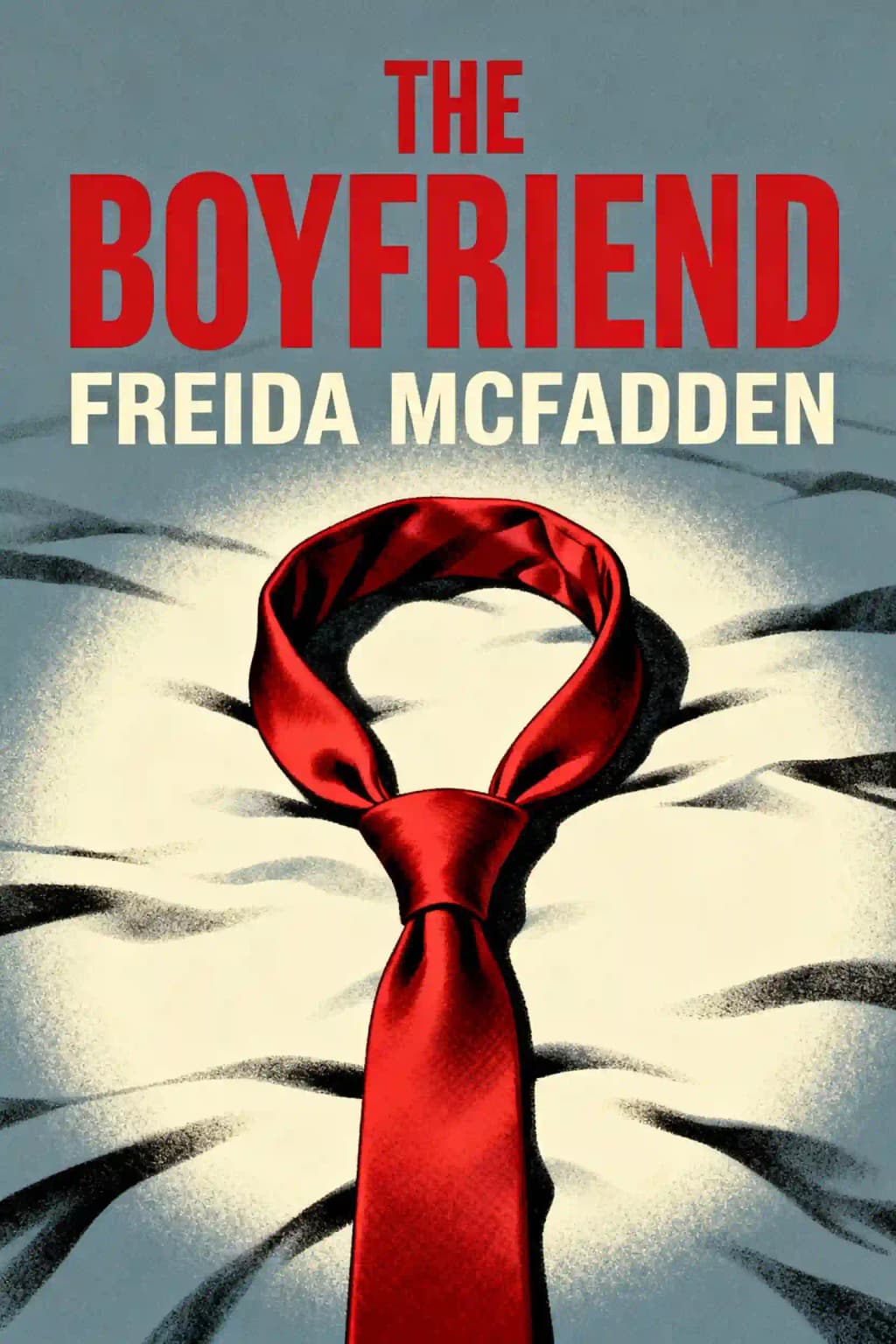
The Boyfriend by Freida McFadden has taken the psychological thriller world by storm, climbing bestseller lists and captivating readers with its chilling exploration of obsession and deception. This #1 New York Times bestseller has become a book club favorite, with readers drawn to its unpredictable twists and complex characters. McFadden, who works part-time as a physician specializing in brain injury, brings her medical knowledge to create authentically disturbing scenarios. The novel has been praised by Stephen King as "unputdownable" and has been optioned for a major streaming adaptation. What makes this thriller particularly compelling is how it plays with our perceptions of trust and danger - forcing us to question who the real monsters are in our everyday lives.
Chapter 2
Dark Desires and Dangerous Obsessions
Tom's prologue immediately plunges us into the disturbing psychology of obsession. Since age four, he has been infatuated with Daisy, describing her as a "golden-haired angel" who makes his knees weak with her secret smiles. His early memories are filled with stolen glances across the playground and carefully preserved Valentine's cards - seemingly innocent artifacts that take on a darker meaning as his fixation deepens. But beneath this apparently typical teenage crush lies something far more sinister. Tom's greatest fear isn't rejection - it's that if they're finally alone together, he might "wrap his fingers around her pretty white neck and squeeze the life out of her."
This jarring confession establishes the novel's central tension: the battle between normal human connection and dangerous obsession. Tom represents the frightening possibility that those closest to us might harbor violent impulses beneath a charming exterior. His intrusive thoughts about Daisy's carotid artery and how "the artery lies just below the skin's surface" reveal a mind fixated on vulnerability and power. These clinical observations appear throughout his narrative, becoming more frequent when he's stressed or feeling out of control, suggesting a coping mechanism that merges medical knowledge with violent fantasy.
What's most disturbing is Tom's self-awareness. He recognizes these thoughts as wrong yet cannot suppress them. During quiet moments in class, he catches himself sketching detailed anatomical drawings in his notebook margins. When he finally kisses Daisy, he notices "how delicate she is" and thinks disturbingly that he "could easily break her neck with a twist." This duality creates a character both sympathetic and terrifying - a young man fighting his own nature while being drawn to violence. His attempts to channel these impulses into medical studies only seem to provide him with more detailed knowledge of human fragility.
The novel forces us to confront uncomfortable questions: Can someone overcome their darkest impulses? Is Tom's attraction to vulnerability something he was born with, or was it shaped by his violent home environment? His father's history of domestic abuse and his mother's enabling behavior suggest environmental factors, yet Tom's obsession began before he could fully comprehend these influences. His careful documentation of his thoughts in a leather-bound journal - which he refers to as his "confession box" - reveals someone desperately trying to understand his own nature. These questions resonate throughout the story, challenging our understanding of human nature and the thin line between love and obsession. The author's decision to frame the narrative through Tom's perspective makes readers unwilling participants in his struggle, forcing them to navigate their own feelings of sympathy and revulsion.
Chapter 3
Sydney's Dating Disasters and Mystery Man
Sydney's modern dating nightmare opens with a date so catastrophic it reads like a comedy of errors. Kevin, her Cynch app match, embodies every dating red flag imaginable - from criticizing her appearance and attempting to recruit her into a pyramid scheme to taking a FaceTime call from his mother during their meal. This disastrous encounter establishes Sydney as relatable and vulnerable, a woman navigating the treacherous waters of modern dating with optimism despite repeated disappointments.
When Kevin becomes aggressive after Sydney refuses his advances, the narrative shifts from awkward comedy to genuine threat. His transformation from annoying date to potential assailant highlights the very real dangers women face in the dating world. Just as the situation becomes truly frightening, a mysterious stranger intervenes, allowing Sydney to escape.
This "Mystery Man" creates an immediate romantic tension - described as incredibly attractive with "thick black hair, intense coal-black eyes, and a strong jaw." Their connection is palpable, yet he walks away without asking for her name or number, leaving Sydney intrigued. The encounter seems like something from a romance novel - the kind Sydney reads, filled with men who look like her rescuer.
This meet-cute sets up a false sense of security. Sydney believes she's living a romance novel moment, complete with a handsome rescuer who appears just when needed. What she doesn't realize is that she's actually in a psychological thriller, where such coincidences should raise suspicion rather than romantic hope. The contrast between Sydney's perception and reality creates dramatic irony that builds tension throughout the novel.
Sydney's bleeding disorder (von Willebrand disease) introduces another layer of vulnerability - she bleeds excessively from even minor cuts. This medical condition serves both as a plot device and metaphor, representing Sydney's emotional vulnerability and foreshadowing how this physical weakness will later become significant in her relationship with Tom, who has a disturbing fascination with blood.
Chapter 4
Tom's Violent Past and Family Trauma
Tom's backstory reveals a household defined by violence and fear. His father is an alcoholic who physically abuses his mother, returning home "reeking of alcohol" and leaving her with a split lip she unconvincingly claims came from "opening a cabinet in my face." This domestic violence shapes Tom's understanding of relationships and power dynamics.
The pivotal moment comes when Tom confronts his father with a fire poker after witnessing another attack on his mother. Rather than backing down, his father easily disarms him, jabs the sharp point into Tom's belly drawing blood, and threatens to kill him. This humiliating defeat forces Tom to recognize his powerlessness while fueling his rage and determination.
When Tom finally acts against his father, the scene is both cathartic and horrifying. Using a steak knife, he stabs his father in the stomach, then makes the calculated decision to finish the job by cutting his throat. The clinical precision with which he describes the act - "I know exactly how to cut my father's throat thanks to all the surgical textbooks I've studied" - reveals his disturbing detachment.
Most chilling is Tom's reaction afterward: "I feel no remorse. He deserved to die." He acknowledges murder is wrong but admits "what disturbs me is how much I enjoyed watching him die - one of the best moments of my life." This self-awareness about his own darkness creates a complex character who understands his moral failings yet cannot overcome them.
Tom's friend Slug emerges as an even more disturbing influence. When Tom confesses he'd like to kill his father, Slug doesn't react with disgust but suggests "why don't you?" adding that killing someone who deserves it isn't wrong "if you don't get caught." This casual approach to murder reveals Slug as someone without moral boundaries, who later becomes instrumental in disposing of the body and covering up the crime.
The aftermath of the murder shows Tom's mother potentially complicit in protecting her son. When Chief Driscoll notices blood on their sofa, she quickly claims it's paint and refuses his request to take a sample. Later, Tom finds her scrubbing the sofa clean - suggesting she suspects what happened but chooses to protect her son rather than seek justice.
Chapter 5
The Serial Killer Investigation Unfolds
The discovery of Bonnie's murdered body transforms the novel from a romance into a thriller. Sydney finds her friend in a horrific, bloody scene that will haunt her forever. The investigation brings Detective Jake Sousa - Sydney's ex-boyfriend - back into her life, creating a complicated dynamic where their personal history intersects with the murder investigation.
Jake reveals disturbing details about the crime: Bonnie had been dating someone special - a doctor she'd recently become exclusive with - but the boyfriend was texting her from a burner phone, suggesting he wasn't who he claimed to be. This revelation plants the first seed of suspicion about Tom, though Sydney doesn't make the connection yet.
As the investigation progresses, Jake shares that Bonnie's murder matches another case from eighteen months ago - both victims were young women who dated on Cynch, and the killer took locks of their hair as souvenirs. This pattern establishes that they're dealing with a serial killer with specific rituals and victim selection criteria. Jake later reveals they've found fingerprints at the murder scenes that match, confirming the same person committed both crimes.
The investigation creates mounting tension as Sydney begins dating Tom, unaware that he might be connected to the murders. Her growing relationship with Tom runs parallel to Jake's investigation, creating dramatic irony as readers wonder whether Sydney is falling for a killer. This dual narrative structure - Sydney falling in love while Jake hunts a murderer - builds suspense as these storylines inevitably converge.
Sydney's position between these two men - her ex-boyfriend investigating murders and her new boyfriend who might be the killer - puts her at the center of the mystery. Her bleeding disorder adds another layer of vulnerability, especially when Jake warns her to be careful and offers protection. The novel effectively uses the investigation to create both external threat (the killer is still out there) and internal conflict (Sydney's growing feelings for Tom despite red flags).
Chapter 6
The Tangled Web of Secrets and Lies
As Sydney's relationship with Tom deepens, inconsistencies in his story begin to emerge. First, an elderly woman at a restaurant recognizes Tom as "Dr. Brewer," though he told Sydney his name was Brown. When confronted, he claims she misheard him. Sydney later discovers he works at Mount Sinai Hospital, not NYU as he'd claimed.
These discrepancies create a growing sense of unease. Is Tom simply forgetful about details, or is he deliberately hiding his identity? When Sydney googles "Thomas Brewer MD pathologist," she finds his impressive credentials from Cornell and University of Pennsylvania, confirming he's a real doctor but raising questions about why he lied about basic facts.
Tom's behavior becomes increasingly suspicious. When Sydney suggests meeting his mother who's visiting, he reacts with horror. Even more concerning, when she texts him and his phone doesn't buzz, he becomes evasive about why he didn't receive it, eventually claiming it's his "work phone" and his personal phone is at home - an obvious lie that makes Sydney question what he's hiding.
The discovery of Bonnie's scrunchie under Tom's nightstand represents the turning point. This physical evidence confirms Sydney's worst fear - Tom was Bonnie's mystery boyfriend. Further investigation reveals a burner phone hidden in Tom's drawer that he uses solely for communicating with her, mirroring how Bonnie's boyfriend contacted her.
These revelations force Sydney to confront the possibility that she's dating a murderer. The man who rescued her from an aggressive date might himself be a predator who killed her friend. This dramatic irony creates unbearable tension as Sydney must pretend everything is normal while planning her escape.
When Sydney provides Tom's water bottle to Jake for fingerprint testing, the results are shocking - Tom's prints match those found in both victims' apartments. Yet in another twist, Tom has an airtight alibi for Bonnie's murder - he was working at the hospital all night, confirmed by multiple witnesses and cameras. This contradiction deepens the mystery: if Tom didn't kill those girls, why hide his relationship with Bonnie? Why use a burner phone?
Chapter 7
The Truth About Daisy and Tom's Dark Past
The novel's dual timeline structure gradually reveals Tom's traumatic past with Daisy. Initially presented as a sweet high school romance, their relationship takes a sinister turn when Tom is implicated in the disappearance of Brandi Healey, a girl he tutored. Chief Driscoll - Daisy's father - questions Tom about his relationship with Brandi, mentioning she told friends she had a crush on a boy she planned to meet the night she disappeared.
The situation worsens when Alison, Daisy's friend who dislikes Tom, confronts him privately. She reveals she saw him kissing Brandi days before her disappearance and threatens to tell Chief Driscoll unless Tom breaks up with Daisy, calling him "dangerous" and suggesting his comfort with biology dissections is suspicious.
When Alison herself disappears and is later found murdered, Tom becomes the prime suspect. The police discover both girls were tortured before being killed, creating a pattern that points to a serial killer. Tom's alibi for Alison's murder - that he was home with his father - is particularly weak since he's already killed his father and disposed of the body.
The shocking truth is revealed in flashbacks: neither Tom nor Slug killed Alison or Brandi - it was Daisy herself. At the Dairy Queen parking lot, Tom discovers Daisy standing over a body, having murdered Slug. She offers Tom an ultimatum: either go along with her story pinning everything on Slug, or she'll kill him too. Despite her murderous actions, Daisy insists she loves Tom and offers a future together, using her father's position as police chief to protect them both.
This revelation completely inverts our understanding of the characters. Daisy, initially presented as an innocent "golden-haired angel," is exposed as a manipulative killer. Tom, despite his violent impulses and disturbing thoughts, didn't actually kill the girls - though he becomes complicit by agreeing to keep Daisy's secret.
Tom's decision in that moment defines his character: he'll protect Daisy's secret to save himself, but refuses to continue their relationship. He recognizes the danger she represents while acknowledging his own moral compromise. This complex choice shows Tom as neither hero nor villain, but someone trapped between his own dark nature and his desire to be better.
Chapter 8
The Final Confrontation and Shocking Revelations
The novel reaches its climax when Sydney discovers locks of hair tied with different-colored ribbons hidden in Randy's toilet tank. She believes Randy is the killer, unaware of the truth about Gretchen. When Tom pounds on the door calling Gretchen "Daisy," the final pieces fall into place.
In a shocking twist, we learn that Gretchen is actually Daisy - Tom's high school girlfriend he claimed was dead. She's been stalking him for years, killing any woman he gets close to. She joined Bonnie's yoga class to spy on Sydney and Tom's relationship and moved in with Randy as her "ticket in" to the building.
To prove her devotion to Tom, Gretchen suddenly stabs Randy multiple times, claiming he deserved it for creeping on female tenants. Her plan is to frame Randy for all the murders and make Sydney his "last victim" before killing him in "self-defense." This revelation recontextualizes everything we thought we knew about the murders.
When Tom begs Gretchen to get help, she exposes his dark secret - that he's attracted to Sydney because he loves watching her bleed. This connects back to Sydney's bleeding disorder and Tom's fascination with blood, revealing that while he may not be a murderer, his attraction still has disturbing undertones.
As police sirens approach - Tom had called them before arriving - Gretchen suggests they escape together. Despite everything, Tom admits he can't live without her either. As they prepare to flee, Gretchen moves to kill Sydney, but Tom stops her, making her promise no more killing as his condition for going with her. When she asks "Even if they deserve it?" he ominously replies, "Well, that's different."
This ambiguous ending leaves us questioning Tom's true nature. Has he chosen to embrace his darkness by running away with a murderer? Or is he sacrificing his freedom to protect Sydney and others from Gretchen's violence? The moral complexity of his choice reflects the novel's central theme - that good and evil often coexist within the same person.
Chapter 9
The Aftermath and Lingering Questions
The epilogue, set one month after the climactic events, reveals that Gretchen and Tom have vanished without a trace, despite an extensive manhunt involving multiple law enforcement agencies including the FBI, state police, and local authorities. The police investigation of Gretchen's house yielded damning forensic evidence - particularly strands of hair in her toilet that provided DNA matches to multiple unsolved murders spanning several years, definitively confirming she was the methodical serial killer they had been seeking all along.
Sydney has found solace in rekindling her relationship with Jake, who has transformed from an occasionally present boyfriend into a fiercely protective partner. He's taken to checking her windows at night, installing additional security measures, and has essentially appointed himself her unofficial bodyguard "in case they come back." Their strengthened relationship represents more than just a return to normalcy - it symbolizes Sydney's anchor to safety after her harrowing brush with death. Jake's dramatic shift in priorities, particularly making Sydney central to his life rather than an afterthought between business meetings, suggests profound personal growth and a deeper understanding of what truly matters.
The novel's most chilling twist arrives in the form of a plain manila envelope Sydney receives in the mail. Inside, she finds a lock of dirty-blond hair bound with a blood-red ribbon, accompanied by an unsigned note in Tom's distinctive handwriting: "Sydney, Kevin won't be bothering you ever again." The implications are unmistakable - Tom and Gretchen have made Kevin, Sydney's aggressive former date and stalker, their latest victim.
Despite her professional training as a journalist and her ethical obligations as a citizen, Sydney makes the calculated decision to return the envelope to the trash - effectively becoming complicit in concealing evidence of Kevin's murder. This morally complex choice eerily parallels Tom's own ethical compromises throughout his life. Sydney, who once judged Tom's actions harshly, now finds herself making similar choices when faced with violence against someone who threatened her safety.
The ending raises profound questions about moral relativism and the nature of justice. Has Sydney's experience fundamentally altered her moral compass, or merely revealed its true nature? Does her silent acceptance of Kevin's murder suggest that principles crumble in the face of personal benefit? The novel deliberately avoids providing neat ethical resolution, instead suggesting that moral absolutes may dissolve when confronted with real-world complexities.
Perhaps most disturbing is the cyclical nature of moral compromise revealed in the final scenes. As Sydney prepares for a romantic dinner with Jake, knowing she's harboring evidence of murder, she unwittingly mirrors Tom's relationship with Daisy years earlier. Just as Tom once protected Daisy's darkest secrets, Sydney now guards Tom's - suggesting that the pattern of ethical compromise and secret-keeping perpetuates itself across generations and relationships. The parallel raises uncomfortable questions about whether anyone can truly remain untainted by violence once they've been touched by it, and whether moral purity is possible in a world where protection sometimes requires compromise.
Chapter 10
The Psychology of Obsession and the Nature of Evil
At its core, The Boyfriend delves deep into the psychology of obsession and the multifaceted nature of evil. Tom's intrusive violent thoughts about Daisy represent one form of obsession - a fixation on vulnerability and power that manifests in vivid fantasies of violence. These thoughts plague him constantly, appearing unbidden during ordinary moments like watching Daisy study or laugh. Meanwhile, Daisy/Gretchen's murderous determination to possess Tom represents another form - the obsessive need to eliminate perceived rivals that drives her to meticulously plan and execute multiple murders across years.
The novel masterfully illustrates how true evil often wears a charming face. Daisy, with her golden hair and perfect blue eyes, weaponizes her appearance of innocence. She cultivates a persona of the perfect student and girlfriend, volunteering at animal shelters and organizing charity drives, all while methodically eliminating anyone who threatens her relationship with Tom. Tom himself presents a complex duality - despite his violent impulses and detailed fantasies of harm, he shows moments of genuine tenderness and conscious restraint, particularly in his protective relationship with his younger sister. Even Sydney, our ostensibly moral protagonist, reveals ethical flexibility when she deliberately conceals evidence that would implicate Tom, choosing personal loyalty over justice.
This layered characterization challenges simplistic notions of good and evil. Characters exist on a nuanced moral spectrum rather than in binary categories. Tom's decision to kill his abusive father feels justified given years of brutal domestic violence, yet his admission that he derived pleasure from the act reveals something fundamentally disturbing about his nature. Daisy's murders are unequivocally evil - calculated, cruel, and often targeting innocent people - yet her absolute devotion to Tom represents a twisted form of love that she's willing to kill and die for.
The novel expertly explores how trauma shapes behavior while avoiding simplistic cause-and-effect explanations. Tom's violent home environment and his father's systematic abuse clearly influenced his development, from his difficulty with intimate relationships to his hair-trigger temper. Yet the novel refuses to use this as a simple explanation or excuse for his darker impulses. Similarly, we never learn what made Daisy/Gretchen into a killer - no tragic backstory explains her actions. The novel suggests that some darkness might be innate rather than created, raising uncomfortable questions about human nature.
By the conclusion, we're left wrestling with whether anyone can truly transcend their fundamental nature. Tom's attempts to resist his violent impulses ultimately fail when he chooses to reunite with Gretchen, suggesting that perhaps we cannot escape our essential selves. Sydney's compromise of her moral principles - protecting a killer for personal reasons - indicates that even the most ethically-minded among us can be corrupted by circumstance and emotion. The novel suggests that while we might control our actions through conscious choice and restraint, our fundamental nature - with all its darkness and light - remains immutable.