Chapter 1
Where Dark Magic Meets Ivy League Privilege
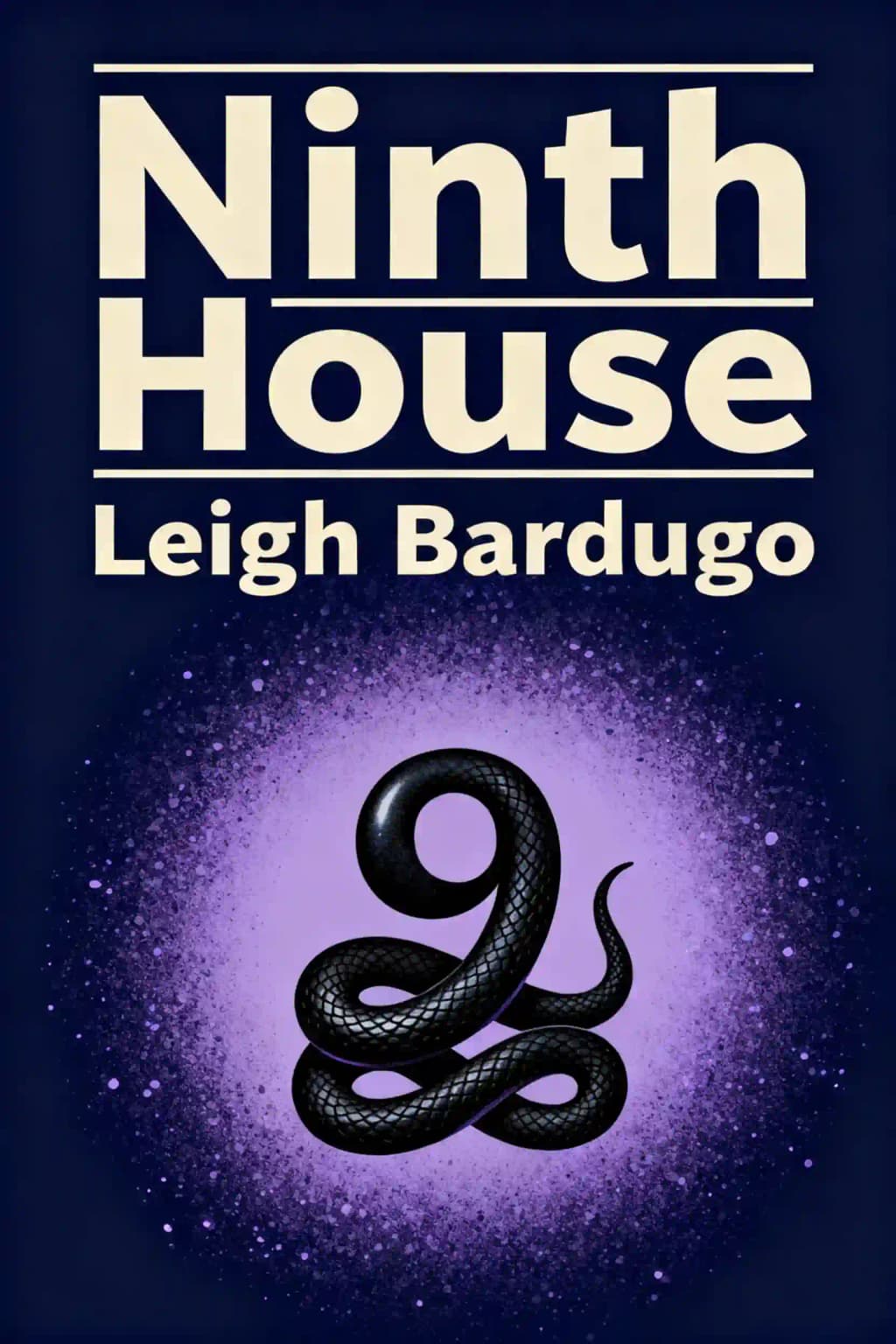
Leigh Bardugo's "Ninth House" has become a cultural phenomenon, blending dark academia with supernatural horror in ways that have captivated readers worldwide. This New York Times bestseller marks Bardugo's first adult novel after her wildly successful Grishaverse series, which Netflix adapted into "Shadow and Bone." The book has garnered praise from Stephen King, who called it "the best fantasy novel I've read in years," and counts among its fans celebrities like Taylor Swift and Florence Welch. Set at Yale University-Bardugo's alma mater-this haunting tale explores privilege, power, and the occult through the eyes of a protagonist who can see ghosts, making it both a gripping supernatural thriller and a scathing commentary on elite institutions.
Chapter 2
A Damaged Heroine with a Dark Gift
Galaxy "Alex" Stern is not your typical Yale freshman. With her ability to see ghosts (called "Grays"), a history of drug abuse, and connections to a horrific multiple homicide in California, she's the last person you'd expect at an Ivy League university. Her supernatural sight manifests as a dark aura around the dead - shadowy figures that drift through walls and linger in corners, their presence a constant reminder of the thin veil between life and death. This unique ability makes her valuable to Lethe House, the secret ninth house tasked with monitoring the occult activities of Yale's eight ancient secret societies, each of which harnesses different forms of magic for power and influence.
Alex's supernatural sight allows her to detect when rituals go wrong and Grays become dangerous - a crucial skill in a university where societies regularly commune with the dead for divination and power. As Lethe's newest recruit, she's paired with Daniel Arlington (nicknamed "Darlington"), a wealthy, educated gentleman who serves as her mentor. Their relationship is initially fraught with tension - he resents having to train someone he considers unworthy of Yale's hallowed halls, while she bristles at his privilege and naivety about the real world's darkness. Their dynamic reflects the larger class divisions at Yale, where old money and new reality collide.
What makes Alex such a compelling protagonist is her raw survival instinct, honed through years of trauma and necessity. Having grown up with her gift in the unforgiving streets of Los Angeles, she learned early that adults couldn't be trusted with her secret. Her ability to see ghosts made her particularly vulnerable to exploitation, especially by drug dealers who recognized her value in detecting police surveillance and rival gang members - both living and dead. This led to her spiral into addiction as she used drugs to blur her supernatural vision, creating a temporary escape from the constant presence of the dead.
When we meet Alex, she's been given a second chance through Dean Sandow of Lethe, who recognized her potential value beyond her troubled past. But she carries deep psychological wounds - not just from seeing ghosts since childhood, but from witnessing her friend Hellie's overdose and the subsequent massacre at a drug house called Ground Zero. These events haunt her throughout the narrative, gradually revealed through vivid flashbacks that explain her hardened exterior and profound distrust of authority figures. The Ground Zero incident left four people dead, including her former boyfriend, and Alex as the sole survivor - a fact that continues to draw unwanted attention from both mundane and supernatural forces.
Unlike Darlington, who romanticizes magic and sees it as something beautiful and transformative - a view shaped by his privileged upbringing and academic study of the occult - Alex understands its dangers firsthand. She approaches the supernatural with caution and pragmatism, making her both an outsider to Yale's privileged magical world and uniquely equipped to navigate its darkest corners. Her street smarts and intimate knowledge of humanity's capacity for evil make her an ideal guardian against the misuse of magic, even as she struggles to find her place in an institution built for people nothing like her.
Chapter 3
Yale's Secret Societies: Magic Behind Closed Doors
The world-building in "Ninth House" masterfully transforms Yale University from an elite academic institution into an intricate nexus of magical power, where centuries-old societies practice dark and potent forms of magic. Each of the "Ancient Eight" societies specializes in distinct magical disciplines: Skull and Bones performs complex prognostications using human entrails in their fortress-like tomb, while Scroll and Key masters the art of portal magic, creating doorways between locations and possibly dimensions. Book and Snake practitioners commune with the dead through sophisticated necromancy, Wolf's Head teaches the dangerous art of therianthropy (shapeshifting into bestial forms), and Manuscript specializes in powerful glamours and illusions that can reshape reality itself.
Bardugo constructs a meticulous magical system anchored to the physical geography of New Haven. These societies' rituals draw power from nexuses - specific points where the boundary between worlds grows gossamer-thin. The societies' tombs, far from being mere meeting houses, were strategically constructed on these power points through careful magical engineering. This positioning allows them to perform increasingly powerful magic that ripples through global events. Their influence extends far beyond Yale's gates, explaining their outsized impact in politics, finance, and culture. Their alumni roster reads like a who's who of American power brokers - presidents, Wall Street titans, media moguls, and cultural icons - all of whom have benefited from supernatural advantages carefully disguised as natural talent or good fortune.
The novel presents a provocative suggestion: much of what society attributes to "privilege" is actually the result of careful supernatural manipulation. When Darlington guides Alex through the Manuscript society's legendary parties, readers witness how glamour magic creates not just beautiful illusions but entire parallel realities. These magical environments influence people's perceptions and decisions in subtle yet profound ways. The societies systematically use their magical abilities to ensure their members succeed, maintaining an iron grip on power that spans generations through supernatural means.
This magical system serves as a brilliant metaphor for institutional privilege and generational wealth. The societies operate with fanatical secrecy, admitting only carefully selected students who meet their arcane criteria. As Darlington explains to Alex in a moment of unusual candor, "That's how these places survive... They're not just about keeping people out. They're about keeping people in." This double meaning speaks to both the physical protection of magical secrets and the psychological bonds that tie members to their societies forever.
Lethe House emerges as a unique entity in this magical ecosystem, serving as the regulatory body overseeing these potentially dangerous magical activities. Founded in the aftermath of a catastrophic ritual in 1898 that claimed multiple lives, Lethe ensures the societies follow a complex set of rules designed to protect both practitioners and the wider community. However, as Alex uncovers through her investigations, Lethe itself operates under compromised conditions, hamstrung by its financial dependence on the very societies it's meant to monitor.
Through this elaborately constructed magical infrastructure, Bardugo crafts a compelling allegory for real-world systems of privilege and power. The supernatural elements serve to illuminate how exclusive institutions perpetuate their influence, creating a narrative that works both as gripping fantasy and as incisive social commentary. The result is a richly imagined fantasy setting that feels simultaneously otherworldly and eerily familiar to anyone who has encountered institutional power structures in the real world.
Chapter 4
Murder at Yale: A Case That Transcends Worlds
The central mystery begins when Tara Hutchins, a New Haven townie, is found murdered on campus. Though Detective Turner initially dismisses any connection to the societies, Alex notices the timing coincides with strange behavior from the Grays during a Bones ritual. Her instincts tell her something supernatural is involved, despite Dean Sandow's insistence that she focus on her Lethe duties instead.
The investigation reveals Tara's connections to multiple societies: she dated a Bonesman named Tripp, had a Tennyson quote tattoo linking her to Scroll and Key, and was growing Merity (a magical drug that renders users completely obedient) possibly for Manuscript. Most significantly, she possessed a crucible-a magical vessel used for alchemical purposes.
As Alex digs deeper, she faces escalating threats. A gluma-a husk spirit that can cross the Veil-attacks her, filling her lungs with corpse beetles that nearly kill her. Later, she discovers Lance Gressang, Tara's boyfriend and the police's prime suspect, can somehow teleport between locations despite being in custody.
The investigation becomes more complex when Blake Keely, a fraternity brother who drugged and assaulted Alex's roommate Mercy, is revealed to possess Merity-a drug that should only be available to society members. This side plot allows Alex to exact revenge on Blake while demonstrating how society magic filters down to privileged students who abuse it.
What makes this mystery compelling is how it weaves together the supernatural and mundane. Tara's murder isn't just about jealousy or passion-it's connected to centuries of magical practice at Yale. The investigation forces Alex to navigate both worlds: interviewing suspects and gathering evidence like a detective while also performing necromantic rituals and consulting with ghosts.
The case ultimately leads to Professor Belbalm, Alex's seemingly kind mentor, who reveals herself as Daisy Whitlock-a woman who died in 1854 but has been possessing bodies and consuming souls for over a century. Each murder created a magical nexus that powered the societies' tombs. Tara's death was meant to create a new nexus for a new society, with Dean Sandow as Belbalm's accomplice.
This resolution brilliantly ties together the novel's themes: institutional power built on exploitation, the commodification of vulnerable bodies, and how privilege perpetuates itself through violence that remains hidden from public view.
Chapter 5
The Veil Between Worlds: Ghosts and Their Rules
The supernatural elements in "Ninth House" follow consistent rules that create tension throughout the narrative. Ghosts (Grays) are drawn to life, not death. They gather where people congregate-theaters, classrooms, busy streets-rather than cemeteries. They're typically harmless, unable to affect the physical world, but they become dangerous when rituals go wrong or when the Veil between worlds thins.
Alex's ability to see Grays makes her both valuable and vulnerable. While others need special potions like basso belladonna to perceive ghosts, Alex sees them constantly unless she dulls her senses with drugs. This gift isolates her-people think she's crazy when she reacts to invisible presences-but also gives her insight others lack.
The novel establishes specific methods for dealing with Grays: salt attracts them, while bone dust and graveyard dirt repel them. Protective chalk circles create barriers they cannot cross. These rules create a framework for the supernatural that feels consistent and believable.
The most fascinating aspect of this system is how Alex learns to work with ghosts rather than just fear them. When she meets the Bridegroom-a powerful Gray who can affect the physical world-she forms an uneasy alliance with him. Later, she discovers she's a "Wheelwalker" who can allow ghosts to possess her, granting her supernatural strength and abilities.
This revelation comes through flashbacks to the Ground Zero massacre, where we learn Alex didn't just witness the killings-she participated in them while possessed by her dead friend Hellie's ghost. This ability becomes crucial in the climax when she summons the ghosts of New Haven to help defeat Belbalm.
The ghost system creates moral complexity throughout the narrative. Are Grays just echoes of the dead, or do they retain consciousness? Do they deserve justice? When Alex discovers North (the Bridegroom) was wrongfully blamed for murder because another spirit possessed him, she feels compelled to clear his name despite the danger to herself.
By the novel's end, Alex's relationship with Grays has evolved from fear to understanding. She can now hear them as well as see them, suggesting her powers are growing. This sets up the sequel's premise-her plan to rescue Darlington from hell-while reinforcing the theme that the boundaries between worlds are more permeable than most people realize.
Chapter 6
Darlington's Disappearance: The Gentleman's Fate
Daniel Arlington-Darlington-begins as Alex's mentor and Lethe's golden boy. Wealthy, educated, and deeply committed to magic, he represents everything Alex is not. Yet beneath his polished exterior lies a troubled past: abandoned by his parents, raised by an eccentric grandfather, and left alone at fifteen to maintain his crumbling family estate, Black Elm.
Darlington's disappearance in the novel's first half creates the book's second major mystery. During a routine check of St. Elmo's magical equipment, he encounters something in the basement that Alex initially believes is a portal. Only later does she realize, "It's not a portal. It's a mouth." A hellbeast devours him "soul and all," leaving Lethe without its most knowledgeable member.
His absence forces Alex to step up, handling Lethe's responsibilities without proper training. She must navigate society rituals, manage supernatural threats, and investigate Tara's murder while piecing together what happened to Darlington through flashbacks and his notes.
The failed ritual to retrieve him reveals the horrifying truth: Darlington has been transformed into a demon. The hellbeast speaks with his voice, saying only "Murder" before Sandow banishes it. This revelation devastates Alex and Dawes, who had hoped to bring him back intact.
What makes Darlington's storyline particularly poignant is how it contrasts with Alex's. While she entered Yale as an outsider seeking normalcy, Darlington was born to privilege but sought the extraordinary. Magic represented his escape from loneliness and abandonment-a way to prove his life had meaning beyond his family's decline.
The flashbacks reveal how Darlington nearly killed himself at seventeen attempting an elixir ritual, only to be saved when Dean Sandow found him and offered him a place in Lethe. This parallel with Alex-both saved by Lethe from self-destruction-creates a bond between them despite their differences.
By the novel's end, Alex is determined to rescue Darlington from hell, having learned enough about magic to believe it's possible. This sets up the sequel while completing Alex's transformation from reluctant recruit to committed practitioner willing to risk everything for someone she initially resented.
Chapter 7
Privilege, Power, and Who Pays the Price
At its core, "Ninth House" is a scathing critique of privilege and institutional power. Yale serves as the perfect setting for this exploration-an elite institution where wealth, legacy, and connections determine who succeeds. The magical societies simply make literal what is often metaphorical in our world: the hidden advantages that perpetuate inequality.
Alex's perspective as an outsider allows her to see the system clearly. When Darlington explains that magic moved from the old world to the new in the early 1800s, she immediately understands: "That explains a lot about this country." The societies' influence explains why certain families maintain power across generations despite mediocrity.
The novel's most damning revelation comes when Alex discovers the societies' nexuses were created through murdered women. Each tomb is built on a site where a girl died, her death creating the magical power that sustains the society's rituals. This literal foundation of female sacrifice perfectly encapsulates how institutional power often rests on the exploitation of the vulnerable.
This theme extends to the novel's secondary plots as well. When Alex discovers Blake Keely has been drugging and assaulting women using Merity obtained from society connections, she recognizes how privilege protects predators. Even when caught, Blake faces no consequences until Alex intervenes with her own form of justice.
Similarly, Lance and Tara's story illustrates how townies are used by society members as experimental subjects and discarded when no longer useful. Colin Khatri taught them portal magic but abandoned them when things went wrong, leaving Lance to take the blame for Tara's murder.
The novel doesn't offer easy solutions to these systemic problems. Even after exposing Belbalm and Sandow, Alex knows the Lethe board will cover up the truth to protect the societies' reputations. The system continues despite individual bad actors being removed.
What makes this critique particularly effective is how it's woven into the supernatural elements rather than delivered through preaching. The metaphor of magical power concentrated in exclusive institutions makes visceral what might otherwise feel abstract, creating a compelling examination of how power perpetuates itself through exploitation and secrecy.
Chapter 8
Trauma, Survival, and Finding Your Power
Throughout "Ninth House," Alex's journey is one of processing trauma and discovering her own power. Her past-seeing ghosts since childhood, being exploited by drug dealers, witnessing her friend's overdose, participating in the Ground Zero massacre-has left her deeply wounded. When she arrives at Yale, she's using Lethe as an escape, hoping to eventually become "a real Yale student" and leave her supernatural abilities behind.
Alex's relationship with her gift evolves throughout the narrative. Initially, she sees her ability to perceive Grays as a curse that isolated her and led to her addiction. She tells Darlington she used drugs because "I didn't want to see them anymore. I just wanted to be normal."
Her healing begins when she stops fighting her nature and starts using it purposefully. When investigating Tara's murder, she performs necromantic rituals and forms an alliance with the Bridegroom ghost. Later, she discovers she's a Wheelwalker who can allow ghosts to possess her body, granting her tremendous power.
The novel's climax represents Alex fully embracing her abilities. When Belbalm attempts to consume her soul, Alex opens herself completely to the Grays of New Haven, summoning them by name to help defeat her enemy. This moment transforms what she once saw as a burden into her greatest strength.
Parallel to this supernatural journey is Alex's more mundane healing. She forms tentative friendships with her roommates Mercy and Lauren, stands up to authority figures like Detective Turner and Dean Sandow, and begins to imagine a future for herself beyond survival. When Professor Belbalm offers her a summer position, Alex glimpses a normal life she never thought possible.
The novel doesn't suggest trauma can be easily overcome. Alex still carries her scars, still struggles with trust, still feels like an impostor at Yale. But she gradually reclaims agency over her life, refusing to be defined solely by what happened to her. As she tells Darlington, "You don't get to choose what hurts you."
By the story's end, Alex has transformed from someone who wanted to escape her supernatural abilities to someone who fully embraces them. Her declaration "Who's ready to go to hell?" shows she's no longer running from her power but directing it toward something she believes in-saving Darlington. This represents the ultimate integration of her traumatic past with her newfound purpose.
Chapter 9
A Dark Academia Masterpiece with Something to Say
"Ninth House" transcends genre boundaries by masterfully combining elements of dark academia, supernatural horror, murder mystery, and social commentary into a cohesive whole. Bardugo's intimate knowledge of Yale-from the gothic architecture of Sterling Memorial Library to the secretive tomb societies-provides authenticity to the setting, while her fantasy expertise creates a magical system that feels both ancient and believable. The novel's rich detail extends to specific campus locations, rituals, and traditions, making the supernatural elements feel like natural extensions of Yale's already mysterious atmosphere.
The novel's sophisticated structure-alternating between "Winter" (the present investigation), "Last Fall" (Darlington's training of Alex), and glimpses of "Last Summer" (the Ground Zero incident)-creates a narrative puzzle that gradually reveals its secrets. This non-linear approach mirrors Alex's fragmented understanding of her own situation, with revelations about her past contextualizing her present actions. Each timeline adds layers of complexity, revealing how seemingly unrelated events connect in unexpected ways. The winter sections ground us in the immediate mystery, while the fall sections illuminate the intricate workings of Yale's magical underground, and the summer fragments slowly unveil the traumatic catalyst that brought Alex into this world.
What elevates "Ninth House" above similar supernatural thrillers is its unflinching examination of power and privilege. The magic system isn't just window dressing-it's a sophisticated metaphor for how institutional advantage operates in the real world. Each magical society's specific powers reflect real-world privilege: Manuscript's market manipulation, Skull and Bones's ability to see the future, Book and Snake's memory alteration. The societies' rituals benefit their members while exploiting outsiders, maintaining a system where the privileged remain so regardless of merit. The novel particularly excels in showing how this exploitation often targets society's most vulnerable members-the homeless, sex workers, and disadvantaged students.
The novel also explores how trauma shapes identity without defining it completely. Alex's supernatural ability to see Grays (ghosts) is inextricably linked to her painful past of abuse and addiction, yet she ultimately finds strength in what once made her vulnerable. This nuanced portrayal avoids both glorifying suffering and suggesting it can be easily overcome. Instead, it shows how past wounds can become sources of power while acknowledging the ongoing cost of survival.
By the conclusion, when Alex declares her intention to rescue Darlington from hell, we've witnessed her transformation from reluctant recruit to determined practitioner. She hasn't abandoned her skepticism or forgotten the system's flaws, but she's found purpose within it-protecting others from the exploitation she experienced. Her journey from outsider to guardian reflects the complex reality of working within flawed systems to effect change.
"Ninth House" leaves readers with haunting questions about institutional power, who pays the price for privilege, and how we reconcile with our own darkest capabilities. Through Alex's eyes, we see how power structures perpetuate themselves through both obvious and subtle means-from magical coercion to social pressure to financial influence. As Alex discovers, sometimes the most terrifying monsters aren't the supernatural ones but the human systems that enable exploitation while maintaining a veneer of respectability. In exposing these dynamics through the lens of fantasy, Bardugo creates a compelling critique that lingers long after the final page, forcing readers to examine their own relationship with privilege and power.