Chapter 1
From Chennai to the C-Suite: A Journey of Ambition and Balance
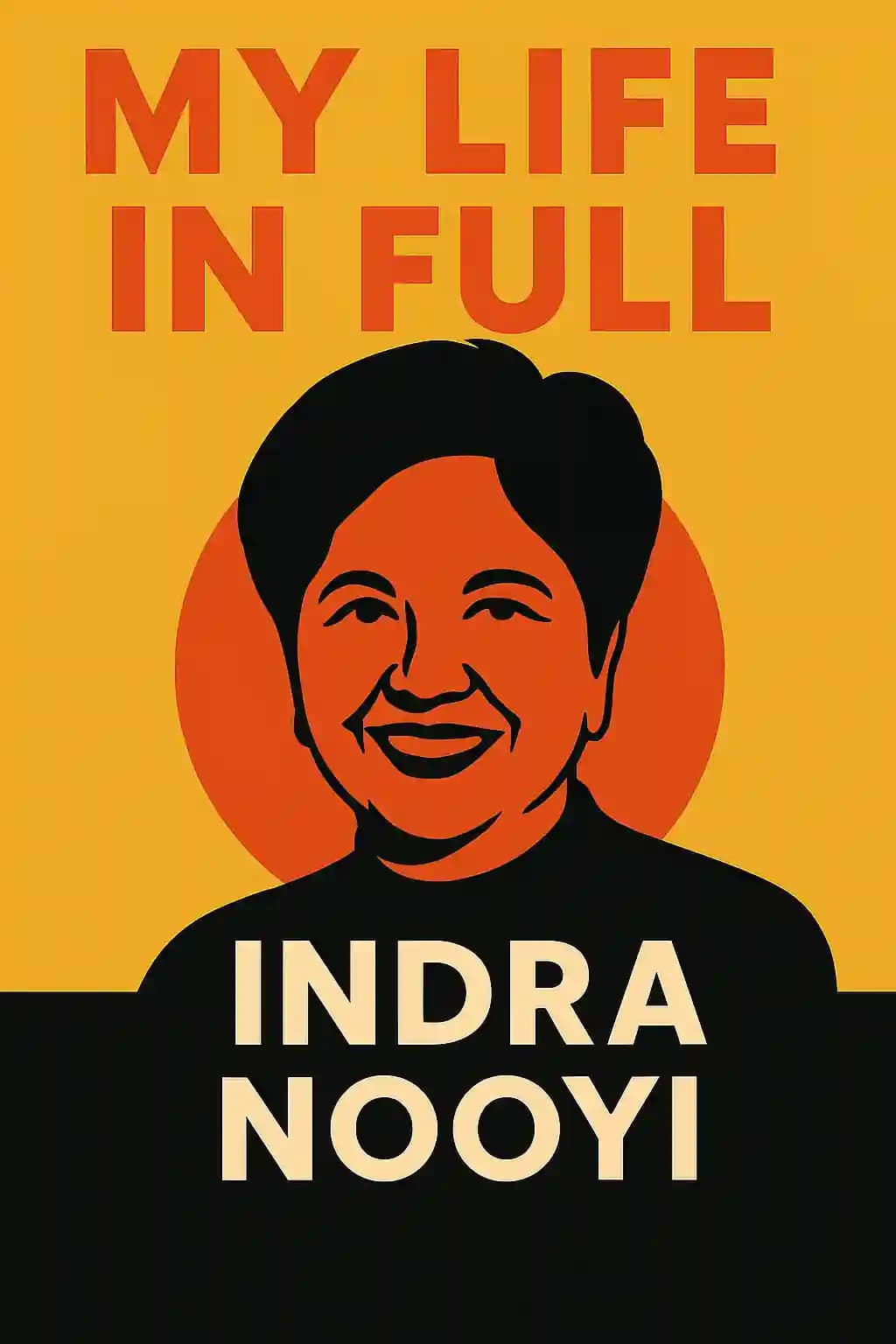
One foggy Tuesday in 2009, I found myself standing between President Obama and Prime Minister Singh of India. When introduced as PepsiCo's CEO, Singh exclaimed, "Oh! But she is one of us!" Obama immediately responded, "Ah, but she is one of us, too!" This moment perfectly captured the duality that defined Indra Nooyi's extraordinary life journey-deeply rooted in Indian heritage while embodying the American dream. Named one of Time's "100 Most Influential People" and consistently ranked among the world's most powerful women by Forbes, Nooyi's rise from Chennai to the C-suite of a global corporation represents a masterclass in leadership, cultural navigation, and the perpetual balancing act between professional ambition and family devotion. Her memoir has become required reading at business schools worldwide, with figures from Oprah Winfrey to Bill Gates citing it as essential for understanding modern leadership challenges, particularly for women and immigrants seeking to break through barriers in corporate America.
Chapter 2
The Rosewood Swing: Foundations of Character
The massive rosewood swing in our childhood home's women's living room served as the centerpiece for countless family gatherings. My mother, her sisters, and cousins would rock gently in the South Indian heat, discussing everything from politics to suitable marriage matches. As children, my siblings and I performed elaborate plays on this swing for our extended family, who offered honest critique rather than false praise-an early lesson in receiving feedback that would serve me throughout my career.
Our home, Lakshmi Nilayam in 1950s Madras (now Chennai), balanced tradition with progressive thinking about women's education. Though not wealthy, our Brahmin family was respected for perceived learning. My grandfather Thatha, a retired district judge, demanded academic excellence, having me look up unfamiliar words and write sentences demonstrating comprehension. While he was undoubtedly the family patriarch, my mother was its heart-constantly cooking, cleaning, and managing finances with remarkable intuition.
Despite being a dark-skinned "tomboy" in a society that valued fair skin and demure girls, I was never intellectually held back because of my gender. My parents invested in my education so I could "stand on my own two feet"-a revolutionary concept for many Indian families of that era who prioritized sons' education over daughters'.
At Holy Angels Convent, an all-girls Catholic institution, my sister Chandrika and I treasured school as our gateway to the wider world. We participated enthusiastically in Girl Scouts, music, and academics under formidable teachers including Irish nuns. Report cards were serious business-my grandfather expected top rankings and would position a chair outside to receive our reports the moment we approached home.
Though closely monitored at home, I thrived in debates and public speaking at school. In eighth grade, I was selected for the first-ever United Schools Organization conference in New Delhi-an exciting 1,350-mile train journey that exposed me to India's majestic capital with its wide roads, monuments, and diverse cultures.
My teenage years brought significant changes. Against my mother's objections that "good South Indian Brahmin girls" shouldn't play rock music, I formed a band called the LogRhythms-becoming Madras's only all-girl group, performing at schools and concerts across the city. This early willingness to challenge conventions while respecting core values would become a hallmark of my leadership style decades later.
Chapter 3
Education as Liberation: The Path to Professional Life
In August 1974, I arrived at the Indian Institute of Management (IIM) Calcutta, one of India's most prestigious business schools. As one of just six women in my class of two hundred students, I entered a world dominated by men. Most of my classmates were engineers in their early twenties, while I was only eighteen with a chemistry degree from Madras Christian College.
The curriculum was rigorous-finance, marketing, operations, strategy, economics-all taught with heavy emphasis on mathematics and statistics. I struggled with technical aspects but excelled in discussion-based classes, drawing on my experience from student conferences I had attended during high school, including meetings with President V.V. Giri and Prime Minister Indira Gandhi.
In 1970s India, women's education was still prioritized less than men's, with most expected to marry and run households rather than pursue careers. My mother, denied college education herself, vowed her daughters would attend university even if it meant financial sacrifice. This commitment to education as a pathway to independence became my foundation.
After graduating from IIM, I began my career at Mettur Beardsell with a six-month sales training program in Bombay at age twenty. I memorized thread specifications and trudged through the city selling to garment makers. This humbling door-to-door experience taught me that business happens one customer at a time-I needed to listen carefully and deliver on promises. After training, I moved to headquarters as assistant product manager in textiles, organizing fabric samples and selecting seasonal designs.
When a textile strike halted Mettur Beardsell's production in 1977, Johnson & Johnson offered me a position in Bombay launching Stayfree feminine protection products. I entered my first American workplace with doubled pay and longer hours. The challenge was introducing disposable maxi pads in a market where women typically used reusable cloth. We couldn't directly advertise such products-we had to educate young women in schools and convince parents to pay for this "freedom."
While I built my career in India, many of my male friends left for postgraduate programs in America. The US held special appeal as a center of culture and innovation-we consumed American music, films, and news. During a holiday visit to Madras, I discovered an article about Yale's new business school in the American Library. The program's blend of public and private management spoke directly to my interests. Yale's acceptance letter with financial aid changed everything, and in August 1978, my parents accompanied me to Bombay for a tearful farewell as I boarded a Pan Am flight to America.
Chapter 4
Crossing Oceans: The Immigrant Experience
My twenty-hour flight from Bombay to New York featured an endlessly looping soundtrack of 1970s hits and a kind stranger teaching me the correct pronunciation of "Connecticut." Landing at JFK Airport, I was awestruck by the orderliness and infrastructure before taking a limousine to Yale. Arriving two days early for orientation, I found myself utterly alone in an empty dormitory with just $450, a suitcase of clothes, and overwhelming loneliness.
At Helen Hadley Hall, I eventually found a vibrant international community where students cooked foods from their homelands and formed lasting friendships. My neighbor Rob Martinez, a Cuban American PhD student, became a lifelong friend who helped many of us buy groceries, taught me disco dancing, and showed such empathy that we made him an honorary Indian.
Yale's School of Organization and Management injected fresh energy into business education with its hybrid public-private management program. I was shocked by American students' relaxed approach-putting feet on desks, eating in class, calling professors by first names-but soon found the free-flowing discussions spectacular. Unlike my theoretical education in India, Yale was practical, using real cases and industry leaders as teachers.
With my limited budget, I worked the night shift at the dorm for $3.85 an hour and proudly sent $100 home every few months. When job-hunting season arrived, I faced interviews with good grades and professor recommendations but no suitable clothes. After an unsuccessful interview in an ill-fitting polyester suit, the career director advised me to wear a sari and "be yourself." For my Booz Allen Hamilton interview, I wore my favorite turquoise silk sari and impressed a partner who judged my abilities rather than my appearance.
During my summer internship in Chicago, I met Raj Nooyi, a young engineer from India who quickly became part of our group. After watching "Silver Streak" and having dinner one night, we spontaneously decided to get married. Despite initial family apprehension, our parents met in Madras for a formal engagement ceremony. After graduation, we married in Raj's uncle's basement with just forty guests-a simple ceremony with our families present.
Chapter 5
Building a Career While Building a Life
My consulting career began at Boston Consulting Group just after our wedding. BCG provided an incredible education-I learned more in six years than possible anywhere else. Companies hired us to answer fundamental business questions about value drivers, strategic options, and organizational structure. I thrived analyzing businesses then zooming out to determine repositioning strategies. Our work was meticulous and pre-digital-using calculators, pencils and paper spreadsheets.
Raj and I lived frugally in our early marriage, economizing with grocery coupons and carefully balancing our checkbook. We both maintained minimal wardrobes-I rotated just two wool suits with two blouses for my constant business travel. After a year, we purchased a $125,000 Tudor-style home in Glen Ellyn with just $7,500 down (mostly borrowed) at a staggering 17.5% interest rate.
In January 1983, we received devastating news that my father had pancreatic cancer. Carl Stern, my BCG manager, offered me six months of paid leave-a benefit that saved my career, as I would have otherwise quit to care for my father. Shortly after his death that June, I discovered I was pregnant-news I'd thankfully been able to share with him before he died. In January 1984, our daughter Preetha was born, becoming the center of our extended family's universe.
I returned to work after three months of maternity leave-an economic necessity made possible only by my mother's caregiving. Though I missed many firsts, our family network enabled both Raj and me to continue building our careers. The support of our extended family was crucial, though I still experienced constant heartache being away from my child.
After a devastating car crash that left me with crushed hip bones and internal bleeding, I spent three months recovering. This forced period of rest made me reassess my priorities, especially with a young daughter at home. When a recruiter persistently called about an opportunity at Motorola's automotive electronics division, I finally went for an interview-still using an aluminum walker.
Chapter 6
The Corporate Climb: From Motorola to ABB
Gerhard Schulmeyer, the tough German engineer running Motorola's automotive electronics division, hired me as head of strategy despite my knowing nothing about cars or electronics. He cared only about results, not whether I was female, an immigrant, or a mother. For the next eight years, he became my teacher, coach, and advocate, fundamental to my career ascent.
To succeed, I hired two community college professors to teach me automotive mechanics and solid-state physics twice weekly. At Motorola, I worked with brilliant minds driving the technology revolution-the company that built NASA's moon mission radios, created microprocessors for Apple computers, and invented the first portable telephone.
When my mother returned to India to escape Chicago's winter, Raj and I suddenly faced the childcare crisis that plagues working parents everywhere. After unsuccessful nanny interviews, we found Vasantha, who we'd met at Indian music concerts, to care for Preetha in her Oak Park home. Each freezing morning at 6:30, we'd bundle our daughter into her snowsuit and Raj would drive her to Vasantha's house.
By spring, exhausted from the routine, we moved to a four-bedroom house in Glen Ellyn-closer to my office with space for live-in help. For the next few years, relatives from India rotated through three-month stays, watching Preetha while taking pride in my career advancement. Though we were fortunate to have this care ecosystem, I often reflect on the millions of families without such support and wonder why accessible, affordable childcare isn't a national priority.
After two years repositioning Motorola's automotive electronics division with Gerhard, I was asked to lead a company-wide project called "Control and Communications for People and Machines on the Move." At thirty-three, I was promoted to director of corporate strategy and planning, moving to the sixth floor with a company car and indoor parking spot.
When Gerhard left Motorola for ABB in Zurich, I initially declined his invitation to join him. But as months passed with no movement on my portfolio recommendations at Motorola, my frustration grew. Gerhard persisted, eventually offering a position in Connecticut where ABB was acquiring Combustion Engineering. Despite our stable life in Chicago-with Raj excelling at Hewlett Packard and Preetha settled in school-my husband made the extraordinary decision to support my career move.
Chapter 7
Family Challenges and Growth
At ABB, I thrived as Senior Vice President of Strategy and Strategic Marketing, overseeing North American businesses and the global industrial segment. I became Gerhard's trusted intermediary in the US while he attended to duties in Zurich, speaking with him multiple times daily. When I became pregnant again, I suffered the same brutal morning sickness that once caused me to pass out at work.
Four days after moving into our rebuilt home in Greenwich, I gave birth via C-section to our second daughter, Tara, in mid-December 1992. I was overwhelmed with love, refusing to let her out of my sight in the hospital. With two children, parenting became significantly more complex. I failed to recognize Preetha's adjustment struggles-she missed our one-on-one time and felt jealous of the baby. Once when Gerhard asked what she wanted to be when she grew up, Preetha replied, "I want to have your job, because if I have your job, I'll always be with my mommy."
Despite having three months of paid maternity leave as a senior executive at ABB, I couldn't fully disengage. The day after Tara's birth, Gerhard called me about a project needing my input. "But it's your body that had the baby," he joked. "Your brain is still working." Though he let me decide when to return, I immediately assembled my team to discuss the project.
When Preetha entered fourth grade at North Street public school in Greenwich, we received a surprising note that she wasn't submitting homework. Investigation revealed she'd completed the work but hadn't turned it in. After consulting a child psychologist who observed her classroom, we discovered the devastating truth: Preetha was being ignored by her teacher despite raising her hand constantly, and at lunch, she was bullied into cleaning up after classmates while sitting alone. As one of few students of color in this wealthy community, she faced exclusion we hadn't anticipated. Heartbroken, we immediately transferred her to Sacred Heart, a Catholic girls school where both daughters would thrive for the next eighteen years.
Chapter 8
The PepsiCo Journey: From Strategy to CEO
When Gerhard left ABB in late 1993 to become CEO of Siemens Nixdorf, I stayed behind but soon faced an uncomfortable environment under new leadership. The new boss regularly called me "honey" and was unwilling to change when I addressed it, leading to my departure. Jack Welch offered me positions at GE that required relocation, and Bob Shapiro at Monsanto wanted me in Saint Louis. Despite entering the big leagues of executive recruitment, I refused to upend my family's life.
Then came an offer to be senior vice president of corporate strategy at PepsiCo in nearby Purchase, New York. After Wayne Calloway, PepsiCo's typically reserved CEO, made a humble, personal appeal-"My need for you is greater than Jack's"-I accepted, excited to join a consumer business where my work would be relatable even to my children.
After completing due diligence, we acquired Tropicana in July 1998 for $3.3 billion in cash. I began thinking more deeply about PepsiCo's nutritional offerings as soda sales slowed and consumers shifted to healthier options. This trend became personal when children at my daughter Tara's birthday party called their mothers for permission to drink Pepsi-a clear red flag. I assembled a health-and-wellness advisory board with outside experts and created a mock grocery store displaying healthier products for our future portfolio.
From 1994 to 1999, my work schedule was relentless. I'd return home, shower, put on a nightgown to show my daughters I wasn't leaving, put them to bed, then work until 1 or 2 a.m. I rarely ate dinner with the family, didn't exercise, barely slept, and traveled constantly-including eight trips to China, some with Henry Kissinger to strategize about competing with Coca-Cola's dominant market share there.
My family adapted to my absence. Raj provided steady support despite his own demanding consulting career. We had household help, and my mother and in-laws assisted when needed. Tara attended Montessori school and often spent evenings at PepsiCo, sometimes sleeping under my desk. Tara once wrote me a heartbreaking note I still keep: "I will love you again if you would please come home," with "please" spelled out seven times.
In spring 2000, Roger casually informed me I would become CFO while maintaining my other responsibilities. When I hesitated, he insisted: "You're already basically doing this job. Get your ass into that office." I moved next door to the CEO's office, overseeing nine departments.
Chapter 9
Performance with Purpose: Transforming PepsiCo
In September 2000, Quaker Oats CEO Bob Morrison approached us about acquiring his company. With its iconic oatmeal, cereals, and especially Gatorade, Quaker was a perfect fit with our portfolio. We announced the $13.4 billion acquisition with an unexpected management change: Roger would step down as CEO, Steve would take over, and I would become president of PepsiCo and join the board.
When I arrived home that night bursting with excitement to share my news about becoming president, my mother immediately asked me to go out for milk instead of listening to me. After getting the milk, I slammed it on the counter in frustration. My mother firmly replied, "You may be president of PepsiCo, but when you come home, you are a wife and a mother and a daughter. Nobody can take your place. So you leave that crown in the garage."
After closing the Quaker deal, my life changed significantly. I moved into a magnificent corner office with ten windows and received a substantial raise when Steve noticed my compensation hadn't been adjusted to reflect my expanded responsibilities beyond CFO. Roger had never addressed this, HR hadn't raised it, and I hadn't either-I loved my job and felt privileged, not comparing myself to male colleagues who, I later learned, had been receiving generous stock options for years.
My family life became somewhat calmer as my daughters grew more independent and I gained access to the company plane-revolutionary for my productivity and family time. I could work privately during flights, conduct multi-stop day trips, and be home for dinner more often to help with homework.
In my early days as CEO, I'd often spend weekend hours anonymously visiting stores in suburban communities. Pushing a cart through supermarkets and convenience stores, I'd observe our products through a consumer's eyes. What struck me was the cluttered appearance of PepsiCo sections compared to upstart brands with their simple packaging and natural messaging.
A pivotal meeting with Steve Jobs in 2008 further shaped my thinking. After discussing our shared vegetarianism and PepsiCo's health initiatives, we spent two hours on design philosophy. Steve emphasized that design must be embedded in innovation from the start, not added at the end. At Apple, design permeated everything-creating an emotional experience that "romanced" users.
Chapter 10
Legacy and Reflection: Beyond the C-Suite
The day after leaving PepsiCo, I woke at my usual 4:30 a.m., reviewing news and checking my now-sparse calendar. Raj and I had set up a joint office in Greenwich where we could pursue our separate interests while working near each other. It felt strange driving to work in casual clothes for the first time on a weekday.
Looking back, I felt immense pride in PepsiCo's achievements during my twelve-year tenure. Total shareholder return reached 149 percent, beating the S&P 500. We returned $79 billion to shareholders, grew market capitalization by $57 billion, and increased net revenue by 80 percent to $64 billion. Our billion-dollar brands grew from seventeen to twenty-two.
I was most proud of our Performance with Purpose initiatives. Good For You and Better For You products grew from 38 to nearly 50 percent of revenue. We reduced water usage, provided safe water access to eleven million people, converted trucks to hybrid power, reduced plastic, and developed compostable packaging.
One thing about leaving PepsiCo truly bothered me-the media's focus on how I didn't leave the company to another woman. Headlines like "When a Female CEO Leaves, the Glass Ceiling is Restored" frustrated me. Why weren't there similar articles when male CEOs retired without female successors?
The number of female Fortune 500 CEOs rose from just ten in 2006 to thirty-seven in 2020-progress from less than 2 percent to only 7.5 percent over twenty-seven years. This glacial pace is unacceptable. We need women in equal decision-making roles because women represent half the population.
Even as PepsiCo's CEO and chairman, I faced gendered treatment. In board meetings with eight men and four women, some male directors made patronizing remarks they wouldn't dare direct at a male leader. They would interrupt me mid-sentence until Sharon Rockefeller, a thirty-year board member, publicly told one man his constant interruptions had to stop.
Chapter 11
The Work-Family Moonshot: A Call to Action
Teaching at INSEAD, the international business school in France, I see students from over eighty countries who remind me of myself at Yale forty years ago. During our seminar on Integrating Performance and Progress, these promising young people inevitably ask me: "How did you do it? How did you rise in your career and keep your family together? How can we do it?"
I answer honestly that it wasn't easy-my life was a constant juggling act with pain, guilt, and trade-offs. I was simply fortunate-with my supportive family, great education, and parents who valued daughters equally to sons. I married a man who shared my ideals, had help from relatives, and could eventually afford to hire assistance.
The reality is that doing well at work is a full-time job, as is being a mother, wife, daughter, and daughter-in-law. Being CEO is at least three full-time jobs. While I devoted every drop of my talent and time to it all, my success was somewhat like winning the lottery-not a model for achieving real progress in combining career and family.
Society's message to young family builders has largely been: "If you want jobs and kids, it's your problem." We haven't built robust systems to support anyone who wants both a good career and happy home life. The situation in the US is even tougher now than when my husband and I started out, with healthcare, childcare, education, and housing consuming a far larger percentage of average incomes.
I believe we need to do more to value families having and raising children to be educated, productive citizens. It's tragic that our young people, despite being the most skilled, creative, and connected group in history, are still dealing with outdated rules and expectations.
Our society can leap ahead on the work-family conundrum by focusing on three interconnected areas: paid leave, flexibility and predictability, and care. These elements function together and must evolve together. As the only developed country without national paid leave, we compromise maternal and child health when women return to work too soon after having a baby because they can't afford unpaid time off.
The path forward requires courage, persistence, and a commitment to transformation-the same qualities that guided my journey from that rosewood swing in Chennai to the executive suite of one of the world's largest companies. By addressing these fundamental challenges, we can create a world where talent and ambition, regardless of gender, can flourish without impossible trade-offs between career and family.