Chapter 1
A Kingdom Forged in Gold, A Woman Bound in Chains
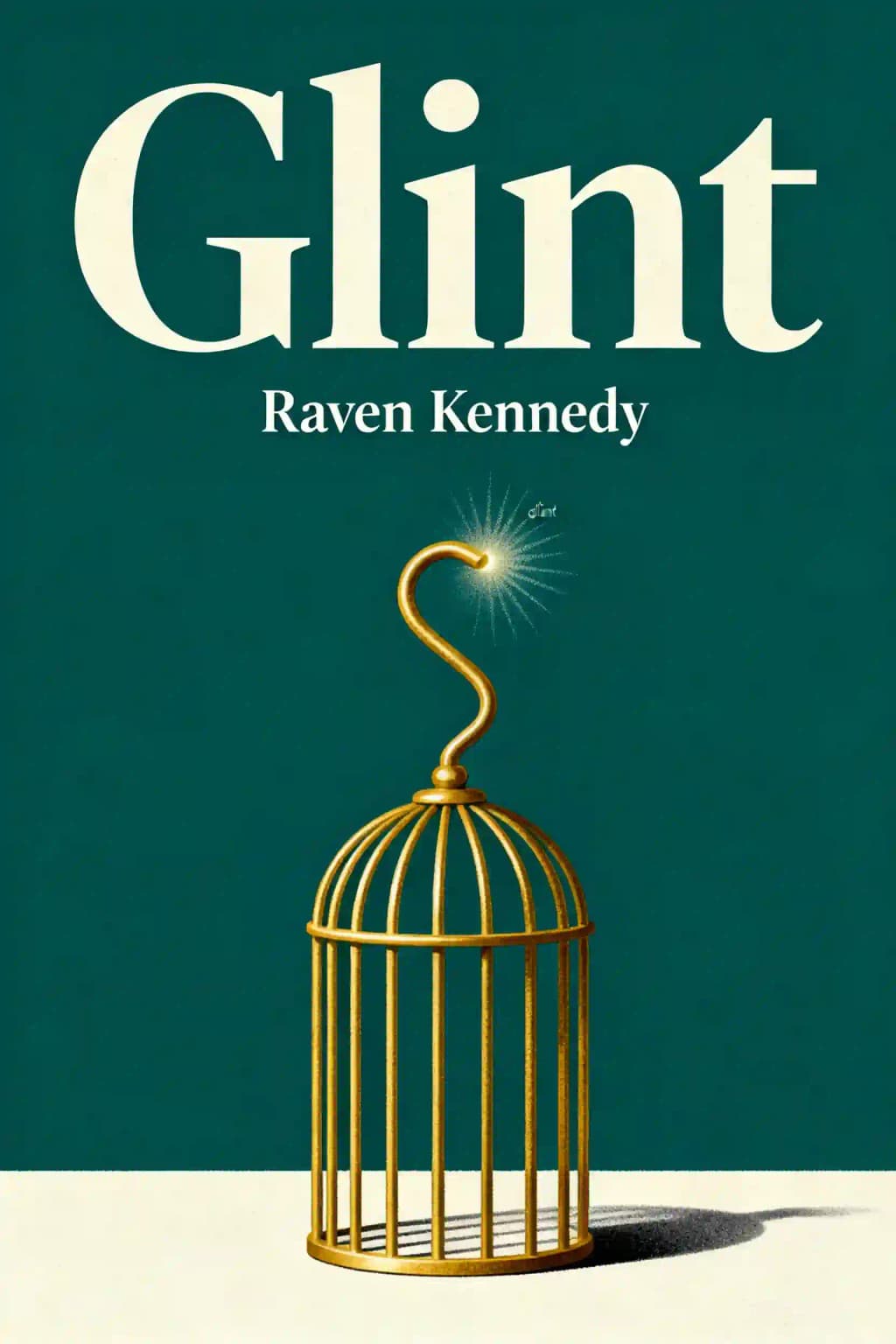
In the realm of Orea, where kingdoms are ruled by magic and power, Raven Kennedy's "Glint" emerges as a glittering standout in the fantasy romance genre. Since its release, this first installment of the Plated Prisoner series has captivated readers worldwide, climbing bestseller lists and inspiring countless TikTok videos under the #PlatedPrisoner hashtag. The series has found particular resonance with readers seeking complex female protagonists who journey from victimhood to empowerment. Even celebrities like Florence Pugh have been spotted with copies, contributing to its meteoric rise in popularity. What makes this tale so compelling? Perhaps it's the way Kennedy transforms the familiar King Midas myth into a dark exploration of power, autonomy, and the cages we allow others to build around us.
Chapter 2
The Golden Cage: Auren's Gilded Prison
Deep within the opulent walls of Highbell Castle in Sixth Kingdom, Auren lives as King Midas's most treasured possession. Her body, transformed by his golden touch, glimmers with inhuman beauty, while twenty-four golden ribbons grow from her spine-a physical manifestation of her fae heritage that she keeps carefully hidden. For ten years, she has resided in a magnificent golden cage built specifically for her in the castle's atrium, believing it was for her protection after a lifetime of abuse and exploitation.
Auren's early life was marked by unimaginable hardship. From ages five to fifteen, she lived as a beggar under the cruel mastery of a man named Zakir, forced to collect coins daily or face punishment. Even among fellow street children, she was an outcast, often sleeping on doorsteps in the rain when she failed to meet her quota. Her existence was one of constant hunger, fear, and rejection-until Midas found her in an alleyway, broken and desperate.
"I will never get bored of you, Auren. You're perfect," he had told her during their early days together, placing her hand over his heart and promising, "It was always going to be you. As soon as I saw your face, I was already lost to you."
These tender memories formed the foundation of Auren's unwavering loyalty to Midas. When nomads once attacked her, cutting off her clothes and hair before fleeing with their spoils, it was Midas who tenderly cared for her wounds. In that moment, she made a vow: the only person she could ever trust was him. His warning-"You can't trust people, Auren"-became her mantra, reinforcing her belief that the cage was necessary for her safety in a world determined to harm her.
Chapter 3
The Shattered Illusion: When Protection Becomes Prison
Auren's world shatters when she's captured by pirates during a rare venture outside Highbell Castle. After witnessing the brutal murder of her friend Sail by Captain Fane of the Red Raids, she's rescued-or rather, captured again-by the feared army of Fourth Kingdom. Led by the intimidating Commander Rip, a man rumored to rip the heads off his enemies, this army is marching toward Fifth Kingdom where Midas is currently negotiating with King Ravinger.
In the Fourth Kingdom's camp, Auren's perspective begins to shift. Though initially determined to escape and warn Midas of the approaching army, she gradually forms unexpected connections with members of Fourth's forces-Keg the cook who insists on feeding her extra portions, Hojat the gentle mender from South Orea, Lu the fierce female captain, and even Commander Rip himself, whose initial hostility masks a complex understanding of her situation.
"We're women in a man's world," Lu tells her during a rare moment of candor. "We have two options: conform to please men, the safe choice, or something harder-choosing ourselves." This simple truth plants a seed in Auren's mind, challenging her acceptance of her gilded prison.
Meanwhile, Commander Rip continually pushes Auren to question her loyalty to Midas. "He keeps you like a pet. Uses you. Manipulates you," he insists, while she defends the man who saved her when no one else would. Yet doubt begins to creep in as she learns disturbing truths-that one of Midas's saddles (concubines) is pregnant with his child despite his claims that he only wants Auren, and that poverty plagues his kingdom despite his golden touch.
Chapter 4
The Power Within: Discovering Her True Nature
Throughout her captivity with Fourth Kingdom, Auren wages an internal battle to conceal her dual secrets - her fae heritage and her extraordinary ability to control golden ribbons. Living in constant fear of discovery, she suppresses these fundamental aspects of herself, having internalized Midas's teachings that her fae nature makes her inherently dangerous and unworthy. This self-denial manifests in physical symptoms: headaches, nausea, and an ever-present sense of being caged within her own skin.
When Commander Rip forces her into a fighting circle during training, the confrontation becomes a catalyst for change. As other saddles watch with mixed expressions of curiosity and disdain, Rip pushes her repeatedly to her limits - not with cruelty, but with calculated precision. The pressure builds until something deep within Auren shatters. In a moment of raw, uncontrolled emotion, she screams "I'M FAE!" as her golden ribbons explode outward, transforming into fierce cyclones that attack Rip with unprecedented force.
To her astonishment, Rip's response defies everything she expects. Instead of punishment or disgust, he offers a proud, knowing smile: "You've finally found your fight." This validation - the first she's received for embracing rather than hiding her true nature - marks a profound turning point in her journey toward self-acceptance and personal empowerment.
The subsequent revelation that Rip himself is a full-blooded fae living openly among humans rocks Auren's worldview. His trusted team, the "Wrath," not only know his secret but embrace him completely, demonstrating a level of acceptance Auren never thought possible. Through their example, she begins to see how deeply Midas's manipulation had warped her self-perception, planting seeds of shame that had grown into forests of self-doubt.
This transformation manifests in small but significant ways. When Auren offers soap to fellow saddles despite their previous rejection and cruelty, she tells Keg, "Kindness shouldn't have to be earned. It should be freely given." This simple act and statement represent a fundamental shift in her understanding of self-worth. She begins to recognize that her value isn't determined by others' treatment of her - a revolutionary concept for someone who spent a decade believing she deserved to be caged.
As Auren gradually embraces her fae nature, her powers grow stronger and more controlled. The golden ribbons, once a source of shame and fear, become an extension of her will, responding to her emotions with increasing precision. This physical manifestation of her growing self-acceptance serves as a powerful metaphor for her journey from captive to warrior, from shame to pride, from hiding to becoming fully herself.
Chapter 5
The Queen's Gambit: Malina's Quest for Power
While Auren grapples with her changing perspective, another woman plots her own liberation in Highbell Castle. Queen Malina, once Princess Malina Colier, has spent ten years as Midas's neglected wife, watching him transform her childhood home into a golden monument to his power. Every inch of the castle-once adorned with slate parapets, iron gates, and colorful furnishings-now gleams with cold, scratched gold.
With Midas away in Fifth Kingdom, Malina seizes her opportunity to reclaim her birthright. "I've worn a crown my entire life, but I'm finally going to wield it," she declares, casting aside her golden attire for white garments and her mother's white opal crown. She sits boldly on the king's throne rather than the smaller queen's seat, gathering influential nobles like Lady Helayna to support her rule in Tyndall's absence.
Malina's relationship with her handsome saddle Jeo offers her a taste of the power and pleasure long denied her as Midas's wife. Their passionate encounters on her desk and floor, with her taking control and ordering him about, symbolize her growing confidence and authority. "Soon, everyone will do whatever their queen orders," she reflects afterward, savoring her newfound dominance.
When Malina receives news that Auren has been captured by Fourth Kingdom's army rather than the Red Raids pirates she hired, she celebrates this unexpected victory. "I'll never have to see Midas's favorite again," she exults, delighting in having taken "all Midas's favorite toys away."
Her plot thickens when she encounters a mysterious man named Loth Pruinn in the market square. With peculiar reflective gray eyes and claims of magic that can "show someone how to gain their greatest desire," Pruinn presents Malina with a magical map showing boundaries into the long-destroyed Seventh Kingdom. Though she initially dismisses him as a fraud, his parting question-"Are you sure about that, Your Majesty?"-sends chills through her body, hinting at darker machinations to come.
Chapter 6
The Betrayal: Midas's True Colors
After weeks with Fourth Kingdom's army, Auren is finally returned to Midas in Ranhold Castle of Fifth Kingdom. Their reunion, which she had desperately anticipated, quickly sours when Midas leads her to a "gift"-a new wrought iron cage he had specially made for her, complete with a gold-painted decoy wearing her dress.
When Auren tries to explain that she's changed, that she's proven she can handle herself, Midas coldly demands she enter the cage to prove her loyalty. "I didn't give you permission to change your mind," he tells her, revealing the true nature of their relationship-not love, but ownership.
In the ensuing struggle, Auren's glove comes off, and her bare hand accidentally touches a servant woman. To her horror, her own gold-touch magic-a secret she's kept even from Midas-transforms the innocent woman into a solid gold statue, her face frozen in agony.
"Look what you did, Auren!" Midas accuses. "Do you see why you need to stay in your cage? Not just to protect you, but to protect everyone from you." His manipulative words strike at her deepest insecurities, nearly convincing her that she deserves imprisonment.
But when Midas strokes her head like a pet and begins planning how he'll use her newly revealed power once she's "regained her strength," clarity dawns. He never loved her-only her golden touch. "If you walk out now, I'm done," she warns as he prepares to leave for his meeting with King Ravinger. "I will never forgive you."
His response confirms everything: "I love you, but I don't need your forgiveness, Precious. I just need your power."
Chapter 7
The Revelation: Enemies and Allies
Locked in a windowless ice room with the golden statue of her victim, Auren confronts the weight of her identity. The metallic sheen of her skin reflects dimly off the frozen walls, a constant reminder of her curse - or gift. "Gold is my identity, has been since birth," she reflects, tracing the gilded patterns that spiral across her arms. "My parents once called me their little sun, saying I shone with the warmth of light. I wonder what they would think of me now, locked in this windowless ice room, in a world determined to keep me from rising." The memory of her parents' loving words cuts deeper than the cold, highlighting how far she's fallen from that innocent child.
As night falls and darkness creeps through the cracks of her prison, she feels the familiar ebb of her gold-touch magic. The power that defines her existence temporarily recedes like a tide pulling away from shore. Without warning, the door to her prison disintegrates into a shower of golden sand - a display of power that makes her own abilities seem modest in comparison. King Ravinger materializes from the shadows, his presence filling the small space with an oppressive energy. His power, raw and ancient, travels through the ground into her feet, making her nauseous as dark veins writhe across his face like living tattoos.
The transformation unfolds before her in horrifying detail. The crawling veins suddenly retreat as his eyes absorb the black power, turning them into bottomless pools of darkness. His features sharpen like a blade being honed, cheekbones becoming deadly angles. His ears elongate and pinch to delicate points, and iridescent scales bloom across his cheeks in a pattern she recognizes all too well. Spikes, gleaming like obsidian, tear through his arms and spine as he unfurls into his true form - a wild, wicked fae of legend and nightmare.
The betrayal cuts deeper than any physical wound as the pieces fall into place. Every conversation, every shared moment of vulnerability, every piece of advice takes on a new, calculated meaning as she realizes the devastating truth: Rip, her confidant and unlikely friend, and King Ravinger, the feared ruler of Fourth Kingdom, are one and the same. He meets her shocked accusation with a predatory grin that transforms his face into something both beautiful and terrible. "Yes, Goldfinch, I am," he purrs, using the nickname that once brought her comfort but now feels like poison. "But you can call me Slade."
This stunning revelation leaves Auren teetering on a precipice of trust and betrayal. The man who pushed her to question everything about her toxic relationship with Midas, who encouraged her to embrace her true nature and "find her fight," is also the feared King Rot - ruler of Fourth Kingdom and Midas's greatest enemy. His dual identity forces her to confront an uncomfortable truth: sometimes the line between mentor and manipulator, between salvation and destruction, is as thin as a blade's edge.
Chapter 8
The Price of Gold: Greed and Its Consequences
Throughout "Glint," gold serves as a powerful metaphor for the destructive nature of greed and obsession. Queen Malina observes that despite the golden splendor of Highbell Castle that visitors marvel at, she sees only scratches and worn surfaces in the soft metal - beauty that deteriorates even as it dazzles. The castle's opulent halls, with their gilded pillars and aureate tapestries, become a testament to the impermanence of material wealth, where even the most precious metal cannot maintain its luster without constant maintenance and care.
A haunting poem embedded in the narrative tells the tale of a miser who cultivates a golden vine, sacrificing everything - his possessions, his home, his body parts - to feed its endless hunger. The vine grows more demanding with each offering, requiring fingers, then hands, then entire limbs as tribute. Despite his suffering, he continues to seek "ever more" from the golden vine, trapped in a cycle of self-destruction for wealth he cannot enjoy. The poem serves as a dark allegory for the way greed consumes its victims from within, leaving them hollow shells of their former selves.
This mirrors Midas's relationship with gold - and with Auren herself. His obsession with golden power leads him to transform everything he touches, including the woman he claims to love, into objects of wealth rather than sources of joy. The poverty in his kingdom despite his golden touch reveals the hollow nature of his rule - all glitter, no substance. His subjects starve while surrounded by inedible golden crops, and children play with metallic toys that were once their beloved pets. Midas's castle becomes a museum of frozen moments, each golden statue a testament to a life he has destroyed in his pursuit of perfection.
Even Auren's own gold-touch magic becomes a burden rather than a gift. When she accidentally transforms the servant woman into a statue, she confronts the destructive potential of her power. The horror of watching life drain from the woman's eyes as gold creeps across her skin forces Auren to face the true cost of her abilities. "Will that be me someday?" she wonders. "Will gold consume and suffocate me as it did in my dream?" Her nightmares become increasingly vivid - visions of herself slowly turning to gold from the inside out, her heart becoming a solid weight in her chest, her breath turning to golden mist.
The theme extends beyond physical transformation to explore how the pursuit of wealth corrupts relationships and warps perceptions. Characters throughout the novel discover that their golden prizes - whether literal or metaphorical - often come at the cost of their humanity, their connections, and ultimately their freedom. The golden chains that bind Auren to Midas become a literal manifestation of how greed enslaves both the powerful and the powerless.
Chapter 9
Breaking Free: The Journey Toward Self-Determination
Auren's evolution from willing captive to a woman on the verge of claiming her power forms the emotional core of "Glint." Her transformation begins with small acts of defiance that gradually build in significance - first searching for messenger hawks to warn Midas of impending danger, then confronting brutal soldiers who threaten the young servant Twig, and finally offering precious soap to the other saddles despite their continued rejection and mistrust of her privileged position.
These seemingly minor rebellions mark crucial steps in her psychological liberation. Each time she chooses to help others despite her precarious position, Auren reclaims pieces of herself that were buried beneath years of systematic trauma and psychological manipulation. "I've been hiding my true self - my magic, my ribbons, my thoughts - while withering beneath the gild," she realizes during a pivotal moment of self-reflection. "It's time to choose me." This realization comes at great personal cost, forcing her to confront the comfortable lies she's told herself about her relationship with Midas and her role as his most precious possession.
This journey of self-discovery parallels Queen Malina's quest for autonomy, though their methods and motivations differ dramatically. While Auren's path is marked by quiet acts of resistance and growing self-awareness, Malina pursues her freedom through political maneuvering and overt challenges to male authority. Both women have been controlled and diminished by Midas's overwhelming presence, and both seek to break free from his golden grip - Auren from her gilded cage in the Fourth Wing, Malina from her politically expedient marriage. Their parallel struggles highlight the novel's nuanced exploration of female empowerment in a world dominated by male power and magic, demonstrating how different women might pursue liberation through varying means.
The theme of breaking free manifests not only in their personal journeys but also in the wider context of the kingdom's power structure. Other characters, from the servant girl Twig to the mysterious Commander Rip, must also confront their own forms of imprisonment - whether physical, emotional, or societal. As "Glint" builds toward its climactic revelation of King Ravinger's true identity, these various threads of liberation and self-determination weave together into a complex tapestry of resistance and renewal.
The novel concludes with Auren standing at a crucial crossroads, forcing readers to contemplate which path she will choose. Will she retreat to the familiar confines of Midas's cage, where safety comes at the cost of authenticity? Or will she step into the unknown territory of true freedom - with all its inherent dangers and possibilities? This choice resonates beyond her personal story to challenge readers' own understanding of freedom, power, and the price of self-determination.
Chapter 10
The Cages We Choose: Autonomy in a World of Constraints
At its heart, "Glint" explores the invisible cages we allow others to build around us - and the courage required to break free. Auren's physical cage in Highbell Castle serves as a tangible symbol of the psychological constraints she's accepted out of fear, gratitude, and a misplaced sense of love. The ornate golden bars of her prison, adorned with precious gems and intricate carvings, mirror the beautiful lies we tell ourselves to justify our own captivity.
Throughout the narrative, Kennedy weaves subtle parallels between Auren's gilded cage and the various forms of containment other characters experience. Commander Rip's loyalty to the crown becomes his prison, while the Fourth Kingdom's rigid social hierarchy traps even its most privileged citizens in roles they never chose. These interconnected threads of constraint demonstrate how society often normalizes different forms of captivity - whether physical, emotional, or social.
"I've been bending backward so long I forgot I had a spine," Auren realizes in her final confrontation with Midas. This powerful moment of self-recognition marks the beginning of her true liberation - not from physical captivity, but from the belief that she deserves to be caged. The metaphor of the spine brilliantly captures both physical and emotional strength, suggesting that standing up for oneself requires both literal and figurative backbone.
Kennedy's masterful storytelling transforms the familiar King Midas tale into a nuanced exploration of power dynamics, trauma, and the journey toward self-determination. Through Auren's eyes, we witness how protection can become prison when it denies autonomy, and how true freedom requires not just the absence of chains, but the courage to step beyond the open door. The author particularly excels in depicting the subtle ways Midas manipulates Auren's gratitude and affection to maintain control, showing how abuse can masquerade as care.
The novel delves deep into the psychology of captivity, examining how victims often become complicit in their own imprisonment. Auren's initial resistance to freedom - her defense of Midas, her rationalization of her captivity, her fear of the outside world - reflects the complex psychology of trauma bonding and learned helplessness. These elements add layers of psychological realism to what could have been a simple tale of imprisonment and escape.
As readers close the final pages of "Glint," they're left with a profound question that resonates far beyond the fantasy realm of Orea: What cages have we accepted in our own lives, and what would it take to break free? In Auren's journey from golden prisoner to a woman reclaiming her power, we find inspiration for our own paths toward authenticity and self-determination - gilded or otherwise. The story serves as a powerful reminder that our most constraining prisons are often those we've grown so accustomed to that we no longer recognize them as cages.