Chapter 1
Into the Enchanted Pages: Where Academia Meets Magic
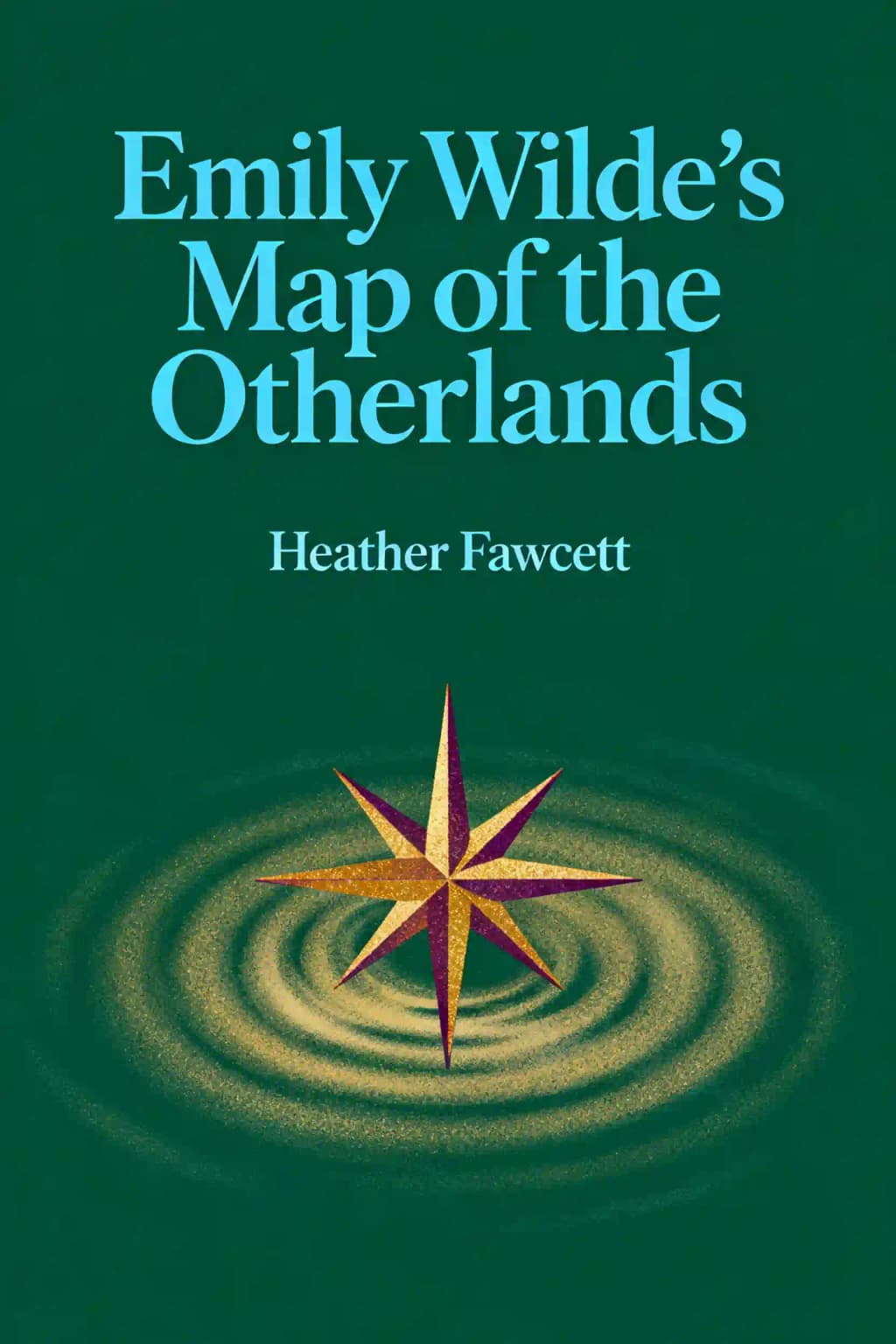
Emily Wilde's Map of the Otherlands invites readers into a world where academic rigor meets faerie enchantment. This captivating sequel to Heather Fawcett's beloved Emily Wilde's Encyclopaedia of Faeries has garnered praise from fantasy enthusiasts and literary critics alike, with Neil Gaiman calling it "a perfect blend of scholarly obsession and magical wonder." The novel continues to climb bestseller lists, resonating with readers seeking intellectual fantasy that doesn't sacrifice emotional depth. What makes this series particularly fascinating is Fawcett's background in archaeology and literature, which infuses her worldbuilding with authentic academic texture. As we follow Emily's journey through mysterious faerie realms, we're not just reading a fantasy-we're experiencing a masterclass in how academic passion can transform into the most thrilling of adventures.
Chapter 2
The Scholar and the Faerie King: A Complicated Partnership
Emily Wilde, newly tenured at Cambridge University's prestigious Department of Dryadology, continues her groundbreaking work in faerie studies while navigating her increasingly complex relationship with Wendell Bambleby - her academic colleague who happens to be an exiled faerie king. Their dynamic is delightfully multifaceted: professional rivals competing for academic recognition, reluctant collaborators on groundbreaking research, and potential romantic partners dancing around their obvious attraction. Emily's analytical, methodical approach to both scholarship and life contrasts sharply with Wendell's capricious faerie nature, creating a tension that drives much of the narrative and provides rich opportunities for both conflict and growth.
When we meet Emily, she's simultaneously wrestling with two significant challenges: a delicate examination of a mummified faerie foot for her research and Wendell's unexpected marriage proposal. Her hesitation stems not from lack of feeling but from scholarly caution - she insists on seeing his kingdom before committing to a life that would straddle two worlds. This perfectly encapsulates Emily's character: even in matters of the heart, she approaches decisions with academic thoroughness, compiling evidence and analyzing potential outcomes. Her detailed journal entries about their relationship mirror her academic field notes, complete with cross-references and careful observations.
Their relationship evolves beyond simple romance into something more nuanced and profound. When Wendell is poisoned by assassins from his former kingdom, Emily's concern transcends scholarly interest or romantic attachment. She becomes fiercely protective, channeling her academic persistence into finding a cure, revealing depths to her character that her professional facade typically conceals. Meanwhile, Wendell's vulnerability - both physical as the poison gradually weakens him and emotional as he depends on Emily for survival - adds compelling complexity to the charming but often superficial persona he presents to the world. His usual magical prowess diminished, he must trust in human medicine and Emily's determination.
What makes their partnership particularly compelling is how they complement each other's weaknesses while amplifying their strengths. Emily's human limitations in the faerie realm are offset by Wendell's magical abilities and innate understanding of faerie politics, while his sometimes careless attitude toward consequences is tempered by her methodical planning and risk assessment. Their academic collaboration becomes a metaphor for their personal relationship - sometimes contentious, often productive, and ultimately stronger than either could achieve alone. Through their joint research papers and field expeditions, they create a new approach to dryadology that bridges the human and faerie worlds, much like their relationship itself.
The evolution of their partnership challenges both characters' fundamental assumptions: Emily must reconcile her need for academic rigor with the unpredictable nature of faerie magic, while Wendell learns to value human methodology and emotional authenticity. Their story demonstrates how the best partnerships - whether academic, romantic, or both - don't require either party to change fundamentally but rather to grow together, finding strength in their differences.
Chapter 3
The Academic Quest: Mapping the Unmappable
The novel's central academic pursuit - creating a comprehensive map of faerie realms and their interconnections - serves as both plot device and metaphor for the complexities of understanding otherworldly phenomena. Emily's groundbreaking discovery that faerie doors might connect multiple locations rather than just two points fundamentally revolutionizes the field of dryadology. This concept of a "nexus" represents not only Emily's most significant contribution to her field but also challenges centuries of established magical theory about the nature of faerie pathways.
The quest leads Emily and her companions to the remote Alpine village of St. Liesl, where the disappeared scholar Danielle de Grey had been conducting revolutionary research on tree fauns decades earlier. De Grey's meticulous field notes, discovered in a hidden compartment of an old desk, suggest she had uncovered a pattern in faerie door formations that contradicted conventional wisdom. The academic mystery of her disappearance - marked by a half-finished journal entry and peculiar symbols carved into her study's doorframe - intertwines with Emily's desperate search for a back door into Wendell's kingdom, creating layers of scholarly and personal motivation.
Fawcett brilliantly portrays the academic mindset through Emily's detailed narration and research methods. Even when facing immediate supernatural threats, Emily maintains her commitment to documentation, categorization, and analysis. Her journal entries demonstrate remarkable scholarly precision while gradually revealing her emotional investment in the outcomes. These entries evolve from detached observations to increasingly personal reflections, particularly after she discovers that the bone key necklace given to her by Poe is actually a folded door itself - a revelation that combines scholarly breakthrough with personal significance.
The academic rivalry between Emily and Dr. Farris Rose provides a compelling subplot that explores the tension between traditional academic approaches and direct magical experience. Rose, initially dismissive of Emily's "fanciful theories," represents the old guard of dryadology, preferring theoretical analysis to field research. Their relationship undergoes a dramatic transformation when Rose witnesses supernatural events firsthand during a midnight expedition to a faerie circle. His struggle to reconcile rigid academic skepticism with undeniable evidence mirrors broader conflicts within the scholarly community about the nature of magical research. Their eventual collaboration on an article about the Silva Lupi - a mysterious forest phenomenon - demonstrates how shared pursuit of knowledge can bridge ideological divides.
Through Emily's academic journey, Fawcett explores how the pursuit of knowledge inevitably transforms the pursuer. Emily's initial goal of creating a definitive mapbook of faerie realms evolves into a deeper questioning of fundamental assumptions about hierarchies among the Folk and the ethical implications of human scholarly investigation into faerie cultures. Her research challenges not only academic conventions but also forces her to confront her own biases about the relationship between human scholars and faerie subjects. This transformation is reflected in her increasingly nuanced field notes, which begin to incorporate faerie perspectives and traditional knowledge alongside conventional academic observations.
Chapter 4
The Perilous Borderlands: Where Worlds Collide
The novel's settings serve as characters in their own right, particularly the liminal spaces where the mortal world meets Faerie. St. Liesl exists in this borderland-a seemingly ordinary Alpine village where residents leave food offerings for the Folk and tie salt-soaked ribbons to avoid getting lost in faerie doors hidden in the mountain mist. This coexistence of mundane and magical creates a tension that permeates the narrative.
The borderlands are physically manifested in the fog-shrouded mountain paths where Emily encounters the ghostly Professor Eichorn and glimpses Danielle de Grey. These spaces shift and transform, challenging human perception and navigation. When Emily follows what she believes is de Grey and suddenly finds herself in a landscape where familiar paths have disappeared, replaced by treacherous cliffs and tempting but dangerous alternatives, we experience the disorientation of crossing between worlds.
Fawcett's description of these borderlands evokes both wonder and dread. The beauty is undeniable-crystalline forests where music plays distantly, mountain folds that could hide countless faerie doors, mist that transforms ordinary landscapes into otherworldly vistas. Yet danger lurks in this beauty, from predatory faeries like the deara that attacks Ariadne to the subtle enchantments that muddle human minds and memories.
The most compelling borderland is the nexus itself-the winter faerie's hovel with its door containing six different knobs leading to various realms. This physical manifestation of intersecting worlds becomes the novel's central set piece, a place where boundaries between realms grow thin enough to cross. The horror elements in this space-blackened human fingers and toes arranged as figurines on the mantel-remind readers that beauty and terror often coexist in faerie realms.
Through these borderlands, Fawcett explores themes of belonging and displacement. Emily, Wendell, and even the ghostly academics Eichorn and de Grey exist between worlds, never fully at home in either the mortal realm or Faerie. This liminality creates both vulnerability and power-the ability to move between worlds that others cannot access, but also the risk of being caught between them, like Eichorn trapped in an endless search for his lost colleague.
Chapter 5
The Politics of Faerie: Power and Hierarchy
Beneath the adventure narrative lies a sophisticated exploration of power dynamics within faerie realms. Wendell's stepmother, the queen who usurped his throne, represents the corrupting influence of power. Her expansion beyond her original kingdom to control four Irish realms makes her "the most powerful faerie monarch in the British Isles," yet this accumulation of power has twisted her nature.
The novel distinguishes between "high" Folk like Wendell and his court and "common" Folk like Poe and Snowbell. This hierarchy initially seems natural to Wendell, who dismisses "common fae" despite their previous help. Emily, however, recognizes the value of these connections and challenges Wendell's assumptions. The revelation that common Folk know far more about doors between realms than the high ones, whose "privilege blinds them to such knowledge," introduces a class critique that deepens the worldbuilding.
This political dimension extends to human-faerie relations as well. The villagers of St. Liesl maintain an uneasy coexistence with the Folk, leaving offerings and observing strict rules about being indoors after dark. Their matter-of-fact acceptance of occasional human deaths at faerie hands-as when Peter casually mentions patrons being "torn apart by the Folk" while still referring to them as "lovely neighbors"-highlights the power imbalance between mortals and immortals.
Emily's academic approach to faeries initially reinforces this imbalance, treating them as subjects to be studied rather than equal beings. Her perspective evolves throughout the novel, particularly after she witnesses Wendell's vulnerability and forms connections with Folk like Poe and Snowbell. By the end, she questions fundamental assumptions about faerie hierarchy and human-faerie relations, suggesting a more equitable approach to both her research and her personal connections with the Folk.
The novel's conclusion, with Emily and Wendell assembling an unlikely coalition of different types of Folk to reclaim his kingdom, points toward a new political order that values diversity and cooperation over traditional hierarchies. This evolution in Emily's thinking parallels her personal growth from isolated scholar to someone deeply connected to both human and faerie companions.
Chapter 6
The Price of Knowledge: Sacrifice and Consequence
Throughout the novel, the pursuit of knowledge carries steep costs. The disappeared scholars Danielle de Grey and Professor Eichorn represent the ultimate price-becoming trapped between worlds, neither fully in the mortal realm nor completely in Faerie. Their fate serves as a warning about the dangers of academic obsession when studying the supernatural.
Emily herself faces physical and psychological dangers in her research. When she ventures into Wendell's realm to find his cat Orga, she risks not just her life but her sanity, noting how her "memory grows patchy and threadbare" and wondering if Faerie contains things "beyond human comprehension, making our mortal memory systems inadequate." This cognitive dissonance represents the fundamental challenge of studying the otherworldly through human frameworks.
The novel also explores the moral compromises that knowledge-seeking can entail. When Emily poisons Wendell's stepmother, she crosses a line from observer to participant in faerie politics. Her justification-protecting Wendell and potentially saving countless others from the queen's cruelty-highlights the ethical complexities that arise when academic detachment gives way to personal involvement.
Even seemingly benign knowledge carries consequences. When Emily discovers the true nature of Wendell's illness-the shadowy birds beneath his skin working toward his heart-the knowledge brings terror rather than comfort. Similarly, learning about the nexus opens possibilities for travel between realms but also exposes them to new dangers from Wendell's enemies.
Perhaps most poignantly, knowledge transforms relationships. As Emily learns more about Wendell's realm and the politics that drove him into exile, their relationship deepens but also grows more complicated. Her decision to help him reclaim his throne means abandoning, at least temporarily, her academic career at Cambridge-a sacrifice of one kind of knowledge pursuit for another.
Through these explorations of knowledge's costs, Fawcett challenges the academic ideal of objective study. Emily's journey suggests that true understanding requires personal investment and acceptance of consequences, not just observation and documentation.
Chapter 7
Monsters and Marvels: The Dual Nature of Faerie
The novel presents faeries as simultaneously wondrous and terrifying, beautiful and monstrous. This duality appears in creatures like the elder huntsmen with their hideous forms mounted on massive warhorses, the deara that attempts to drown Ariadne, and even Wendell's brother-in-law-a terrifying, branch-like being with enchanting dark eyes.
Yet alongside these horrors exist moments of breathtaking beauty: Wendell's dream-magic transforming his train compartment into a forest scene with flowering ivy and mossy stone floors, the crystalline forests of the winterlands where music plays distantly, and the perfect reflection of the castle in the glasslike lake. This juxtaposition of beauty and horror defines the faerie aesthetic throughout the novel.
The most complex exploration of this duality appears in Wendell himself. His charming exterior and magical abilities enchant both Emily and readers, yet glimpses of his darker nature emerge when he confronts threats. During the battle with the elder huntsmen, Emily observes him slaughtering them with "disturbing calm," sometimes "forgetting his sword entirely in his murderous efficiency." This revelation of Wendell's capacity for violence complicates Emily's understanding of him and raises questions about what other aspects of his nature remain hidden.
Rose's warning that one day Emily will see Wendell for what he truly is echoes throughout the narrative. When he compares understanding Wendell to knowing the wind, he highlights the fundamental otherness of faerie nature-beautiful, powerful, but ultimately governed by different rules than human morality. Emily's journey involves reconciling these contradictory aspects of Wendell and the faerie realms he represents.
Through this exploration of faerie duality, Fawcett engages with the oldest traditions of faerie lore-beings that are neither good nor evil by human standards, but dangerous, beautiful, and governed by their own incomprehensible logic. The novel suggests that true understanding requires accepting this complexity rather than attempting to categorize faeries within human moral frameworks.
Chapter 8
The Transformative Power of Connection
At its heart, Emily Wilde's Map of the Otherlands is about connection - between realms, between species, between individuals. Emily begins as the quintessential isolated academic, more comfortable with books than people, spending countless hours in dusty archives and preferring the company of her research notes to social gatherings. Her journey transforms her into someone deeply connected to others: Wendell, her niece Ariadne, her dog Shadow, and even former antagonists like Dr. Rose. This evolution from solitary scholar to connected individual mirrors the broader themes of interconnectedness that permeate the narrative.
These connections prove crucial to the novel's resolution, demonstrating that even the most formidable challenges require collaborative solutions. Emily cannot save Wendell alone - she needs help from an unlikely alliance including Poe's strategic mind, Snowbell's ancient wisdom, and Orga's raw power. The final plan to reclaim Wendell's kingdom relies not on individual heroism but on careful coalition-building across different types of Folk, from the smallest household spirits to the most ancient forest beings. This represents a fundamental shift from the traditional academic approach of studying subjects from a distance to engaging with them as partners, challenging centuries of scholarly tradition that emphasized detached observation.
The most significant transformation occurs in Emily's relationship with Wendell. Her initial hesitation about his marriage proposal stems from scholarly caution and her ingrained habit of analyzing rather than feeling. Through their shared adventures and trials, she gradually learns to trust her emotions. When she finally whispers her acceptance while he lies unconscious, it represents her choosing connection over analysis, emotion over intellect - a profound shift for someone who has always hidden behind academic objectivity.
Physical transformations throughout the novel mirror these emotional changes in striking ways. Shadow's ability to shift between ordinary dog and massive grim form represents the duality present in all beings. Wendell's magical cloak, expanding into a terrifying shadow or transforming into a comfortable tent, symbolizes the adaptability required for true connection. The landscape itself shifts between mortal and faerie aspects, suggesting that reality itself is mutable and responsive to relationship. These transformations suggest that identity is not fixed but responsive to connection and context - a radical departure from traditional academic understanding of both human and Folk nature.
By the novel's conclusion, Emily has created far more than a simple geographical guide. Her Map of the Otherlands represents not just physical connections between realms but a complex network of relationships that transcend traditional boundaries between human and faerie, academic and subject, observer and participant. Her decision to take a sabbatical from Cambridge to help Wendell reclaim his throne represents the culmination of this transformation - choosing connection over isolated scholarship, engagement over observation, and love over academic advancement. This choice cements her evolution from a solitary researcher into someone who understands that true knowledge comes through relationship rather than detached study.
Chapter 9
The Scholar's Journey: Emily's Evolution
Emily Wilde's academic and personal growth forms the emotional core of the novel. She begins with clear boundaries between her scholarly and personal lives, approaching even her relationship with Wendell with academic detachment. Her insistence on seeing his kingdom before accepting his proposal exemplifies this analytical approach to emotional decisions.
As dangers mount and Wendell's condition worsens, Emily's priorities shift. Her determination to find his cat Orga stems not from scholarly interest but from desperate concern for someone she loves. When she confronts his stepmother and administers the poison, she acts not as a careful academic but as a protector willing to take extreme measures.
This evolution doesn't mean abandoning her scholarly identity but integrating it with her emotional life. Her academic skills-careful observation, logical deduction, knowledge of faerie lore-prove crucial to navigating the dangers of Wendell's realm. Conversely, her emotional connections provide insights that pure scholarship could never yield, such as understanding the importance of common Folk that Wendell's privilege blinds him to.
Emily's growth is reflected in her changing relationships with others. Her initial impatience with her niece Ariadne evolves into genuine appreciation for her contributions. Her antagonism toward Dr. Rose transforms into respectful collaboration. Even her connection with Shadow deepens as she embraces his true nature as a grim rather than pretending he's an ordinary dog.
By the novel's conclusion, Emily has become someone who can move between worlds-academic and magical, human and faerie-without losing herself in either. Her decision to take a sabbatical while continuing her scholarly work represents this integration of identities. She remains Professor Emily Wilde, pioneering dryadologist, but now acknowledges her role as partner to a faerie king and ally to various Folk.
This evolution suggests that true scholarship requires not detachment but engagement-not studying subjects from a safe distance but risking personal involvement to gain deeper understanding. Emily's journey challenges academic conventions while affirming the value of knowledge pursued with both intellectual rigor and emotional intelligence.
Chapter 10
A Map to the Heart: Love Across Boundaries
The romance between Emily and Wendell provides emotional resonance to the academic and magical adventures. Their relationship defies conventional romance tropes-Emily is not swept away by Wendell's supernatural charm but approaches their connection with the same careful analysis she applies to her research. Yet beneath her scholarly exterior lies genuine affection that gradually transforms into love.
Their relationship faces obstacles beyond the typical romantic conflicts. The assassination attempts on Wendell, Emily's insistence on seeing his kingdom before accepting his proposal, and the fundamental differences between human and faerie nature all complicate their connection. When Emily discovers the shadowy birds beneath Wendell's skin-harbingers of death according to faerie lore-she confronts the possibility of losing him permanently.
The physical expressions of their relationship are particularly meaningful against this backdrop of potential loss. When Emily impulsively kisses Wendell before departing for St. Liesl, she feels "as though I'd left the mortal realm somehow," suggesting that their connection already transcends the boundary between worlds. Later, in the enchanted tent, their intimacy represents not just physical desire but mutual vulnerability in a dangerous situation.
Emily's journey to find Orga becomes a metaphor for her commitment to Wendell. By entering his realm-a place "dryadologists have entered but never left"-she risks everything for him. This act demonstrates that her love has overcome her scholarly caution, though she approaches even this emotional decision with characteristic planning and research.
The novel suggests that love across boundaries-whether between human and faerie, scholar and subject, or different types of Folk-requires accepting fundamental differences rather than trying to erase them. Emily never expects Wendell to become human, nor does he expect her to abandon her scholarly identity. Their relationship works precisely because they maintain their distinct natures while building connections between them.
By the novel's conclusion, their partnership has evolved into something that transcends conventional categories. They are colleagues, lovers, and allies in a political struggle-roles that complement rather than conflict with each other. Their plan to reclaim Wendell's throne together represents the integration of their personal relationship with larger purposes, suggesting that love can enhance rather than distract from meaningful work.