What is Earl Nightingale's Greatest Discovery about?
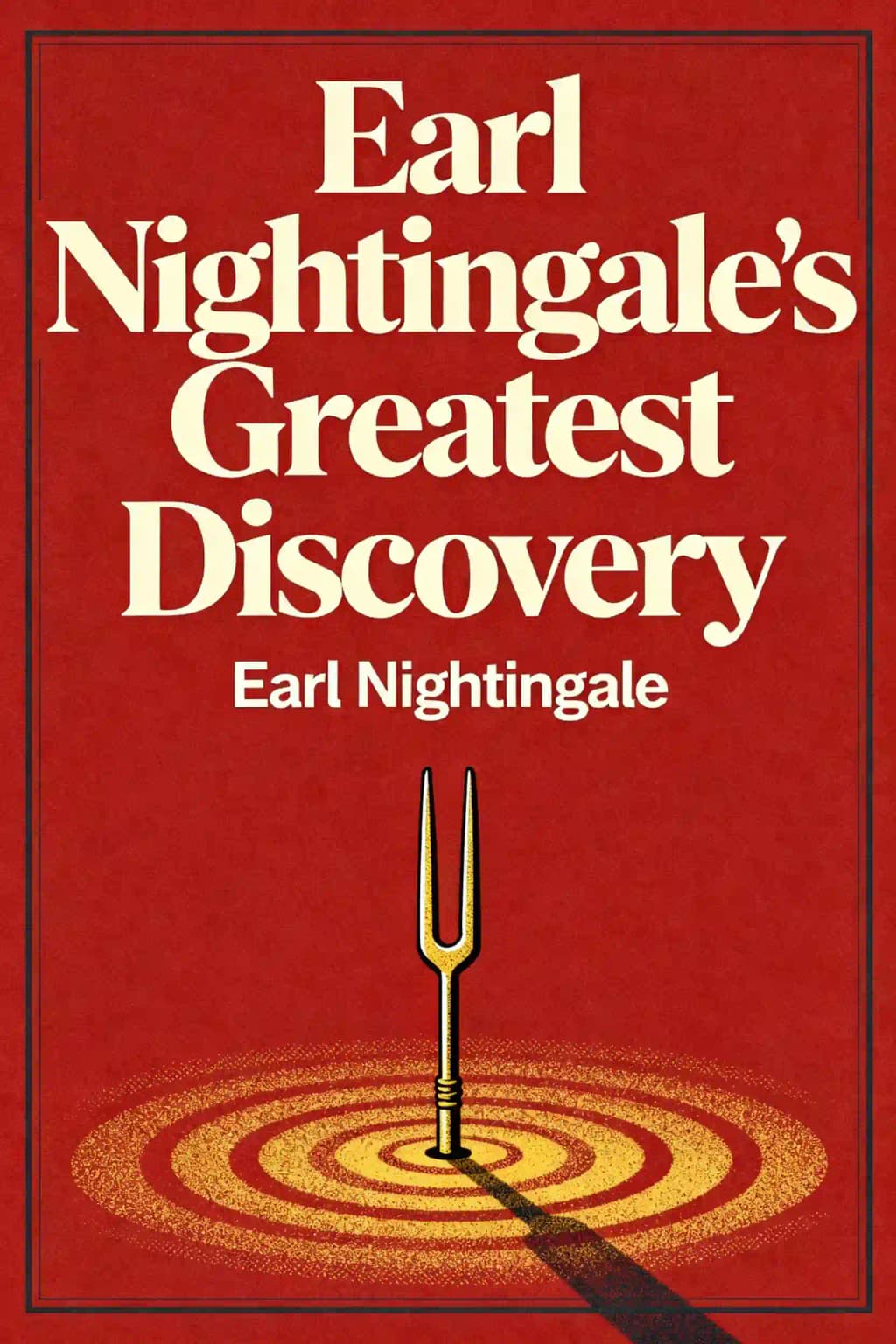
Earl Nightingale's Greatest Discovery reveals the secret to success that Nightingale spent 17 years searching for: "We become what we think about." The book explores how this six-word principle, discovered in Napoleon Hill's Think and Grow Rich, can transform anyone's life by harnessing the power of focused thinking, goal-setting, and visualization to achieve financial independence and personal fulfillment.
Who was Earl Nightingale and why is he influential?
Earl Nightingale was a renowned radio broadcaster, author, and motivational speaker who overcame childhood poverty during the Great Depression to become a pioneer in personal development. He is best known for creating "The Strangest Secret" in 1956, the first spoken-word recording to achieve gold record status, which introduced millions to concepts of positive thinking, goal-setting, and the law of attraction before these ideas became mainstream.
Who should read Earl Nightingale's Greatest Discovery?
Earl Nightingale's Greatest Discovery is ideal for anyone seeking financial independence, career advancement, or personal transformation. It particularly benefits individuals feeling stuck in conformity, entrepreneurs building businesses, professionals wanting to unlock their potential, and anyone curious about why only 5% of people achieve extraordinary success while 95% remain average.
Is Earl Nightingale's Greatest Discovery worth reading?
Earl Nightingale's Greatest Discovery is worth reading for its timeless, actionable principle that thoughts shape reality. Despite being written before the internet era, its core message about focused thinking remains highly relevant in today's age of distraction and information overwhelm. The book offers practical frameworks like the 30-day challenge and goal-setting strategies that readers can immediately apply to transform their lives.
What is "The Strangest Secret" revealed in Earl Nightingale's book?
The Strangest Secret is the profound realization that "we become what we think about"—six simple words that revolutionized Earl Nightingale's life. This principle means our thoughts directly create our reality: focusing on concrete goals leads to achievement, while dwelling on fears creates failure and frustration. Nightingale found this truth echoed by historical figures like Marcus Aurelius, William James, and the Biblical proverb "As a man thinketh in his heart, so is he."
What does the 95% vs 5% statistic mean in Earl Nightingale's Greatest Discovery?
Earl Nightingale states that 95% of people fail to achieve anything worthwhile and remain financially dependent, while only 5% become truly successful and financially independent. This disparity exists because the majority conform to societal expectations and drift through life without clear goals or purposeful thinking. The book emphasizes breaking free from the unsuccessful 95% by setting worthy goals and directing your thoughts intentionally.
How does Earl Nightingale define success in his book?
Earl Nightingale defines success as "the progressive realization of a worthy ideal," meaning anyone actively pursuing their chosen goals is successful. Success isn't limited to wealth—it encompasses teachers, parents, entrepreneurs, or anyone working toward meaningful objectives. This definition contrasts with conformity, where people drift without direction. Nightingale uses a ship analogy: success is like a ship with a planned course, while failure is like a ship adrift without destination.
What is the 30-day test in Earl Nightingale's Greatest Discovery?
The 30-day test is Earl Nightingale's practical challenge where readers focus intensely on their specific goal for 30 consecutive days while replacing negative thoughts with positive visualizations. This exercise trains the mind to maintain constructive thinking patterns and proves the power of directed thought. Nightingale emphasizes persistence throughout this period, as consistent focus on worthy ideals activates the creative power of thought to manifest desired outcomes in reality.
What does the "mind as fertile land" metaphor mean in Earl Nightingale's book?
Earl Nightingale compares the human mind to a farmer's land—both are equally fertile and return exactly what is planted. Just as land doesn't discriminate between corn seeds or poison ivy, producing whatever is sown, the mind manifests whatever thoughts are consistently planted and nurtured. This illustrates the Biblical principle "As ye sow, so shall ye reap." The metaphor emphasizes personal responsibility: planting positive, goal-oriented thoughts yields success, while negative thinking produces failure and frustration.
How does Earl Nightingale's Greatest Discovery compare to Think and Grow Rich?
Earl Nightingale's Greatest Discovery builds directly upon Napoleon Hill's Think and Grow Rich, where Nightingale discovered the foundational principle "we become what we think about" in 1950. While Hill's book provides comprehensive success principles and interviews with wealthy industrialists, Nightingale distills the essence into actionable audio format and practical exercises like the 30-day test. Nightingale's work made these ideas accessible to everyday people through radio broadcasting, becoming the gateway to personal development for millions.
Why is Earl Nightingale's Greatest Discovery still relevant in 2025?
Earl Nightingale's Greatest Discovery remains remarkably relevant in 2025 because its core challenge—that "men simply don't think"—has intensified with constant digital distractions, social media, and information overwhelm. While Nightingale wrote before the internet existed, today's environment makes purposeful, focused thinking even more critical for success. The book's emphasis on goal-setting, visualization, and mental discipline provides essential tools for navigating modern complexity and achieving financial independence in an increasingly distracted world.
What are the main criticisms of Earl Nightingale's Greatest Discovery?
Critics argue that Earl Nightingale's Greatest Discovery oversimplifies success by focusing primarily on mindset while underemphasizing systemic barriers, privilege, and structural inequalities that affect opportunity. The 95% vs 5% statistic lacks nuance about socioeconomic factors beyond individual thinking patterns. Some readers find the content repetitive or dated in language and examples. Additionally, the principle "we become what we think about" can be misinterpreted as promoting toxic positivity, suggesting failure stems solely from wrong thinking rather than acknowledging legitimate external obstacles.