Chapter 4
Prince Kai: A Ruler Caught Between Duty and Desire
Prince (later Emperor) Kaito presents a refreshing take on the traditional fairy tale prince. Rather than a one-dimensional charming royal seeking a bride, Kai is a complex young man struggling with immense responsibility and impossible choices. When we first meet him, he's seeking Cinder's help to repair his android - already subverting expectations by approaching her as a skilled professional rather than a potential romantic interest. His humility and willingness to interact with a common mechanic reveals early glimpses of the kind of ruler he aspires to be.
Kai's character is defined by the tension between his personal desires and his duty to his people. Following his father's death from letumosis, he inherits not just a throne but also a diplomatic crisis at the young age of eighteen. The weight of responsibility transforms him from a relatively carefree prince into a leader forced to make devastating choices. Queen Levana offers both a cure for letumosis and peace between Earth and Luna - but only if Kai agrees to marry her. This creates a far more compelling conflict than the typical fairy tale prince faces, as Kai must choose between personal happiness and the welfare of millions. His internal struggle manifests in sleepless nights, private moments of despair, and a growing understanding of the true cost of leadership.
His attraction to Cinder develops naturally through their interactions, drawn to her honesty, intelligence, and lack of pretense - qualities rare in his world of political maneuvering. Their early encounters in the market show Kai's appreciation for her direct manner and technical expertise. Unlike the traditional prince who falls for Cinderella's beauty at the ball, Kai appreciates Cinder for her mind and character long before seeing her in a ball gown. Their conversations reveal a shared sense of humor and mutual understanding of bearing unwanted responsibilities.
The revelation of Cinder's cyborg nature creates a powerful moment of truth for Kai. His initial disgust and sense of betrayal reflect his society's deeply ingrained prejudices, creating a more nuanced exploration of love than the unconditional acceptance found in most fairy tales. This reaction shows that despite his progressive mindset, even Kai isn't immune to societal biases. His journey from shock and anger to understanding mirrors broader themes of prejudice and acceptance in the story. This complexity makes their potential relationship far more meaningful - not a love that comes easily, but one that must overcome genuine social barriers and personal biases. Throughout the series, Kai's growth is marked by his ability to question these inherited prejudices and recognize worth beyond social status or physical form.
As the story progresses, Kai's character development is reflected in his evolving leadership style. He learns to balance diplomatic necessity with moral conviction, often finding creative solutions to seemingly impossible situations. His relationship with Cinder becomes a catalyst for personal growth, challenging him to become not just a better man, but a better ruler for his people.
Chapter 5
The Lunar Threat: Queen Levana and Political Intrigue
Queen Levana emerges as a formidable antagonist who transcends the wicked stepmother archetype, embodying both psychological complexity and political menace. As Luna's ruler, she wields both political power and Lunar glamour - the ability to manipulate how others perceive her through bioelectrical manipulation. This glamour creates a literal manifestation of the fairy tale's preoccupation with appearances versus reality, as Levana's breathtaking beauty masks a horrifically scarred true form. Her mastery of glamour extends beyond mere vanity, serving as a powerful tool of psychological warfare and social control over both her subjects and potential allies.
The political intrigue between Earth and Luna adds layers of complexity to the traditional fairy tale structure, introducing themes of colonialism, resource dependency, and diplomatic manipulation. Levana's offer of a letumosis antidote in exchange for marriage to Kai transforms the royal wedding from a happily-ever-after into a potential catastrophe. Her threat of war if refused raises the stakes far beyond the personal happiness of the protagonists to the survival of Earth itself. This diplomatic crisis forces characters to wrestle with impossible choices between personal integrity and collective survival.
Meyer cleverly incorporates elements of the Snow White story into Levana's characterization, creating a multidimensional villain whose motivations stem from deep-seated trauma and insecurity. The queen's obsession with mirrors (which reveal her true appearance), her jealousy of a younger, more beautiful rival, and her murderous intentions all echo the classic tale. Her backstory reveals childhood abuse, political manipulation, and a desperate need for control that drives her actions. This interweaving of multiple fairy tales creates a richer narrative tapestry while maintaining thematic coherence around power, beauty, and identity.
The revelation that Levana has been building an army of genetically engineered wolf-human hybrid soldiers adds urgency to the political situation and showcases Luna's technological superiority. These creatures - reminiscent of the Big Bad Wolf from Little Red Riding Hood - represent another fairy tale element reimagined as a science fiction threat. Their existence proves that Levana's intentions toward Earth are hostile regardless of any marriage alliance, complicating Kai's already impossible decision. The wolf soldiers also symbolize the fusion of fairy tale horror with modern anxieties about genetic engineering and biological warfare.
Through Levana and the Lunar threat, Meyer transforms the external obstacles of the original Cinderella story from mere social barriers into matters of global security and survival. The author elevates the narrative stakes while maintaining the fairy tale's concern with power imbalances and the abuse of authority. Levana's rule demonstrates how personal trauma can manifest as political violence, while her manipulation of both individuals and masses through glamour serves as a commentary on media influence and social control in contemporary society. The complex political dynamics between Earth and Luna mirror real-world tensions between nations with asymmetric power relationships, adding depth to the traditional fairy tale framework.
Chapter 6
Family Bonds and Broken Promises
While the original Cinderella tale focuses primarily on the mistreatment by stepfamily members, Meyer's retelling explores a more nuanced web of family relationships. Cinder's relationship with her stepsister Peony stands in stark contrast to the traditional narrative-instead of jealousy and cruelty, they share genuine affection and sisterly love. This makes Peony's contraction of letumosis and subsequent death all the more devastating, adding emotional depth to Cinder's motivation.
Adri, the stepmother, initially appears to fit the wicked stepmother archetype perfectly. She treats Cinder as property rather than family, forcing her to be the household's sole provider while enduring constant emotional abuse. However, Meyer adds complexity by revealing Adri's grief over her husband Garan's death from letumosis and her desperate desire to save Peony. Her cruelty toward Cinder stems partly from blaming her for Garan's death and the financial burden his adoption of Cinder placed on the family.
Pearl, the other stepsister, more closely resembles the traditional jealous stepsister, particularly in her spiteful destruction of Kai's gift to Cinder. Yet even her cruelty is contextualized by her grief over Peony's illness and her internalization of society's prejudice against cyborgs.
The android Iko serves as a surrogate family member for Cinder, offering unconditional acceptance and emotional support. Their relationship raises questions about what constitutes personhood and family in a world where the line between human and machine is increasingly blurred. When Adri sells Iko for parts, it represents not just the loss of property but the severing of one of Cinder's few genuine emotional connections.
Dr. Erland eventually emerges as a father figure for Cinder, guiding her toward understanding her true identity. His own backstory-as a Lunar who lost his daughter because she was a shell-creates a parallel to Cinder's situation and explains his protective attitude toward her. This relationship offers Cinder the mentorship and guidance she's been denied in her stepfamily.
Through these varied family dynamics, Meyer explores how grief, fear, and societal prejudice can poison family relationships, while also showing how genuine bonds can form between unlikely individuals. This creates a more psychologically complex exploration of family than the simple good-versus-evil dynamic of the original tale.
Chapter 7
The Plague and the Politics of Medicine
The letumosis epidemic serves as both a plot device and a powerful metaphor in "Cinder." This "blue fever" has killed hundreds of thousands worldwide with no known cause or cure, creating a backdrop of fear and desperation that shapes the story's events. The disease's progression through four distinct stages-from blue-tinged fingernails to death within days-creates a ticking clock that drives the narrative forward.
Meyer uses the plague to explore the politics of medicine and the value placed on different lives. Cyborgs are routinely "drafted" for letumosis research without their consent, revealing how society views them as expendable test subjects rather than people with rights. This creates a disturbing parallel to real-world medical ethics violations throughout history, where marginalized populations have been exploited for medical research.
The quarantine facilities where plague victims are housed highlight social inequalities. While Emperor Rikan receives treatment in a comfortable private room with silk bedding and flowers, ordinary citizens like Peony are warehoused in crowded, squalid conditions. This disparity in care based on social status reflects real-world healthcare inequities.
Queen Levana's revelation that she possesses the letumosis cure transforms medicine into a political weapon. By offering the antidote only in exchange for marriage to Kai, she weaponizes healthcare and holds millions of lives hostage to her political ambitions. This creates an impossible ethical dilemma for Kai-sacrifice his autonomy and potentially his life in marriage to a tyrant, or deny his citizens access to a life-saving cure.
The revelation that Lunars are immune to letumosis because they're the original carriers adds another layer of complexity. The plague becomes not just a natural disaster but potentially a form of biological warfare, raising questions about responsibility and reparation. Dr. Erland's work to develop an antidote using his own Lunar blood represents an attempt at redemption for this inadvertent harm.
Through the plague storyline, Meyer explores how healthcare access becomes a form of power and control, and how medicine can be manipulated for political ends-themes that resonate strongly in our own world of healthcare disparities and pharmaceutical politics.
Chapter 8
Identity and Self-Discovery: Who is Cinder Really?
At its core, "Cinder" is a story about identity-discovering who you truly are beneath the labels society has placed upon you. Cinder's journey of self-discovery drives the narrative, as she moves from seeing herself as "just a cyborg" to embracing her complex, multifaceted identity.
The novel explores multiple layers of identity. Cinder's cyborg status represents her most visible identity struggle-she literally hides parts of herself to pass as fully human in a society that dehumanizes those with mechanical components. This creates a powerful metaphor for how marginalized individuals often conceal aspects of themselves to avoid discrimination.
Memory plays a crucial role in Cinder's identity formation. Her damaged hippocampus has erased her pre-surgery memories, leaving her with no sense of her origins or early childhood. This amnesia creates a literal manifestation of the fairy tale protagonist who doesn't know her true worth or heritage. As fragments of memory return throughout the story, Cinder must integrate this new information into her understanding of herself.
The revelation that Cinder is Lunar adds another identity layer, forcing her to reconcile her hatred of Lunars with the discovery that she is one. This creates internal conflict as she fears becoming like Queen Levana-manipulative and power-hungry. Her status as a "shell" (a Lunar without magical abilities) further complicates this identity, placing her in a persecuted minority even among Lunars.
The final revelation-that Cinder is actually Princess Selene, the rightful heir to the Lunar throne-represents the ultimate identity twist. This discovery transforms the traditional Cinderella narrative from a story about a common girl becoming royalty through marriage to one about a princess reclaiming her birthright through her own agency. Yet Cinder's reaction is not simple acceptance but ambivalence-she questions whether she wants this identity and the responsibility it entails.
Through Cinder's journey, Meyer explores how identity is shaped by memory, biology, technology, and social perception. The novel suggests that true identity isn't about fitting into a single category but integrating multiple aspects of oneself-even those that seem contradictory-into a coherent whole. Cinder must learn to see herself not as "just" a cyborg, Lunar, or princess, but as all of these things and more.
Chapter 9
Reimagining Fairy Tales for a Modern Audience
"Cinder" brilliantly demonstrates how fairy tales can be reimagined to speak to contemporary concerns while maintaining their mythic power. Meyer preserves key elements of the Cinderella story-the mistreated stepdaughter, the royal ball, the lost shoe-but transforms them in ways that create new meanings and resonances.
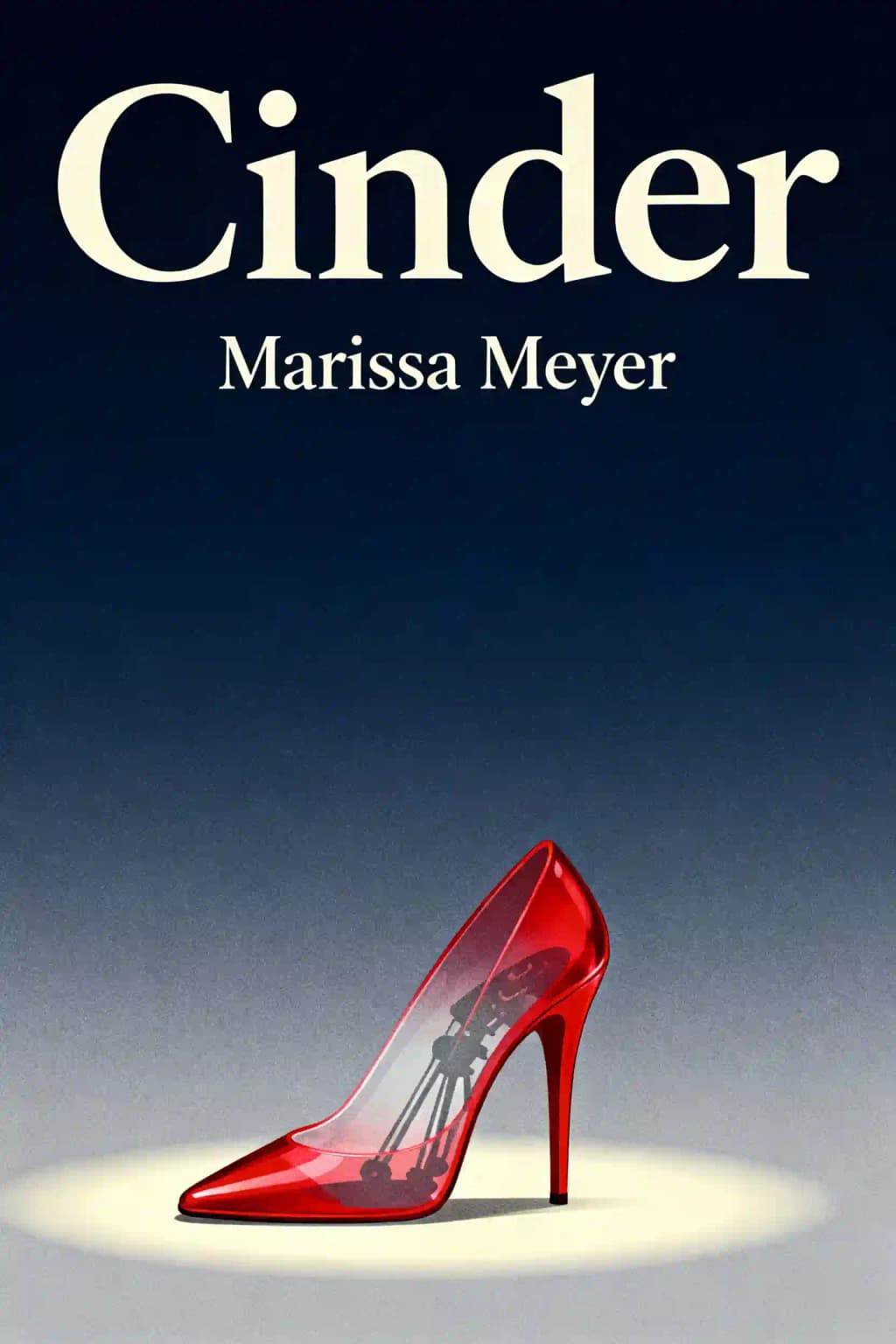
The glass slipper becomes a cyborg foot, transforming a symbol of delicate femininity into one of resilience and functionality. The royal ball remains a pivotal setting, but instead of being simply a marriage market, it becomes the stage for political confrontation and personal revelation. The midnight transformation is reimagined as Cinder's cyborg nature being exposed to all, including the prince-a moment of truth rather than magic.
Meyer interweaves elements from multiple fairy tales to create a richer narrative tapestry. Queen Levana incorporates aspects of the Evil Queen from Snow White, particularly in her vanity and use of mirrors. The threat of war with Luna's genetically engineered wolf-soldiers evokes Little Red Riding Hood. These connections hint at the larger series to come, where each book will focus on a different fairy tale heroine while continuing the overarching story.
The novel also updates fairy tale themes for contemporary relevance. The original tale's concern with social class becomes an exploration of prejudice against cyborgs, raising questions about what defines humanity in an age of increasing technological integration with the human body. The romance between Cinder and Kai evolves from love at first sight to a complex relationship built on mutual respect and shared values, challenging the instant attraction trope of traditional fairy tales.
Perhaps most significantly, Meyer transforms Cinderella from a passive character whose fate depends on external magic and the prince's favor into an active protagonist whose technical skills, courage, and choices drive the narrative. Cinder doesn't need a fairy godmother-she has her own abilities and agency. This shift reflects modern values of female empowerment while maintaining the wish-fulfillment aspect that makes fairy tales eternally appealing.
Through these transformations, "Cinder" demonstrates how fairy tales remain relevant not as static stories to be preserved unchanged, but as flexible narratives that can be reimagined to address contemporary concerns while maintaining their emotional resonance and symbolic power.
Chapter 10
The Road Ahead: A Revolution Begins
As "Cinder" concludes, it sets the stage for a larger revolution that will unfold throughout the Lunar Chronicles series. Cinder's escape from prison-cutting out her ID chip and using her newly discovered Lunar abilities-represents not just personal freedom but the beginning of a movement that could transform both Earth and Luna.
The revelation that Cinder is Princess Selene creates a legitimate alternative to Queen Levana's rule. As the rightful heir to the Lunar throne, she represents hope for a more just and peaceful relationship between Earth and Luna. However, Meyer wisely avoids presenting this as a simple solution. Cinder herself questions whether she wants this identity and responsibility, and whether her cyborg nature would make her acceptable to Lunar citizens even if she claimed her birthright.
Dr. Erland's invitation to join him in Africa hints at a global resistance movement forming against Levana. His research on the letumosis antidote suggests that medical liberation might be as important as political revolution-freeing Earth from both Levana's rule and the plague she brought. This creates multiple fronts for the coming conflict, adding complexity to the traditional fairy tale resolution.
The political situation remains precarious, with Kai caught between his attraction to Cinder and his duty to his people. His disgust upon discovering her cyborg nature suggests that personal prejudices will need to be overcome alongside political obstacles. This creates a more nuanced path to potential romance than the typical fairy tale "happily ever after."
Perhaps most significantly, Cinder's transformation from someone who planned to escape her problems by fleeing New Beijing to someone willing to confront a galactic tyrant represents profound character growth. She begins to accept not just who she is but what she might become-not a passive princess waiting to be rescued, but a revolutionary leader who might save both worlds.
This open-ended conclusion perfectly sets up the continuing saga while still providing satisfying character development and resolution of the immediate story. It transforms the traditional fairy tale ending of marriage and elevation to royalty into something far more complex and compelling-the beginning of a revolution that will require courage, sacrifice, and the forging of unexpected alliances.