Chapter 1
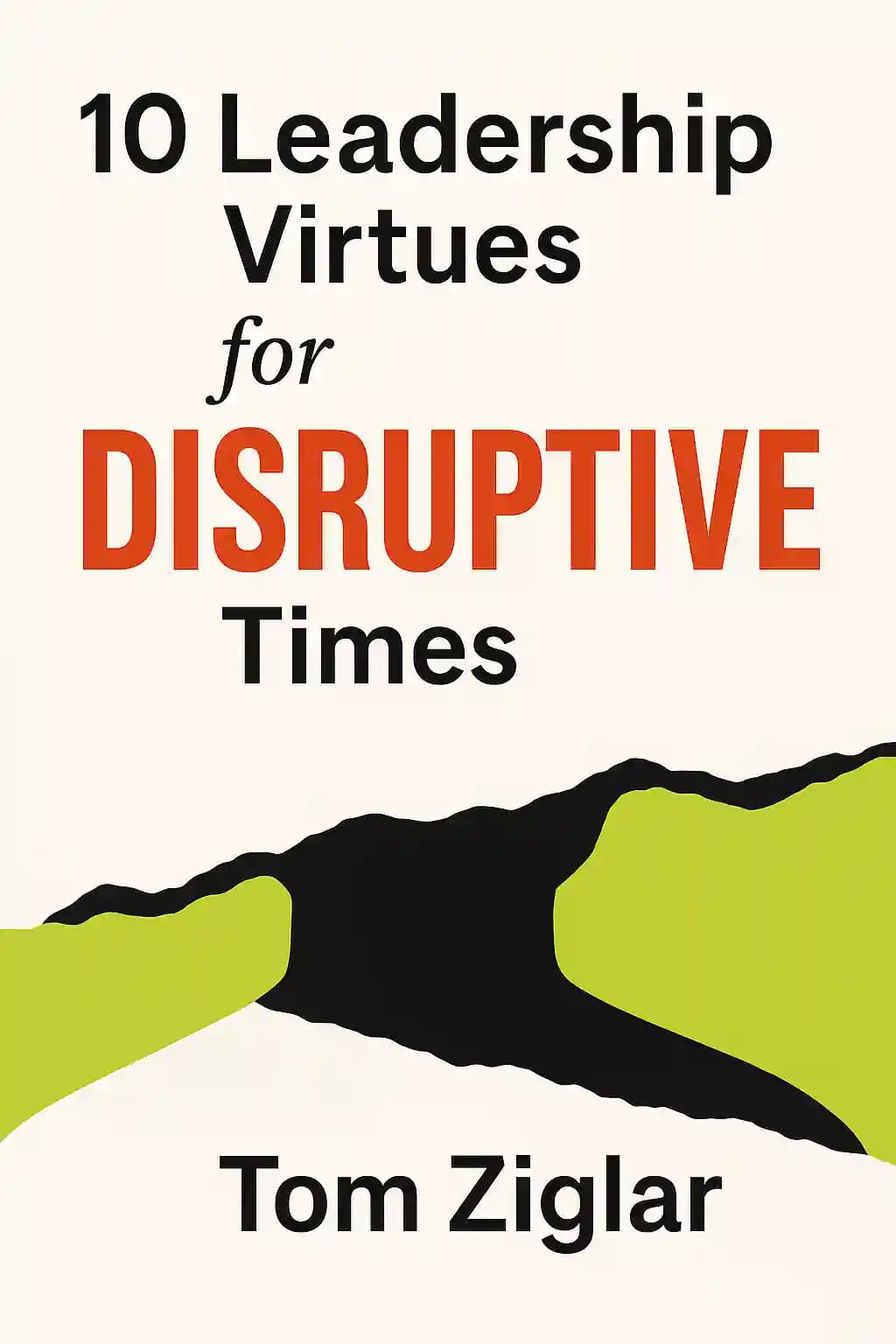
Leading Through Disruption: The Ziglar Approach to Thriving in Uncertain Times
In a world where change is the only constant, Tom Ziglar's leadership philosophy offers a refreshing perspective. As the son of legendary motivational speaker Zig Ziglar and CEO of Ziglar Inc., Tom has built upon his father's legacy while adapting it for today's rapidly evolving business landscape. This book has become a favorite among executives navigating post-pandemic leadership challenges, with figures like Microsoft CEO Satya Nadella citing it as influential in developing their remote work strategies. Beyond business circles, the book has gained traction in educational institutions, where its principles are being applied to transform classroom dynamics. What makes this work particularly powerful is how it reframes disruption not as an obstacle to overcome, but as an opportunity to create unprecedented growth-a perspective that has never been more relevant than in our current era of constant change.
Chapter 2
The Disruption Vaccine: Preparing for a Transformed World
The COVID-19 pandemic created unprecedented global disruption, fundamentally changing how work gets done and impacting every area of our lives. As organizations pivoted to remote work, something unexpected happened: productivity increased. Saved commute times led to more actual work hours, flexible schedules replaced rigid ones, and accomplishing tasks became more important than physical presence. Though challenging, this shift permanently altered workplace expectations, with over half of employees now preferring to work from home at least part-time.
But the pandemic is just one example of the accelerating pace of change. Consider Cadillac's development of a flying car with AI piloting, 5G connectivity, and advanced battery technology. Or imagine our near future: virtual meetings indistinguishable from reality, driverless car subscriptions, wearable health devices that detect illness before symptoms appear, and personalized healthcare delivered by drone. Quantum computing, virtual reality, and augmented reality will dramatically reduce costs, save time, and increase performance.
As Zig Ziglar wisely noted, "It's not what happens to you that determines how far you will go in life; it is how you handle what happens to you." We always have a choice: fold up or rise up to create a better world. Rather than asking how to lead during crisis, we should ask about leadership's purpose. The answer lies in ten virtues that enable Coach Leaders to thrive during disruption by building bridges between pain and vision.
These virtues form a "corrosion-proof" bridge between the pain people feel about achieving their goals and the organization's vision. During disruption, this gap widens, making these virtues even more crucial. Coach Leaders who embody these virtues can effectively guide their teams through change while doing the right things in the right ways.
Chapter 3
Coach Leadership: The New Management Paradigm
The trend toward coach-style leadership has accelerated because coaches get better results than managers, especially in remote environments where traditional management is severely handicapped. David Wright from Ziglar Corporation contrasts managers (seen as superiors who delegate, tell, drive, follow rules and focus on results) with coaches (seen as guides who co-create, ask questions, empower, engage and focus on growth).
During disruption, team members experience uncertainty, fear, loneliness, and identity crises that threaten their sense of security. Coach Leaders understand the "atmosphere connection" - that how people feel about their jobs correlates with how they feel about leadership. While managers focus on results (which become unpredictable during disruption), Coach Leaders focus on growth, seeing disruption as a competitive edge.
Remote workers have historically been overlooked for advancement due to their physical absence from office politics and relationship-building opportunities. With the shift to remote work, Coach Leaders must create a "remote-first atmosphere" where policies, procedures, meetings, recognition and evaluations prioritize remote workers' needs. The core challenge for remote teams is building strong relationships, innovation and collaboration - requiring empathy and intentional policies to maximize productivity while minimizing isolation.
At Ziglar, Coach Leaders follow a growth-focused process that unlocks each team member's potential through four key steps:
1. Inspire (breathe life into hopes and dreams)
2. Influence (shape mindset through encouraging daily positive choices)
3. Impart (build confidence for consistent action)
4. Introduce (bring new practices that transform habits)
This process removes pressure by focusing on incremental choices rather than overwhelming change. Understanding personality differences through tools like DISC profiles helps leaders communicate effectively with different team members. For example, knowing whether someone is dominant, influential, steady or conscientious allows you to adapt your communication style accordingly.
Chapter 4
The Wheel of Life: Balancing Work and Personal Growth
Ziglar Inc. has long taught that quality of life leads to quality of work - a principle especially critical during disruption when personal weaknesses become magnified. The Ziglar Wheel of Life illustrates seven interconnected life areas: Career, Family, Financial, Mental, Personal, Physical, and Spiritual. Success requires balance across all spokes, as neglecting any area diminishes the others.
For example, focusing solely on career while neglecting family and spiritual growth limits professional potential; likewise, wealth without health creates "a chronically ill wealthy person." Coach Leaders influence team members' life balance by first building trust-based relationships through demonstrating the ten virtues, then helping them evaluate their own wheel balance.
This holistic approach recognizes that during disruptions like COVID-19, personal challenges become magnified and directly impact professional performance. By supporting team members across all life dimensions, Coach Leaders create resilience that translates to sustained high performance even during difficult times.
The Coach Leader process works in four phases to develop team members:
1. Discovery - Ask curious questions about performance, focusing on mindset, attitude, effort, and skill
2. Strategy - Co-create an actionable plan the team member will own
3. Accountability - Establish clear follow-up structures with regular check-ins
4. Growth - Focus on developing team members so they can coach themselves through future challenges
This approach is especially crucial in remote and hybrid work environments, where mastering new attitudes, efforts, and skills separates average performers from top performers.
Chapter 5
Developing Selflessness: The Heart of Coach Leadership
Developing selflessness as a Coach Leader requires specific practices that shift focus from self to others. Through detailed gratitude lists for each team member, you build a foundation for valuing people for who they are rather than just what they produce.
By asking deeper "why" questions beyond surface motivations, you can discover team members' true drivers. When someone says they want to perform well "to make more money," follow-up questions might reveal they want to get out of debt, save for a house, and start a family. This transforms your relationship from managing "a human unit of production" to helping someone achieve their heartfelt dreams.
Help team members see they're working for dreams, not paychecks, by connecting job performance to their personal goals. Selfless leaders show how company mission aligns with personal dreams, creating powerful motivation. Sometimes this means going beyond professional boundaries to support team members facing disruptions - like running errands for someone preparing for a big presentation - demonstrating that dream alignment matters more than positional authority.
True listening is inherently selfless because it focuses entirely on the other person. Beyond just hearing words, selfless leaders listen for tone, body language, and energy, making time to dig deeper when necessary. No one has ever complained about being truly listened to, as it demonstrates they matter more than deadlines or tasks.
The "nice to have" tradition began with Tom's sister Suzie shopping with their father for thoughtful, inexpensive gifts. This practice demonstrates both thoughtfulness and action simultaneously. As a Coach Leader, thinking about your people first manifests through personalized gestures - not just any Starbucks drink but their favorite one, not just any thank-you card but one reflecting their interests.
When facing challenges with team members, mentally change seats with them. What are they thinking and feeling? What fears hold them back? Is their struggle related to mindset, skill, knowledge, or actions? From their perspective, how would you handle their situation? Coach Leadership reaches its highest level when you're selfless enough to genuinely view challenges from your team members' positions.
Chapter 6
Building a Foundation of Respect
How leaders treat others, especially service workers, sets a powerful example. Tom recalls how his parents would visit Luby's Cafeteria and treat every employee with genuine interest and respect, asking about their families and offering encouragement. This resulted in extraordinarily generous portions on his father's plate and created lasting impressions on observers. Coach Leaders demonstrate that respecting everyone you encounter is the foundation for team respect.
In today's "cancel culture," people are often demeaned for differing opinions, which is fundamentally disrespectful. True respect acknowledges others' right to different beliefs without necessarily agreeing with them. Tom shares how Krish Dhanam resolved workplace conflict between immigrant and non-immigrant toll booth workers by focusing on "cultural similarity" rather than diversity, helping them recognize their shared desire for respect despite different perspectives on their working conditions.
Respect begins with self-respect, demonstrated through intentional growth in mindset, spiritual and physical health, positive self-talk, and establishing healthy boundaries. Coach Leaders understand that others' respect often reflects how they see you respecting yourself.
Before coaching conversations, create mental models by asking yourself what outcome you want, what the other person is thinking and feeling, their unique perspectives, strengths, weaknesses, barriers, and needed resources. Understanding someone's perspective allows you to better support their growth goals and shows you care about where they're coming from before directing where they should go.
Showing respect means taking initiative with greetings, welcomes, handshakes, and social outreach. Ask open-ended questions followed by more open-ended questions. As Bob Tiede observed, "Leadership is not as much about knowing the right answers as it is about asking the right questions!" The purpose is always to better understand the person to more effectively serve them.
Celebration shows gratitude and respect when it's meaningful and specific. Acknowledge accomplishments with details about what was achieved and how it was done. Tailor recognition to personality types-extroverts might enjoy public team celebrations while introverts might prefer email recognition. Connect achievements to character qualities displayed, as recognizing someone incorrectly can be as harmful as not recognizing them at all.
Chapter 7
Embracing Humility in a Technological World
Humility will be essential for embracing massive technological changes. Advances like blockchain, 5G (100 times faster than 4G), quantum computing (100 trillion times faster than classical computing), AI, and battery storage are converging to transform how we work and live. For example, blockchain technology could reduce a 90-day home refinancing process requiring fifty documents to just ten minutes by securely storing all financial records in a personal digital wallet, eliminating human processing delays.
Scott Klososky coined "humalogy" to describe the blending of humans and technology. The humalogy scale ranges from H5 (completely human function) to T5 (completely technological function), with 0 representing an equal blend. This concept helps visualize how work is shifting from human to technological processes - like how phone calls once connected to human receptionists but now route through automated systems, soon to be replaced by AI voices indistinguishable from humans.
Leaders must embrace technology to lead effectively in the new world. Experienced leaders often resist new technology, but with remote and hybrid work environments becoming standard, collaboration technologies are essential for innovation. It takes courage and humility to try something new and potentially look inexperienced in front of younger team members who adapt quickly to technology.
During a breakfast with mentor Bob Tiede, Tom expressed feeling overwhelmed by great ideas without bandwidth to implement them. Bob shifted his perspective: "You're asking yourself the wrong question. The question shouldn't be 'How do I do this?' but 'Who should do this?'" This insight was transformative. Humility allows you to take responsibility not for doing everything yourself, but for finding the best person for each task.
When working with someone knowledgeable in an area where you have limited experience, humility leads to asking questions rather than dictating methods. Even with long-term team members, questions like "How did you learn to do it that way?" or "What would you have done differently with unlimited resources?" demonstrate genuine interest. Few things impact people more than someone showing authentic curiosity about their thinking and choices.
Chapter 8
Self-Control: The Leadership Virtue That Prevents Derailment
The best way to face the future is to avoid sabotaging it through loss of self-control. Everything we say should be said with the belief it will be recorded and revealed. Self-control begins with thinking-an effective mindset depends on it. Self-talk forms the foundation for self-control, enabling effective communication.
In disruptive times, few things matter more than communication, and nothing damages faster than losing control of it. How you respond when attacked in front of peers reveals your self-control and affects your career trajectory. Without self-control, effective leadership becomes impossible-it has derailed more promising careers than almost anything else.
When communicating under stress, Coach Leaders need three key strategies:
1. Know what you believe and your purpose in the situation - clarity of belief allows you to respond rather than react.
2. Ask "would a secure person do that?" when attacked, recognizing that insecure people attack others. This shifts your emotional state from defensive to concerned.
3. Recall your mental model for self-control, understanding that disruptions often precede significant breakthroughs.
The internal narrative you maintain dramatically affects your self-control. Many leaders doubt themselves with negative self-talk like "Why would they listen to me?" or "I'm not good enough." Instead, Coach Leaders should craft powerful internal stories: "I'm excited to speak because I believe..." and "I know the needs are..." Even anticipating challenges becomes positive: "Things beyond my control may happen, which is fantastic because I'm here to serve." This mental preparation builds self-control before you need it.
Chapter 9
Cultivating Positivity Through Disruption
Positivity is a choice in how we view circumstances. Tom Ziglar recalls learning this lesson early when his father reframed "having to go to church" as "getting to go to church." Being positively contagious means your presence creates energy and hopefulness. It's not fake optimism that ignores reality, but rather understanding you have a choice in how you respond to any situation.
As Zig Ziglar said, "A positive attitude won't let you do anything, but it will let you do everything better than a negative attitude will." When facing major disruptions like lost funding or key personnel departures, the Coach Leader's approach makes all the difference. Rather than dwelling on devastation, effective leaders acknowledge challenges while focusing on the team's past victories and collective strengths.
Like coaches preparing for potential halftime deficits, Coach Leaders need a plan for when their team faces setbacks. This includes being visibly positive despite challenges, demonstrating confidence through body language and tone, being thoroughly prepared, taking time for gratitude exercises to shift negative mindsets, creating a "victory list" of past challenges overcome, and clearly defining which problems the team can actually solve versus those they must simply accept.
Effective problem-solving requires distinguishing between problems the team can solve and those they must accept as facts. During disruptions like a pandemic, focus on what's within your control rather than what isn't. When teams can't fix external problems like being forced to work remotely, they should accept these as facts and concentrate on what they can influence, like making remote work more effective.
Once problems are clarified, address each one separately with appropriate team members. Ask three key questions: What are the major obstacles to solve this problem? What skills or knowledge are required? Who are the individuals or resources needed to solve it? This targeted approach ensures everyone understands their specific role in problem-solving.
Chapter 10
Looking for the Best: The Fuel for Forward Movement
Looking for the best in people, change, and opportunities provides the fuel, hope, and energy to keep moving forward. When you believe "we create the future we see," your vision shapes your actions and outcomes. Great Coach Leaders distinguish themselves by envisioning positive futures for themselves and their teams.
Clarity about your desired future in leadership capacity, growth, results, and the people you'll work with is essential for creating that future. Your view of the future determines your thinking about challenges-if you're hopeful, you'll see disruptions as obstacles to overcome on the path to your goal; if hopeless, you'll see them as reasons to quit. How you see the future shapes your thinking, which determines your performance.
Like miners in the TV show Gold Rush who focus on finding gold rather than the harsh conditions they endure, looking for the best means seeking value amid difficulty. This isn't blind optimism but strategic thinking: expect the best (maintain a positive mindset), prepare for the worst (build reserves and contingencies), and maximize what comes (serve others and solve problems when disruption reveals new opportunities).
When a top performer leaves your team unexpectedly, you face a choice: have a pity party and lower expectations, or celebrate their advancement while getting excited about developing remaining team members. The problem remains the same either way, but your mindset determines the outcome.
When addressing challenges with team members, clearly identify the issue with growth as the goal. Share similar situations from your own past where you overcame obstacles, showing vulnerability that helps them identify with you. This approach defines the problem as separate from the person, making them 30% more likely to try your advice long enough to see results.
Chapter 11
The Power of Perseverance in Leadership
As a Coach Leader, embrace challenges with joy, recognizing that difficulties ultimately make you stronger. Just as muscles grow stronger when stressed with weights, business challenges provide growth opportunities and develop competencies for greater responsibility. The "consider-it-all-joy" mindset significantly increases your likelihood of handling problems correctly and efficiently.
We can transform our lives one simple choice at a time, including choosing to persevere and endure. Prepare your mindset before challenges arrive by deciding in advance what attitudes you'll adopt when disruption comes. This preparation acknowledges that challenges are inevitable while equipping you to handle them effectively when they appear.
When facing setbacks or disruption, reconnect with your fundamental purpose. Understanding why you're doing what you're doing provides the motivation to persevere through storms. Clarity about your why - whether it's family, legacy, personal growth, or faith - helps focus your energy on what truly matters and prevents wasting effort on activities that don't support your core purpose.
The "perfect start" habit makes your life happen to your day rather than letting the day happen to your life. Start small, remove distractions, and create time early in your day. The six-step Never-Give-Up Perfect Start includes: 1) Five minutes of gratitude and reflection; 2) Ten minutes reading something inspirational; 3) Two minutes reviewing your why; 4) Five minutes journaling about your challenge; 5) Ten minutes answering key problem-solving questions; and 6) Forty-five minutes intensely working on solutions. Repeat daily until the problem is solved.
Baby steps create major victories. Most people overestimate what they can accomplish short-term while underestimating their long-term potential. When facing challenges, break down problems into manageable parts you can control and improve each by just 1%. For example, with a struggling salesperson, examine individual components like mindset, lead quality, call volume, and presentation skills - then work on improving each area incrementally. This comprehensive approach addresses attitude, effort and skill simultaneously. As the saying goes: "By an inch, it's a cinch!"
Chapter 12
Creating a Legacy of Leadership
During tough times, effective leadership requires both a strong spine and an open heart. Like a lighthouse in a hurricane, leading with integrity creates stability when everything else seems chaotic. Trust emerges naturally from integrity. The musical "The Greatest Showman" illustrates this principle through P.T. Barnum's leadership - he recognized the greatness in society's outcasts, defended them against ridicule, and insisted they be treated with dignity.
The image of Hugh Jackman at the edge of the stage perfectly illustrates the Coach Leader's stance during disruption - combining the "warrior spine" (chin up, back straight, chest out) that says "this is us" with the "open heart" (arms down, hands back) that demonstrates complete vulnerability and transparency. This posture shows you know your team's fears, weaknesses, strengths, hopes and dreams - and they know yours too. Standing firm like this during storms inspires trust, creates confidence, and drives performance, but requires genuine vulnerability starting with you as the leader.
Your personal story is your greatest leadership asset. When students in a study believed they shared a birthday with a mathematician, they worked 30% longer on problems. Similarly, when Zig Ziglar shared his humble beginnings - born in "lower Alabama," raised by a widowed mother with fifth-grade education, struggling in school and sales - audiences shifted from thinking "Wow, I could never be like him" to "If he can, maybe I can." This identity connection drives people to try your recommendations 30% longer, enough to see results.
Disruption is accelerating, but by leading through the ten virtues, you create a powerful future where those you lead know you respond with kindness, serve selflessly, show respect, exercise humility, maintain self-control under pressure, stay positive, look for the best in everyone, illuminate the path forward, never give up, and stand firm with warrior spine and open heart. Together, these virtues mean you're leading from love, creating an atmosphere where vulnerability flourishes, allowing teams to quickly admit mistakes and make rapid adjustments during disruption.
Legacy isn't just passing knowledge but transferring the habits that build character, integrity and wisdom that ripple through eternity. As Clifton Jolley told Tom after his father died: "Your dad's legacy is secure. There is nothing you can do to hurt it. The only legacy you have to worry about is the one you will leave." As Coach Leaders, we equip our people to build their own legacies through habits that create money as a by-product of life well-lived, build great relationships, and prepare loved ones to grow through life's challenges. Your ultimate legacy is how you prepare those you lead to reach their potential and leave their own rippling legacy.