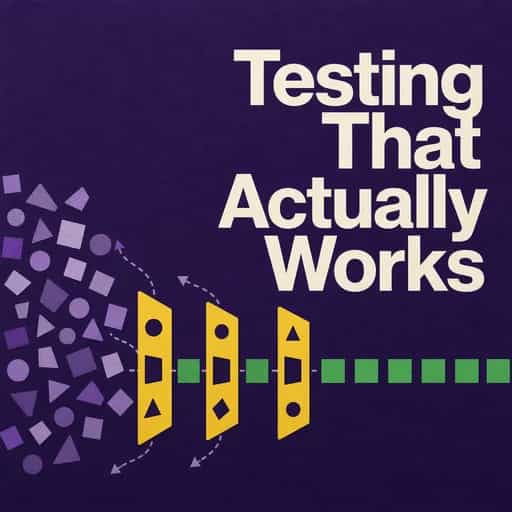
Writing Test Cases That Actually Work
Software testing is more than a to-do list; it's a recipe for validation. Learn how to build a solid framework that catches bugs and handles edge cases.

Writing Test Cases That Actually Work最佳语录
Testing is not just about finding defects; it is an act of empathy where you anticipate a user's needs to build a bridge of trust between those who make the software and those who use it.
Generated by Zh
Test




常见问题
The Pesticide Paradox is a principle stating that if the same set of automated tests is run repeatedly, those tests eventually stop finding new bugs. Just as insects can develop resistance to a specific pesticide, software becomes "immune" to static test cases because the specific defects they were designed to catch have already been resolved. To overcome this, teams must constantly review, update, and diversify their test cases, incorporating new data variations and exploratory testing to uncover hidden issues.
Unit testing focuses on the "bedrock" of the application by testing the smallest testable parts, such as a single function or method, in total isolation using "test doubles" like mocks and stubs. In contrast, integration testing focuses on the "seams" of the system, verifying how these individual modules work together and exchange data. While unit tests are designed to be lightning-fast and run in milliseconds, integration tests ensure that different parts of the software—such as a database and an API—communicate correctly.
This fallacy is the mistaken belief that software is successful simply because it is 100% bug-free. A product can pass every technical functional test but still fail if it does not meet the user's actual needs or solve their specific problems. It highlights the critical distinction between verification (building the code correctly) and validation (building the right product that is fit for its intended purpose).
Consumer-Driven Contract Testing is a strategy used to manage the complexity of multiple teams updating different microservices simultaneously. A "consumer" (like a frontend app) defines a "contract" of exactly what data format it expects from a "provider" (like a backend API). Tools like Pact allow the provider to verify their changes against these contracts before deploying. This ensures that an update to one service won't unexpectedly break another, allowing teams to deploy independently with confidence.
Testing ML models shifts from "deterministic" logic (where a specific input always equals a specific output) to "probabilistic" validation. Instead of checking if the code is "right," testers evaluate how well a model generalizes to new data it hasn't seen before. This involves splitting data into training, validation, and holdout sets, and using statistical metrics like Precision (how often the model is right when it predicts something) and Recall (how many actual cases the model successfully caught).
由哥伦比亚大学校友创建 源自旧金山
BeFreed 汇聚全球求知若渴的学习者


"Instead of endless scrolling, I just hit play on BeFreed. It saves me so much time."


"I never knew where to start with nonfiction—BeFreed’s book lists turned into podcasts gave me a clear path."


"Perfect balance between learning and entertainment. Finished ‘Thinking, Fast and Slow’ on my commute this week."
"Crazy how much I learned while walking the dog. BeFreed = small habits → big gains."
"Reading used to feel like a chore. Now it’s just part of my lifestyle."

"Feels effortless compared to reading. I’ve finished 6 books this month already."
"BeFreed turned my guilty doomscrolling into something that feels productive and inspiring."

"BeFreed turned my commute into learning time. 20-min podcasts are perfect for finishing books I never had time for."
"BeFreed replaced my podcast queue. Imagine Spotify for books — that’s it. 🙌"

"It is great for me to learn something from the book without reading it."
"The themed book list podcasts help me connect ideas across authors—like a guided audio journey."
"Makes me feel smarter every time before going to work"
由哥伦比亚大学校友创建 源自旧金山
BeFreed 汇聚全球求知若渴的学习者
"Instead of endless scrolling, I just hit play on BeFreed. It saves me so much time."
"I never knew where to start with nonfiction—BeFreed’s book lists turned into podcasts gave me a clear path."
"Perfect balance between learning and entertainment. Finished ‘Thinking, Fast and Slow’ on my commute this week."
"Crazy how much I learned while walking the dog. BeFreed = small habits → big gains."
"Reading used to feel like a chore. Now it’s just part of my lifestyle."
"Feels effortless compared to reading. I’ve finished 6 books this month already."
"BeFreed turned my guilty doomscrolling into something that feels productive and inspiring."
"BeFreed turned my commute into learning time. 20-min podcasts are perfect for finishing books I never had time for."
"BeFreed replaced my podcast queue. Imagine Spotify for books — that’s it. 🙌"
"It is great for me to learn something from the book without reading it."
"The themed book list podcasts help me connect ideas across authors—like a guided audio journey."
"Makes me feel smarter every time before going to work"
"Instead of endless scrolling, I just hit play on BeFreed. It saves me so much time."
"I never knew where to start with nonfiction—BeFreed’s book lists turned into podcasts gave me a clear path."
"Perfect balance between learning and entertainment. Finished ‘Thinking, Fast and Slow’ on my commute this week."
"Crazy how much I learned while walking the dog. BeFreed = small habits → big gains."
"Reading used to feel like a chore. Now it’s just part of my lifestyle."
"Feels effortless compared to reading. I’ve finished 6 books this month already."
"BeFreed turned my guilty doomscrolling into something that feels productive and inspiring."
"BeFreed turned my commute into learning time. 20-min podcasts are perfect for finishing books I never had time for."
"BeFreed replaced my podcast queue. Imagine Spotify for books — that’s it. 🙌"
"It is great for me to learn something from the book without reading it."
"The themed book list podcasts help me connect ideas across authors—like a guided audio journey."
"Makes me feel smarter every time before going to work"
"Instead of endless scrolling, I just hit play on BeFreed. It saves me so much time."
"I never knew where to start with nonfiction—BeFreed’s book lists turned into podcasts gave me a clear path."
"Perfect balance between learning and entertainment. Finished ‘Thinking, Fast and Slow’ on my commute this week."
"Crazy how much I learned while walking the dog. BeFreed = small habits → big gains."
"Reading used to feel like a chore. Now it’s just part of my lifestyle."
"Feels effortless compared to reading. I’ve finished 6 books this month already."
"BeFreed turned my guilty doomscrolling into something that feels productive and inspiring."
"BeFreed turned my commute into learning time. 20-min podcasts are perfect for finishing books I never had time for."
"BeFreed replaced my podcast queue. Imagine Spotify for books — that’s it. 🙌"
"It is great for me to learn something from the book without reading it."
"The themed book list podcasts help me connect ideas across authors—like a guided audio journey."
"Makes me feel smarter every time before going to work"