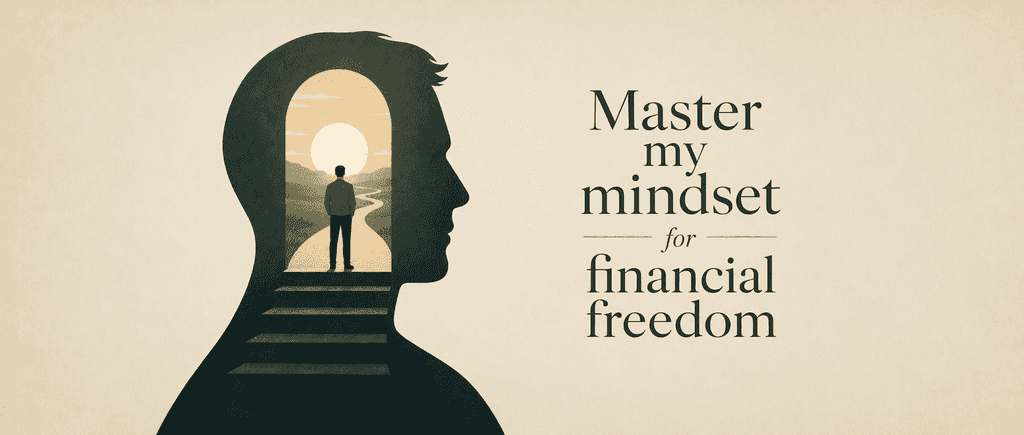
The Wealthy Mindset: Ending Financial Anxiety in 2026
Stop letting your bank balance trigger a fight-or-flight response. Learn to rewire your financial nervous system and rewrite your money story to build a rich, stress-free life.

The Wealthy Mindset: Ending Financial Anxiety in 2026最佳语录
You can’t build a sustainable empire on a nervous system that’s constantly in 'fight or flight' mode. You have to move from being 'erratically heroic' to being 'predictably accountable' because you’re regulated.
Generated by Brundy
How to worry less/ anxiety and be rich. 28 year old man in 2026


常见问题
Money anxiety often scales with a person's identity and internal "money story" rather than their actual bank balance. The human nervous system can struggle to distinguish between a physical predator and a financial stressor, such as a credit card statement. Because this response is rooted in the brain's threat circuitry, a higher paycheck cannot fix the underlying biological habit loop of worry unless you actively work to regulate your nervous system.
The Money Spiral is a habit loop consisting of a Trigger (uncertainty or a bill), a Behavior (worrying or catastrophizing), and a Reward (a false sense of control). To break this cycle, you must practice "disenchantment" by consciously noticing that the worry feels unpleasant and does not actually solve the problem. Shifting from a state of anxiety to one of curiosity acts as a "Bigger Better Offer" for the brain, as these two emotional states cannot coexist in the same moment.
Most people carry an inherited "Money Story" formed by observing how their parents handled finances. If you grew up in a household where money caused conflict or was scarce, your brain may have filed away "permanent truths" that equate money with safety or self-worth. Even if you are currently stable, your amygdala may trigger a "fight or flight" response during routine financial tasks because it is still reacting to past crises or "Financial PTSD."
Erratic heroism occurs when a high-achiever uses anxiety as an engine, pulling all-nighters or obsessing over details out of a fear of failure. While this can produce short-term results, it leads to burnout and health issues. Being predictably accountable means operating from a regulated nervous system, setting sustainable boundaries, and relying on consistent systems rather than stress-induced bursts of energy to achieve long-term professional success.
This rule suggests that you should never engage with financial data or stressful work emails while in a state of high cortisol, because the prefrontal cortex—the part of the brain responsible for rational math—effectively goes offline during "threat mode." By taking sixty seconds to breathe and plant your feet on the floor before opening a spreadsheet, you "turn the lights back on" in your brain, allowing you to make logical decisions instead of fear-based ones.
由哥伦比亚大学校友在旧金山创建
"Instead of endless scrolling, I just hit play on BeFreed. It saves me so much time."


"I never knew where to start with nonfiction—BeFreed’s book lists turned into podcasts gave me a clear path."


"Perfect balance between learning and entertainment. Finished ‘Thinking, Fast and Slow’ on my commute this week."
"Crazy how much I learned while walking the dog. BeFreed = small habits → big gains."
"Reading used to feel like a chore. Now it’s just part of my lifestyle."

"Feels effortless compared to reading. I’ve finished 6 books this month already."
"BeFreed turned my guilty doomscrolling into something that feels productive and inspiring."

"BeFreed turned my commute into learning time. 20-min podcasts are perfect for finishing books I never had time for."
"BeFreed replaced my podcast queue. Imagine Spotify for books — that’s it. 🙌"

"It is great for me to learn something from the book without reading it."
"The themed book list podcasts help me connect ideas across authors—like a guided audio journey."
"Makes me feel smarter every time before going to work"
 Ask ChatGPT
 Ask Claude
由哥伦比亚大学校友在旧金山创建
"Instead of endless scrolling, I just hit play on BeFreed. It saves me so much time."
"I never knew where to start with nonfiction—BeFreed’s book lists turned into podcasts gave me a clear path."
"Perfect balance between learning and entertainment. Finished ‘Thinking, Fast and Slow’ on my commute this week."
"Crazy how much I learned while walking the dog. BeFreed = small habits → big gains."
"Reading used to feel like a chore. Now it’s just part of my lifestyle."
"Feels effortless compared to reading. I’ve finished 6 books this month already."
"BeFreed turned my guilty doomscrolling into something that feels productive and inspiring."
"BeFreed turned my commute into learning time. 20-min podcasts are perfect for finishing books I never had time for."
"BeFreed replaced my podcast queue. Imagine Spotify for books — that’s it. 🙌"
"It is great for me to learn something from the book without reading it."
"The themed book list podcasts help me connect ideas across authors—like a guided audio journey."
"Makes me feel smarter every time before going to work"
"Instead of endless scrolling, I just hit play on BeFreed. It saves me so much time."
"I never knew where to start with nonfiction—BeFreed’s book lists turned into podcasts gave me a clear path."
"Perfect balance between learning and entertainment. Finished ‘Thinking, Fast and Slow’ on my commute this week."
"Crazy how much I learned while walking the dog. BeFreed = small habits → big gains."
"Reading used to feel like a chore. Now it’s just part of my lifestyle."
"Feels effortless compared to reading. I’ve finished 6 books this month already."
"BeFreed turned my guilty doomscrolling into something that feels productive and inspiring."
"BeFreed turned my commute into learning time. 20-min podcasts are perfect for finishing books I never had time for."
"BeFreed replaced my podcast queue. Imagine Spotify for books — that’s it. 🙌"
"It is great for me to learn something from the book without reading it."
"The themed book list podcasts help me connect ideas across authors—like a guided audio journey."
"Makes me feel smarter every time before going to work"
"Instead of endless scrolling, I just hit play on BeFreed. It saves me so much time."
"I never knew where to start with nonfiction—BeFreed’s book lists turned into podcasts gave me a clear path."
"Perfect balance between learning and entertainment. Finished ‘Thinking, Fast and Slow’ on my commute this week."
"Crazy how much I learned while walking the dog. BeFreed = small habits → big gains."
"Reading used to feel like a chore. Now it’s just part of my lifestyle."
"Feels effortless compared to reading. I’ve finished 6 books this month already."
"BeFreed turned my guilty doomscrolling into something that feels productive and inspiring."
"BeFreed turned my commute into learning time. 20-min podcasts are perfect for finishing books I never had time for."
"BeFreed replaced my podcast queue. Imagine Spotify for books — that’s it. 🙌"
"It is great for me to learn something from the book without reading it."
"The themed book list podcasts help me connect ideas across authors—like a guided audio journey."
"Makes me feel smarter every time before going to work"