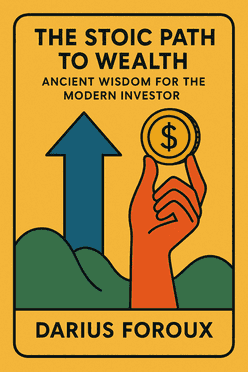
《The Stoic Path to Wealth》概述
Discover how ancient Stoic wisdom creates lasting wealth in today's volatile markets. Ranked #20 in 2024's top psychology books, Morgan Housel praises Foroux's rare gift for turning complex ideas into simple, actionable strategies that build both financial and emotional resilience.
- Stoic wealth-building starts by mastering emotions, not market timing
- View money as an "indifferent" tool rather than life's ultimate goal
- Cultivate financial resilience through daily Stoic reflection on worst-case scenarios
- Build your Stoic investing edge through skill development, not stock picks
- Let money compound silently for decades instead of chasing quarterly gains
- Practice "wealth temperance"—define your "enough" before markets define greed
- Embrace market crashes as Stoic training grounds for rational investment decisions
- Achieve financial independence through emotional control, not just net worth
- Apply Marcus Aurelius' morning meditations to daily spending decisions
- Develop Epictetus' discipline: invest 20% first, then live on 80%
- Treat investment losses as Seneca's "negative visualization" practice in action
- Combine Zen financial patience with S&P 500 index fund simplicity
《The Stoic Path to Wealth》作者介绍
Darius Foroux, bestselling author of The Stoic Path to Wealth, is a productivity expert and entrepreneur whose work bridges ancient philosophy and modern wealth-building strategies.
A University of Groningen graduate with a finance specialization, Foroux transitioned from co-founding a manufacturing business and advising at ING to becoming a full-time writer and educator.
His blog, DariusForoux.com, has reached over 30 million readers since 2015, offering actionable insights on productivity, career growth, and financial responsibility—themes central to his eight books, including Do It Today and Think Straight.
Foroux’s ideas have been featured in TIME, NBC, and Fast Company, and his 140,000 newsletter subscribers and six online courses reflect his authority in merging Stoic principles with practical wealth creation. The Stoic Path to Wealth distills his decade of research and personal experience into a system embraced by professionals seeking enduring financial clarity.
关于《The Stoic Path to Wealth》的常见问题
What is The Stoic Path to Wealth by Darius Foroux about?
The Stoic Path to Wealth merges ancient Stoic philosophy with modern investing strategies to teach emotional control, disciplined financial habits, and long-term wealth building. Darius Foroux emphasizes managing reactions to market volatility, avoiding greed, and focusing on sustainable practices like index fund investing and skill development. The book blends practical finance advice with timeless Stoic principles like acceptance and self-mastery.
Who should read The Stoic Path to Wealth?
This book suits investors seeking emotional resilience, beginners interested in Stoicism-backed financial strategies, and anyone overwhelmed by market uncertainty. It’s particularly valuable for readers who want actionable steps to build wealth while maintaining mental clarity.
Is The Stoic Path to Wealth worth reading?
Yes, for its unique fusion of Stoic mindfulness and finance. While some sections use technical investing terminology, the book provides clear frameworks for decision-making, stress-tested strategies from historical investors, and exercises to cultivate discipline. Reviews praise its structured approach but note it leans more toward finance than philosophy.
What are the key Stoic principles in The Stoic Path to Wealth?
Core principles include:
- Emotional detachment: Avoiding fear/greed-driven decisions.
- Focus on controllables: Prioritizing skill development over market predictions.
- Acceptance: Embracing losses as part of the process.
- Contentment: Balancing ambition with gratitude for current resources.
How does The Stoic Path to Wealth differ from other finance books?
Unlike purely technical guides, Foroux’s approach prioritizes psychological resilience. It avoids get-rich-quick schemes, instead teaching readers to build “enduring prosperity” through consistent habits, low-cost index funds, and emotional discipline rooted in Stoic practices.
What investment strategies does Darius Foroux recommend?
Foroux advocates:
- Long-term index fund investing (e.g., S&P 500).
- Diversification across assets and industries.
- Avoiding frequent trading and market timing.
- Reinvesting dividends to compound growth.
Can beginners follow The Stoic Path to Wealth’s advice?
Yes, but some chapters (e.g., portfolio rebalancing) assume basic financial literacy. Foroux clarifies complex terms through analogies and historical examples, making it accessible to motivated newcomers.
What critiques exist about The Stoic Path to Wealth?
Critics note the Stoic-philosophy integration feels secondary in later chapters, and the finance-focused sections may overwhelm readers seeking purely philosophical insights. However, most praise its actionable blend of mindset and strategy.
How does The Stoic Path to Wealth address modern economic challenges?
Foroux argues that Stoicism’s emphasis on adaptability helps investors navigate 2025’s AI disruptions, geopolitical shifts, and market unpredictability. Techniques like journaling and pre-loss acceptance prepare readers for volatility.
What are memorable quotes from The Stoic Path to Wealth?
- “Wealth isn’t about having money—it’s about mastering your mind.”
- “The market tests patience; your edge is refusing to play its game.”
- “Greed turns enough into never enough”
How does this book compare to Foroux’s earlier works?
Unlike his productivity-focused titles (e.g., Do It Today), this book applies Stoicism specifically to finance. It shares his signature clarity but delves deeper into technical investing concepts.
Are there practical exercises in The Stoic Path to Wealth?
Yes, including:
- Daily Stoic journaling to track emotional responses.
- A “pre-loss rehearsal” exercise to mentally prepare for downturns.
- A 12-month savings challenge to build discipline.
通过作者的声音感受这本书
将知识转化为引人入胜、富含实例的见解
快速捕捉核心观点,高效学习
以有趣互动的方式享受这本书
《The Stoic Path to Wealth》主要人物
- Darius ForouxAuthor and investor who applies Stoic philosophy
- Zeno of CitiumFounder of Stoicism and former wealthy merchant
- Jesse LivermoreFamous stock trader used as a case study
《The Stoic Path to Wealth》核心主题
- investor psychology
- emotional regulation
- long-term compounding
- market volatility management
- financial resilience
《The Stoic Path to Wealth》经典语录
Avoiding investing is financial suicide in a world where inflation steadily erodes cash value.
True wealth isn't just about getting rich at all costs-it's about prospering financially while maintaining peace of mind.
Skills remain when money may disappear.
If you can make money remaining honest, trustworthy, and dignified, by all means do it.
探索你的学习方式
 快速摘要模式
11分钟阅读或收听《The Stoic Path to Wealth》摘要
将《The Stoic Path to Wealth》的核心观点拆解为易于理解的要点,了解创新团队如何创造、协作和成长。

 趣味模式
趣味模式
《The Stoic Path to Wealth》的启示 - 22分钟故事
通过生动的故事体验《The Stoic Path to Wealth》,将创新经验转化为令人难忘且可应用的精彩时刻。
 个性化模式
个性化模式
用你自己的学习方式体验《The Stoic Path to Wealth》
随时提问,选择你的学习方式,共创真正适合你的洞察。

"Instead of endless scrolling, I just hit play on BeFreed. It saves me so much time."


"I never knew where to start with nonfiction—BeFreed’s book lists turned into podcasts gave me a clear path."


"Perfect balance between learning and entertainment. Finished ‘Thinking, Fast and Slow’ on my commute this week."
"Crazy how much I learned while walking the dog. BeFreed = small habits → big gains."
"Reading used to feel like a chore. Now it’s just part of my lifestyle."

"Feels effortless compared to reading. I’ve finished 6 books this month already."
"BeFreed turned my guilty doomscrolling into something that feels productive and inspiring."

"BeFreed turned my commute into learning time. 20-min podcasts are perfect for finishing books I never had time for."
"BeFreed replaced my podcast queue. Imagine Spotify for books — that’s it. 🙌"

"It is great for me to learn something from the book without reading it."
"The themed book list podcasts help me connect ideas across authors—like a guided audio journey."
"Makes me feel smarter every time before going to work"
"Instead of endless scrolling, I just hit play on BeFreed. It saves me so much time."
"I never knew where to start with nonfiction—BeFreed’s book lists turned into podcasts gave me a clear path."
"Perfect balance between learning and entertainment. Finished ‘Thinking, Fast and Slow’ on my commute this week."
"Crazy how much I learned while walking the dog. BeFreed = small habits → big gains."
"Reading used to feel like a chore. Now it’s just part of my lifestyle."
"Feels effortless compared to reading. I’ve finished 6 books this month already."
"BeFreed turned my guilty doomscrolling into something that feels productive and inspiring."
"BeFreed turned my commute into learning time. 20-min podcasts are perfect for finishing books I never had time for."
"BeFreed replaced my podcast queue. Imagine Spotify for books — that’s it. 🙌"
"It is great for me to learn something from the book without reading it."
"The themed book list podcasts help me connect ideas across authors—like a guided audio journey."
"Makes me feel smarter every time before going to work"
"Instead of endless scrolling, I just hit play on BeFreed. It saves me so much time."
"I never knew where to start with nonfiction—BeFreed’s book lists turned into podcasts gave me a clear path."
"Perfect balance between learning and entertainment. Finished ‘Thinking, Fast and Slow’ on my commute this week."
"Crazy how much I learned while walking the dog. BeFreed = small habits → big gains."
"Reading used to feel like a chore. Now it’s just part of my lifestyle."
"Feels effortless compared to reading. I’ve finished 6 books this month already."
"BeFreed turned my guilty doomscrolling into something that feels productive and inspiring."
"BeFreed turned my commute into learning time. 20-min podcasts are perfect for finishing books I never had time for."
"BeFreed replaced my podcast queue. Imagine Spotify for books — that’s it. 🙌"
"It is great for me to learn something from the book without reading it."
"The themed book list podcasts help me connect ideas across authors—like a guided audio journey."
"Makes me feel smarter every time before going to work"
"Instead of endless scrolling, I just hit play on BeFreed. It saves me so much time."
"I never knew where to start with nonfiction—BeFreed’s book lists turned into podcasts gave me a clear path."
"Perfect balance between learning and entertainment. Finished ‘Thinking, Fast and Slow’ on my commute this week."
"Crazy how much I learned while walking the dog. BeFreed = small habits → big gains."
"Reading used to feel like a chore. Now it’s just part of my lifestyle."
"Feels effortless compared to reading. I’ve finished 6 books this month already."
"BeFreed turned my guilty doomscrolling into something that feels productive and inspiring."
"BeFreed turned my commute into learning time. 20-min podcasts are perfect for finishing books I never had time for."
"BeFreed replaced my podcast queue. Imagine Spotify for books — that’s it. 🙌"
"It is great for me to learn something from the book without reading it."
"The themed book list podcasts help me connect ideas across authors—like a guided audio journey."
"Makes me feel smarter every time before going to work"

下载《The Stoic Path to Wealth》摘要
免费获取《The Stoic Path to Wealth》摘要的 PDF 或 EPUB 版本。可打印或随时离线阅读。