The Invention of the Creative Genius
Explore how 19th-century Romanticism shifted our focus from artistic craft to the 'sender,' permanently redefining the human self as a vessel for original expression.

The Invention of the Creative Genius最佳语录
The 'sender-centered' theory was basically a legal necessity: if I’m a 'genius' whose work is a 'spontaneous overflow of my powerful feelings,' then it’s my property. It turns the book into the fruits of intellectual labour, embodied in the form of capital.
Generated by Lilly
The sender-center literary proposal inherited from 19th century Romanticism

常见问题
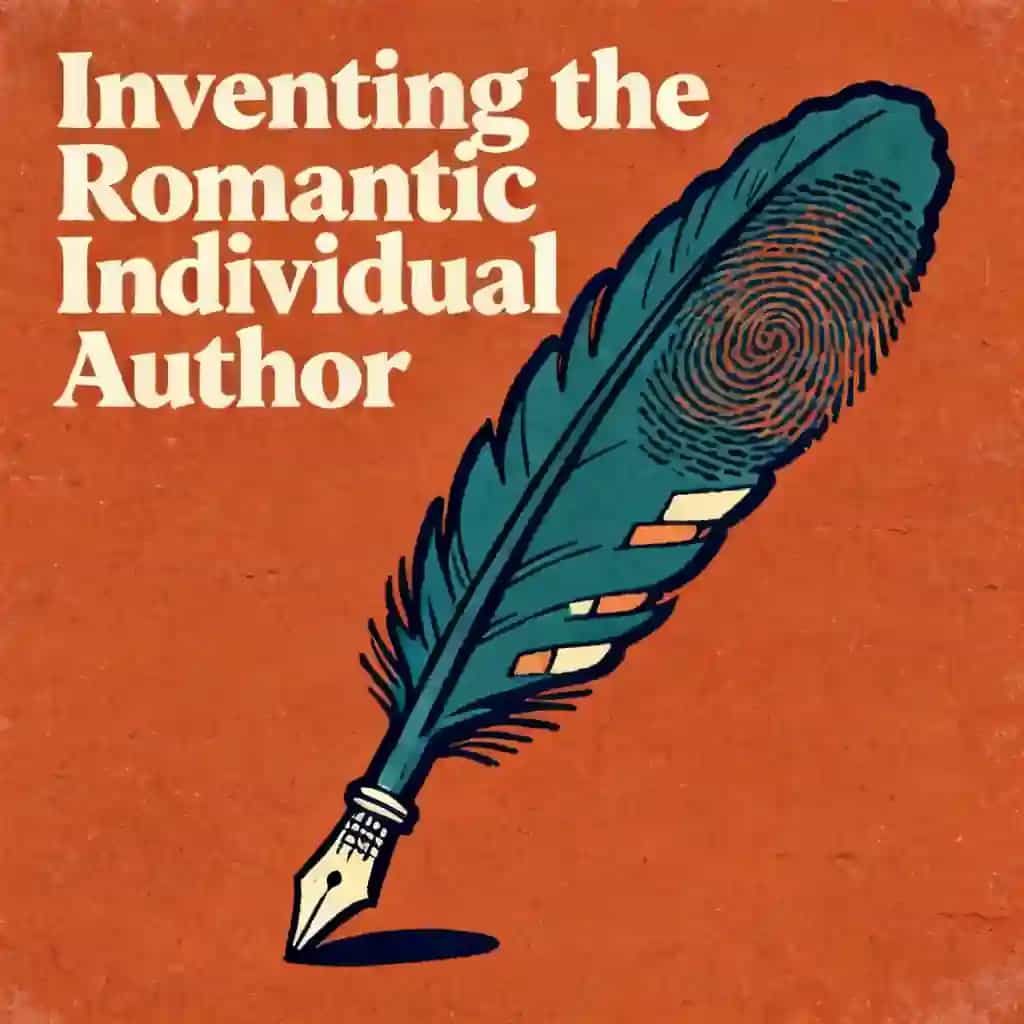
Before the Romantic revolution, a book was viewed through a "compound model" or as a product of craft, similar to furniture. In 1753, for example, a book was defined as a manufacturing output that supported many workers, including paper makers, type founders, and binders, with the writer acting as just one cog in the machine. By the 19th century, this shifted to a "sender-centered" view where the book was seen as an "imprint" or "record" of a unique individual’s soul and a "spontaneous overflow of powerful feelings."
The intentional fallacy is the belief that to truly understand a text, a reader must know exactly what the author intended when they wrote it. This concept emerged from the Romantic idea that the author is the ultimate "source" and master of the text's meaning. However, the script notes that even the Romantics were conflicted about this, as they often felt their words took on a life of their own or came from an unconscious "inspiration" that they themselves did not fully control.
The shift toward viewing authors as "geniuses" was closely tied to the development of copyright law. To move away from being seen as mere "craftsmen" who organized existing ideas, writers needed to prove they were the "original source" of unique intellectual property. By framing their work as a unique piece of their humanity and a "spontaneous overflow" of their own feelings, authors like Wordsworth could argue for "text-as-capital" and secure long-term financial rights and royalties for themselves and their heirs.
This metaphor suggests that while authors and creators like to think of themselves as original "owners" of their ideas, they are actually using a shared, pre-existing structure of language, genres, and traditions. Even when expressing their most "authentic" feelings, writers are often following "scripts" or using "prefabricated" linguistic tools inherited from society. This creates a tension where the "sender" is both a unique individual and a temporary occupant of a cultural storehouse that existed long before them.
The Romantics sought to heal the "Cartesian rift," which viewed the mind (the subject) and the world (the object) as separate and indifferent to one another. Their solution was to make the "subject" the hero, arguing that the human mind and nature are one. Under this philosophy, expressing one's inner feelings became a moral duty because it was seen as a way to tap into the "living force" or "universal" truth of the entire world.
"Instead of endless scrolling, I just hit play on BeFreed. It saves me so much time."


"I never knew where to start with nonfiction—BeFreed’s book lists turned into podcasts gave me a clear path."


"Perfect balance between learning and entertainment. Finished ‘Thinking, Fast and Slow’ on my commute this week."
"Crazy how much I learned while walking the dog. BeFreed = small habits → big gains."
"Reading used to feel like a chore. Now it’s just part of my lifestyle."

"Feels effortless compared to reading. I’ve finished 6 books this month already."
"BeFreed turned my guilty doomscrolling into something that feels productive and inspiring."

"BeFreed turned my commute into learning time. 20-min podcasts are perfect for finishing books I never had time for."
"BeFreed replaced my podcast queue. Imagine Spotify for books — that’s it. 🙌"

"It is great for me to learn something from the book without reading it."
"The themed book list podcasts help me connect ideas across authors—like a guided audio journey."
"Makes me feel smarter every time before going to work"
"Instead of endless scrolling, I just hit play on BeFreed. It saves me so much time."
"I never knew where to start with nonfiction—BeFreed’s book lists turned into podcasts gave me a clear path."
"Perfect balance between learning and entertainment. Finished ‘Thinking, Fast and Slow’ on my commute this week."
"Crazy how much I learned while walking the dog. BeFreed = small habits → big gains."
"Reading used to feel like a chore. Now it’s just part of my lifestyle."
"Feels effortless compared to reading. I’ve finished 6 books this month already."
"BeFreed turned my guilty doomscrolling into something that feels productive and inspiring."
"BeFreed turned my commute into learning time. 20-min podcasts are perfect for finishing books I never had time for."
"BeFreed replaced my podcast queue. Imagine Spotify for books — that’s it. 🙌"
"It is great for me to learn something from the book without reading it."
"The themed book list podcasts help me connect ideas across authors—like a guided audio journey."
"Makes me feel smarter every time before going to work"
"Instead of endless scrolling, I just hit play on BeFreed. It saves me so much time."
"I never knew where to start with nonfiction—BeFreed’s book lists turned into podcasts gave me a clear path."
"Perfect balance between learning and entertainment. Finished ‘Thinking, Fast and Slow’ on my commute this week."
"Crazy how much I learned while walking the dog. BeFreed = small habits → big gains."
"Reading used to feel like a chore. Now it’s just part of my lifestyle."
"Feels effortless compared to reading. I’ve finished 6 books this month already."
"BeFreed turned my guilty doomscrolling into something that feels productive and inspiring."
"BeFreed turned my commute into learning time. 20-min podcasts are perfect for finishing books I never had time for."
"BeFreed replaced my podcast queue. Imagine Spotify for books — that’s it. 🙌"
"It is great for me to learn something from the book without reading it."
"The themed book list podcasts help me connect ideas across authors—like a guided audio journey."
"Makes me feel smarter every time before going to work"
"Instead of endless scrolling, I just hit play on BeFreed. It saves me so much time."
"I never knew where to start with nonfiction—BeFreed’s book lists turned into podcasts gave me a clear path."
"Perfect balance between learning and entertainment. Finished ‘Thinking, Fast and Slow’ on my commute this week."
"Crazy how much I learned while walking the dog. BeFreed = small habits → big gains."
"Reading used to feel like a chore. Now it’s just part of my lifestyle."
"Feels effortless compared to reading. I’ve finished 6 books this month already."
"BeFreed turned my guilty doomscrolling into something that feels productive and inspiring."
"BeFreed turned my commute into learning time. 20-min podcasts are perfect for finishing books I never had time for."
"BeFreed replaced my podcast queue. Imagine Spotify for books — that’s it. 🙌"
"It is great for me to learn something from the book without reading it."
"The themed book list podcasts help me connect ideas across authors—like a guided audio journey."
"Makes me feel smarter every time before going to work"