Testing strategies and why they fail
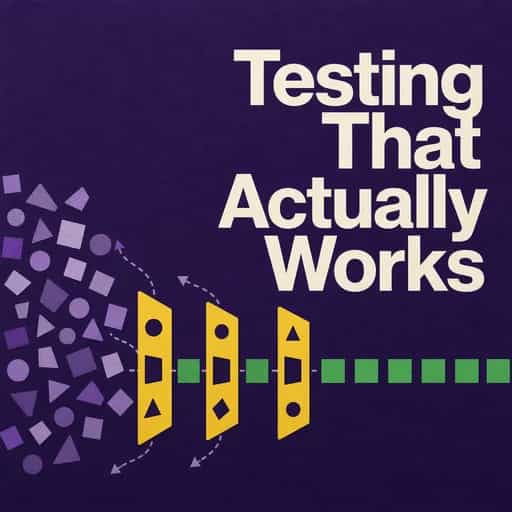
Treating every test like a high-stakes exam leads to strategy failure. Learn how to prioritize risk and build a stable test pyramid for better software.

Testing strategies and why they fail最佳语录
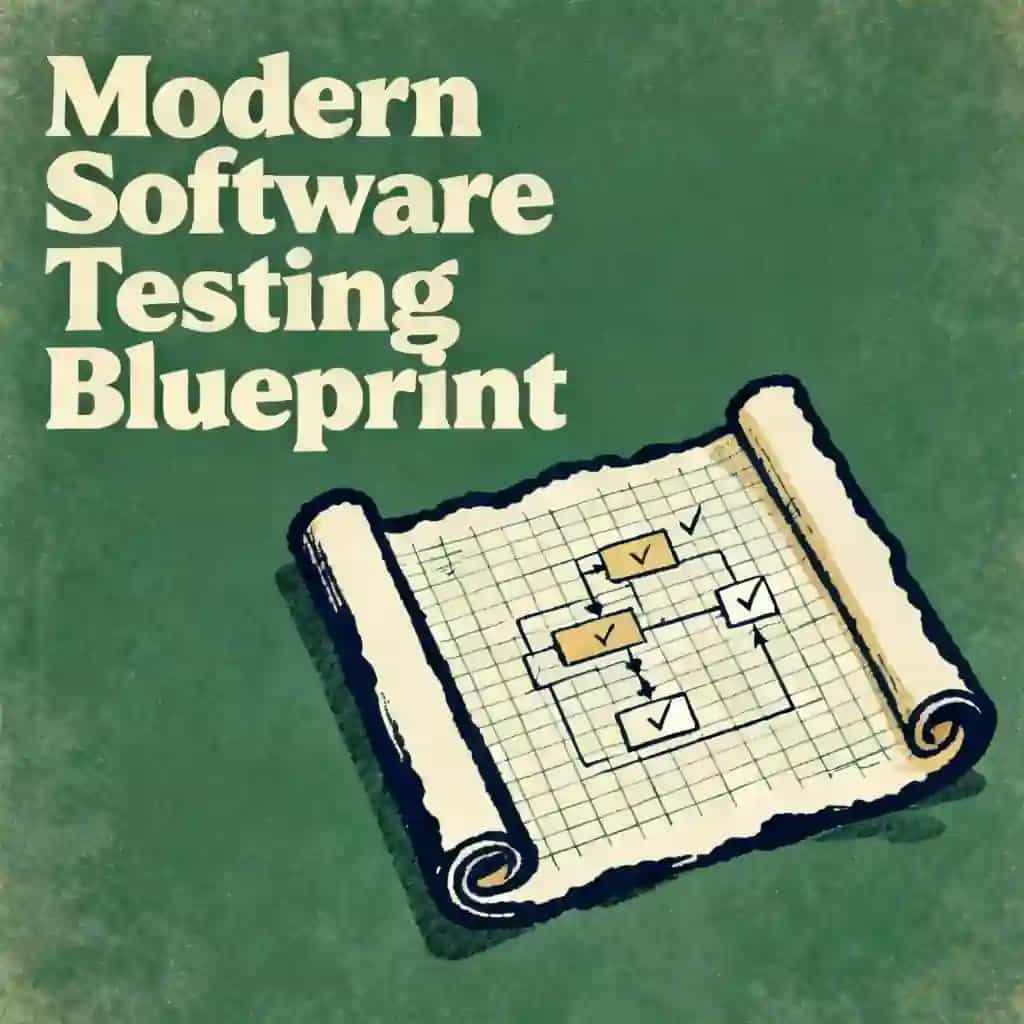
A software testing strategy is the constitution—it defines the high-level rules and standards—while the test plan is the legislation that handles the specific details of a single release.
Generated by Howard Zane
test


常见问题
The script uses a legal metaphor to distinguish the two: the strategy is the "constitution," while the test plan is the "legislation." A strategy is a high-level, long-term document that defines fundamental rules, such as which tools are standardized, who is responsible for specific tasks, and how "effective" testing is defined. In contrast, a test plan is specific to a single release or sprint, detailing schedules, specific test cases, and immediate resource assignments.
Shifting left refers to moving quality checks as early as possible in the software development life cycle, such as testing requirements before code is even written. This is based on research from IBM and NIST showing that a bug caught during the initial requirements phase might only cost an hour of conversation to fix. However, if that same bug escapes to production, it can cost ten to a hundred times more due to the need for hotfixes, rollbacks, and customer support.
The Test Pyramid is a model that suggests a stable foundation of many fast, cheap unit tests at the bottom, a middle layer of integration tests, and a small peak of end-to-end (E2E) tests at the top. The "ice cream cone" anti-pattern occurs when a team has very few unit tests and a massive, top-heavy layer of E2E tests. This results in a testing process that is slow, brittle, and expensive, as E2E tests are difficult to maintain and often fail due to environmental issues rather than actual code bugs.
Traditional testing involves running various scenarios to see if a system breaks, which provides confidence but not certainty. Formal Verification uses mathematical models, calculus, and logic to "prove" that a system is correct and that specific errors are mathematically impossible. While traditional testing is like driving heavy trucks across a bridge to see if it holds, formal verification is like using the laws of physics to prove the bridge cannot collapse under a specific load.
Automation is best suited for repetitive, "boring" tasks like regression testing or smoke tests where human testers might get tired and miss details. However, manual testing remains indispensable for tasks requiring human intuition, pattern recognition, and empathy. This includes usability testing—to see if an experience actually feels good to a user—and exploratory testing, where a skilled human follows "hunches" to find creative edge cases that a script would never be programmed to look for.
由哥伦比亚大学校友创建 源自旧金山
BeFreed 汇聚全球求知若渴的学习者


"Instead of endless scrolling, I just hit play on BeFreed. It saves me so much time."


"I never knew where to start with nonfiction—BeFreed’s book lists turned into podcasts gave me a clear path."


"Perfect balance between learning and entertainment. Finished ‘Thinking, Fast and Slow’ on my commute this week."
"Crazy how much I learned while walking the dog. BeFreed = small habits → big gains."
"Reading used to feel like a chore. Now it’s just part of my lifestyle."

"Feels effortless compared to reading. I’ve finished 6 books this month already."
"BeFreed turned my guilty doomscrolling into something that feels productive and inspiring."

"BeFreed turned my commute into learning time. 20-min podcasts are perfect for finishing books I never had time for."
"BeFreed replaced my podcast queue. Imagine Spotify for books — that’s it. 🙌"

"It is great for me to learn something from the book without reading it."
"The themed book list podcasts help me connect ideas across authors—like a guided audio journey."
"Makes me feel smarter every time before going to work"
由哥伦比亚大学校友创建 源自旧金山
BeFreed 汇聚全球求知若渴的学习者
"Instead of endless scrolling, I just hit play on BeFreed. It saves me so much time."
"I never knew where to start with nonfiction—BeFreed’s book lists turned into podcasts gave me a clear path."
"Perfect balance between learning and entertainment. Finished ‘Thinking, Fast and Slow’ on my commute this week."
"Crazy how much I learned while walking the dog. BeFreed = small habits → big gains."
"Reading used to feel like a chore. Now it’s just part of my lifestyle."
"Feels effortless compared to reading. I’ve finished 6 books this month already."
"BeFreed turned my guilty doomscrolling into something that feels productive and inspiring."
"BeFreed turned my commute into learning time. 20-min podcasts are perfect for finishing books I never had time for."
"BeFreed replaced my podcast queue. Imagine Spotify for books — that’s it. 🙌"
"It is great for me to learn something from the book without reading it."
"The themed book list podcasts help me connect ideas across authors—like a guided audio journey."
"Makes me feel smarter every time before going to work"
"Instead of endless scrolling, I just hit play on BeFreed. It saves me so much time."
"I never knew where to start with nonfiction—BeFreed’s book lists turned into podcasts gave me a clear path."
"Perfect balance between learning and entertainment. Finished ‘Thinking, Fast and Slow’ on my commute this week."
"Crazy how much I learned while walking the dog. BeFreed = small habits → big gains."
"Reading used to feel like a chore. Now it’s just part of my lifestyle."
"Feels effortless compared to reading. I’ve finished 6 books this month already."
"BeFreed turned my guilty doomscrolling into something that feels productive and inspiring."
"BeFreed turned my commute into learning time. 20-min podcasts are perfect for finishing books I never had time for."
"BeFreed replaced my podcast queue. Imagine Spotify for books — that’s it. 🙌"
"It is great for me to learn something from the book without reading it."
"The themed book list podcasts help me connect ideas across authors—like a guided audio journey."
"Makes me feel smarter every time before going to work"
"Instead of endless scrolling, I just hit play on BeFreed. It saves me so much time."
"I never knew where to start with nonfiction—BeFreed’s book lists turned into podcasts gave me a clear path."
"Perfect balance between learning and entertainment. Finished ‘Thinking, Fast and Slow’ on my commute this week."
"Crazy how much I learned while walking the dog. BeFreed = small habits → big gains."
"Reading used to feel like a chore. Now it’s just part of my lifestyle."
"Feels effortless compared to reading. I’ve finished 6 books this month already."
"BeFreed turned my guilty doomscrolling into something that feels productive and inspiring."
"BeFreed turned my commute into learning time. 20-min podcasts are perfect for finishing books I never had time for."
"BeFreed replaced my podcast queue. Imagine Spotify for books — that’s it. 🙌"
"It is great for me to learn something from the book without reading it."
"The themed book list podcasts help me connect ideas across authors—like a guided audio journey."
"Makes me feel smarter every time before going to work"