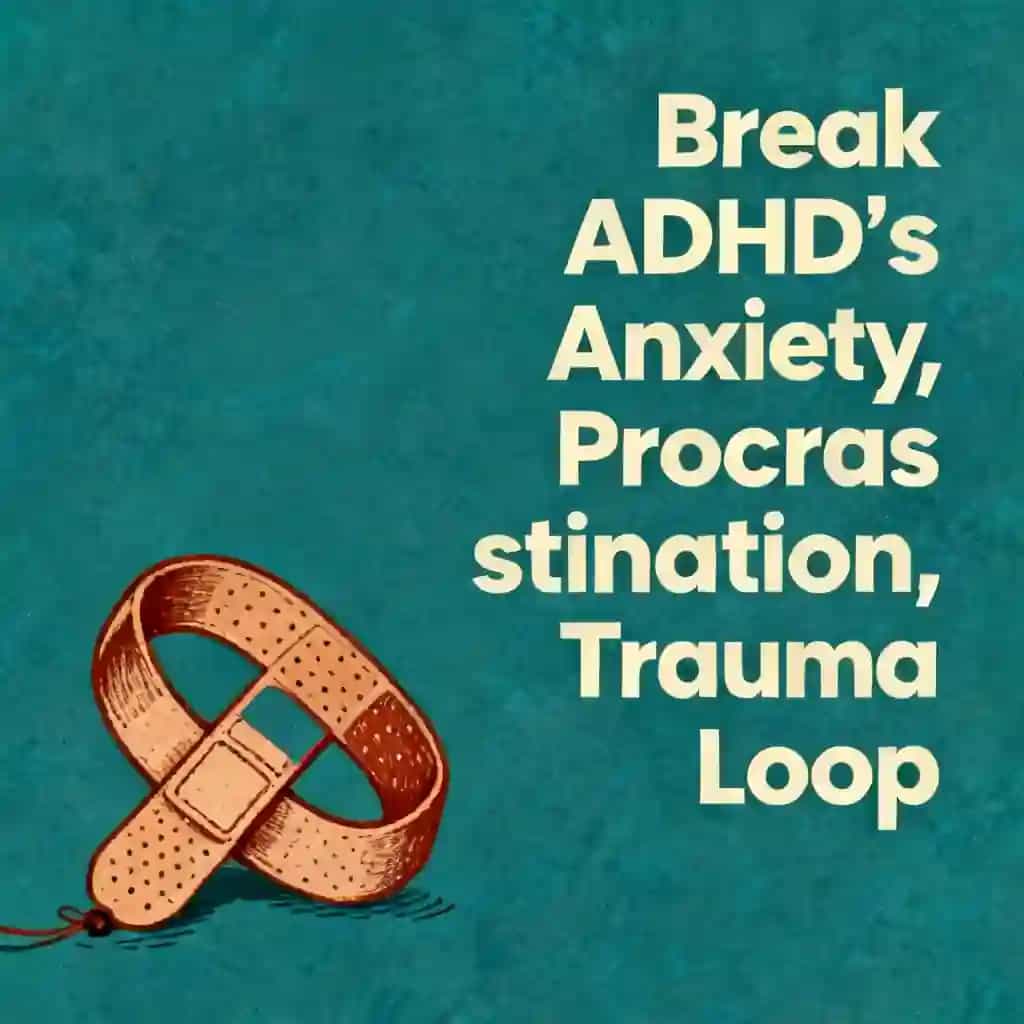
Mastering ADHD: From Rejection Spirals to Internal Security
Stop the emotional tailspin of RSD and overthinking. Learn to recalibrate your brain's alarm system, manage intrusive thoughts, and build lasting self-trust without needing constant external validation.

Mastering ADHD: From Rejection Spirals to Internal Security最佳语录
You aren't broken; you're just working with a more complex emotional operating system. Self-trust in ADHD isn't about promising you’ll never make a mistake again—it’s about trusting that you can repair when you do.
Generated by Laura
Help me heal trust issues, low self-esteem, relationship anxiety, and overthinking, while also supporting the way my ADHD can intensify intrusive thoughts, emotional reactions, hyperfocus on problems, and fear of rejection or betrayal. Help me trust myself, regulate my emotions, stop spiralling, and feel secure without needing constant reassurance

常见问题
Rejection Sensitive Dysphoria is described as an emotional "smoke alarm" that is hypersensitive to perceived rejection or criticism. In the ADHD brain, the prefrontal cortex—which manages logic and emotional regulation—often develops with a two-to-three-year delay, while the amygdala, the brain's alarm system, is fully active. This creates a "short emotional latency" where the hit of rejection is felt physically and intensely before the logical brain can process the facts.
The ADHD brain has a "porous" filter due to a glitch in executive function, making it difficult to inhibit unwanted or irrelevant thoughts. Once a scary or negative thought pops up, the brain’s "Default Mode Network" can cause it to get "emotionally sticky," leading to rumination or worry loops. Additionally, because of "time blindness," the distress felt in the present moment can feel like an eternal truth, making it difficult to remember past security or imagine a calmer future.
The script suggests a multi-step "emergency emotional first aid" process. First, you should "name the alarm" by labeling the experience as an RSD wave or a rejection story to create distance from the feeling. Second, you must "downshift" the body using sensory tools like a long exhale, a grounding scan, or splashing cold water on your face to reset the nervous system. Finally, you should apply the "Pause Rule," waiting at least twenty minutes before reacting or sending messages to allow the emotional peak to pass.
Effective management involves moving from "safety through perfection" to "safety through repair." Instead of trying to be perfect to avoid rejection, partners should build a shared "repair style" where they address mistakes and move on. The script also recommends "diversifying your dopamine" by maintaining hobbies and friendships outside the relationship so that self-worth isn't tied to a single person. Using "bridge scripts" to communicate when you are feeling sensitive can also help prevent misunderstandings.
This metaphor frames the ADHD brain as a high-performance race car that was unfortunately equipped with "bicycle brakes." It suggests that the individual isn't broken, but rather possesses a powerful engine that requires specialized "brake skills" to manage. Healing involves building better "brake pads" through tools like medication, structure, sensory management, and self-compassion, rather than trying to slow down the brain's natural power.
由哥伦比亚大学校友在旧金山创建
"Instead of endless scrolling, I just hit play on BeFreed. It saves me so much time."


"I never knew where to start with nonfiction—BeFreed’s book lists turned into podcasts gave me a clear path."


"Perfect balance between learning and entertainment. Finished ‘Thinking, Fast and Slow’ on my commute this week."
"Crazy how much I learned while walking the dog. BeFreed = small habits → big gains."
"Reading used to feel like a chore. Now it’s just part of my lifestyle."

"Feels effortless compared to reading. I’ve finished 6 books this month already."
"BeFreed turned my guilty doomscrolling into something that feels productive and inspiring."

"BeFreed turned my commute into learning time. 20-min podcasts are perfect for finishing books I never had time for."
"BeFreed replaced my podcast queue. Imagine Spotify for books — that’s it. 🙌"

"It is great for me to learn something from the book without reading it."
"The themed book list podcasts help me connect ideas across authors—like a guided audio journey."
"Makes me feel smarter every time before going to work"
 Ask ChatGPT
 Ask Claude
由哥伦比亚大学校友在旧金山创建
"Instead of endless scrolling, I just hit play on BeFreed. It saves me so much time."
"I never knew where to start with nonfiction—BeFreed’s book lists turned into podcasts gave me a clear path."
"Perfect balance between learning and entertainment. Finished ‘Thinking, Fast and Slow’ on my commute this week."
"Crazy how much I learned while walking the dog. BeFreed = small habits → big gains."
"Reading used to feel like a chore. Now it’s just part of my lifestyle."
"Feels effortless compared to reading. I’ve finished 6 books this month already."
"BeFreed turned my guilty doomscrolling into something that feels productive and inspiring."
"BeFreed turned my commute into learning time. 20-min podcasts are perfect for finishing books I never had time for."
"BeFreed replaced my podcast queue. Imagine Spotify for books — that’s it. 🙌"
"It is great for me to learn something from the book without reading it."
"The themed book list podcasts help me connect ideas across authors—like a guided audio journey."
"Makes me feel smarter every time before going to work"
"Instead of endless scrolling, I just hit play on BeFreed. It saves me so much time."
"I never knew where to start with nonfiction—BeFreed’s book lists turned into podcasts gave me a clear path."
"Perfect balance between learning and entertainment. Finished ‘Thinking, Fast and Slow’ on my commute this week."
"Crazy how much I learned while walking the dog. BeFreed = small habits → big gains."
"Reading used to feel like a chore. Now it’s just part of my lifestyle."
"Feels effortless compared to reading. I’ve finished 6 books this month already."
"BeFreed turned my guilty doomscrolling into something that feels productive and inspiring."
"BeFreed turned my commute into learning time. 20-min podcasts are perfect for finishing books I never had time for."
"BeFreed replaced my podcast queue. Imagine Spotify for books — that’s it. 🙌"
"It is great for me to learn something from the book without reading it."
"The themed book list podcasts help me connect ideas across authors—like a guided audio journey."
"Makes me feel smarter every time before going to work"
"Instead of endless scrolling, I just hit play on BeFreed. It saves me so much time."
"I never knew where to start with nonfiction—BeFreed’s book lists turned into podcasts gave me a clear path."
"Perfect balance between learning and entertainment. Finished ‘Thinking, Fast and Slow’ on my commute this week."
"Crazy how much I learned while walking the dog. BeFreed = small habits → big gains."
"Reading used to feel like a chore. Now it’s just part of my lifestyle."
"Feels effortless compared to reading. I’ve finished 6 books this month already."
"BeFreed turned my guilty doomscrolling into something that feels productive and inspiring."
"BeFreed turned my commute into learning time. 20-min podcasts are perfect for finishing books I never had time for."
"BeFreed replaced my podcast queue. Imagine Spotify for books — that’s it. 🙌"
"It is great for me to learn something from the book without reading it."
"The themed book list podcasts help me connect ideas across authors—like a guided audio journey."
"Makes me feel smarter every time before going to work"