第 1 章
Unwrapping the Prison of Obsession: A Journey Through the OCD Brain
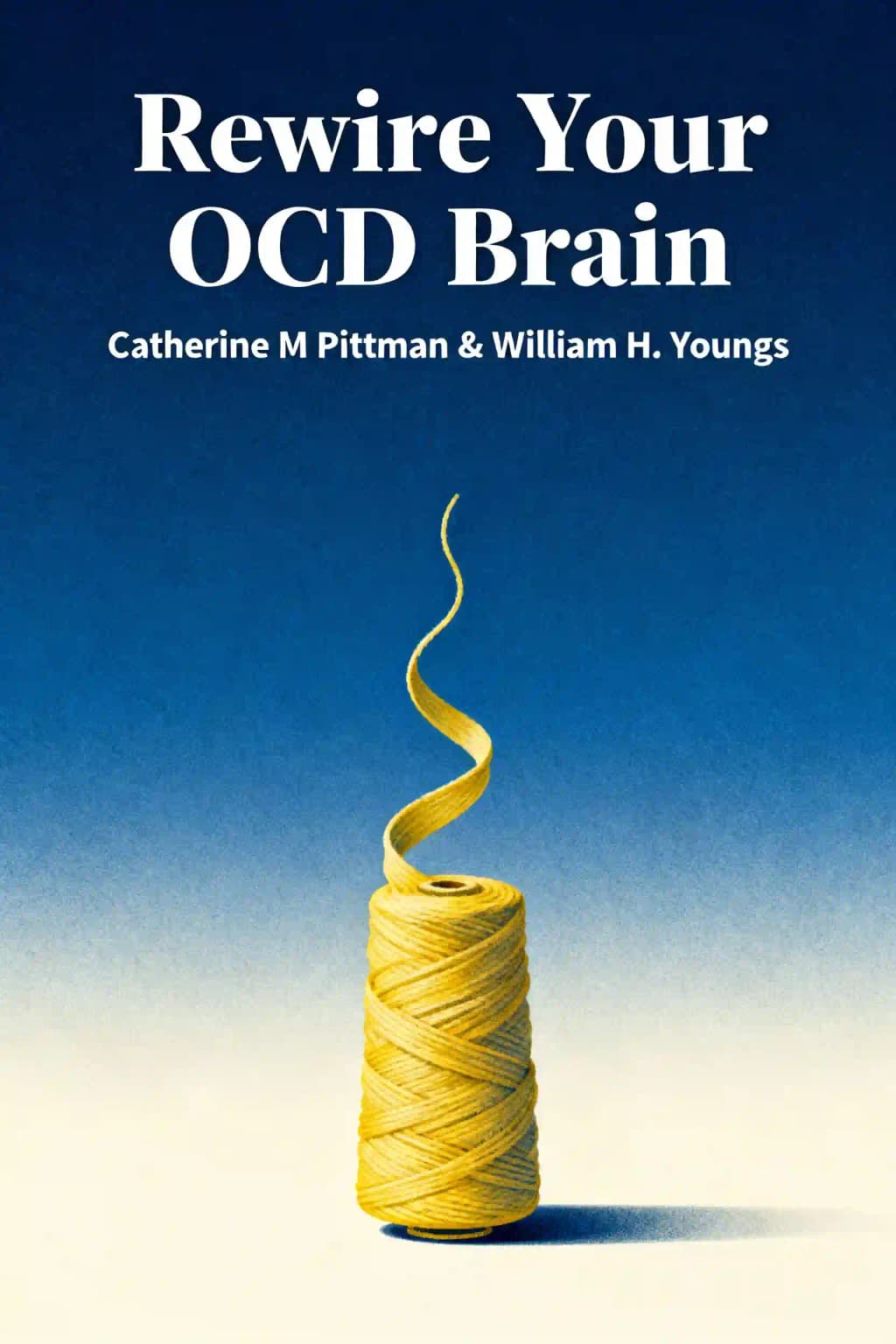
Have you ever had a thought so intrusive, so persistent that it felt impossible to shake? For millions suffering from Obsessive-Compulsive Disorder, this isn't an occasional inconvenience-it's daily torment. "Rewire Your OCD Brain" has become something of a phenomenon since its publication, praised by mental health professionals and patients alike for its accessible approach to a complex neurological condition. The book has gained particular traction on social media, where countless readers have shared how its brain-based approach helped them understand their symptoms in ways traditional therapy never could. Even celebrities like Howie Mandel and Maria Bamford, who have spoken openly about their OCD struggles, have recommended similar neurological approaches to understanding the condition. What makes this book so revolutionary is how it demystifies the seemingly irrational behaviors of OCD by explaining exactly what happens in the brain to create them-and more importantly, how to change those patterns.
第 2 章
The Brain: Both Miracle and Tormentor
Our brains enable remarkable achievements-from artistic masterpieces to technological innovations, from composing symphonies to landing spacecraft on distant planets-yet for those with OCD, this same magnificent organ can become an inescapable torture chamber. Every perception we have depends on brain processing, from visual interpretation to face recognition, from emotional responses to memory formation, yet we rarely consider this intricate machinery until something goes wrong.
Understanding the brain's rules and limitations is key to gaining control over OCD symptoms. While OCD has genetic components and can run in families, with studies showing a 25-30% concordance rate in identical twins, it may also develop from certain infections like PANDAS and PANS that affect brain structures. The condition involves differences in specific regions including the frontal lobes (responsible for executive function), basal ganglia (movement and habit formation), and amygdala connections (fear processing). Brain imaging studies have revealed that OCD patients show heightened activity in these circuits, particularly during symptom provocation.
Obsessive thinking manifests as unwanted thoughts that can't be dismissed-persistent doubts about locked doors or turned-off appliances, disturbing images of harm, or unwanted impulses never acted upon. Common themes include contamination fears (excessive hand washing, avoiding "contaminated" objects), orderliness needs (symmetry, precise arrangements), violence worries (fear of harming loved ones), perfectionism (repeated checking, inability to complete tasks), and religious or sexual concerns (intrusive blasphemous or inappropriate thoughts). These obsessions dominate daily life, consuming hours and driving compulsions-repetitive behaviors performed to neutralize anxiety, often following specific rules or patterns.
While our frontal lobes have given humans unique anticipation abilities that evolved beyond movement planning into complex imagination, this gift comes with costs. We can imagine troubling events that may never happen, creating detailed scenarios of worst-case outcomes, yet our brain reacts emotionally as if they were real threats, triggering the same stress responses as actual danger. This creates a feedback loop of anxiety that feeds obsessive thinking, making it increasingly difficult to distinguish between realistic and exaggerated concerns.
Scientists have discovered the brain's remarkable neuroplasticity-the ability to change structures and reorganize response patterns regardless of age. Your brain isn't fixed by genetics but can be remodeled through experiences, thoughts, and behaviors, with new neural connections forming in as little as hours or days of consistent practice. This neuroplasticity is the foundation for "rewiring" your OCD brain-interrupting problematic patterns and building new neural structures that resist anxiety rather than create it. Research has shown that targeted behavioral therapy can actually normalize brain activity patterns in OCD patients, demonstrating the power of directed neuroplastic change.
第 3 章
The Amygdala: Your Brain's Alarm System
The amygdala-an almond-sized structure in the brain's center-creates the physical responses that lead to anxiety: pounding heart, nausea, shakiness. Understanding how and why it creates these responses helps you interpret anxiety more accurately and gain control over it.
Located near influential brain regions like the hypothalamus, the amygdala can quickly alter heart, lung, muscle and digestive function when it detects threats-often before you're even consciously aware of danger. It functions as a vigilant threat detector through two pathways: the faster amygdala pathway (sensory information travels directly to the amygdala within milliseconds) and the slower cortex pathway (information goes through the cortex for processing before reaching the amygdala).
While this quick reaction to potential threats has evolutionary advantages, it comes with costs. The amygdala relies on unprocessed, incomplete sensory information-like a blurry Polaroid-which can lead to false alarms. Consider seeing a curved object on a path: your amygdala might trigger a defense response (jumping back, racing heart) before your cortex processes that it's just a vine, not a snake.
This teaches an important lesson for OCD sufferers: the amygdala's reactions may be incorrect or unnecessary, yet people often misinterpret these bodily reactions as indicating real threats. In OCD, overestimating threats happens because people assume the accuracy of the amygdala's reactions rather than recognizing that anxiety can be based on erroneous defense responses.
The amygdala's defense response falls into three categories: fight, flight, or freeze (FFF). When detecting potential threats, it triggers physiological changes to prepare the body-increasing blood pressure, releasing glucose into the bloodstream, tensing muscles, and slowing digestion. These reactions explain symptoms like racing hearts and queasy stomachs during anxiety. The amygdala can also "hijack" the cortex, making it difficult to focus or think clearly-a normal neurological process, not a sign of "going crazy."
第 4 章
The Cortex: Where Obsessions Begin
While the amygdala is the root of anxiety fueling OCD, the cortex often initiates and strengthens obsessions. The cortex activates the amygdala in two key ways: by interpreting harmless sensory information as threatening, and by activating the amygdala without any sensory input, simply through thoughts and worries.
Cognitive fusion-believing in the absolute truth of mere thoughts-is fundamental to OCD development. When we treat thoughts as reflecting reality rather than recognizing them as simply mental events, unnecessary anxiety follows. People with OCD often take thoughts too seriously, transforming them into obsessions. When anxiety follows a thought, it creates a misleading feedback loop: "I feel anxious, so there must be something concerning about this thought."
The cortex doesn't just receive information-it interprets it, sometimes erroneously. When thoughts activate the amygdala, producing anxiety, people with OCD interpret this anxiety as confirmation of danger, when all that occurred was a mere thought. Nearly all college students admit to having random intrusive thoughts like "I could drive into that truck," which surprises those with OCD who believe such thoughts are uniquely significant.
Taking thoughts too seriously strengthens neural circuits through "survival of the busiest"-the busiest circuits strengthen while unused ones weaken. This explains why obsessive thoughts become stronger through repetition. Ironically, even arguing against obsessions reinforces their neural pathways.
The amygdala is essential for cortex-based anxiety, as only it can produce the defense response. The brain structure reveals an imbalance of power: many connections run from amygdala to cortex, while fewer run in the opposite direction. This explains why emotions often overpower rational thought. The amygdala constantly monitors cortical activity like watching "Cortex Television," responding to threatening thoughts or images by triggering anxiety.
第 5 章
Worry and Obsession: The Brain's Anticipation Machine
Our frontal lobes contain sophisticated circuitry specifically designed for worry-the process of thinking about potential negative outcomes in an elaborated, logical chain. Unlike our pets who live purely in the present moment, humans possess the unique ability to project themselves into hypothetical future scenarios, repeatedly worrying about things that may never materialize. This puts our amygdalas through completely imagined distress, often triggering the same physiological stress responses as real threats.
Worry provides a paradoxical form of relief by keeping us focused on abstract thought processes rather than more anxiety-provoking imagery-essentially switching from seeing a frightening "movie" in our minds to merely hearing a narrative about it. Though worry still increases heart rate, muscle tension, and sustains anxiety, many people mistakenly believe it's helpful or protective. In reality, chronic worry depletes mental resources, disrupts sleep patterns, and is fundamentally different from productive problem-solving which involves taking concrete actions toward solutions.
The worry process engages multiple interconnected brain systems. The prefrontal cortex handles complex anticipation and future planning, while the anterior cingulate cortex makes decisions about future responses and monitors conflicts between competing impulses. Neuroimaging studies have revealed structural and metabolic abnormalities in the anterior cingulate cortex of people with OCD. This crucial region normally acts as a bridge between the emotional amygdala and the rational prefrontal cortex, but in OCD it may get stuck in repetitive loops, creating a "faulty worry circuit" that prevents the natural progression from threat assessment to active problem-solving.
Obsessions differ fundamentally from worry in being experienced as intrusive, unwanted, and beyond voluntary control. They manifest as recurrent thoughts, urges, or vivid images that cause marked distress and interfere with daily functioning. While worry is something we consciously engage in, obsessions feel like they happen to us involuntarily, often contradicting our values and desires. Their distressing nature frequently stems from cognitive fusion-the tendency to take thoughts as accurate reflections of reality rather than seeing them as mental events that may or may not be true.
Understanding the complex brain circuitry behind OCD symptoms can provide comfort by making sense of seemingly illogical reactions and behaviors. The brain operates through intricate connections between billions of neurons that form circuits holding memories, learned associations, and producing both voluntary and involuntary thoughts. These circuits can be modified through neuroplasticity-the brain's remarkable ability to change its structure and function based on experience and repeated patterns of activity. This plasticity offers hope for treatment, as new neural pathways can be formed through exposure therapy and other interventions that help break the cycle of obsessive thinking.
第 6 章
Calming the Amygdala: Practical Strategies
When experiencing fear or anxiety, bodily reactions like trembling, sweating, and muscle tension are normal manifestations of the fight-flight-freeze response, though people with OCD often misinterpret them as dangerous signals. Heart palpitations, rapid breathing changes, digestive disruptions, and heightened muscle tension don't indicate illness or impending doom but rather demonstrate a healthy body activating its ancient defense system. These physical responses helped our ancestors survive genuine threats and continue to serve a protective function today.
The amygdala, our brain's threat detection center, acts so swiftly that these initial reactions cannot be consciously controlled, and attempts to forcefully manage them often lead to feelings of frustration and failure. Many people misinterpret these defense responses as signs they're "losing control," "going crazy," or experiencing a medical emergency, which creates a feedback loop that fuels obsessive thinking. Understanding these reactions as normal protective mechanisms, similar to a home security system being activated, helps prevent incorrect interpretations that worsen anxiety and perpetuate OCD cycles.
Slow, deep breathing emerges as one of the most powerful tools for directly calming the amygdala, proving more effective than most other interventions, including meditation or positive thinking. The amygdala functions as a sophisticated chemosensor that constantly monitors CO2 levels in the bloodstream, activating quickly when levels become elevated. Scientific research shows that breathing at a rate of five to six breaths per minute for even five minutes can noticeably reduce stress hormones, while fifteen minutes of controlled breathing can completely reset the entire defense response system.
Diaphragmatic (abdominal) breathing is particularly effective at activating the parasympathetic nervous system - our body's "rest and digest" mode - to counter the amygdala's defense response. To practice properly, sit comfortably with one hand on your chest and the other on your stomach, then breathe deeply to expand your abdomen rather than your chest. Imagine filling a balloon in your stomach as you inhale and deflating it as you exhale. Regular practice - just five to ten minutes three times daily - improves awareness of healthy versus unhealthy breathing patterns and builds a strong foundation for emotional regulation.
Progressive muscle relaxation offers another powerful approach, involving systematically tensing and releasing muscle groups throughout the body, working methodically from your hands through your torso to your feet. After tensing each area for five seconds, you completely relax it, paying careful attention to the sensation of deep relaxation spreading through your body. This technique helps identify and release unconscious muscle tension that often accompanies anxiety. With daily practice, you can reduce the time needed to about ten minutes, eventually learning to relax most muscles without tensing them first. Many practitioners find combining this technique with diaphragmatic breathing particularly effective for managing acute anxiety episodes.
Regular implementation of these strategies creates new neural pathways that make relaxation responses more automatic over time. It's essential to practice these techniques during calm periods, building muscle memory that makes them more accessible during high-stress situations. This proactive approach helps prevent the amygdala from becoming chronically overactive and supports long-term anxiety management.
第 7 章
Exercise and Sleep: Foundational Brain Maintenance
Remember that the defense response prepares your body for physical activity, so exercise is exactly what the amygdala wants. When you engage in physical activities, especially aerobic ones, amygdala activation decreases-as if you've done what the amygdala wants, allowing it to stand down. Just twenty minutes of exercise can reduce anxiety, regardless of what's causing it.
Exercise uses the increased blood flow from the defense response, burns excess adrenaline, stimulates endorphins, and increases serotonin levels (similar to anxiety medications). Regular exercise (at least 25 minutes every 2-3 days) leads to lasting changes in the amygdala itself, making it generally calmer and less reactive. The most effective exercise is moderately intense, doctor-approved, enjoyable, and performed at least three times weekly for 30 minutes.
Sleep is crucial for managing OCD, yet often becomes a casualty of perfectionism and overthinking. During sleep, your brain releases hormones, produces neurochemicals, removes toxins, and stores memories. Sleep deprivation makes the amygdala more reactive to emotional stimuli, significantly increasing anxiety.
To fall asleep effectively, keep your amygdala calm before bedtime by avoiding worry-focused thoughts. Rather than telling yourself not to worry (which doesn't work), replace worrying thoughts with calming activities. Reading can be effective because it's difficult to worry while reading, as both activities use verbal processing. Listening to audiobooks or calming podcasts can block worry circuits by making it impossible to focus on two things simultaneously.
Sleep occurs in stages characterized by different brain waves and activities. REM sleep, when we have our most vivid dreams, is particularly important for the amygdala. Research shows the amygdala is less reactive when a person gets plenty of REM sleep. For maximum REM sleep, aim for 7-9 hours of uninterrupted sleep.
第 8 章
Teaching the Amygdala New Responses
To overcome OCD, you must teach your amygdala to respond differently to triggers. The amygdala learns through direct experience, not through logic or reassurance. Exposure with response prevention (ERP) is the most effective treatment for OCD, requiring you to face triggers while resisting compulsions.
The amygdala has two ways of identifying danger. First, it's prewired to respond to certain threats like insects, heights, water, angry faces, and contamination-evolutionary fears that provided survival advantages. Second, it learns to fear objects or situations based on your unique life experiences, creating specialized neural circuitry that helps you avoid specific dangers.
The amygdala learns through the process of association-classical conditioning. When an object or situation is paired with a negative experience, neurons in the amygdala fire simultaneously, creating emotional memories that tag that stimulus as threatening. These connections form when "neurons that fire together wire together." After this association is formed, the amygdala will produce a defense response whenever it encounters similar stimuli.
The timing of the amygdala's defense response follows a specific pattern: anxiety typically peaks before encountering the feared situation, not during it. This anticipatory nature makes evolutionary sense-the fight-flight-freeze response is most effective when triggered before danger arrives. Understanding this timing can help you push through anxiety, knowing that facing the feared situation will typically make anxiety diminish rather than intensify.
Exposure involves deliberately confronting triggers while ensuring nothing negative occurs (except the defense response itself). Though anxiety-provoking, this process is essential for teaching the amygdala new responses. With repeated exposure, amygdala activation decreases as new memories form.
Response prevention requires resisting compulsions during exposure. Compulsions-repetitive behaviors or mental acts performed to reduce anxiety-provide temporary relief but prevent the amygdala from learning that triggers aren't dangerous. Only by experiencing the trigger without seeking relief will the amygdala learn the trigger is safe.
第 9 章
Managing Obsessive Thinking
Obsessions aggressively intrude into daily life, consuming precious mental energy and generating intense anxiety that typically leads to either compulsive behaviors or complete avoidance. These intrusive thoughts originate in your cortex's neural circuitry, following what neuroscientists call the "survival of the busiest" principle - the more attention and energy you invest in these thoughts, the stronger and more persistent they become. However, it's crucial to understand that these thoughts, no matter how disturbing, are not inherently dangerous; they're simply electrical and chemical activity in the brain.
Defusing obsessions requires a fundamental shift in how we process thoughts. Research shows that an overwhelming majority of people (80-90%) experience troubling intrusive thoughts, ranging from violent imagery to inappropriate sexual thoughts to fears of contamination. The key difference is that individuals without OCD can recognize these as meaningless mental events and naturally let them pass. Those with OCD make the critical error of analyzing, questioning, and repeatedly engaging with these thoughts, inadvertently strengthening neural pathways that make the thoughts more frequent and intense.
Thought-action fusion represents a particularly problematic cognitive distortion where having a thought is equated with acting on it. For example, someone might believe that thinking about harming someone means they're likely to do it, or that thinking about contamination means they're already contaminated. This fusion, combined with other cognitive vulnerabilities like perfectionism (needing everything to be "just right"), catastrophizing (assuming the worst possible outcome), and an excessive need for certainty, creates a perfect storm that transforms normal intrusive thoughts into debilitating obsessions.
While traditional approaches often focus on thought suppression, research consistently shows this strategy backfires. Instead, modern treatment approaches leverage the brain's limited attention capacity - our inability to fully focus on multiple things simultaneously. Rather than trying to eliminate obsessive thoughts (like attempting to turn off a TV), the goal is to actively redirect attention to something else (changing the channel). This might involve engaging in absorbing activities, practicing specific skills, or focusing on sensory experiences in the environment.
Mindfulness has emerged as a powerful tool in managing obsessions, becoming an integral component of many evidence-based OCD treatments. This approach involves cultivating present-moment awareness without judgment or reaction. Practical mindfulness exercises might include focusing on breath sensations, observing physical movements during daily activities, or noting thoughts without engaging with them. Regular mindfulness practice strengthens the neural networks involved in attention control, essentially building the "muscle" that allows you to shift focus away from obsessions more effectively. Research shows that consistent mindfulness practice can lead to measurable changes in brain regions associated with attention regulation and emotional processing.
The key to success lies in consistent practice of these attention-management skills, understanding that improvement comes gradually through repeated effort rather than immediate mastery. This approach, combined with other cognitive behavioral strategies, helps break the cycle of obsessive thinking by changing your relationship with thoughts rather than trying to eliminate them entirely.
第 10 章
Rewiring for Freedom: The Path Forward
Cognitive restructuring involves identifying and changing thoughts that are illogical or unhealthy. These self-defeating thoughts create problematic emotional responses, particularly anxiety. When we change our thoughts, we're literally rewiring our brain by strengthening certain neural circuits while weakening others.
Often it's not a situation itself that activates the amygdala, but your interpretation of it. For example, when someone with OCD hears about an unexpected meeting, they might immediately worry about being fired, while colleagues remain unconcerned. Recognizing that your interpretations-not events themselves-trigger anxiety is crucial self-knowledge.
Self-defeating beliefs set you up to become anxious and overwhelmed by life experiences. They trigger thoughts that cause the amygdala to react as if you're in danger. Several specific beliefs promote obsessions by intensifying intrusive thoughts, making them harder to dismiss, including perfectionism, catastrophizing, misperceiving probabilities, need for certainty, and excessive guilt/responsibility.
To change anxiety-producing neural pathways, you must replace self-defeating thoughts with beneficial coping thoughts. Rather than trying to erase negative thoughts (which actually reinforces them), the key principle is "Don't erase-replace!" When you notice an anxiety-producing thought, use thought-stopping by saying "Stop!" then immediately substitute a different thought that engages your mind.
Beyond cognitive restructuring, acceptance offers another powerful approach to managing OCD. Rather than trying to control the amygdala's response, you can observe it mindfully with curiosity and acceptance. By accepting thoughts without attempting to control them and allowing anxiety to be experienced without struggle, you paradoxically gain more control over your brain.
The ultimate goal is to help you understand the brain processes involved in OCD and provide tools to rewire the obsessive brain. By learning how the amygdala creates the defense response and how the cortex contributes to anxiety, you can now focus on what you can control while accepting what you cannot. Through neuroplasticity, you can teach both your amygdala and cortex to respond differently, allowing you to overcome OCD's limitations and become the master of your own life.