BeFreed
    Categories>Psychology>Dark Psychology and the Ethics of Influence: Persuasion vs Manipulation

    Dark Psychology and the Ethics of Influence: Persuasion vs Manipulation

    19 分钟
    |
    |
    2026年8月24日
    PsychologySelf-GrowthCommunication

    Explore the line between ethical influence and dark psychology. Learn how psychological levers, transparency thresholds, and manipulation affect our daily decisions.

    Dark Psychology and the Ethics of Influence: Persuasion vs Manipulation
    选择讲述方式

    同一期节目,多种聆听方式。

    围绕《Dark Psychology and the Ethics of Influence: Persuasion vs Manipulation》的相同观点,选择适合你的声音、深度和节奏,随时切换。

    逐字稿与章节

    第 1 章

    The Subtle Art of the Invisible Hand

    Have you ever walked out of a meeting feeling completely convinced by a new idea, only to wonder an hour later why you agreed to it so readily? Or perhaps you’ve found yourself clicking "buy now" on a website because a little red timer told you that you only had three minutes left to claim a discount, even though you hadn’t planned on spending money that day? Most of us like to think of ourselves as the captains of our own souls—rational actors making deliberate choices based on facts and logic. But the truth is that our decisions are often guided by psychological levers that we don’t even realize are being pulled. This is the realm of influence, a spectrum of human interaction that spans from the warmest, most ethical persuasion to the coldest reaches of what we call dark psychology.

    Today, in 2026, the stakes of understanding this have never been higher. We live in an era where algorithms are designed to keep us scrolling, and where professional success often depends on your ability to move people toward your vision. But where is the line? When does a helpful "nudge" become a manipulative "shove"? One of the most striking tests of ethical influence is the transparency threshold: would your tactic still work if the person you were talking to knew exactly what you were doing?. If the success of your influence depends on the other person staying "in the dark," you’ve likely crossed into manipulation.

    In this exploration, we aren’t just looking for a "how-to" guide for getting your way. We are looking for the "why" behind the "how." We’re going to deconstruct the frameworks used by social psychologists and philosophers to separate legitimate influence from harmful control. We will examine the SHAPE framework—Secrecy, Harm, Agency, Privacy, and Exogeneity—which provides a rigorous way to evaluate whether the influence we exert or receive is actually ethical. We’ll also look at the classic principles of influence, like social proof and reciprocity, and see how they can be used either to build genuine trust or to exploit our cognitive shortcuts. So, let’s dive into the foundational mechanics of how we move each other—and why the intent behind that movement changes everything.
    第 2 章

    The Spectrum from Reason to Coercion

    To understand influence, we have to stop seeing it as a single thing and start seeing it as a continuum. At one end, you have rational persuasion—what philosophers sometimes call "the unforced force of the better argument". This is the ideal. It’s when I give you all the facts, you weigh them, and you decide that my path is the right one. At the other extreme, you have coercion—force or threats that leave you with no real choice but to comply. But the vast majority of human interaction happens in the murky middle. This middle ground is where manipulation lives. It’s influence that isn't quite a logical argument, but it isn't a gun to the head either.

    Manipulation is sometimes said to be as a way of "bypassing" or "perverting" a person’s rational deliberation. Think about it like this: if rational persuasion is talking to the driver of a car, manipulation is trying to reach in through the window and turn the steering wheel yourself. It exploits our "fixed action patterns"—those automatic, almost mechanical responses we have to certain triggers. For example, when someone does something nice for us, we feel an overwhelming urge to return the favor. That’s the principle of reciprocity. In an ethical context, this builds the social fabric of trust. In a dark context, a manipulator might give you an unsolicited gift—something you didn’t even want—specifically to trigger that feeling of debt so you’ll find it harder to say no to a much larger request later.

    This raises a deep question about agency. Does manipulation actually take away your free will? Some thinkers, like Sarah Buss, argue that manipulation doesn't actually deprive you of choice; it typically presupposes that the target will make her own choice. But other frameworks, like SHAPE, suggest that if the influence bypasses your reason or is "irresistible," it effectively reduces your agency. You’re still the one clicking the button or signing the contract, but the "you" making that decision has been neurologically hacked. This leads us to a crucial realization: influence is not just about what you do, but about how you treat the other person. Are you treating them as a rational agent with their own goals, or are you treating them as a mechanism to be operated for your own ends?. Understanding this distinction is the first step in moving from "dark" tactics toward ethical influence.

    继续学习本期节目

    在 BeFreed 中把本期节目的观点带入更完整的引导式学习体验。

    第 3 章

    Deconstructing the Dark Triad of Personality

    When we talk about "dark psychology," we’re often talking about a specific set of personality traits that researchers call the Dark Triad: narcissism, Machiavellianism, and psychopathy. These aren't just labels for "bad people"; they describe different ways of relating to others where the "callous core" is a disregard for the well-being or autonomy of anyone but oneself. Understanding these traits is essential because they drive the most aggressive forms of manipulation you’ll encounter in professional and personal life.

    Machiavellianism is perhaps the most relevant to the business world. It’s named after Niccolò Machiavelli, who famously argued that the ends justify the means. A person high in this trait sees other people as tools or "causal levers" to be pulled. They are strategic, cold, and patient. They aren't necessarily looking for a standing ovation—that’s the narcissist’s job—they just want the win. Narcissism, on the other hand, is driven by a grandiose sense of self and a desperate need for admiration. A narcissistic influencer might use "love bombing"—showering you with excessive praise and attention—to create an intense emotional bond. But this isn't about you; it’s about making you a satellite that orbits their ego.

    Then there’s psychopathy, which in a "subclinical" or everyday context, shows up as high impulsivity and a total lack of empathy. These are the individuals who can ship a product they know is flawed or fire a team without a second thought because they simply don’t feel the "social friction" that stops the rest of us. Interestingly, these traits persist in the human gene pool because, in the short term, they can be "adaptive". A Machiavellian can climb a corporate ladder quickly by navigating power structures that others find too distasteful to touch. But there’s a catch. While these "dark" traits can lead to quick wins, they almost always result in long-term collapse. They leave a trail of broken trust, high turnover, and resentment. The "successful psychopath" might get the promotion today, but they’ve often destroyed the very team they need to succeed tomorrow. This is why ethical influence isn't just about "being nice"—it’s a superior long-term strategy for anyone who wants to build something that lasts.

    第 4 章

    The Mechanics of Psychological Warfare

    If the Dark Triad represents the "who," then tactics like gaslighting, triangulation, and intermittent reinforcement represent the "how." These aren't just mean behaviors; they are calculated moves designed to erode your trust in your own judgment. Take gaslighting, for example. It’s not just lying. It’s a systematic attempt to make you doubt your own perception of reality. When a manipulator tells you "that never happened" or "you’re being too sensitive" over and over again, they are trying to break your "mental integrity". Once you stop trusting your own eyes and ears, you have no choice but to rely on theirs. That is the ultimate form of control.
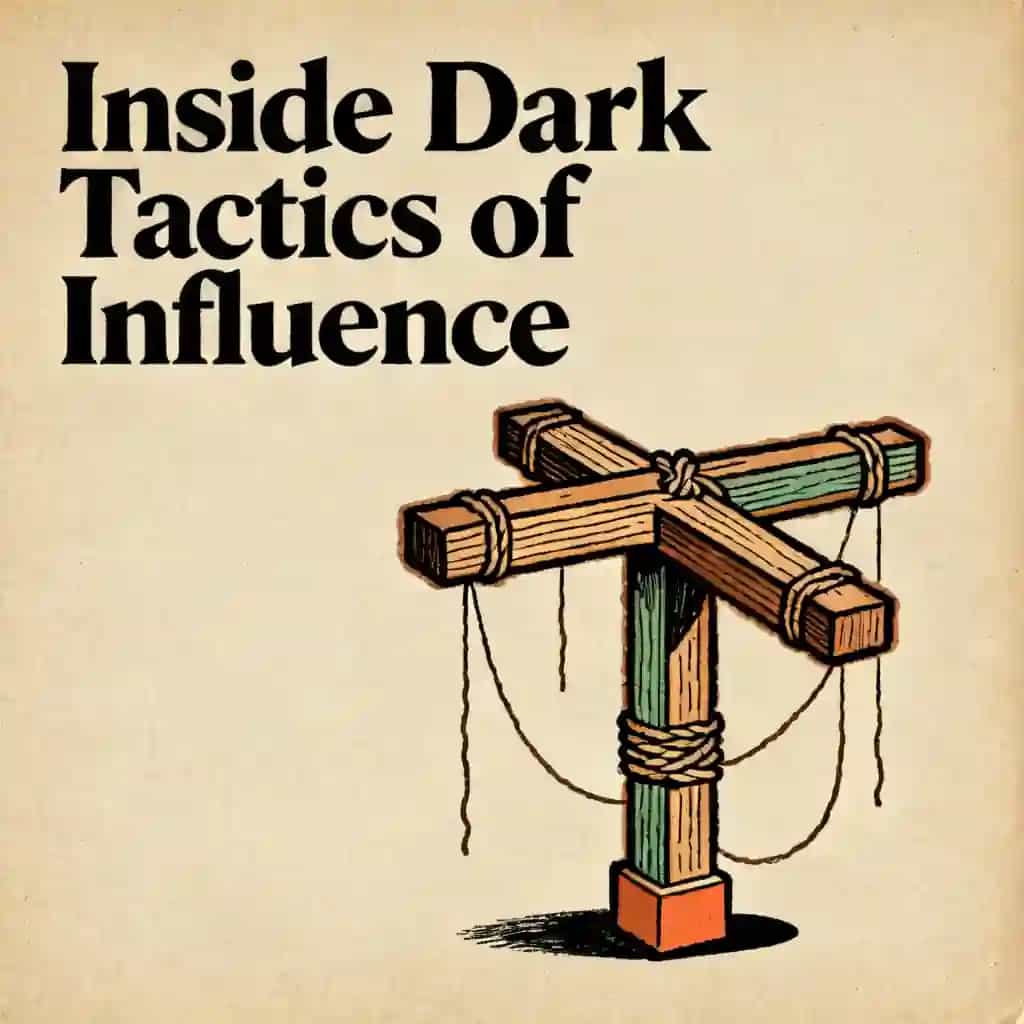
    Another powerful tool is triangulation. This is when an influencer brings a third person into a two-person dynamic to create competition or jealousy. In an office setting, this might look like a manager constantly comparing you to a colleague, subtly hinting that the other person is doing better. It keeps you in a state of perpetual anxiety, working harder and harder not to reach a goal, but to win back the manager’s favor. You’re so busy competing with your peer that you never stop to ask if the manager is actually being fair. This is often paired with "intermittent reinforcement"—the psychological equivalent of a slot machine. The influencer is warm one day and cold the next, without any clear reason. This unpredictability actually makes the bond stronger because your brain becomes addicted to the "hit" of validation when it finally comes.

    Even the "silent treatment" is a weapon in this arsenal. Neuroscience has shown that social exclusion activates the same parts of the brain as physical pain. When someone shuts you out to get their way, they are literally inflicting pain to force your compliance. But notice something about all these tactics: they require secrecy to work. They rely on you not knowing that you’re being played. This brings us back to the transparency threshold. If a manager said, "I’m going to compare you to Sarah today to make you jealous so you’ll work through the weekend," the tactic would immediately fail. It only works when it’s "in the dark." Ethical influence, by contrast, seeks to bring everything into the light, relying on the strength of the idea rather than the weakness of the listener.

    继续学习本期节目

    在 BeFreed 中把本期节目的观点带入更完整的引导式学习体验。

    第 5 章

    Cognitive Shortcuts and the Architecture of Choice

    Why are we so vulnerable to these tactics? It’s because our brains aren't perfect logic machines; they are survival machines that rely on cognitive shortcuts to save energy. In the world of UX design and marketing, the way choices are designed is sometimes called "choice architecture". When used ethically, they help you make better decisions faster—like putting healthy fruit at eye level in a cafeteria so you’re more likely to grab it. But when these same shortcuts are used to trick you, they become "dark patterns".

    One of the most common shortcuts is "anchoring." This is the tendency to rely too heavily on the first piece of information you receive. If you see a product that was "originally $200" but is now "$50," that $50 feels like a bargain, even if the product was never actually worth $200. The "original price" is a fabricated anchor designed to distort your sense of value. Then there’s "scarcity"—the idea that we want what we can't have. If a website tells you there are "only 2 items left," your brain shifts from "do I need this?" to "I have to get this before it’s gone!". If the scarcity is real—say, a limited-run artisan product—it’s a helpful signal of value. But if it’s a fake countdown timer that resets every time you refresh the page, it’s a dark pattern designed to bypass your reason through loss aversion.

    We also have a deep-seated need for "social proof." We look to what others are doing to figure out what we should do. This is why you’re more likely to buy a book with five thousand reviews than one with zero. Manipulators exploit this by using fake testimonials or curated, "five-star-only" feedback. Ethical influence, on the other hand, embraces "radical transparency". It shows the mixed reviews alongside the great ones because it trusts you to make an informed decision. As Angus Morrison, a UX expert, points out, the goal of "nudge theory" should be to make it easier for people to choose what is best for them, not just what is best for the business. When you use these psychological levers, you have to ask yourself: am I helping the user navigate a complex world, or am I building a cage out of their own cognitive biases?

    第 6 章

    The SHAPE Framework for Ethical Evaluation

    Given how complex these interactions are, how can you objectively decide if a particular form of influence is okay? This is where the SHAPE framework comes in. It was developed by researchers at King’s College London and Imperial College London to help designers and thinkers evaluate the "ethicality" of influence. SHAPE stands for Secrecy, Harm, Agency, Privacy, and Exogeneity. It’s a rigorous "stress test" for any persuasive tactic.

    First, let’s look at Secrecy. Influence becomes ethically questionable if the "influencee" is not fully aware of the intent to influence or the means of influence. If I’m trying to get you to vote for a candidate by using a deepfake video that looks like their opponent, I’m violating this principle because I’m hiding both my intent and my methods. Second is Harm. This seems obvious, but it’s often subtle. Does the influence cause physical or mental suffering, or does it lead to "epistemic injustice"—where someone’s ability to make sense of their own experience is reduced?. Third is Agency. Does the influence remove options or impose "conditional costs" that make it nearly impossible to say no?. If an influence is "irresistible," it effectively strips the person of their status as a rational actor.

    The final two letters are Privacy and Exogeneity. Privacy is about whether the influence is enabled by a breach of contract or mass surveillance. If a company uses your sensitive mental health data to target you with ads for "quick-fix" supplements, they are violating your privacy to find a psychological "hook." Exogeneity, however, is perhaps the most profound. It asks: whose interests are being served?. Influence is often unethical if it serves "exogenous" interests—the influencer’s goals—at the expense of "endogenous" interests—the influencee’s goals. If I influence you to take a job that I know is a bad fit just so I can get a referral bonus, I am prioritizing my exogenous interest over your life. But if I "nudge" you to save for retirement, I am serving your endogenous interest. By running your own actions through the SHAPE filter, you can move from a place of "accidental manipulation" to one of intentional, ethical leadership.

    继续学习本期节目

    在 BeFreed 中把本期节目的观点带入更完整的引导式学习体验。

    第 7 章

    Professional Intelligence and the Ethics of Tradecraft

    There is one field where the ethics of manipulation are tested in the extreme: human intelligence, or HUMINT. In the world of spying and interrogation, manipulation isn't just a side effect; it’s the core "tradecraft." Intelligence officers often use "sub-rational" influence to get sources to reveal secrets. This might include building "rapport"—a sense of connection and trust—specifically to lower someone’s guard. On the surface, this looks like dark psychology. But within this professional context, there is a fierce debate about the difference between "legitimate" and "illegitimate" manipulation.

    One school of thought argues that in high-stakes national security, the "harm" of manipulation is outweighed by the "greater good" of preventing a terrorist attack. This is a utilitarian approach. But even in this world, thinkers like Stephan Lau suggest that there is a difference between influence that respects the target’s "functional freedom" and influence that destroys it. For example, "science-based interviewing" focuses on building a genuine relationship rather than using "browbeating" or threats. This isn't just about being ethical; it’s about getting better data. People who are coerced or gaslit often give false information just to make the pain stop. People who are influenced through rapport and respect are more likely to provide reliable intelligence.

    This tells us something vital for the business world: even in the "darkest" professions, the most effective long-term results come from the "lighter" end of the spectrum. When you treat people as "things" or "levers," they eventually break. When you treat them as agents, you build a sustainable source of influence. In 2026, we see this in the shift away from "disruptive" leadership toward "authentic" influence. The smartest "growth hackers" are realizing that "bleeding on the back end"—losing customers who feel tricked—is more expensive than the "slow build" of genuine trust. Whether you’re an FBI interrogator or a marketing lead, the lesson is the same: manipulation is a high-interest loan. You get the capital now, but the "interest" in lost trust will eventually bankrupt you.

    第 8 章

    Building Your Psychological Defense Kit

    So, how do you protect yourself in a world where everyone is trying to pull your strings? The first and most powerful defense is awareness. This is called "Inoculation Theory"—the idea that by learning how manipulative arguments work, you build up a psychological resistance to them. Just by listening to this, you are "inoculating" yourself. The next time someone showers you with excessive praise, a little voice in your head will whisper: "Is this love bombing?" The next time a salesperson creates a fake sense of urgency, you’ll recognize the "loss aversion" trigger.

    A practical technique for dealing with highly manipulative individuals is called "Grey Rocking". If you have to interact with someone high in Dark Triad traits—like a toxic co-worker—you make yourself as boring and unreactive as a grey rock. Manipulators thrive on emotional feedback; they want to see you flustered or flattered because that gives them a "handle" to grab. By giving them neutral, one-word answers and zero emotional reaction, you deprive them of the "fuel" they need to operate. They will eventually get bored and look for a more "interesting" target.

    Another vital defense is "slowing down". Many dark psychology tactics rely on urgency and isolation. They want you to decide now, and they want you to decide alone. If you feel a sudden pressure to act, that is your signal to stop. Take twenty-four hours. Call a friend who isn't involved in the situation and explain what’s happening. Often, just hearing yourself describe a manipulative tactic out loud is enough to break its spell. And finally, trust your gut. Neuroscience suggests that your subconscious pattern recognition is often faster than your conscious mind. If a situation "feels" off—if you feel a sense of "social friction" you can't quite explain—it’s likely that your brain has spotted a manipulative pattern before you’ve logically identified it. Your discomfort is a data point. Use it.
    继续学习本期节目

    在 BeFreed 中把本期节目的观点带入更完整的引导式学习体验。

    第 9 章

    The Integrity of Intent

    As we wrap up this exploration, we return to the core of the matter: intent. Influence is like a hammer—it can be used to build a house or to break a window. The tools of psychology—reciprocity, social proof, anchoring—are morally neutral in themselves. What makes them "dark" or "light" is the hand that holds them. If your intent is to empower the other person, to help them make a choice that serves their own goals, then you are engaging in the highest form of human communication. You are building trust, and in 2026, trust is the most valuable currency we have.

    But if your intent is to "mechanify" the other person—to treat them as a tool to be operated—then you are treading a dangerous path. You might get the sale, you might win the argument, and you might even get the promotion. But you will do so at the cost of your own integrity and the long-term health of your relationships. Manipulation is a shortcut that leads to a dead end. Persuasion is a long road that builds a destination worth living in. The "transparency threshold" remains the best compass we have: if your tactic would still work if the person you’re talking to knew exactly what you were doing, you are likely doing it right.

    I want to thank you for spending this time with me today, diving into the deeper "why" of human behavior. It’s not easy to look at the darker corners of our psychology, but it’s the only way to ensure we stay in the light. I encourage you to take one of the frameworks we discussed—maybe the SHAPE test or the transparency threshold—and apply it to one interaction you have this week. Notice the levers being pulled, both by you and by others. Once you see the invisible hand, you can finally choose where you want it to lead. Reflect on the power you hold, and use it to build something that doesn't just work, but something that actually matters.

    ★★★★★

    你已完成Dark Psychology and the Ethics of Influence: Persuasion vs Manipulation

    “坚持使用 23 天了,我每天都会打开它。它现在已经成为我的日常习惯。”

    jayallen

    Dark Psychology and the Ethics of Influence: Persuasion vs Manipulation最佳语录

    “

    One of the most striking tests of ethical influence is the transparency threshold: would your tactic still work if the person you were talking to knew exactly what you were doing?

    ”
    K

    Generated by Kim

    输入问题

    Creating a lesson on dark psychology focused on ethical influence and persuasion techniques.

    主持声音
    Lenaplay
    知识来源
    The Ethics of Manipulation (Stanford Encyclopedia of Philosophy)
    link
    https://plato.stanford.edu/entries/ethics-manipulation/
    The Ethics of Influence: Persuasion vs. Dark Psychology
    link
    https://www.befreed.ai/podcast/the-ethics-of-influence-1
    SHAPE: A Framework for Evaluating the Ethicality of Influence
    link
    https://arxiv.org/html/2309.04352v2
    Principles of Influence Lesson | Program in Professional Writing | Illinois
    link
    https://prowriting.web.illinois.edu/activities/principles-of-influence-lesson/
    The good, the bad, and the tradecraft: HUMINT and the ethics of psychological manipulation: Intelligence and National Security: Vol 38, No 4
    link
    https://www.tandfonline.com/doi/abs/10.1080/02684527.2022.2129159
    How to use dark UX patterns for good | by Angus Morrison | Prototypr
    link
    https://blog.prototypr.io/ethically-evil-how-to-use-dark-ux-patterns-for-good-e0af1e0443c9

    常见问题

    The distinction lies in the intent and the transparency of the tactics used. Ethical influence involves moving people toward a vision using logic and helpful nudges, whereas dark psychology often relies on keeping the subject 'in the dark.' If a tactic only works because the other person is unaware of the psychological levers being pulled, it has likely crossed the line from ethical persuasion into manipulation.

    The transparency threshold is a critical test used to determine if an influence tactic is ethical. It asks whether your strategy would still be effective if the person you are interacting with knew exactly what you were doing. When the success of your influence depends on secrecy or the other person's lack of awareness, you are likely engaging in manipulation rather than ethical persuasion.
    Many of our choices are guided by psychological levers that we don't realize are being pulled, such as artificial scarcity created by countdown timers or algorithms designed to keep us scrolling. While we like to view ourselves as rational actors, these subtle nudges can bypass logic and lead us to make impulsive decisions, highlighting the importance of understanding the ethics of influence in the modern era.

    由哥伦比亚大学校友创建 | 源自旧金山

    BeFreed 汇聚全球求知若渴的学习者

    4.7

    平均评分

    7,840+ 条 App 评分

    BeFreed 社区

    说真的,我还没把这个 app 完全摸透,但用了这几天已经被惊艳到了… BeFreed 和我用过的任何学习类 app 都不在一个层级。它让人特别投入,还能实实在在地提升专注力,对刷手机停不下来的人来说太合适了!

    @ladyInfinity

    我买 BeFreed 正好 23 天,从那以后每天都在用。它已经完全融入了我的日常工作流和学习习惯。

    @jayallen

    说实话,这个 app 超出了我所有的预期。我可以让它就任何主题生成音频,无论是什么,效果都很惊艳。我的专业领域是心理治疗方向,而且是多学科交叉的,但它给出的内容非常准确。

    @Raguipa

    我最感激的是它大大减少了我刷手机的时间——花在搜索上的时间少了,吸收信息的时间多了。完整有声书、播客加上学习计划的组合,真的很出色。

    @colonyofcreatorsNGO

    我做 PhotoReading 快速学习讲师已经 24 年了… 书籍、阅读和学习就是我的本行,而 BeFreed 用一种创新的方式,把知识变得特别容易吸收,做得非常出色。

    @BeFreed user

    它不只是一个书籍摘要 app。我用过「有趣」这个阅读模式,比传统方式的摘要好得多,理解观点也更容易,光这一点就值回票价。

    @austinakon

    我爱这个 app。用了几天,完全停不下来。作为开始,再好不过了。

    @jcrules328

    我真的很喜欢这个产品;已经试用了大概一个月,感觉挖到宝了。它特别好用,因为我可以用 BeFreed 创建自己想学的主题,声音也很棒,旁白选择多到用不完。

    @DanielCZ

    说真的,我还没把这个 app 完全摸透,但用了这几天已经被惊艳到了… BeFreed 和我用过的任何学习类 app 都不在一个层级。它让人特别投入,还能实实在在地提升专注力,对刷手机停不下来的人来说太合适了!

    @ladyInfinity

    我买 BeFreed 正好 23 天,从那以后每天都在用。它已经完全融入了我的日常工作流和学习习惯。

    @jayallen

    说实话,这个 app 超出了我所有的预期。我可以让它就任何主题生成音频,无论是什么,效果都很惊艳。我的专业领域是心理治疗方向,而且是多学科交叉的,但它给出的内容非常准确。

    @Raguipa

    我最感激的是它大大减少了我刷手机的时间——花在搜索上的时间少了,吸收信息的时间多了。完整有声书、播客加上学习计划的组合,真的很出色。

    @colonyofcreatorsNGO

    我做 PhotoReading 快速学习讲师已经 24 年了… 书籍、阅读和学习就是我的本行,而 BeFreed 用一种创新的方式,把知识变得特别容易吸收,做得非常出色。

    @BeFreed user

    它不只是一个书籍摘要 app。我用过「有趣」这个阅读模式,比传统方式的摘要好得多,理解观点也更容易,光这一点就值回票价。

    @austinakon

    我爱这个 app。用了几天,完全停不下来。作为开始,再好不过了。

    @jcrules328

    我真的很喜欢这个产品;已经试用了大概一个月,感觉挖到宝了。它特别好用,因为我可以用 BeFreed 创建自己想学的主题,声音也很棒,旁白选择多到用不完。

    @DanielCZ

    我特别喜欢它能把有用的信息和想法浓缩成 8-15 分钟的播客式音频。我本来不太爱听播客,因为废话太多,但它把这些全都去掉了。

    @BeFreed user

    我正在读博士的最后阶段,需要读大量不熟悉的材料… 用 BeFreed,只要输入一个提示,app 就会帮你找到源材料并生成一期音频播客。我觉得 BeFreed 的流程比 NotebookLM 更顺畅。

    @Brad

    我经常在做早餐、散步、通勤的时候上 YouTube 找点东西听,而 BeFreed 提供了更有针对性的选择,没有广告,也没有废话!

    @BeFreed user

    这个平台最棒的地方是它的多面性。真的没有任何主题是它讲不了的,你丢给它什么它都能处理… 很少能找到一个毫无限制、又真正兑现承诺的学习工具。

    @jayallen

    BeFreed 太棒了。界面好用,让我花在找功能上的时间更少,花在学习上的时间更多。有声书、播客和学习计划的组合是天才设计,彻底改变了我的日常。

    @BeFreed user

    一开始我花了点时间才弄明白怎么生成意大利语的播客,然后就——哇!太棒了!我可以让它讲解任何一个话题,它讲得又好又聪明!

    @matteo77

    BeFreed 已经成了我每天都用的有声书 app… 我最喜欢的是,把自己的文字放进去,它就能生成随时随地都能听的音频。

    @kotanzu1

    我特别喜欢它能把有用的信息和想法浓缩成 8-15 分钟的播客式音频。我本来不太爱听播客,因为废话太多,但它把这些全都去掉了。

    @BeFreed user

    我正在读博士的最后阶段,需要读大量不熟悉的材料… 用 BeFreed,只要输入一个提示,app 就会帮你找到源材料并生成一期音频播客。我觉得 BeFreed 的流程比 NotebookLM 更顺畅。

    @Brad

    我经常在做早餐、散步、通勤的时候上 YouTube 找点东西听,而 BeFreed 提供了更有针对性的选择,没有广告,也没有废话!

    @BeFreed user

    这个平台最棒的地方是它的多面性。真的没有任何主题是它讲不了的,你丢给它什么它都能处理… 很少能找到一个毫无限制、又真正兑现承诺的学习工具。

    @jayallen

    BeFreed 太棒了。界面好用,让我花在找功能上的时间更少,花在学习上的时间更多。有声书、播客和学习计划的组合是天才设计,彻底改变了我的日常。

    @BeFreed user

    一开始我花了点时间才弄明白怎么生成意大利语的播客,然后就——哇!太棒了!我可以让它讲解任何一个话题,它讲得又好又聪明!

    @matteo77

    BeFreed 已经成了我每天都用的有声书 app… 我最喜欢的是,把自己的文字放进去,它就能生成随时随地都能听的音频。

    @kotanzu1

    查看更多网络上关于 BeFreed 的讨论
    129.7K19.5K
    55.2K19.2K
    154.2K10827355
    48.1K2.5K
    81.2K6.6K
    82.3K1.8K
    开启你的学习之旅,就是现在
    BeFreed 应用
    BeFreed

    个性化学习,无所不能

    DiscordLinkedIn
    精选书籍摘要
    Crucial ConversationsThe Perfect MarriageInto the WildNever Split the DifferenceAttachedGood to GreatSay Nothing
    热门分类
    Self HelpCommunication SkillRelationshipMindfulnessPhilosophyInspirationProductivity
    名人书单
    Elon MuskCharlie KirkBill GatesSteve JobsAndrew HubermanJoe RoganJordan Peterson
    获奖作品
    Pulitzer PrizeNational Book AwardGoodreads Choice AwardsNobel Prize in LiteratureNew York TimesCaldecott MedalNebula Award
    精选主题
    ManagementAmerican HistoryWarTradingStoicismAnxietySex
    年度最佳书籍
    2025 Best Non Fiction Books2024 Best Non Fiction Books2023 Best Non Fiction Books
    精选作者
    Chimamanda Ngozi AdichieGeorge OrwellO. J. SimpsonBarbara O'NeillWinston ChurchillCharlie Kirk
    BeFreed 与其他应用对比
    BeFreed vs. Other Book Summary AppsBeFreed vs. ElevenReaderBeFreed vs. ReadwiseBeFreed vs. Anki
    学习工具
    Knowledge VisualizerAI Podcast Generator
    更多信息
    关于我们arrow
    定价arrow
    常见问题arrow
    博客arrow
    招聘arrow
    合作伙伴arrow
    大使计划arrow
    目录arrow
    BeFreed
    Try now
    © 2026 BeFreed
    使用条款隐私政策
    BeFreed

    个性化学习,无所不能

    DiscordLinkedIn
    精选书籍摘要
    Crucial ConversationsThe Perfect MarriageInto the WildNever Split the DifferenceAttachedGood to GreatSay Nothing
    热门分类
    Self HelpCommunication SkillRelationshipMindfulnessPhilosophyInspirationProductivity
    名人书单
    Elon MuskCharlie KirkBill GatesSteve JobsAndrew HubermanJoe RoganJordan Peterson
    获奖作品
    Pulitzer PrizeNational Book AwardGoodreads Choice AwardsNobel Prize in LiteratureNew York TimesCaldecott MedalNebula Award
    精选主题
    ManagementAmerican HistoryWarTradingStoicismAnxietySex
    年度最佳书籍
    2025 Best Non Fiction Books2024 Best Non Fiction Books2023 Best Non Fiction Books
    学习工具
    Knowledge VisualizerAI Podcast Generator
    精选作者
    Chimamanda Ngozi AdichieGeorge OrwellO. J. SimpsonBarbara O'NeillWinston ChurchillCharlie Kirk
    BeFreed 与其他应用对比
    BeFreed vs. Other Book Summary AppsBeFreed vs. ElevenReaderBeFreed vs. ReadwiseBeFreed vs. Anki
    更多信息
    关于我们arrow
    定价arrow
    常见问题arrow
    博客arrow
    招聘arrow
    合作伙伴arrow
    大使计划arrow
    目录arrow
    BeFreed
    Try now
    © 2026 BeFreed
    使用条款隐私政策

    相似内容

    The Ethics of Influence 书籍封面
    Ethical Persuasion: Influence vs. ManipulationDark Psychology: Definition, Techniques, and MoreDark Psychology: Unveiling Hidden Human Behavior SecretsDark Triad: S-Tier Behavioral Designer's Guide | Yu-kai Chou
    5 sources
    The Ethics of Influence
    Discover the thin line between persuasion and manipulation. Learn to spot the tactics of dark psychology and build a defense against hidden control.
    23 min
    Dark Psychology: The Logic of Influence 书籍封面
    Dark Psychology: The Complete Guide – Stan TaylorPrebunking Against Misinformation in the Modern Digital Age - Managing Infodemics in the 21st Century - NCBI BookshelfSpotting and Resisting Dark Psychology TacticsPsychology expert: The No. 1 phrase to shut down a manipulator
    4 sources
    Dark Psychology: The Logic of Influence
    Ever feel a strange guilt after a normal chat? Learn to spot the hidden tactics of manipulation and build a mental immune system to stay autonomous.
    1127 min
    Ethical Influence vs. Dark Manipulation 书籍封面
    The Art of SeductionInfluence is Your SuperpowerFlipnosisAge of Propaganda
    16 sources
    Ethical Influence vs. Dark Manipulation
    Discover the spectrum of psychological influence techniques and how to distinguish between harmful manipulation and ethical persuasion that respects autonomy and creates win-win situations.
    14 min
    Dark psychology and the hidden levers of influence 书籍封面
    In sheep's clothingThe narcissist you knowSurrounded by PsychopathsFlipnosis
    21 sources
    Dark psychology and the hidden levers of influence
    Why do we feel forced to buy things we don't need? Learn how dark empaths map your vulnerabilities and how to spot the tactics used to influence you.
    30 min
    Dark Psychology: The Tactics of Influence 书籍封面
    The 48 laws of powerInfluence20 Dark Psychology Tricks Used On You Every Day in 2026 - Manipulation TrickDark Psychology: Manipulation Tactics to Recognize and Neutralize | When Notes Fly
    7 sources
    Dark Psychology: The Tactics of Influence
    Unseen tactics often bypass our logic to control our choices. Learn to spot the Dark Triad's playbook and reclaim your decision-making power.
    23 min
    Dark Psychology: When Truth Becomes Manipulation 书籍封面
    The Art of SeductionFlipnosisInfluence is Your SuperpowerThe Art of Influencing Anyone
    22 sources
    Dark Psychology: When Truth Becomes Manipulation
    Explore the hidden world of psychological manipulation, from 'paltering' and emotional hijacking to digital deception and workplace predators. Learn to recognize and resist these everyday tactics.
    55 min
    Dark Psychology: The Tactics of Manipulation 书籍封面
    Understanding Dark Psychology and Manipulation Tactics - Psych CentralDark Psychology: Complete Guide To The Dark Side Of Human BehaviorDark Psychology Explained: 10 Essential Insights — Expert Guide5 Manipulation Tactics You Might Miss Until It’s Too Late | Psychology Today United Kingdom
    5 sources
    Dark Psychology: The Tactics of Manipulation
    Hidden influence can turn a deep connection into a trap. Learn to spot the red flags of the 'Dark Triad' and build a defense kit against manipulation.
    1418 min
    Dark Psychology: The Mechanics of Manipulation 书籍封面
    Dark Psychology: Manipulation Tactics to Recognize and Neutralize | When Notes FlyUnderstanding Dark Psychology and Manipulation TacticsDark Psychology: 11 Traits & Manipulation TacticsThe Ethics of Manipulation - Stanford Encyclopedia of Philosophy
    6 sources
    Dark Psychology: The Mechanics of Manipulation
    When empathy is weaponized, even the most conscientious people can be manipulated. Learn to spot the tactics of the Dark Tetrad and reclaim your autonomy.
    22 min