第 1 章
The Science of Wisdom: Ancient Virtue Meets Modern Neuroscience
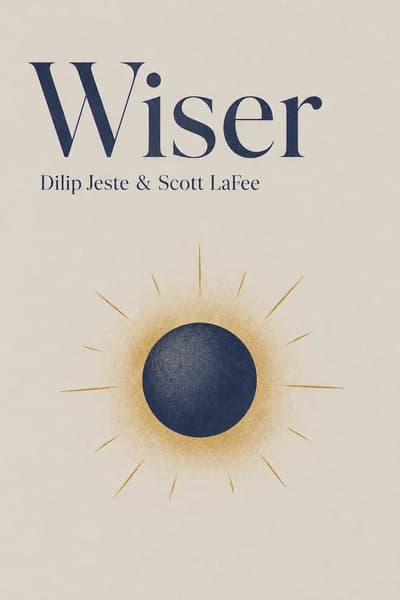
Have you ever wondered why some people make consistently better decisions than others, even when faced with life's most complex challenges? What if wisdom-that elusive quality we associate with white-bearded sages and fictional wizards-could actually be scientifically measured, understood, and even cultivated? This is the revolutionary premise behind "Wiser" by Dr. Dilip Jeste, a book that has become required reading in psychology departments at universities like Harvard and Stanford. As a renowned neuropsychiatrist who pivoted from studying schizophrenia to investigating wisdom, Jeste brings unique credentials to this exploration. The book has garnered praise from luminaries across disciplines, with Deepak Chopra calling it "a masterpiece that brings together science and humanity." Perhaps most remarkably, it arrives at a moment when our world desperately needs more wisdom-when intelligence alone has proven insufficient to solve our greatest challenges.
第 2 章
Defining Wisdom: From Ancient Philosophy to Modern Neuroscience
What exactly is wisdom? This question has occupied philosophers and religious leaders for millennia, from Socrates and King Solomon to Buddha and Confucius. Yet despite this long history, wisdom has remained somewhat ethereal-we recognize it when we see it, but struggle to define it precisely.
Wisdom is not merely intelligence. While we might admire smart people, they often appear stressed and self-centered. The truly wise demonstrate something more profound-they are intelligent but also warmhearted, compassionate, open-minded, reflective, and problem-focused. They maintain calm amid chaos.
The scientific movement to define wisdom began earnestly in the 1970s with researchers like Paul Baltes in Germany and Vivian Clayton at UC Berkeley. Clayton established wisdom's three foundational components: cognition, reflection, and compassion. Baltes and his colleagues at the Berlin Wisdom Project defined wisdom as "expert knowledge in the fundamental pragmatics of life," emphasizing factual and procedural knowledge about life matters.
Jeste's own journey toward studying wisdom began unexpectedly while researching schizophrenia in older adults. Contrary to expectations that patients would deteriorate with age, many actually functioned better later in life. They became more medication-compliant, had fewer psychotic relapses, and required less hospitalization than younger patients. This phenomenon mirrored mathematician John Nash's experience, whose schizophrenia symptoms improved as he aged, allowing him to eventually cease treatment and return to academic work.
Through extensive literature reviews and expert consensus using the Delphi method, Jeste and colleagues identified several core components of wisdom: prosocial attitudes and behaviors (empathy, compassion, altruism); emotional stability with happiness; balancing decisiveness with acceptance of uncertainty; reflection and self-understanding; and social decision-making with pragmatic knowledge of life. Later research added spirituality, openness to new experiences, and sense of humor as additional components.
Remarkably, when comparing these scientifically derived components with ancient texts like the Bhagavad Gita, striking similarities emerged across millennia and cultures, suggesting wisdom has biological foundations. While cultural differences exist-like the Gita's emphasis on love of God-the core components remained consistent through time.
第 3 章
The Neurobiology of Wisdom: Mapping the Wise Brain
If wisdom exists as a definable trait, where does it physically reside in our brains? Initial searches for "wisdom" and "neurobiology" in scientific literature yielded little, but expanding to include wisdom components revealed patterns. Repeatedly, the same brain regions appeared-particularly the prefrontal cortex (PFC) and amygdala-suggesting these areas house wisdom's neural foundations.
The prefrontal cortex, evolutionarily newest and uniquely developed in humans, plays a crucial role in several wisdom components. Prosocial attitudes like empathy and altruism reside in the PFC where mirror neurons enable us to feel others' emotions. Social decision-making occupies the PFC and nearby regions. Emotional regulation lives in the PFC and dorsal anterior cingulate cortex, maintaining the psychological homeostasis essential for wisdom. Reflection and self-understanding function in the medial prefrontal cortex, enabling the self-knowledge that ancient Greeks called "gnothi seauton."
The famous case of Phineas Gage illustrates how brain damage affects wisdom-related behaviors. In 1848, railroad foreman Gage suffered a horrific accident when an explosion drove a tamping iron through his skull, destroying his left frontal lobe. Though he survived, his personality transformed dramatically. Once described as virtuous and industrious, he became profane, impatient, and disrespectful after the accident. His physician noted, "Gage was no longer Gage."
Similar cases continue to emerge, like "Patient CD," a soldier whose jeep accident damaged his ventromedial prefrontal cortex. Despite maintaining high cognitive abilities (verbal IQ of 119), he couldn't hold employment, went through four marriages, and became estranged from his children.
Frontotemporal dementia (FTD) similarly illuminates wisdom's neurobiological foundations by selectively damaging the prefrontal cortex. Patients with behavioral variants of FTD initially become less like themselves and gradually lose inhibition and social restraint, displaying behaviors that represent the antithesis of wisdom.
Damage to the amygdala produces different but equally revealing effects. A Kentucky woman known as "Patient SM" with a rare condition that destroyed her amygdalae became known as "the woman with no fear." Though outgoing and friendly, she couldn't recognize danger signals or threatening social cues, leading to numerous traumatic encounters.
第 4 章
The Paradox of Aging: Why Wisdom Often Increases While Bodies Decline
As a geriatric neuropsychiatrist, Jeste has witnessed the physical and cognitive challenges of aging-from chronic diseases to memory problems and cognitive slowing. Normal aging brings a sense of diminishing control over body and mind. From an evolutionary perspective, prolonged human longevity seems paradoxical-we regularly outlive our reproductive period by decades, unlike most animals.
While physical capacity peaks between ages 20-30 and declines thereafter, human lifespan continues increasing (from 47 years in 1900 to around 80 today). Meanwhile, the age of menopause remains unchanged, creating an expanding post-reproductive life period.
The explanation must be that certain qualities improve with age to compensate for physical decline. Erik and Joan Erikson were among the first to formally link wisdom with aging, describing life's final stage as a struggle between ego integrity and despair-with wisdom as the remedy. As Joan noted: "Lots of old people don't get wise, but you don't get wise unless you age."
The "grandmother hypothesis" helps explain humans' unusually long post-reproductive lifespans. This evolutionary theory suggests that as females age, the energy needed for reproduction is better spent ensuring earlier offspring succeed. In species like killer whales (one of few species where females experience menopause), the death of a post-reproductive female increases offspring mortality dramatically.
Studies of Tanzanian hunter-gatherers found grandmother-helpers ensured younger generations lived longer. Even in modern societies, grandparental involvement reduces emotional problems among grandchildren, especially in single-parent households.
The societal value of older adults may extend to our genetic makeup. Research has discovered that humans have evolved specific gene variants that protect older adults from neurodegenerative and cardiovascular diseases. The evolution of these protective gene variants suggests the importance of intergenerational care and information transfer for group survival.
While aging brains show some decline, they also demonstrate remarkable strengths. Older adults show better emotional regulation, with brain imaging revealing that the amygdala in older brains activates equally to positive and negative input, while younger brains give negative input an extra boost. Aging brains also compensate through neuroplasticity-different regions take up duties once performed elsewhere, with some circuits growing stronger even as others weaken.
第 5 章
Measuring Wisdom: From Philosophy to Scientific Assessment
How do we measure something as complex and subjective as wisdom? While physical measurements are straightforward, psychological phenomena require more nuanced approaches.
Intelligence quotient (IQ) tests represent the most studied objective measure of cognitive ability, but face significant criticisms: they unfairly stratify test-takers by race, gender, class, and culture; their norms primarily reflect Western, urban populations; results depend heavily on test-taking experience; and they measure only general intelligence while ignoring interpersonal skills, creativity, and practical knowledge.
As Harvard's David Perkins aptly noted, "A high IQ is like height in a basketball player... very important, all other things being equal. But all other things aren't equal." IQ tests measure only one kind of intelligence and fail to assess crucial wisdom components like emotional regulation, compassion, and self-reflection.
The Berlin Wisdom Paradigm, pioneered by Paul Baltes and Ursula Staudinger, represented one of the first systematic attempts to assess wisdom scientifically. Their model defined wisdom as high-level intellectual expertise, but treated wisdom primarily as exceptional cognition, neglecting the crucial role of emotions.
Building on earlier work, researchers developed more comprehensive tools. Monika Ardelt's Three-Dimensional Wisdom Scale (3D-WS) measures wisdom through cognitive (intelligence), reflective (introspection), and affective (empathy and compassion) dimensions. Jeffrey Webster's Self-Assessed Wisdom Scale (SAWS) evaluates critical life experiences, reminiscence, openness, emotional regulation, and humor.
Jeste and colleague Michael Thomas developed the San Diego Wisdom Scale (SD-WISE), which measures six components linked to distinct brain regions: emotional regulation, prosocial behaviors, self-reflection, acceptance of uncertainty, decisiveness, and social decision-making. This 24-item assessment provides not only a total wisdom score but also component scores compared against age and sex-matched peers, helping individuals identify specific areas for personal growth.
第 6 章
Compassion: The Heart of Wisdom
Compassion-translating empathy into helpful action-stands as wisdom's most essential component. Humans are fundamentally social creatures whose brains are "wired" for prosocial behavior through specific neurocognitive mechanisms.
Mirror neurons, discovered in the 1980s, provide the neurological basis for empathy. Located in the prefrontal cortex, these specialized brain cells activate both when performing an action and when observing others perform it, allowing us to instinctively understand others' feelings and intentions-whether flinching at someone's injury or crying during an emotional film.
Compassion extends beyond the mutual benefits of social cooperation seen throughout the animal kingdom. "Extraordinary altruism"-like donating a kidney to a complete stranger-represents the pinnacle of selfless giving. Research shows these rare donors share an "engine model of well-being"-their own good fortune drives their generosity toward others.
Self-compassion-treating yourself with care regarding personal inadequacies and failures-proves critical to wellbeing and resilience, which enables compassion toward others. Unlike narcissism, which involves an exaggerated sense of self-importance and lacks empathy, self-compassion acknowledges shared human imperfection.
Compassion has genetic underpinnings, with studies of identical twins suggesting 30-60% of altruistic tendencies are genetically determined. Gender differences exist-women consistently score higher on compassion measures while showing no differences in other wisdom domains. Research reveals that variations in the oxytocin receptor gene correlate with empathic behavior, with certain genetic variants making people more receptive to this "bonding hormone."
Compassion can be deliberately cultivated, fundamentally changing our brains. Research shows "compassion training" activates brain regions associated with positive affect and affiliation. Lovingkindness meditation, even when taught online, increases relaxation and achievement. Simple compassion exercises include imagining kind wishes for others or keeping a gratitude journal-practices that measurably calm and uplift mood.
Reading fiction particularly builds empathy by engaging neural networks used for social interaction. Studies show children read to regularly develop stronger theory of mind, and adults who read fiction better understand others' perspectives.
第 7 章
Emotional Regulation: Finding Balance in a Chaotic World
Emotional regulation represents the crucial middle ground between uncontrolled emotional expression and complete suppression. Emotions are fundamental physical responses to stimuli, while feelings are mental interpretations of those emotions. Moods persist longer but are less intense than emotions.
Homeostasis represents the balance between emotion and reason that wisdom requires. Just as our bodies maintain physical equilibrium, our minds need balance between the evolutionarily older limbic system (emotions) and the newer prefrontal cortex (reasoning).
Happiness appears to follow a U-shaped curve across the lifespan, with relative contentment in youth followed by declining satisfaction that reaches its lowest point around the early fifties during the "midlife crisis." However, Jeste's research suggests this classical curve may be changing to a steady increase in well-being from the 20s through 80s.
Wisdom correlates with lower perceived stress and greater optimism and resilience. While moderate stress can be beneficial, chronic stress suppresses the immune system and contributes to numerous health problems. Optimism has biological foundations: neuroimaging shows that optimistic adults have larger orbitofrontal cortices, which regulate anxiety susceptibility.
Self-restraint, a cornerstone of wisdom, was famously studied in Walter Mischel's "marshmallow test." Children who successfully delayed gratification showed remarkable life advantages in follow-up studies spanning 40 years-higher SAT scores, lower substance abuse rates, better stress responses, and superior social skills.
Dopamine, norepinephrine, and serotonin are key neurotransmitters that regulate mood. Our emotional tendencies have strong genetic foundations, similar to our physical characteristics. Specific genes influence how we process emotions-for example, variants of the ADRA2B gene affect norepinephrine and change how people perceive emotional stimuli.
Habitual impulsiveness carries significant health risks, from seemingly innocent behaviors like spontaneous purchases to dangerous decisions. Studies link impulsivity to higher rates of smoking, drinking, and drug abuse. The teenage brain exemplifies this developmental imbalance: the reward-seeking limbic system becomes supercharged around puberty, while the prefrontal cortex that provides rational control doesn't fully mature until the early to mid-20s-creating "a race car with dubious brakes."
第 8 章
Balancing Decisiveness with Uncertainty: The Wisdom of Not Knowing
Wisdom requires balancing decisive action with flexibility to change course when needed. Aristotle distinguished between theoretical wisdom (sophia)-understanding reality's deep nature-and practical wisdom (phronesis)-making good everyday decisions for the right reasons at the right time.
Our brains make thousands of unconscious decisions every second, but we also make approximately 35,000 conscious choices daily, each requiring varying degrees of wisdom. Some dilemmas carry minimal consequences, while others present profound choices that could change lives or even the world.
Brain imaging reveals that decision-making engages different neural regions depending on the process stage-forming preferences activates limbic and prefrontal cortex regions, executing actions involves the striatum, and evaluating outcomes returns to limbic-PFC circuits. The eternal tension between immediate rewards (limbic system) and delayed gratification (PFC) represents a fundamental aspect of wisdom.
Mark Twain observed that good decisions come from experience, which comes from making bad decisions. But a Taoist perspective suggests the very concept of "good" versus "bad" outcomes is fluid and interconnected. In the parable of a farmer whose horse runs away (bad), then returns with more horses (good), leading to his son's broken leg (bad), which prevents military conscription (good), we see how outcomes continuously transform.
Our brains function as "anticipation machines" designed to contemplate the future-a uniquely human trait that helps us build civilizations. While this prospection gives us power, true wisdom comes not from predicting the future perfectly, but from accepting uncertainty and making sound decisions anyway. Intolerance of uncertainty can lead to psychological distress, with some people preferring definite negative outcomes over uncertain possibilities.
Decisional capacity-the ability to make good decisions even under uncertainty-varies among individuals and situations. In clinical settings, this capacity requires understanding relevant information, appreciating how it applies to one's situation, reasoning through the decision rationally, and clearly expressing one's choice.
Critical thinking-using cognitive skills to think rationally toward goals-correlates with wellness and longevity. Research with schizophrenia patients revealed that those with better decisional capacity showed greater activation in brain regions crucial for encoding information, particularly the hippocampus.
第 9 章
Self-Reflection, Curiosity, and Humor: The Lighter Side of Wisdom
Self-reflection requires brutal honesty with oneself. Unlike self-awareness (which some animals possess), self-reflection appears uniquely human-the capacity to examine our own mental and emotional processes. As Plato wrote, "The unexamined life is not worth living." Self-reflection gives the brain time to pause, sort through experiences, consider multiple interpretations, and create meaning that shapes future thoughts and actions.
Self-reflection occurs primarily in the medial prefrontal cortex (mPFC), which remains active even when the brain shifts into default mode. The mPFC collaborates with other structures like the cingulate cortex during autobiographical memories and self-judgment tasks.
Despite having the capacity for self-reflection, many people avoid it. University of Virginia experiments found participants considered being alone with their thoughts for just 6-15 minutes unpleasant-some even preferred administering electric shocks to themselves rather than sitting quietly thinking.
Attempting to suppress negative thoughts often backfires, giving them more power-what psychologists call "the white bear problem" after Dostoevsky's observation about trying not to think of polar bears. Self-affirmation offers a positive alternative, activating the brain's reward centers while mitigating negative emotions.
Curiosity drives human development at all scales, from individuals to entire societies. A Caltech study identified the neural pathways of curiosity by presenting participants with trivia questions while in an fMRI machine. When participants reported high curiosity, their left caudate and prefrontal cortex activated-regions linked to rewarding stimuli.
Curiosity significantly benefits learning-curious people better remember both information they're interested in and unrelated information. Neuroimaging shows curiosity stimulates the hippocampus, boosting memory formation and connecting with the brain's reward circuit. This creates a self-perpetuating cycle: curiosity produces dopamine, making discovery feel good, which motivates seeking more information.
Mark Twain observed that genuine humor contains wisdom-it's both part and parcel of wisdom, informing and reflecting it. Humor works through cognitive processes that detect what's funny and affective processes that allow enjoyment. When we hear jokes, our frontal lobe processes information, supplementary motor areas direct laughter, and the nucleus accumbens triggers reward circuits.
Humor provides health benefits: stronger immune systems, higher pain tolerance, lower blood pressure, and reduced anxiety. For older adults, humor improves the aging process by enhancing health perception, social communication, and life satisfaction.
第 10 章
Spirituality: Looking Beyond Ourselves
Religion can be defined as an organized system of beliefs, practices, rituals, and symbols designed to facilitate closeness to the sacred or transcendent. Spirituality encompasses religion but expands to include understanding answers to ultimate questions about life, meaning, and relationships with the sacred.
Religious practice provides measurable benefits: regular socialization, explanations for life's dilemmas, emotional support, and boosts to optimism and resilience. Religion fundamentally gives meaning to life by advocating for a protective creator, helping make sense of crises, and universalizing problems through shared experience.
Religious attendance is strongly predictive of better health outcomes, including greater longevity, lower depression rates, lower suicide rates, and longer cancer survival. The communal aspect appears most beneficial, creating discipline, opportunities for self-reflection, and healthy social environments where people can flourish.
Religious traditions across Buddhism, Christianity, Hinduism, and Judaism recognize spirituality as a characteristic of wise people. Sixteen characteristics are important to both wisdom and spirituality, including altruism, forgiveness, ego integrity, peace with death, humility, gratitude, self-compassion, mindfulness, reverence for nature, ethical conduct, and sense of purpose.
However, wisdom and spirituality aren't synonymous-wisdom uniquely involves rich life knowledge, realism, value relativism, learning from experience, and acceptance of uncertainty, while spirituality distinctly encompasses connection with a higher power, wider universe, and nonattachment to material things.
Numerous studies show correlation between using religion as a positive coping tool and better health outcomes. Spirituality can predict improved physical and mental health, while low spiritual well-being correlates with depression, hopelessness, suicidal thoughts, and higher mortality.
Several scientists suggest religious and spiritual beliefs have a neurobiological basis. Neurotheology research reveals that religious people's brains show increased activity in frontal lobes when praying, and brain scans indicate that for believers, God activates the same brain regions as talking to neighbors. Many brain regions involved in wisdom, particularly the prefrontal cortex, also participate in spirituality experiences.
第 11 章
Becoming Wiser Faster: Practical Wisdom Development
Wisdom is malleable-personality traits are only 35-55% inherited, with the remainder shaped by external forces and personal behavior. Research has identified 57 rigorous studies focused on enhancing prosocial behaviors, emotional regulation, and spirituality, with 47% reporting significant improvement.
Clinical trials with adults over 60 in retirement communities demonstrated that a one-month group intervention incorporating savoring, gratitude, and value-based activities significantly improved wisdom, resilience, and reduced stress-even with participants who started with relatively high baseline wisdom scores.
The ancient Greeks distinguished between theoretical wisdom (sophia) and practical wisdom (phronesis). While sophia concerns "scientific knowledge combined with intuitive reason," most people care about phronesis-wisdom applied to daily life. Practical wisdom isn't about rare moments of profound insight but about making wise decisions habitually.
Decision-making capacity is finite-like a muscle that tires. "Decision fatigue" occurs when we make too many choices, leading our brains to seek shortcuts and potentially revert to poor decision patterns. To make wiser decisions, be mindful of your physical and mental state, recognize your peak cognitive hours, and know when to pause before making important choices.
Honest self-reflection forms the foundation of wisdom. Without clear understanding of your strengths and weaknesses in wisdom components, you have no basis for improvement. Self-reflection helps counter our inherent biases-from jumping to conclusions to overconfidence.
Research shows compassion can be cultivated. A Stanford University study found that a nine-week compassion training program significantly improved participants' compassion for others, reception of compassion, and self-compassion. Lovingkindness meditation (LKM) effectively boosts compassion by focusing on positive thoughts and mantras like "May you live with ease."
Mindfulness-achieving moment-by-moment awareness without judgment-teaches that "the past is already gone, the future is not yet here. There's only one moment for you to live." Jon Kabat-Zinn's mindfulness-based stress reduction (MBSR) program combines meditation, body scanning, and simple yoga to achieve greater mental clarity, and is associated with reduced depression and anxiety and improved immune function.
Acts of kindness promote happiness, with volunteering being one of the most meaningful prosocial activities strongly associated with life satisfaction. People who donate time feel more socially connected, experience greater happiness, and live longer.
Gratitude forms the foundation of wisdom-we cannot be wiser without recognizing the blessings we already possess. Effective methods to cultivate gratitude include keeping a nightly journal of specific positive experiences, writing thank-you letters, composing your own obituary to identify aspirational traits, and savoring everyday experiences.