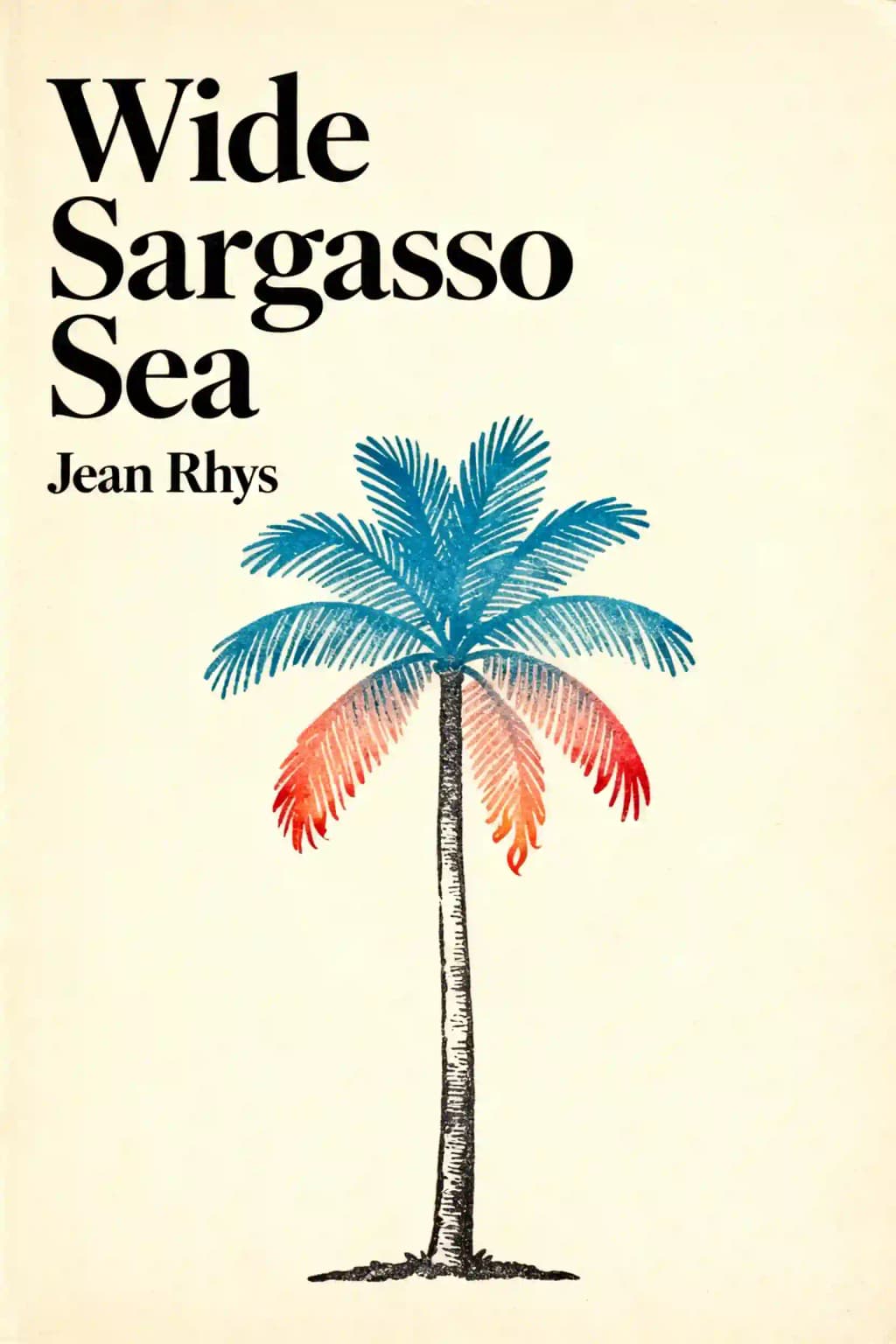
Wide Sargasso Sea
《Wide Sargasso Sea》概述
Before Jane Eyre's madwoman existed, Jean Rhys's postcolonial masterpiece revealed her haunting origin story. Written over 21 years and published when Rhys was 74, this Time-listed novel transformed literature with its powerful exploration of race, gender, and colonial legacy - arriving "too late" for its creator.

《Wide Sargasso Sea》核心主题
- postcolonial identity
- creole marginalization
- female madness
- colonial power dynamics
- intersectional displacement
《Wide Sargasso Sea》经典语录
"They say when trouble comes close ranks, and so the white people did. But we were not in their ranks,"
"I have not bought her, she has bought me, or so she thinks,"
the convent's lessons about female destiny were perhaps more prophetic than anyone could have anticipated.
the violent collapse of the colonial world order.
Rhys was haunted by the one-dimensional portrayal of Bertha Mason, the "madwoman in the attic."
《Wide Sargasso Sea》主要人物
- Antoinette CoswayThe protagonist, a complex Creole woman
- AnnetteAntoinette's beautiful French Creole mother
- Mr. MasonA wealthy Englishman who marries Annette
- PierreAntoinette's disabled younger brother
- Sister Marie AugustineA nun who provides comfort to Antoinette
关于作者
《Wide Sargasso Sea》作者介绍
Jean Rhys (born Ella Gwendolen Rees Williams, 1890–1979) was a Caribbean-born modernist novelist and the acclaimed author of Wide Sargasso Sea, a pioneering feminist prequel to Charlotte Brontë's Jane Eyre. Born in Dominica to a Welsh doctor and white Creole mother, Rhys drew on her colonial upbringing and experiences of cultural displacement to craft powerful narratives exploring marginalized women, isolation, and postcolonial identity.
After moving to England at sixteen, Rhys became part of the European bohemian literary scene, publishing Quartet (1928), Voyage in the Dark (1934), and Good Morning, Midnight (1939).
Her work largely disappeared from public view until the 1960s, when Wide Sargasso Sea (1966) achieved critical acclaim, winning both the W.H. Smith Literary Award and Heinemann Award in 1967. Known for her spare, economical prose and unflinching exploration of women's lives in patriarchal societies, Rhys was appointed Commander of the British Empire in 1978 for her literary contributions.
下载《Wide Sargasso Sea》摘要
免费获取《Wide Sargasso Sea》摘要的 PDF 或 EPUB 版本。可打印或随时离线阅读。
关于本书的常见问题
Wide Sargasso Sea by Jean Rhys is a 1966 postcolonial prequel to Charlotte Brontë's Jane Eyre that tells the untold story of Bertha Mason, the "madwoman in the attic." Set in 1830s-1840s Jamaica, the novel follows Antoinette Cosway, a white Creole heiress, through her troubled childhood and devastating marriage to an Englishman who renames her Bertha, declares her mad, and confines her in his English mansion.
Readers interested in postcolonial and feminist literature should explore Wide Sargasso Sea by Jean Rhys. It appeals to Jane Eyre fans seeking a reimagined perspective, students studying Caribbean history and identity, and anyone drawn to narratives about colonialism's psychological impact. The novel rewards readers who appreciate complex explorations of race, displacement, power dynamics in marriage, and the silenced voices of marginalized women in classic literature.
Jean Rhys (1890-1979) was a Dominican-British novelist born Ella Gwendoline Rees Williams in Dominica to a Welsh father and Creole mother. She moved to England at age 16 and lived in obscurity after publishing Good Morning, Midnight in 1939. Wide Sargasso Sea, published in 1966 after decades of silence, revived her literary career, won the WH Smith Literary Award in 1967, and became her most acclaimed work.
Wide Sargasso Sea by Jean Rhys is widely considered essential reading in postcolonial and feminist literature. Time magazine named it one of the "100 best English-language novels since 1923," and it was included in the 2022 "Big Jubilee Read" celebrating Commonwealth authors. The novel's powerful exploration of identity, race, colonialism's legacy, and its radical reimagining of a classic Victorian character make it a compelling and culturally significant work that continues to resonate.
Wide Sargasso Sea serves as a prequel to Charlotte Brontë's 1847 novel Jane Eyre, reimagining the backstory of Bertha Mason, Mr. Rochester's first wife confined in Thornfield Hall's attic. Jean Rhys gives voice to the silenced "madwoman" by revealing Antoinette Cosway's tragic journey from Jamaica to England. The novel challenges Jane Eyre's colonial perspective by centering the Creole woman's experience, exploring how Rochester's betrayal and cultural displacement led to her descent into madness.
Wide Sargasso Sea by Jean Rhys explores postcolonial identity, feminism, racial tensions, and the psychological impact of displacement. The novel examines power dynamics in marriage, particularly between colonizer and colonized, as Antoinette loses her identity and agency to her English husband. Key themes include:
- The legacy of slavery in post-emancipation Jamaica
- Cultural assimilation
- The destruction caused by patriarchal control
- The struggle of Creole identity—belonging fully neither to Europe nor the Caribbean
Antoinette Cosway is the protagonist of Wide Sargasso Sea—a white Creole heiress living in Jamaica who becomes Charlotte Brontë's Bertha Mason, the "madwoman in the attic." Born into a former slave-owning family, she faces rejection from both the Black Jamaican community and white colonial society due to her family's poverty and ambiguous social status. Her marriage to an Englishman, arranged by her stepfather Mr. Mason, leads to her eventual renaming as Bertha, loss of identity, and confinement in England.
Wide Sargasso Sea is set in Jamaica during the 1830s-1840s, immediately following the Emancipation Act of 1833, which abolished slavery throughout British colonies. This post-emancipation period created intense social and racial tensions as former slave owners lost power and wealth while newly freed populations sought justice. Jean Rhys situates Antoinette's story within this volatile historical moment to explore how colonial legacies, racial violence, and economic upheaval shaped individual lives and identities in the Caribbean.
In Wide Sargasso Sea, the unnamed Englishman (Mr. Rochester) renames Antoinette "Bertha" as an act of control and erasure of her Caribbean identity. The renaming symbolizes his rejection of her cultural heritage and his assertion of patriarchal and colonial power over her. By stripping away her name, he denies her selfhood and agency, contributing to her psychological unraveling. This deliberate destruction of identity reflects broader colonial practices of domination and the violence of assimilation.
The Sargasso Sea, a region of the Atlantic Ocean known for its stillness and entangling seaweed, symbolizes entrapment, stagnation, and the liminal space between cultures in Jean Rhys's novel. Like Antoinette caught between Jamaica and England, the Sargasso Sea exists between continents—neither fully Caribbean nor European. The "wide" expanse suggests the vast emotional and cultural distance that separates Antoinette from belonging, foreshadowing her isolation and the suffocating entanglement of her doomed marriage and lost identity.
Wide Sargasso Sea is a seminal work of postcolonial literature because Jean Rhys deliberately rewrites a canonical British novel from the colonized subject's perspective. The novel challenges Jane Eyre's imperialist narrative by centering a Creole Caribbean woman's experience and exposing the violence of colonial domination. Rhys critiques how European colonizers exploited Caribbean people and resources, examining the psychological trauma of displacement, the racial hierarchies of colonial society, and the silenced voices erased by British literature.
Christophine is Antoinette's Martinican servant and obeah (voodoo) practitioner who represents resistance to colonial power and a connection to Caribbean culture and spirituality. She serves as Antoinette's protector and the novel's moral voice, warning against the Englishman's exploitation. Christophine's practice of obeah symbolizes indigenous knowledge systems that colonial society fears and suppresses. Her eventual powerlessness to save Antoinette highlights the limitations of resistance within oppressive colonial structures, yet her presence affirms the strength and agency of Black Caribbean women.