第 1 章
The Lost Art of Human Connection
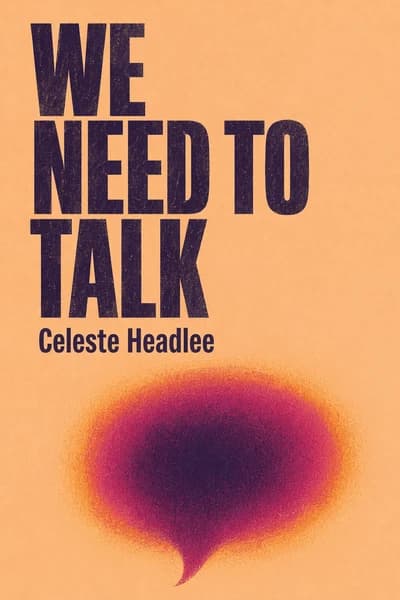
Have you ever noticed how a seemingly casual conversation changed the entire trajectory of your life? For Celeste Headlee, it happened when she accompanied her mother to a radio interview and left with a weekend job as a classical music announcer-launching her broadcasting career. This serendipitous moment illustrates the profound power of conversation, the central theme of "We Need to Talk." The book has resonated with millions since its 2017 publication, with Headlee's accompanying TEDx Talk garnering over 20 million views. As digital communication dominates our lives, this work stands as a cultural touchstone for those seeking to reclaim authentic human connection. Celebrities like Brene Brown and Adam Grant have praised its practical wisdom, while companies including Google and Microsoft have incorporated its principles into communication training. In a world where we're constantly connected yet increasingly isolated, Headlee's insights offer a roadmap back to what makes us fundamentally human-our ability to truly talk with one another.
第 2 章
The Evolutionary Advantage of Human Speech
Conversation isn't just a social nicety-it's the evolutionary advantage that propelled our species to dominance. Despite our physical weakness (we rank just 2.21 on the food chain, alongside anchovies), humans conquered the planet through our unique ability to communicate with nuance and specificity. Unlike other animals, we can lie, describe pain precisely, conduct complex trades, and establish trust through language.
Our bodies physically evolved to prioritize speech-our mouths shrank, necks shortened, and lips became more flexible. We even accepted a deadly trade-off: our larynx moved farther down our throats, creating the pharynx that enables clearer speech but increases our risk of choking. Think about that-humans literally risk death to communicate more effectively. That's how crucial language is to our survival.
Scientists debate whether language evolved primarily for economic reasons, mating purposes, or other survival needs, but the outcome is clear. As evolutionary biologist Mark Pagel notes, human speech allows us to "look into the future, share thoughts, benefit from past wisdom, make plans, and reach agreements"-capabilities that transformed our species' prospects.
Some linguists, like Shigeru Miyagawa, theorize that human language developed by combining animal gestures with birdsong patterns, suggesting we sang before we spoke. This rich evolutionary history makes our current communication crisis all the more concerning.
The decline in conversational ability isn't just socially problematic-it's economically devastating. Poor communication costs businesses approximately $37 billion annually, while companies with excellent communicators as leaders see 50% higher returns on investment. At Best Buy, each percentage point increase in employee engagement through better communication generated $100,000 in additional annual operating income per store.
Hospitals lose $12 billion yearly to communication inefficiencies, while electronics companies lose another $12 billion in returns simply because customers don't understand how to use their products. These staggering numbers reveal the hidden cost of our deteriorating conversation skills.
As we've abandoned conversation for emails and texts in our workplaces, we've created distance where connection should exist. Research consistently shows that face-to-face or phone communication remains more effective for complex exchanges. Our avoidance of real conversation has contributed to unprecedented polarization-we're more divided than at any time since the Civil War, talking at rather than with each other.
第 3 章
The Digital Disconnect
Our reliance on technology has fundamentally altered how we connect with others, and not for the better. Consider the explosion of text messaging-from 14 billion monthly texts in 2000 to a staggering 561 billion by 2014. Email is projected to reach 246 billion messages annually by 2020. Digital communication now dominates worldwide, with 75% of cell phone owners globally using their devices primarily for texting.
This shift comes with a disturbing cost: empathy among college students has declined 40% over thirty years, with most of that drop occurring after 2000. Empathy-our ability to sense others' feelings and imagine their experiences-is essential for human connection. Even six-month-old babies demonstrate empathic behavior, suggesting it's a fundamental human trait now being eroded by our screen-dominated lives.
The problem isn't just the quantity of digital communication, but how screens block genuine human connection. When dealing with my son's school issues, weeks of email exchanges with his teacher produced no progress. Only when we met in person-when I could touch her hand and she could see my face-did we truly connect. She transformed from an obstacle into my son's strongest advocate once we had a real conversation that allowed us to see each other as human beings rather than roles.
Even more troubling is how the mere presence of technology damages our conversations. Research shows that simply having a cell phone sitting on a table during a conversation between strangers reduces trust, connection quality, and perceived empathy. Our shrinking attention spans-now averaging just eight seconds-further undermine meaningful exchange.
Despite communicating constantly through screens, many of us rarely engage in substantive face-to-face conversations. We're missing the emotional resonance that makes human connection powerful-the micro-expressions, tone variations, and subtle body language that convey meaning beyond words. When we replace these rich interactions with texts and emails, we lose the very essence of what makes conversation meaningful.
What's the solution? It's not abandoning technology entirely, but rather being intentional about creating space for real conversation. Put the phone away during meals. Schedule coffee with a friend instead of catching up via text. Make eye contact with the barista instead of checking your phone while ordering. These small shifts can begin to rebuild our conversational muscles and restore our capacity for empathy.
第 4 章
The Myth of Conversational Competence
Most of us believe we're skilled communicators while blaming conversation failures on others. I learned this painful lesson when attempting a difficult workplace conversation with my boss. Despite careful preparation-researching conflict resolution techniques and rehearsing potential responses-I failed spectacularly when my boss took the conversation in an unexpected direction, focusing on my mental state rather than addressing my concerns.
As a professional radio journalist with twelve years of experience, I should have excelled at conversation. Instead, I discovered that good conversation doesn't happen naturally, regardless of intelligence or verbal fluency. Research consistently shows we overestimate our communication abilities, and ironically, intelligent people often make worse conversationalists.
Smart, educated people tend to overvalue logic and undervalue emotion in conversation. We respond to friends' emotional pain with facts ("almost half of marriages end in divorce") rather than empathy. But humans are inherently emotional creatures, and approaching emotional situations with pure logic is doomed to fail. Even when we believe we're being logical, we're often relying on what psychologist Daniel Kahneman calls "System 1 thinking"-quick, intuitive judgments based on assumptions and shortcuts that frequently lead us astray.
Kahneman's research indicates that smart people wrongly assume they're free from bias. This belief actually makes them more vulnerable to errors in conversation, where logic is sometimes inadequate and assumptions frequently incorrect. Intelligent people also resist asking for help, especially from those they consider less intelligent or educated. They're reluctant to admit when they don't understand something, viewing it as weakness rather than an opportunity for growth.
To improve, I had to acknowledge I was part of the problem. I recorded conversations in my radio studio, analyzed my mistakes, and sought honest feedback from friends and colleagues about my conversational flaws. As my skills improved, I noticed that shy people spoke up more in my presence and ramblers became more focused. While we can't control what others say, we can control ourselves-and sometimes that's enough to transform the entire dynamic.
Most conversation advice-maintain eye contact, come prepared with topics, repeat what you've heard-proves ineffective in practice. My radio studio functions as a conversational laboratory where I've tested these techniques with diverse guests. Conscious nodding and forced eye contact come across as inauthentic and often make people uncomfortable. Only after questioning my assumptions and starting with a blank slate did I begin to improve.
第 5 章
The Power of Clear Expectations
When conversations go wrong, it's often because expectations aren't aligned. I learned this through painful experiences as a radio host-like when an African American guest stormed out of my environmental panel discussion feeling disrespected, or when a professor became furious after his interview ended much sooner than he anticipated.
People become upset when their expectations aren't aligned with reality. The solution isn't trying to accommodate everyone's unknown expectations, but rather setting clear expectations from the start. I discovered this when a nervous first-time interviewee asked me to explain exactly how our conversation would unfold. Once I outlined the process, she relaxed and we had an excellent interview.
Like a good doctor who explains procedures before performing them, I now prepare my guests by describing the interview structure, time constraints, and signals I might use. This simple practice transforms nervous guests into relaxed conversationalists who feel in control of the situation.
This approach works equally well outside the studio. When disciplining an employee, I state the purpose immediately: "I've called you in for an official reprimand, but you're not being fired." With my son, I avoid passive-aggressive questions ("Why is your room still messy?") and directly state my concerns ("I'm frustrated that your room isn't clean yet").
Setting expectations forces you to clarify your own conversational objectives. Do you want advice or just a sympathetic ear? Are you expressing frustration or seeking solutions? Taking a moment to consider your goals and sharing them with your conversation partner creates the foundation for productive exchange-like shopping with a list instead of browsing aimlessly.
Articulating expectations is just one way to set the stage. Also consider how you're feeling before initiating important discussions. While intentional body language techniques are unhelpful, our authentic gestures and tone reveal our true feelings. If you're anxious, distracted or angry, it will show in your voice and expression regardless of the words you choose.
We all bring expectations to every conversation, but we can create an environment for authentic communication by sharing those expectations and being aware of our own thoughts and feelings before speaking. What happens before the conversation is just as important as what happens during it.
第 6 章
Navigating Difficult Conversations
I've often heard people claim there are some folks "you just can't talk to"-whether it's someone who won't acknowledge institutional racism or supports a particular political candidate. But if an African American woman like Xernona Clayton could talk respectfully with KKK grand dragon Calvin Craig in 1960s Atlanta-eventually leading him to renounce the Klan-surely we can talk to people whose opinions differ from ours.
Good conversations aren't necessarily easy ones. Some topics are emotionally charged and risky, but there's no human being with whom you have "nothing in common" and no topic too volatile to discuss respectfully. Through my experience, I've identified five key strategies for difficult conversations: be curious, check your bias, show respect, stay the course, and end well.
Being curious means genuinely wanting to learn from someone else. Xernona didn't try to educate Craig or convince him he was wrong-she was curious about what shaped his beliefs. As former CIA officer Amaryllis Fox noted about talking with extremists, "Everybody believes they are the good guy... The only real way to disarm your enemy is to listen to them."
Checking your bias requires resisting the impulse to constantly decide whether you agree with everything someone says. We quickly categorize people based on certain words or cues, but these groupings are rarely accurate. This "halo and horns effect" leads us to judge someone entirely based on a single aspect we approve or disapprove of. The truth is, we are all biased-it's a survival skill rooted in our need to make sense of a complicated world.
Showing respect means viewing others as human beings deserving of empathy despite disagreements. Try to identify what positive outcome they're trying to achieve, even when you strongly disagree with their methods or beliefs. Practice empathy by watching someone you disagree with and focusing on their positive intentions.
Staying the course means not changing the subject when uncomfortable topics arise. Don't make jokes or go off on tangents. Accept that you may not reach agreement and that's okay. Sometimes just learning what someone else thinks is enough.
Finally, end well. Let go of having the last word and thank them for sharing their thoughts. If you end graciously, you set the tone for future conversations. And if you do make mistakes-as we all will-apologize immediately without excuses. Sincere apologies are powerful agents for reconciliation.
第 7 章
The Myth of Multitasking and the Power of Presence
Multitasking is a myth. Originally describing computers running multiple programs, humans can only focus on one thing at a time-we're actually rapidly switching between tasks. This task-switching creates a dopamine feedback loop that feels rewarding but produces cortisol and adrenaline, clouding our thinking and causing stress.
For meaningful conversation, we must give our full attention. Technology creates the illusion of competency, but studies show even unread emails can reduce IQ by 10 points. I learned this lesson after making a serious journalistic error while multitasking during an interview. We naturally forget about half of what we hear within hours, making distracted listening even more problematic.
The solution? "Be present or be gone"-either commit fully to conversations or politely excuse yourself. If you can't give someone your full attention, it's better to reschedule than pretend to listen while your mind wanders elsewhere. This honesty preserves relationships and ensures quality exchanges.
Meditation, even just five minutes daily, can train your brain to be present and improve listening skills by quieting mental chatter. Loving-kindness meditation specifically can reduce depression, decrease bias, and foster empathy by directing compassionate thoughts to yourself and others.
Our conversational narcissism-the tendency to shift focus back to ourselves-further undermines presence. Charles Derber describes this as "the key manifestation of the dominant attention-getting psychology in America," distinguishing between "shift responses" (redirecting conversation to oneself) and "support responses" (encouraging others to continue).
Our brains naturally scan for comparable experiences when hearing someone's story, but this often distorts our understanding of others' experiences. Research shows we're poor judges of our own empathy, with wealth and comfort actually decreasing empathic accuracy. Simply thinking of yourself as better off than others makes you less empathetic.
Learning to resist sharing personal stories and instead asking questions that encourage others to continue is crucial. Sometimes people just need to be heard-as demonstrated when a friend thanked me for "advice" I never actually gave. My simple act of listening attentively was more valuable than any wisdom I could have offered.
第 8 章
The Art of Brevity and Purposeful Questions
Brevity is essential in modern conversation. Most public radio interviews are only five minutes long despite seeming longer because they're packed with information. Our declining attention spans (now averaging less than a minute) make concise communication more important than ever. This shift is particularly evident in workplace communications, where studies show that emails longer than three paragraphs often go unread, and meetings exceeding 45 minutes see a significant drop in participant engagement.
While conversations shouldn't be robotically brief, being sensitive to others' attention signals shows consideration. These signals include body language cues like fidgeting, checking phones, or decreased eye contact. I admit my ex-husband complained I tried to cover our entire relationship in one conversation, diluting my message. At work, I've found keeping meetings focused and brief improves attendance, engagement, and information retention. For instance, implementing a 30-minute meeting cap increased participation by 40% and resulted in clearer action items. Quality trumps quantity in conversation, and being mutually aware of each other's needs creates better exchanges.
Repetition can be counterproductive in conversation. While repetition may help the speaker remember information, it often causes listeners to tune out. Studies from cognitive psychology show that after the first hearing, people process repeated information less deeply, thinking "I know, I know" while their attention wanders. This phenomenon, known as semantic satiation, actually reduces comprehension rather than enhancing it. Ironically, we often repeat ourselves when we fear we haven't been heard, but this typically backfires. Instead, rephrasing key points in different ways proves more effective.
Questions are powerful conversation tools, especially open-ended ones that begin with who, what, where, when, why, and how. Unlike closed-ended questions that can be answered with yes or no, open-ended questions transfer control to the respondent and encourage storytelling. For example, replacing "Did you enjoy the conference?" with "What were your main takeaways from the conference?" typically yields richer responses. I've used open-ended questions when meeting with angry critics, which led to productive conversations rather than arguments. One particularly effective technique is the "what else?" follow-up, which often reveals deeper concerns or insights.
Questions express concern and interest, draw out introverts, and can even open communication with people who dislike you. Social psychologist Robert Cialdini suggests asking for advice as a way to win over critics, as it demonstrates respect for their expertise and perspective. His research shows that people who are asked for advice become more invested in the success of the person they advised. Allow silence after asking questions, as silence engages more of the brain and often leads to thoughtful responses. The "seven-second rule" - waiting seven full seconds after asking a question - has been shown to elicit more detailed and considered answers. As novelist James Stephens wrote, "We get wise by asking questions, and even if they are not answered, we get wise." This wisdom extends to both personal and professional relationships, where thoughtful questioning can transform surface-level exchanges into meaningful dialogue.
第 9 章
The Courage to Say "I Don't Know" and the Power of Listening
We must resist pretending to know things we don't. While it's tempting to add our opinions, we shouldn't offer uninformed thoughts. Reading part of an article doesn't constitute "knowing" something, and limited experience doesn't make one an expert. People pretend expertise for various reasons: to impress others, reluctance to ask for help (which can feel like exposing weakness), or genuine desire to be helpful. However, this behavior erodes trust and respect.
Research shows that 25% of adults pretend to know things they couldn't possibly know, especially when speaking to someone of higher rank. Admitting knowledge limitations actually builds trust-as demonstrated by doctors who found patients trusted them more when they said "I don't know." The three hardest words in English may be "I don't know," but they strengthen relationships and open doors to learning.
Similarly, we should avoid correcting others' minor details or grammar, which derails conversations. Eliminate the phrase "Well, actually..." from your vocabulary, as it rarely leads to productive exchanges. When deciding whether to correct someone, consider if the information is truly essential or just trivial.
Most importantly, we must learn to truly listen. Harvard researchers found that talking about ourselves activates the brain's pleasure centers similar to sex or chocolate. We're naturally wired to talk, not listen, often judging conversations by how much we enjoyed speaking rather than the quality of our listening.
Research shows we forget half of what we hear within eight hours, and our digital habits have worsened our listening skills as we've developed "Twitter brain" that skims rather than deeply processes information. Despite 98% of people believing they're good listeners, most multitask during conversations and rarely focus fully on others.
Active listening-hearing, understanding, responding, and retaining-must be consciously taught and practiced. It requires energy, attention, and interpreting not just words but also tone and body language. As Stephen Covey noted, "Most people do not listen with the intent to understand. They listen with the intent to reply."
第 10 章
The Revolutionary Power of Conversation
Conversation has the power to change the world. As a journalist since 1999, I've witnessed conversations deteriorate while people grow less inclined to seek diverse information sources. The collapse of conversation damages society and our shared humanity. Most concerning is research showing empathy's rapid decline among young people.
Unlike compassion (feeling for others), empathy means feeling with others-recognizing our shared humanity. Empathy improves patient outcomes, workplace morale, reduces prejudice, and forms the basis of morality. Good conversation fosters empathy by allowing us to understand others' experiences.
The best conversations happen between two people genuinely considering each other. Like volunteering, which improves health and longevity, conversation benefits come from sincere interest in others. So put away your smartphone and talk to someone-better yet, listen to someone. People will surprise, delight, enlighten, and sometimes anger you, but they'll never bore you if you get past superficial chitchat.
Sometimes the best conversation strategy is not talking at all. Research shows happier people have fewer superficial conversations and twice as many substantive ones. When you lack energy or motivation to focus on others, isolation is preferable to angry outbursts or meaningless exchanges. Good conversation requires energy-if you can't engage meaningfully, politely excuse yourself.
Solitude benefits everyone, not just introverts. Studies show teenagers who spend at least 25% of their time alone earn higher grades and experience less depression. While most people dislike being alone (some even preferring electric shocks to solitude), isolation can boost creativity, deepen thought, and increase empathy. Remember: conversation quality matters more than quantity.
In our increasingly divided world, the ability to have meaningful conversations across differences isn't just a social skill-it's a survival skill. By practicing these principles, we can begin to heal the rifts in our communities, workplaces, and families. The path forward isn't through more technology or more information, but through more humanity-one conversation at a time.