"Warsaw Boy" - a teenager's harrowing memoir begun on toilet paper in a Nazi POW camp, published 70 years later. Andrew Borowiec's firsthand account of the Warsaw Uprising offers a gripping window into youth resistance during WWII. How did children become warriors overnight?
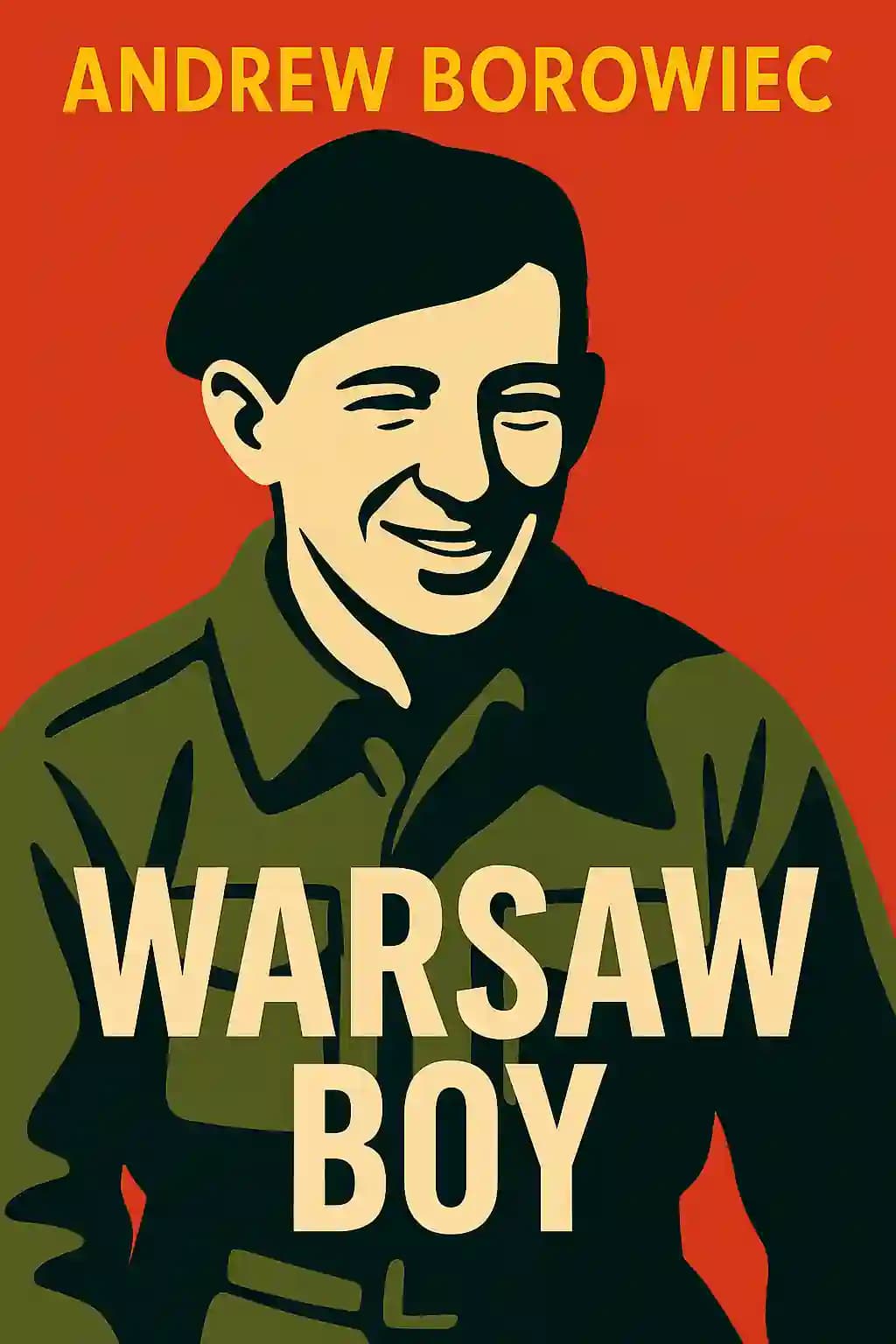
Andrew Borowiec, author of Warsaw Boy: A Memoir of a Wartime Childhood, is a Polish-born journalist and memoirist renowned for his firsthand accounts of World War II. His seminal work blends historical memoir with personal narrative, chronicling his experiences as a 16-year-old soldier in the 1944 Warsaw Uprising and subsequent imprisonment.
Borowiec’s writing is deeply informed by his childhood under Nazi occupation and his later career as a foreign correspondent for The Washington Times, where he covered global conflicts for over four decades. His expertise in geopolitics and postwar transitions extends to other notable works like Destroy Warsaw!: Hitler’s Punishment, Stalin’s Revenge and Cyprus: A Troubled Island.
Born in Łódź, Poland, Borowiec emigrated to the U.S. after the war, channeling his trauma into nuanced examinations of resistance and resilience. Warsaw Boy has been praised as an essential contribution to World War II literature, offering a rare Polish perspective on the conflict’s human cost.
Warsaw Boy is a memoir of Andrew Borowiec’s experiences as a 15-year-old Polish Resistance fighter during the 1944 Warsaw Uprising. It details harrowing street battles, survival in sewers, and capture by German forces, offering a firsthand perspective on youth soldiers’ bravery and the moral complexities of war. The book also explores Poland’s devastation under Nazi occupation and the resilience of its people.
This memoir appeals to WWII history enthusiasts, scholars of Eastern European conflicts, and readers interested in firsthand accounts of wartime resistance. Its vivid storytelling and historical detail make it suitable for educators teaching 20th-century history or individuals seeking personal narratives of courage under oppression.
Yes. Andrew Borowiec (1928–2016) recounts his real-life experiences as a teenage soldier in the Warsaw Uprising, including combat, injury, and captivity. The memoir draws from his diaries and memories, validated by historians as a credible account of Poland’s guerrilla resistance.
The 1944 Warsaw Uprising was a 63-day revolt by Polish Resistance fighters against Nazi occupation. Despite being outgunned, insurgents—including teenagers like Borowiec—used sewers to navigate the city and launched guerrilla attacks. The failed uprising resulted in 200,000 Polish deaths and Warsaw’s near-total destruction.
Borowiec was 15 when he joined the Resistance in August 1944. He turned 16 during the uprising, marking his “coming of age” amid combat. His youth underscores the extraordinary role adolescents played in the conflict.
Themes include the psychological toll of war on youth, the blurred line between heroism and survival, and the contrast between Nazi brutality and occasional humanity. Borowiec also highlights Poland’s overlooked contributions to WWII’s Eastern Front.
A pivotal quote describes Borowiec’s first combat act: “I felt I had come of age. I was a soldier and I’d just tried to kill some of our enemies.” This captures the abrupt loss of innocence faced by young fighters.
Unlike broader historical accounts, Warsaw Boy offers a ground-level view of urban guerrilla warfare, emphasizing adolescent soldiers’ perspectives. Critics liken its visceral detail to John Hersey’s Hiroshima but with a focus on Polish resistance.
Wounded and captured, Borowiec survived imprisonment and later emigrated to the U.S., becoming a journalist. His post-war career informed the memoir’s reflective tone, balancing wartime trauma with observations on human resilience.
The book preserves firsthand testimony of a pivotal but underreported WWII event, countering narratives that marginalize Poland’s suffering. It remains a critical resource for understanding youth soldiers’ roles in 20th-century conflicts.
Borowiec details claustrophobic journeys through Warsaw’s sewers to evade German patrols. These passages symbolize both ingenuity and desperation, as fighters navigated filth and darkness to transport supplies or wounded comrades.
The memoir illustrates how ordinary individuals endure extreme adversity through camaraderie, adaptability, and sheer will. Borowiec’s survival underscores the human capacity to find hope even in systematic destruction.
通过作者的声音感受这本书
将知识转化为引人入胜、富含实例的见解
快速捕捉核心观点,高效学习
以有趣互动的方式享受这本书
"or worse."
"They will lose the war, but their language will survive."
"I don't think I'll be needing them where I'm going."
"I could have walked on air."
"If the Jews could do it, then so could we-and so much better."
将《Warsaw Boy》的核心观点拆解为易于理解的要点,了解创新团队如何创造、协作和成长。
将《Warsaw Boy》提炼为快速记忆要点,突出坦诚、团队合作和创造力的关键原则。

通过生动的故事体验《Warsaw Boy》,将创新经验转化为令人难忘且可应用的精彩时刻。
随心提问,选择声音,共同创造真正与你产生共鸣的见解。

"Instead of endless scrolling, I just hit play on BeFreed. It saves me so much time."
"I never knew where to start with nonfiction—BeFreed’s book lists turned into podcasts gave me a clear path."
"Perfect balance between learning and entertainment. Finished ‘Thinking, Fast and Slow’ on my commute this week."
"Crazy how much I learned while walking the dog. BeFreed = small habits → big gains."
"Reading used to feel like a chore. Now it’s just part of my lifestyle."
"Feels effortless compared to reading. I’ve finished 6 books this month already."
"BeFreed turned my guilty doomscrolling into something that feels productive and inspiring."
"BeFreed turned my commute into learning time. 20-min podcasts are perfect for finishing books I never had time for."
"BeFreed replaced my podcast queue. Imagine Spotify for books — that’s it. 🙌"
"It is great for me to learn something from the book without reading it."
"The themed book list podcasts help me connect ideas across authors—like a guided audio journey."
"Makes me feel smarter every time before going to work"

免费获取《Warsaw Boy》摘要的 PDF 或 EPUB 版本。可打印或随时离线阅读。
August 1, 1944. Five o'clock in the afternoon. A fifteen-year-old boy stands at a window, grenade in hand, watching SS troops cross a courtyard below. He pulls the pin and throws. The explosion is deafening, though the soldiers escape unharmed. In that moment, Andrew Borowiec crosses a threshold he can never uncross. "I'll never be able to live back with my mother after this," he thinks-and he's right. This memoir, scribbled initially on Red Cross toilet paper in a German POW camp, has become required reading in military academies worldwide. What makes it extraordinary isn't just its historical significance but its emotional honesty: a teenage boy's unfiltered perspective on war, resistance, and the violent theft of innocence.