第 1 章
From Chains to Change: The Remarkable Journey of a Visionary
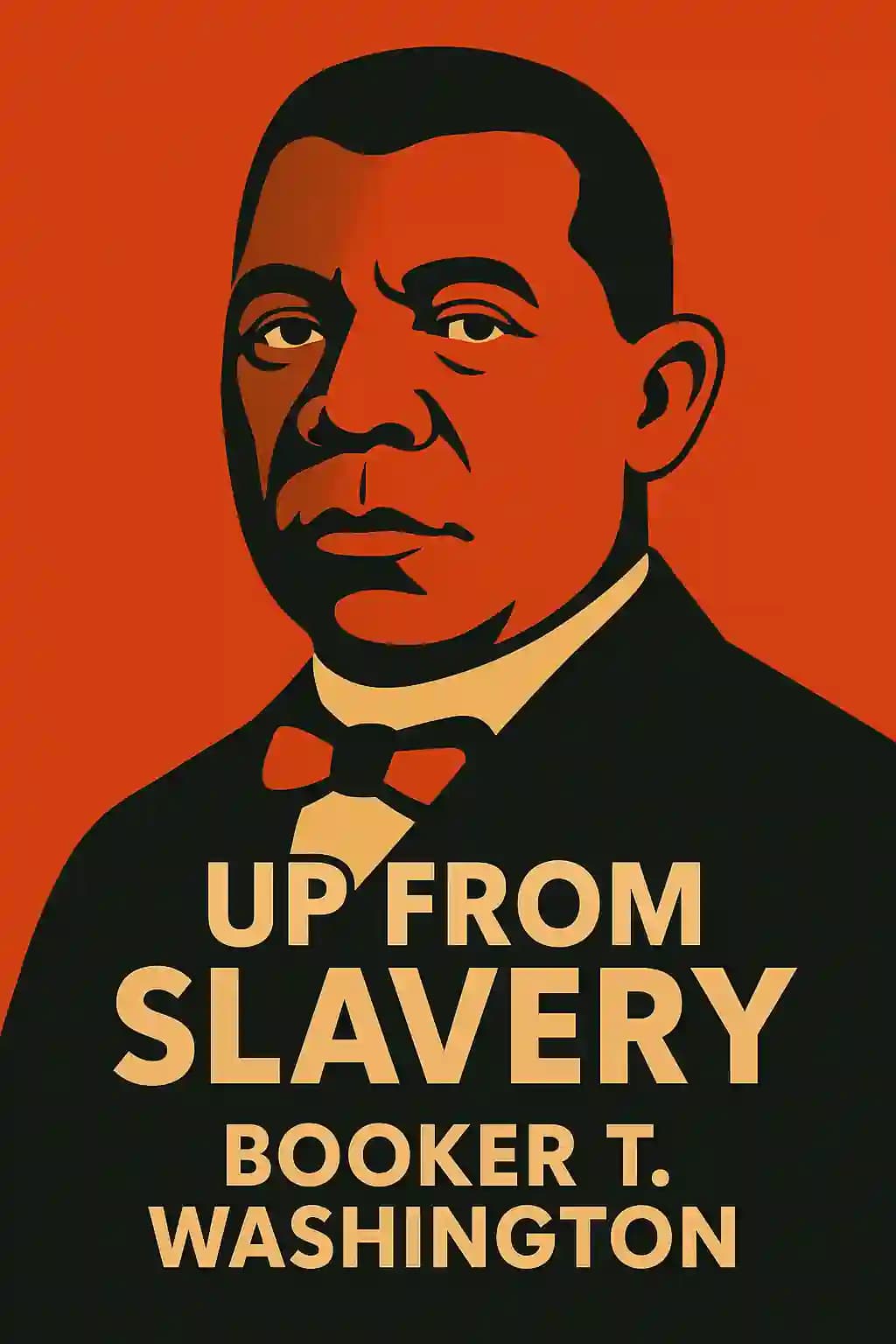
Imagine waking up each morning on a dirt floor, working from dawn until dusk, with no hope of education or advancement. This was Booker T. Washington's reality as a young slave in Virginia. Yet this same man would go on to address presidents, dine with royalty, and build one of America's most influential educational institutions from nothing but determination and vision. Washington's autobiography "Up From Slavery" isn't just a personal narrative-it's the story of a nation struggling to redefine itself after the Civil War. When first published in 1901, it became an instant bestseller, with Theodore Roosevelt praising it as "one of the most remarkable books of our time." Even today, celebrities from Oprah Winfrey to Denzel Washington cite it as transformative reading. Washington's philosophy of self-help, industrial education, and racial cooperation remains controversial yet profoundly influential, shaping conversations about race, education, and economic advancement that continue to this day.
第 2 章
The Brutal Reality of Slavery and First Taste of Freedom
I was born a slave in Franklin County, Virginia around 1858 or 1859. My earliest memories are of the plantation's slave quarters-a crude fourteen-by-sixteen-foot log cabin with dirt floors where I lived with my mother and siblings. Our cabin doubled as the plantation kitchen where my mother worked as cook. It had no glass windows, just openings that let in light and winter's chill, with an ill-fitting door full of large cracks. We slept on filthy rags on the dirt floor. My childhood contained no play-only constant labor cleaning yards, carrying water, or taking corn to the distant mill.
I first learned of freedom when I awoke to find my mother praying for Lincoln's armies to succeed. Through the "grapevine telegraph," even remote plantation slaves understood the war's true purpose. When freedom finally came, word spread quickly. The night before, excitement prevented sleep. The next morning, all slaves gathered at the master's house, where a Union officer read the Emancipation Proclamation. My mother kissed us, tears streaming down her face, explaining this was the day she'd prayed for.
The initial wild rejoicing quickly gave way to sobering reality. The responsibility of providing homes, education, and churches suddenly fell upon an unprepared people. Many older slaves, uncertain where to go, quietly returned to the "big house" to discuss their future with former owners. Our journey to Malden, West Virginia was arduous-walking hundreds of miles with meager possessions in a cart, sleeping outdoors and cooking over open fires. We finally reached Malden, a small salt-mining town where my stepfather had secured work at a salt-furnace.
Though just a child, I was put to work in the salt-furnace, often beginning as early as four in the morning. From my earliest memories, I had an intense longing to read. When a school for colored children opened, the entire community buzzed with excitement. Despite my enthusiasm, my stepfather initially refused to spare me from work. Eventually, I arranged for night lessons and finally won permission to attend day school, provided I worked in the furnace before and after school hours. To reach school on time after my morning furnace work, I secretly moved the hands of the workplace clock forward until the boss discovered my trick and locked the clock away.
After the salt-furnace, I worked in a coal-mine-work I dreaded deeply. The mine's oppressive darkness, the constant risk of explosions or cave-ins, and the difficulty of ever feeling clean made it a fearful experience. Many children spent their formative years in these dangerous mines with little chance for education. Yet even then, I maintained an unwavering determination to secure an education at any cost.
第 3 章
The Struggle for Knowledge Against All Odds
My journey toward education took a decisive turn when I overheard two miners discussing Hampton Normal and Agricultural Institute-a school where poor but worthy students could work for their board while learning a trade. The thought of attending Hampton consumed me day and night. With little money and my mother's reluctant blessing, I embarked on the 500-mile journey, receiving small donations from older colored people who never expected to see someone from their race attend boarding school.
My journey to Hampton was arduous. With insufficient funds, I faced my first experience of racial discrimination when a hotel refused me lodging. In Richmond, 82 miles from Hampton, I arrived penniless, hungry and exhausted. After walking the streets past midnight, I slept under an elevated sidewalk. The next morning, desperate for food, I convinced a ship captain to let me help unload pig iron. I worked several days, continuing to sleep under the sidewalk to save money.
When I finally reached Hampton with just fifty cents remaining, the sight of the large brick school building filled me with hope. Upon arriving, I presented myself to the head teacher, making a poor impression after my long journey without proper food or clean clothes. While she considered my admission, I watched other students being accepted. Finally, she instructed me to sweep an adjoining recitation room. Recognizing this as my opportunity, I swept the room three times, dusted it four times, moved all furniture, and cleaned every corner thoroughly. After inspecting my work and finding not a speck of dirt, she simply remarked, "I guess you will do to enter this institution." This sweeping was my college examination-the most satisfying I've ever passed.
As janitor, my work was hard and taxing-caring for numerous rooms late into night while rising at four to build fires and prepare lessons. Hampton constantly revealed new worlds to me-regular meals, tablecloths, napkins, bathtubs, toothbrushes and bed sheets were all novelties that taught me self-respect alongside academic lessons. But the greatest impression came from meeting General Samuel C. Armstrong-the noblest human being I'd ever encountered. Fresh from the degrading influences of slavery and coal mines, contact with such a character was a rare privilege and education beyond what any books could provide.
During my final year, I devoted every spare minute to studying, determined to make the honor roll for Commencement speakers, which I achieved in June 1875. The greatest benefits from Hampton were my contact with General Armstrong and learning that education wasn't about avoiding manual labor but about loving work for its independence and the happiness found in making others useful and happy.
第 4 章
Building a Foundation Through Service
After graduating from Hampton, I returned to Malden and began teaching at the colored school-one of the happiest periods of my life. I taught from 8am until 10pm, including a night school for working adults. Beyond academics, I taught students personal hygiene, proper use of the tooth-brush, and bathing. I established a reading room, debating society, and two Sunday schools. Without regard to pay, I taught anyone wanting to learn.
The years from 1867 to 1878 marked the Reconstruction period. During this era, two ideas constantly agitated in the minds of many colored people: a craze for Greek and Latin learning and a desire to hold office. After generations in slavery, many couldn't properly conceive what education truly meant. Schools everywhere overflowed with students of all ages, some as old as seventy, driven by praiseworthy ambition. However, the prevalent misconception was that education would somehow free one from manual labor, and that knowledge of Greek or Latin would make one almost supernatural.
During Reconstruction, Southern Black people looked to the Federal Government for everything, like a child to its mother. This wasn't unnatural-the government gave us freedom after centuries of benefiting from our labor. I felt it was wrong that no provision was made for our general education beyond state efforts, to better prepare us for citizenship. Even as a youth, I sensed mistakes were being made. The Reconstruction policy seemed built on a false foundation-artificial and forced. The North sometimes used my race's ignorance as a tool to punish Southern whites by forcing Blacks into positions over them. This political agitation distracted our people from fundamental matters of industrial improvement and property acquisition.
After teaching in Malden for two years, I spent eight months studying in Washington. The institution I attended lacked industrial training, unlike Hampton. Students there had more money and dressed better, but seemed less self-dependent. Having lived comfortably, they were less inclined to work in difficult rural districts. Washington attracted many colored people seeking government positions or an easy life. I found alarming superficiality-young men earning four dollars weekly spending half on Sunday buggy rentals to appear wealthy, government employees in constant debt. I wished I could transplant them to country districts, upon the solid foundation of Mother Nature where all successful races began.
第 5 章
The Birth of Tuskegee Institute
While teaching at Hampton, I continued my own studies. In May 1881, General Armstrong mentioned receiving a letter from gentlemen in Alabama seeking someone to lead a normal school for colored people in Tuskegee. They expected a white recommendation, but Armstrong surprisingly called me to his office and asked if I could fill the position. I agreed to try. Several days later, a telegram arrived: "Booker T. Washington will suit us. Send him at once."
I arrived in Tuskegee, a town of about two thousand inhabitants in Alabama's Black Belt where colored people outnumbered whites three to one. I expected to find a building and necessary apparatus ready for teaching but found nothing of the kind-only hundreds of hungry, earnest souls wanting knowledge. The state Legislature had granted an annual appropriation of two thousand dollars for instructors' salaries, but nothing for land, buildings, or equipment-like making bricks without straw. The most suitable place was a dilapidated shanty near the colored Methodist church. During rainy days, students would hold umbrellas over me while I taught.
I spent my first month finding accommodations and traveling through Alabama by mule cart, examining the actual lives of the people. I ate and slept in their cabins, seeing their farms, schools, and churches without advance notice. Most families slept in a single room, often with relatives or others sharing the space. The common diet was fat pork and corn bread. Despite fertile land surrounding them, people planted nothing but cotton, right up to their cabin doors. I found sewing machines purchased on installments for sixty dollars and showy clocks for twelve to fourteen dollars in cabins where families shared a single fork at meals. Most colored farmers were in debt with mortgaged crops.
After a month investigating rural conditions, I felt overwhelmed by the immense work needed. I became more convinced than ever that mere book education wouldn't be enough-the Hampton approach that combined practical skills with academics was essential. After consulting with Tuskegee citizens, I set July 4, 1881, as opening day for the school in our little shanty and church. Both white and colored people showed great interest, though some whites questioned the value of educating Negroes, fearing they would abandon farm work and domestic service.
Through all difficulties, two men provided constant advice and guidance: Mr. George W. Campbell, a white ex-slaveholder, merchant and banker; and Mr. Lewis Adams, a black ex-slave who had learned shoemaking, harness-making, and tinsmithing during slavery. Though Mr. Adams never attended school, he taught himself to read and write as a slave. Both men understood my educational vision from the start and supported every effort, especially during financial hardships.
第 6 章
Creating Education with Purpose
Thirty students reported on opening day, equally divided between sexes. Most lived in Macon County and were public school teachers, some nearly forty years old. Many had studied impressive-sounding subjects and big books, with some claiming knowledge of Latin or Greek. I found this disconnect troubling-like the young man I'd seen studying French grammar while sitting in a filthy one-room cabin with an overgrown yard. Despite these issues, I never saw more earnest, willing learners once shown the right direction.
After six weeks, Miss Olivia A. Davidson joined as co-teacher, later becoming my wife. Born in Ohio, she first taught in Mississippi where she nursed a smallpox-stricken pupil when everyone else fled. During Memphis' worst yellow fever epidemic, she volunteered as a nurse despite never having had the disease. Miss Davidson brought fresh teaching methods and rare moral character to Tuskegee, becoming instrumental in laying the school's foundation.
We immediately recognized that mere book learning wouldn't suffice. Our students needed practical knowledge-how to bathe, care for teeth and clothing, proper nutrition, and room maintenance. We wanted to give them practical industry skills ensuring self-sufficiency after graduation. With 85% of colored people in Gulf states dependent on agriculture, we needed to avoid educating students away from farm life toward city living. Our goal was producing teachers who would return to plantation districts with new energy and ideas for farming and community improvement.
Three months after opening, an abandoned plantation a mile from Tuskegee came up for sale-perfect for our needs but priced at five hundred dollars. With no money or credit, I wrote to General J.F.B. Marshall at Hampton Institute, who personally lent me the required $250 down payment. We immediately moved to the property, converting the old dining cabin, kitchen, stable, and hen-house into classrooms.
I determined to clear land for crops, but the students-many former teachers-hesitated, seeing no connection between manual labor and education. To overcome their reluctance, I personally led the way with my axe each afternoon after classes. Seeing I wasn't afraid or ashamed to work, they joined enthusiastically. We eventually cleared twenty acres and planted crops. Meanwhile, Miss Davidson organized fundraising festivals where white and colored families donated food items to sell. We also collected direct monetary gifts, sometimes as little as five cents from elderly former slaves.
第 7 章
Building a School Brick by Brick
From the beginning at Tuskegee, I was determined to have students not only perform agricultural and domestic work but erect their own buildings. My plan was to teach them the latest methods of labor while showing them the utility, beauty, and dignity in work. Many advised against having students build, but I insisted this approach would teach civilization, self-help, and self-reliance, more than compensating for any lack of finish.
For nineteen years, we've maintained our commitment to student-built structures. Forty buildings have been constructed, with only four not being almost entirely student-made. This approach has trained hundreds of mechanics now scattered throughout the South. Knowledge passes from one student generation to the next, creating a self-sustaining system where we can now construct any building from planning to electrical fixtures without outside workers. Students take ownership of these buildings-I've often heard older students correcting newcomers who might mark walls: "Don't do that. That is our building. I helped put it up."
After establishing farm work, we turned to brickmaking-needed both for our buildings and to meet local market demand since no brickyard existed in town. Our task was making bricks with no money and no experience. The work was hard and dirty, with students particularly resistant to standing knee-deep in mud-pits for hours. Many became disgusted and left the school. After finding suitable clay, we endured three failed kilns. The third failure left me without a single dollar to continue. Against most teachers' advice to abandon the effort, I pawned my watch for fifteen dollars to make one final attempt. This fourth try succeeded, and brickmaking became an important industry at Tuskegee.
Our brickmaking success taught me a crucial lesson about race relations in the South. White residents who had no previous connection to the school came to buy our bricks because they met a community need. This commercial relationship helped them see that educating Negroes added to the community's wealth and comfort. As we traded with each other, our business interests intermingled, laying the foundation for pleasant relations. The tangible evidence of a first-class house built by a Negro does more to soften prejudice than pages of theoretical discussion.
We applied the same industrial education principle to building wagons, carts, and buggies. We now use dozens of these student-built vehicles on our farm and supply them to the local market. I've learned that someone who can meet a community's practical needs will eventually create demand for more advanced knowledge. While a community might not initially need Greek analysis, it needs bricks, houses and wagons-providing these creates the foundation for appreciating higher education.
第 8 章
The Atlanta Exposition: A Defining Moment
My public speaking career began unexpectedly when the National Educational Association's president heard me speak during a Northern fundraising tour with General Armstrong. He invited me to address their next meeting in Madison, Wisconsin, where nearly 4,000 people gathered. This address marked my first major speech on race relations, where I advocated bringing the races together rather than embittering them.
Though gaining Northern recognition after my Madison address, I eagerly sought opportunities to address Southern white audiences. In 1893, I was invited to speak for five minutes at the International Meeting of Christian Workers in Atlanta. Despite tight scheduling between Boston engagements, I determined this rare opportunity to address influential Southerners was worth the journey. The enthusiastic reception and favorable coverage in Atlanta newspapers suggested I had achieved my goal of gaining a hearing from the South's dominant class.
My five-minute Atlanta address likely led to my invitation to speak at the Atlanta Cotton States and International Exposition in September 1895-the event that gave me a national reputation. When the directors decided to include a Negro speaker at the opening ceremonies, they unanimously selected me-an unprecedented honor and responsibility. I felt the weight of history: a former slave addressing Southern whites on a national stage, knowing one misstep could damage race relations for years.
In my address, I shared the story of a lost ship signaling for water, repeatedly told to "Cast down your bucket where you are," only to discover fresh water from the Amazon River. To my race seeking opportunity elsewhere, I urged: "Cast down your bucket where you are"-make friends with Southern neighbors. To whites looking to foreign immigrants for prosperity, I urged: "Cast down your bucket where you are" among eight million Negroes whose loyalty you've tested. I emphasized that our security lies in the highest development of all, and that any effort to curtail Negro growth should be redirected to making him useful and intelligent.
Governor Bullock rushed to shake my hand afterward, and crowds greeted me everywhere. Newspapers published the address in full, with the Atlanta Constitution calling it "a platform upon which blacks and whites can stand with full justice to each other." President Cleveland sent an enthusiastic letter of thanks, later visiting the Negro Building at the Exposition. While initially praised by colored people, some later criticized me for being too conciliatory to whites, though most eventually supported my approach.
第 9 章
Recognition and Reflection
My greatest surprise came one Sunday morning while sitting on my Tuskegee veranda with my family-a letter from Harvard University President Charles W. Eliot inviting me to receive an honorary degree at their Commencement. This recognition from America's oldest and most renowned university brought tears to my eyes as my entire life flashed before me-plantation slavery, coal mining, homelessness, educational struggles, Tuskegee's financial challenges, and racial oppression.
On June 24th, I joined President Eliot and the Board of Overseers for the Harvard Commencement procession alongside distinguished recipients like General Miles, telephone inventor Dr. Bell, and Bishop Vincent. We marched to Sanders Theatre where degrees were conferred amid enthusiastic student cheers. The day culminated at Memorial Hall's alumni dinner-a magnificent gathering of over a thousand accomplished men representing the best in every field. When called to speak, I emphasized the vital question of how to bring the strong, wealthy and learned into helpful touch with the poorest and most humble.
Early in my Tuskegee work, I secretly resolved to build a school so valuable that a President would one day visit. This dream materialized when President McKinley visited on December 16th, 1898. The entire town enthusiastically prepared decorations, and the President arrived with Mrs. McKinley, Cabinet members, prominent generals, and reporters. Even the Alabama Legislature adjourned to attend. After the visit, Postmaster General Smith declared it "more impressive and more encouraging, more inspiring for our future, than any other spectacle" they had witnessed.
In spring 1899, Boston friends raised funds for Mrs. Washington and me to spend several months in Europe. We sailed on the Friesland of the Red Star Line on May 10th. As soon as we departed, eighteen years of responsibility began lifting from my shoulders. Our European journey began in Antwerp, continued through Holland, Belgium, and France, and culminated in England. In London, we met those who had known Garrison and Douglass, and I gained new appreciation for English abolitionists' substantial contributions to freedom. Through Lady Aberdeen's kindness, we met Queen Victoria at Windsor Castle and had tea with her majesty.
第 10 章
Legacy of Transformation
Twenty years have passed since I made the first humble effort at Tuskegee in a broken-down shanty and hen-house, with one teacher and thirty students. Now the institution owns twenty-three hundred acres of land, with sixty-six buildings almost wholly erected by student labor. We operate thirty industrial departments alongside academic and religious training, teaching skills that ensure immediate employment upon graduation. Our property value now exceeds $700,000, with an endowment fund of $1,000,000.
From thirty students, we've grown to fourteen hundred from twenty-seven states and territories, plus foreign countries. With 110 officers and instructors and their families, our campus population approaches seventeen hundred people. We maintain order through the students' earnestness and a rigorous daily schedule beginning at 5 a.m. and ending with lights out at 9:30 p.m.
The true worth of our school lies in its graduates. At least six thousand Tuskegee men and women now work throughout the South, improving material, educational, moral and religious life through example and direct effort. Their common sense and self-control are fostering better race relations and demonstrating the value of education to Southern whites. Our graduates transform communities-buying land, improving homes, saving money, and elevating moral character.
As I write these closing words, I find myself-not by design-in Richmond, Virginia, where decades ago I slept under sidewalks due to poverty. Now I'm here as guest of the colored people, invited to address both races in the Academy of Music-the first time colored people were permitted to use this hall. The City Council and state Legislature voted unanimously to attend in body. Before hundreds of colored people and distinguished white citizens, I delivered a message of hope, thankful to both races for welcoming me back to my birth state.
My life has been filled with unexpected encouragements, proving that anyone who commits to doing their level best each day will experience the joy and satisfaction that comes from helping others. Despite superficial signs suggesting otherwise, I've never felt more hopeful for the race, believing the universal law that recognizes merit will prevail if given support and forbearance.