第 1 章
A Journey Through the Darkest Chapter of American History
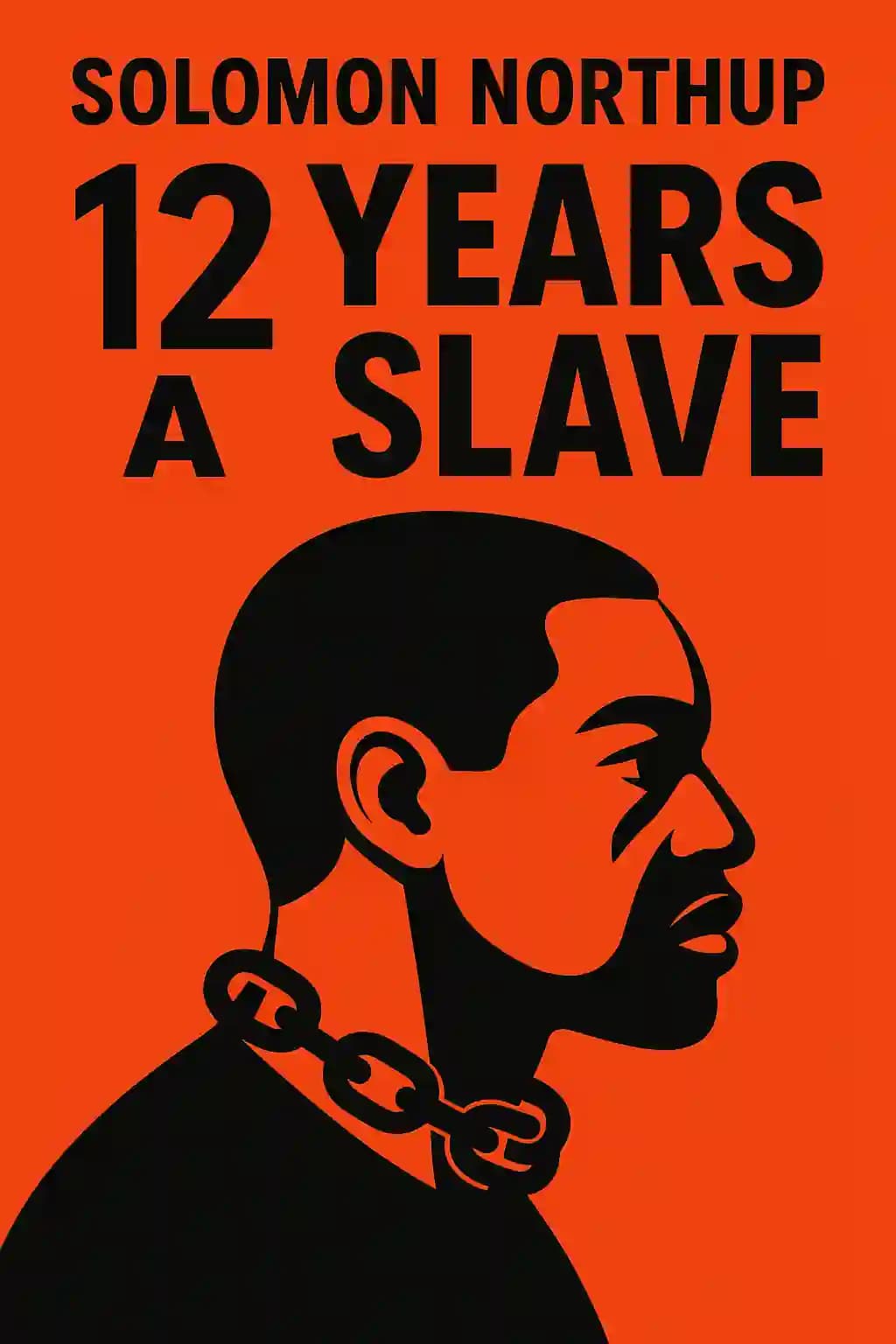
Solomon Northup's memoir "12 Years a Slave" stands as one of the most powerful firsthand accounts of American slavery ever written. Published in 1853, just months after Northup's dramatic rescue from bondage, the book became an immediate sensation, selling over 30,000 copies in its first year. It provided Northern readers with unprecedented insight into the brutal reality of Southern slavery from someone who had experienced both freedom and bondage. The 2013 film adaptation, directed by Steve McQueen and starring Chiwetel Ejiofor, won the Academy Award for Best Picture, introducing Northup's story to millions worldwide. What makes this narrative uniquely compelling is Northup's perspective as an educated free man suddenly thrust into slavery's horrors-allowing him to articulate the experience with remarkable clarity and moral force that continues to resonate nearly two centuries later.
第 2 章
From Freedom to Captivity: The Betrayal That Changed Everything
Born free in Minerva, New York in 1808, Solomon Northup enjoyed thirty years of liberty before his life took a catastrophic turn. His father Mintus, though born enslaved, had been freed by the Northup family's will and raised Solomon with education beyond what was typical for Black Americans of the era. By 1829, Solomon had married Anne Hampton, a woman of mixed racial heritage, and established himself as an industrious man of many talents-working on the Champlain Canal, transporting timber, farming, and earning additional income through his exceptional violin playing.
By 1841, Solomon and Anne had settled in Saratoga Springs with their three children. That spring, while seeking employment, Solomon encountered two strangers-Brown and Hamilton-who offered him work with their circus. Their friendly demeanor and generous wage offers persuaded Solomon to travel with them to Washington D.C., where they arrived during the funeral ceremonies for President William Henry Harrison.
What happened next reveals the calculated cruelty of the kidnapping scheme. Throughout the day, Brown and Hamilton plied Solomon with drinks. By evening, he experienced excruciating pain and overwhelming thirst-clear symptoms of drugging. Barely conscious, Solomon was led from his room by unknown figures. When he regained awareness, he found himself in utter darkness, chained to the floor of what he would later learn was Williams' slave pen-a horrifying establishment disguised behind the facade of a respectable residence, ironically within sight of the Capitol building itself.
His money and free papers were gone. The slave trader James H. Burch and his turnkey Ebenezer Radburn soon appeared, claiming Solomon was a runaway slave bound for New Orleans. When Solomon defiantly asserted his freedom, Burch ordered him stripped and beaten mercilessly with a paddle and cat-o'-nine-tails. Despite excruciating pain, Solomon refused to acknowledge being a slave. The beating continued until the paddle broke and Radburn finally suggested stopping. Burch threatened worse if Solomon ever claimed freedom again.
This sudden, violent transition from freedom to bondage-from respected citizen to brutalized property-forms the psychological heart of Solomon's narrative. Imagine the cognitive dissonance: one day enjoying all the rights of a free man, the next being told your very humanity is forfeit. What makes this account so powerful is how it forces us to confront the jarring reality that freedom in America has always been conditional, dependent not just on laws but on whether those laws are enforced equally for all citizens.
第 3 章
The Slave Pen and the Journey South
In the Washington slave pen, Solomon met fellow captives who would become his first companions in bondage: Clemens Ray, an intelligent hack driver; John Williams, taken for debt payment; and ten-year-old Randall, who constantly cried for his absent mother. Ray advised Solomon to remain silent about his free status to avoid further beatings-the first of many compromises with brutal reality Solomon would make to survive.
The night before their departure south, Randall's mother Eliza arrived with her young daughter Emily. Their reunion was simultaneously joyous and heartbreaking. Through her tears, Eliza revealed her story: she had been the mistress of her master Elisha Berry for nine years, with Emily being his child. Berry had promised her freedom, but after his death, his daughter's husband Jacob Brooks had tricked Eliza into coming to Washington under the pretense of receiving freedom papers, only to sell her to Burch.
The journey south took Solomon and his companions through Richmond to New Orleans. In Richmond, Solomon made the mistake of mentioning New York when questioned, earning Burch's fury and threats. This moment crystallizes the precarious position of kidnapped free people-any mention of their true identity could bring severe punishment, yet remaining silent meant abandoning hope of rescue.
In New Orleans, the captives were prepared for sale at Freeman's slave pen. They were thoroughly washed, given new clothes, and trained to "look smart" and move precisely. Customers examined them thoroughly-feeling their hands, arms, and bodies, checking their teeth, sometimes taking them to be stripped and inspected privately. When Solomon revealed his violin skills, Freeman had him play for potential buyers, highlighting his talents to increase his price.
The most devastating scene occurred when little Randall was sold separately from his mother. Eliza's hysterical weeping nearly earned her a whipping from Freeman. Shortly after, most of the captives fell ill with smallpox. Solomon became critically ill, going blind for three days, and expected to die. After recovery, his face permanently disfigured, Solomon was purchased along with Eliza and her remaining child by William Ford. Before they departed, however, Freeman sold Emily separately despite Eliza's desperate pleas, tearing the child from her mother's arms as she screamed, "Don't leave me, mama!" This scene of family separation-multiplied thousands of times across the South-represents one of slavery's most profound cruelties.
What makes these scenes particularly affecting is Solomon's unflinching honesty about the commodification of human beings. The clinical inspections, the price negotiations based on physical attributes, the casual separation of families-all described with the clarity of someone who understood he was experiencing something fundamentally wrong yet institutionally normalized.
第 4 章
Life Under Master Ford: A Glimpse of Humanity
William Ford represented the rare "good master" in Solomon's narrative-a Baptist preacher who treated his slaves with relative kindness. Ford gathered his slaves for Sunday Scripture readings and rewarded good work with approval rather than punishing poor performance with the lash. Solomon observed that masters who treated slaves leniently were generally rewarded with greater labor, as the slaves worked harder to please a kind master than they would under threat of punishment.
During this period, Solomon's ingenuity earned him respect. When faced with the challenge of transporting lumber from Ford's mill, Solomon devised a system to float logs down Indian Creek to Bayou Boeuf rather than hauling them overland. Despite skepticism from the mill's superintendent, Solomon successfully implemented his plan, earning commendations and the title "smartest nigger in the Pine Woods."
Yet even under Ford's relatively humane ownership, Solomon remained property. When Ford experienced financial difficulties, he was forced to sell Solomon to John Tibeats, a cruel carpenter who immediately resented Solomon's intelligence. Their relationship quickly deteriorated into violence when Tibeats attempted to whip Solomon for using nails that the overseer had provided. In a moment of desperate courage, Solomon fought back, overpowering Tibeats and whipping him instead-an almost unheard-of act of resistance that could have resulted in Solomon's execution.
Only the intervention of overseer Chapin, who appeared with pistols and reminded Tibeats that Ford still held a mortgage on Solomon, prevented Tibeats and his companions from hanging Solomon on the spot. Left bound in the scorching midday sun until Ford's arrival that evening, Solomon reflected: "Despite my agony, not once did I conclude that a slave was happier than a free colored citizen of the North-a conclusion I've never reached since."
This period under Ford illustrates an important truth about American slavery: even its most "benevolent" form remained fundamentally dehumanizing. Ford's kindness, while genuine, existed within a system that denied Solomon's basic humanity and could transfer ownership of him at any moment. The contrast between Ford and Tibeats demonstrates how completely a slave's quality of life depended on the character of whoever happened to own them-a terrifying vulnerability that no amount of personal merit could overcome.
第 5 章
Edwin Epps: The Face of Slavery's Cruelty
After narrowly escaping death at Tibeats' hands, Solomon was eventually sold to Edwin Epps, who would be his master for the next ten years. Epps embodied slavery at its most brutal-a large, portly man with a sharp expression who delighted in dancing with his slaves when drunk and whipping them for pleasure. Sober, he was silent and cunning, striking lagging slaves with sly precision.
Life on Epps' cotton plantation followed the relentless rhythm of the seasons. Slaves worked from dawn until dark, with only 10-15 minutes for their cold bacon at noon. After weighing the cotton at night, whippings followed for those who failed their quota. Their weekly allowance was three and a half pounds of bacon and corn for a peck of meal-no tea, coffee, sugar, or salt. They slept on wooden planks with only a coarse blanket, in log cabins without floors or windows.
Solomon struggled particularly with cotton picking, never mastering the skill despite repeated whippings. His poor harvests, often half the required weight, eventually led Epps to reassign him to cutting wood and hauling cotton. During sugar cane season, Epps hired Solomon out to neighboring plantations where his skill at cutting cane made him valuable as a driver leading gangs of fifty to a hundred hands.
The most heartbreaking figure in Solomon's narrative is Patsey, a young slave woman described as exceptionally strong, agile, and skilled, particularly at cotton picking where she could harvest 500 pounds daily (more than twice the standard quota). Despite her natural joyfulness, Patsey suffered terribly as the object of Epps' lust and his wife's jealous hatred. The mistress had even tried bribing Solomon to kill Patsey secretly.
The culmination of Patsey's suffering came when Epps, enraged by her unauthorized absence to obtain soap from a neighboring plantation, ordered Solomon to whip her. When Solomon hesitated, Epps threatened to whip them both. Forced to comply, Solomon administered the lashes while Epps demanded he strike harder. Eventually, Epps took the whip himself, continuing until Patsey's back was raw and bleeding. Afterward, Solomon washed her wounds with salt water and carried her to her cabin, where she remained face-down for days, unable to lie in any other position.
From that day forward, Patsey was changed-her buoyant spirit crushed, replaced by a despondent mood and care-worn expression. Her life became "one long dream of liberty, an enchanted region in the distant North where black people could work for themselves"-a dream she would never realize.
This relationship between Epps, his wife, and Patsey illustrates how slavery corrupted even intimate human connections. Epps' sexual exploitation of Patsey, his wife's misdirected rage at the victim rather than the perpetrator, and Patsey's complete inability to escape this toxic dynamic reveal slavery's poisonous effect on everyone involved. Solomon's forced participation in Patsey's punishment adds another layer of moral injury-the system not only victimized the enslaved but forced them to participate in each other's suffering.
第 6 章
The Rhythms of Slave Life
Despite its profound horrors, slavery developed its own distinct culture and rhythms, with moments of respite woven into the fabric of brutal daily existence. Christmas holidays represented the most significant break in the relentless cycle of labor, with Epps granting three days of relative freedom - a practice common across many plantations. These precious days became elaborate social occasions, with neighboring plantations taking turns hosting "Christmas suppers" where hundreds of slaves gathered in their finest clothing, often carefully preserved throughout the year for this singular occasion. The feasts featured foods normally beyond reach - whole oxen slowly roasted over carefully tended coals for hours, accompanied by fresh biscuits, carefully preserved fruits, and special-occasion pies. The air would fill with the aromas of roasting meat and the sounds of rare laughter.
After the feasting came the dancing, where Solomon's musical talents shone brightest. His skill with the violin earned him the nickname "Ole Bull of Bayou Boeuf," after the famous Norwegian violinist. His reputation spread beyond the plantation's boundaries, leading to invitations to perform at white gatherings up to ten miles away. These performances provided both additional income and brief escapes from field labor, though they also represented a complex dynamic where his talent served to entertain those who enslaved him. His violin became more than an instrument - it was a constant companion through years of bondage, "triumphing with him in joy, consoling him in sorrow, and providing solace during sleepless nights" when memories of his family and freedom weighed heavily.
Marriage customs among enslaved people reflected both their attempts to build meaningful relationships and the brutal reality of their status as property. Unions required only the masters' approval, with no legal or religious ceremony necessary. Female slave marriages were particularly encouraged by owners who saw them as opportunities to increase their human property through childbirth. The harsh reality of these arrangements meant that spouses could be separated by sale at any time, and either party might have multiple partners across different plantations. Saturday nights became precious opportunities for married couples separated by distance to reunite, though these visits depended entirely on their owners' permission and the practical limitations of travel.
Solomon's innovative spirit manifested in various ways, particularly in his creation of an ingenious fish trap near the bayou bank. The device featured a sophisticated design with a sliding door and movable bottom that would capture fish swimming toward strategically placed bait. This invention proved remarkably effective, providing regular meals of substantial fish from the abundant waters of Bayou Boeuf. The trap became a valuable source of supplementary food for Solomon and his fellow slaves, demonstrating how ingenuity could slightly improve their difficult circumstances.
These glimpses into the everyday adaptations and cultural practices of enslaved people reveal their extraordinary resilience and determination to maintain their humanity. Despite systematic dehumanization, they created vibrant communities, preserved family bonds whenever possible, and found creative ways to assert some control over their lives. Solomon's achievements with his violin and his fish trap exemplify not just survival skills but expressions of an unquenchable human spirit in a system designed to crush it. Through music, innovation, and community gatherings, enslaved people created spaces of dignity and joy within the confines of their bondage.
第 7 章
Resistance and the Hope of Freedom
Throughout his ten years with Epps, Solomon constantly contemplated escape. He even trained Epps' dogs to obey him in preparation, though he recognized the numerous obstacles facing runaway slaves. The swamps remained filled with desperate fugitives despite the near certainty of capture. Solomon describes Celeste, who constructed a crude hut in the center of a palmetto swamp so dark that sunlight barely penetrated. She was one of those rare individuals whose tracks hounds refused to follow. Solomon secretly provided her with food until she eventually returned to her master, unable to sustain her isolated existence.
Solomon admits he participated in insurrection discussions but always counseled against such actions, knowing they would end in disaster. Nevertheless, he acknowledges that most slaves along Bayou Boeuf would have welcomed an invading army, understanding fully the magnitude of their oppression despite masters' beliefs to the contrary.
His most significant act of resistance was his attempt to send a letter north. Though Epps had forbidden him from reading or writing under threat of a hundred lashes, Solomon managed to create ink from boiled maple bark, fashion a pen from a duck feather, and write on stolen paper while others slept. When betrayed by a white man named Armsby, Solomon saved himself through convincing lies, questioning how he could write without materials and suggesting Armsby was merely trying to secure an overseer position. Watching his letter burn in the fire, Solomon felt his hopes for freedom dissolve into smoke and ashes.
Salvation finally came through an unexpected source-a Canadian carpenter named Bass who was working on Epps' property. Unlike most whites in the region, Bass openly criticized slavery, declaring to Epps: "It's all wrong-no justice nor righteousness in it." When Bass learned Solomon's true identity, he risked his own safety to write letters to Solomon's friends in New York, eventually leading to Henry B. Northup's journey south to secure Solomon's freedom.
The rescue itself reads like a thriller-Northup and local attorney John P. Waddill navigating Louisiana's legal system, tracking down Bass to discover Solomon's location, and arriving at Epps' plantation before Solomon could be hidden. The moment of recognition between Solomon and Henry Northup represents the narrative's emotional climax: "When I saw Henry B. Northup, overwhelming emotion flooded me as memories of my former life rushed back. I exclaimed his name, knowing my deliverance had come."
As Solomon prepared to depart, Patsey ran from behind a cabin and threw her arms around his neck, crying that he was going to be free, going where she would never see him again. This poignant farewell underscores the bittersweet nature of Solomon's rescue-his joy at returning to freedom tempered by leaving behind those who would remain in bondage.
第 8 章
Homecoming and the Pursuit of Justice
Solomon's journey home traced the same waterways that had carried him into bondage twelve years earlier, following the Red River's meandering path northward. In New Orleans, with mixed emotions of anger and vindication, he deliberately paused to identify Freeman's slave pen, where countless others had been bought and sold, and the precise room where Ford had purchased him. The journey continued through the Southern states - Charleston with its bustling port, Richmond's tobacco warehouses, and finally Washington, D.C. - before Solomon and Henry Northup reached Sandy Hill on a cold January 21, 1853. Each mile brought him closer to a freedom he had never surrendered in his heart.
The reunion with his family the following morning in their Glens Falls cottage became an indelible moment of joy and healing. His daughter Margaret, now a married woman, had named her own son Solomon Northup Staunton, carrying forward her father's legacy even in his absence. Elizabeth, no longer the small child he remembered, ran to him with the same devotion that twelve years' separation couldn't dim. Anne, who had maintained their household through endless uncertainty, rushed from the hotel where she worked, her tears matching those streaming down Solomon's face. Around the warmth of their hearth, stories flowed like a river - Anne recounting her struggles to support the family, the children sharing their growth into young adults, and Solomon carefully relating what he could of his ordeal. The revelation that his son Alonzo had been laboriously saving money to purchase his father's freedom - not knowing of the rescue already in motion - particularly moved Solomon, demonstrating the depth of his family's unwavering dedication.
However, Solomon's quest for justice revealed the deep-seated prejudices still entrenched in American society, even in the North. In Washington, he filed formal charges against James H. Burch for kidnapping and illegally selling him into slavery. The case seemed strong, with prestigious witnesses including Senator Chase of Ohio, the Honorable Orville Clark of Sandy Hill, and Henry Northup all testifying to Solomon's free status and the circumstances of his abduction. Yet the court, in a ruling that exposed the era's racial prejudices, declared that Burch had acquired Solomon "innocently and honestly" - a conclusion that defied both logic and evidence. The ultimate insult came when Solomon himself was barred from testifying, solely because of his race, despite his free status being well-documented and uncontested.
This judicial failure represented more than just Solomon's personal disappointment; it illustrated the systemic racism that permeated even supposedly free states' legal systems. The stark reality that white perpetrators could walk free while a free Black man was denied the basic right to testify about his own kidnapping revealed the hollow promises of Northern justice. Solomon's philosophical reflection captured this bitter truth: "A human tribunal permitted him to escape, but there is a higher tribunal where false testimony will not prevail." These words spoke not only to his personal case but to the broader struggle for justice that would continue long after his own story concluded.
第 9 章
The Enduring Legacy of Solomon's Story
Solomon Northup's narrative ends with remarkable restraint: "I make no comments on slavery. Readers may form their own opinions of the 'peculiar institution.'" This understated conclusion belies the devastating power of his testimony. By simply relating his experiences without excessive editorializing, Solomon created one of the most damning indictments of American slavery ever written.
What makes "12 Years a Slave" uniquely valuable is Solomon's perspective as someone who experienced both freedom and bondage. Unlike those born into slavery, he could articulate precisely what had been stolen from him-not just liberty but identity itself. For twelve years, he was "Platt," property to be bought and sold, beaten and exploited. His reclamation of his name and personhood represents not just personal triumph but a powerful assertion of Black humanity in a society determined to deny it.
Solomon's story reminds us that American slavery wasn't an abstract historical evil but a lived experience of specific individuals with hopes, fears, talents, and relationships. Through his clear-eyed account, we witness the system's brutality not just in dramatic moments of violence but in daily indignities and the constant threat of family separation. We see how slavery corrupted everyone it touched-the sadistic Epps, his jealous wife, even the relatively kind Ford who nonetheless participated in human trafficking.
Perhaps most importantly, Solomon's narrative reveals the extraordinary resilience of those who endured slavery. Despite overwhelming oppression, they maintained their humanity-forming relationships, creating culture, finding moments of joy, and never abandoning hope for freedom. Solomon's ingenuity with the fish trap, his solace in music, his determination to maintain his literacy despite prohibition-all testify to the indomitable human spirit that slavery could damage but never destroy.
Nearly 170 years after its publication, "12 Years a Slave" remains essential reading for anyone seeking to understand America's foundational sin and its enduring consequences. In Solomon's measured voice, we hear not just historical testimony but a moral challenge that continues to resonate: to recognize the full humanity of every person and to build a society where no one's freedom depends on the color of their skin.