第 1 章
The Ethical Dilemma of Being Unwound
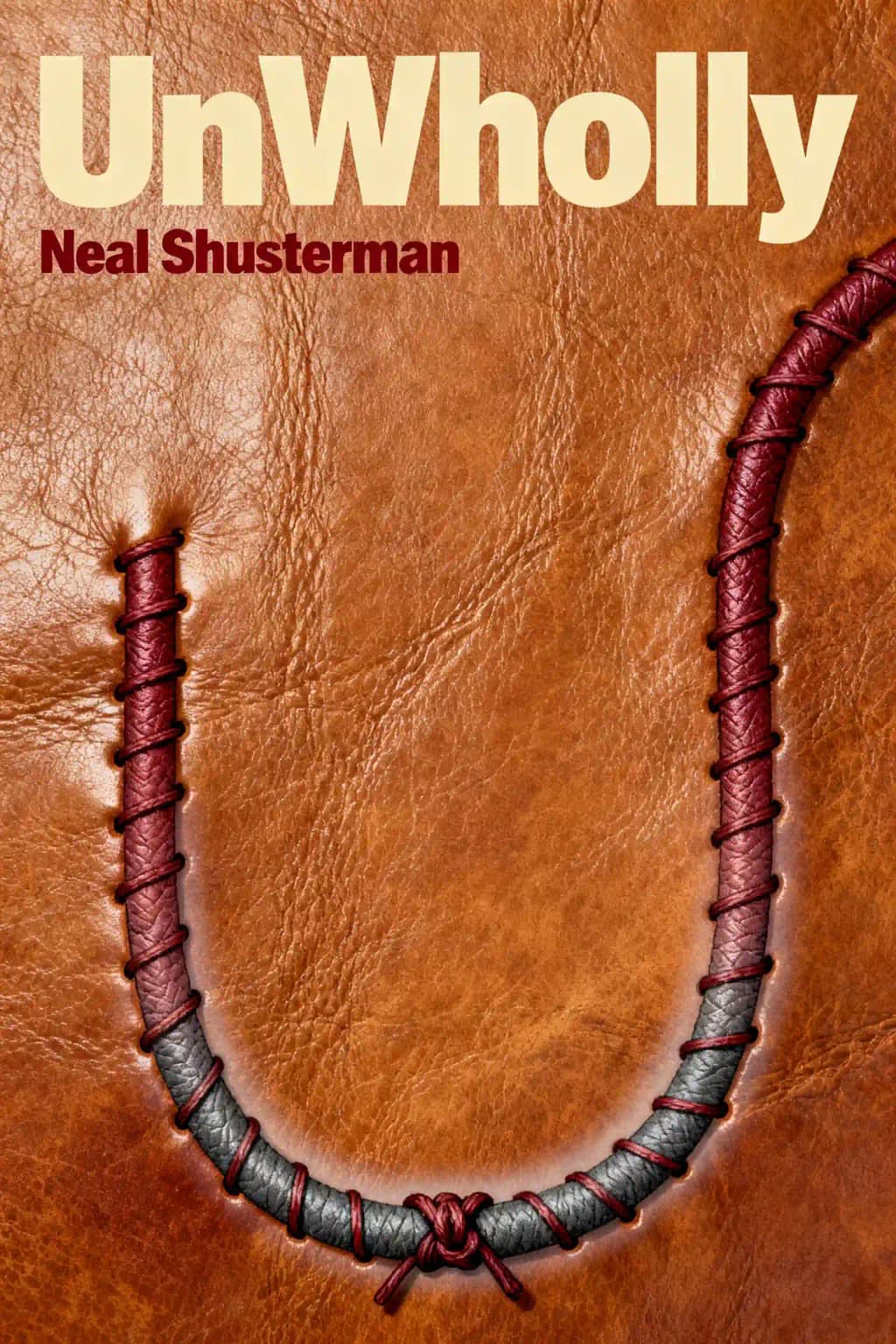
In a world where teenagers are systematically dismantled for their body parts, Neal Shusterman's "UnWholly" presents a chilling continuation of his dystopian universe. This sequel to the bestselling "Unwind" has captivated millions of readers worldwide, including celebrities like Emma Watson who praised its "thought-provoking exploration of bodily autonomy." The novel's haunting premise-that troubled teens can be "unwound" with their organs harvested for others-has made it required reading in countless high schools, sparking crucial discussions about medical ethics, human rights, and the value of young lives. What makes this story particularly disturbing is how Shusterman crafts a society that has normalized this practice through propaganda and religious justification. As you step into this world, ask yourself: how far would you go to maintain your right to exist as a whole person?
第 2 章
A Society Built on Harvested Children
The world of UnWholly presents a disturbing social order where unwinding - the process of dismantling teenagers for their body parts - has become normalized through an intricate web of propaganda and social engineering. Public service announcements saturate media channels, promoting unwinding as "the sensible solution" to juvenile delinquency, while sophisticated marketing campaigns advertise "NeuroWeave" brain tissue implants as academic enhancement products for struggling students. Harvest camps are masterfully rebranded as exciting "adventures" through slick promotional materials featuring smiling teens and promises of heroic sacrifice, masking their true nature as processing facilities where adolescents are systematically dismantled.
This normalization permeates every level of the legal system, where parents can sign "unwind orders" for troublesome children with the same casualness as signing a permission slip for a field trip. The process is clinically efficient: when Mason Starkey, a storked child (abandoned on someone's doorstep as a baby), is apprehended by Juvenile Authority officers, they mechanically recite the "Negation Clause" - a legal document that officially terminates his existence as a person. These officers themselves serve as walking advertisements for the unwinding industry, sporting transplanted features from harvested teens - one has delicate feminine lips jarringly transplanted onto his masculine face, while another boasts enhanced muscles from a teenage athlete.
The system operates with ruthless efficiency in targeting society's most vulnerable populations. Storked children like Starkey face astronomical rates of unwinding, their very existence marked by abandonment making them easy targets. State home residents like Risa Ward are evaluated purely in terms of cost-benefit analysis - their unwinding justified through budget spreadsheets and resource allocation metrics. Religious communities have developed their own disturbing practices through "tithing" - raising children specifically for unwinding, wrapping the practice in the language of sacred duty and divine purpose. These tithe children are groomed from birth to accept their fate, creating a particularly insidious form of indoctrination.
The historical foundations of unwinding have been deliberately obscured through systematic manipulation of public records and educational materials. Connor Lassiter's investigation reveals that the Unwind Accord served a dual purpose beyond resolving the abortion debate during the Heartland War - it was specifically designed to neutralize "the terror generation," a powerful youth movement that had nearly succeeded in overthrowing the government through coordinated protests and civil disobedience. This hidden history is carefully excised from textbooks and public discourse to prevent modern teenagers from recognizing their potential for collective action.
The media serves as a crucial tool in maintaining this system, employing sophisticated psychological manipulation to shape public perception of teenagers. Research shows that 57% of news stories about teenage boys focus exclusively on criminal behavior, liberally employing loaded terms like "yobs," "thugs," and "scum" to dehumanize young people. Paradoxically, teenagers only receive sympathetic media coverage when they die violently - a calculated editorial choice that makes unwinding seem more palatable by comparison. This carefully constructed social narrative creates a world where the systematic harvesting of children has become not just acceptable but routine, transforming young bodies from sacred vessels of humanity into commodified resources for a morally bankrupt society.
第 3 章
The Underground Resistance: AWOLs and Whollies
In response to the horrors of unwinding, a resistance movement has formed, centered around a hidden sanctuary called the Graveyard. Here, Connor Lassiter-the legendary "Akron AWOL"-leads over seven hundred escaped Unwinds who now call themselves "Whollies" to emphasize their right to remain whole.
The Graveyard operates within an abandoned airplane salvage yard in the Arizona desert, where decommissioned aircraft serve as living quarters, medical facilities, and command centers. Connor has established a leadership structure with inner and outer circles handling everything from security to food distribution. Daily life involves constant maintenance-keeping toilets flushing, fans working, and food supplies adequate. As Connor reflects, leadership is less about inspiring speeches and more about "keeping toilets flushing," as the Admiral once told him.
The Anti-Divisional Resistance (ADR) operates a network of safe houses that funnel AWOLs to the Graveyard. They transport teens in coffins via aircraft, providing a dangerous but effective underground railroad. However, as the story progresses, the ADR abandons the Graveyard, forcing Connor to develop self-sufficiency and escape plans.
Connor also leads rescue missions to save teens scheduled for unwinding. In one operation, he forces parents to write down their reasons for unwinding their son Noah-ranging from "disrespect" to "lack of hygiene" to "our own failure as parents"-exposing the often trivial justifications behind this horrific practice.
The resistance faces constant threats, not just from external forces but from within. Mason Starkey, a charismatic storked teen, forms a faction called the "Stork Club" that eventually splinters from Connor's leadership. Starkey's group conducts unauthorized missions, including one that ends in tragedy when they accidentally kill the very teen they were trying to save.
Communication becomes a vital tool for the resistance. Hayden operates the "ComBom," monitoring media and government channels. When Risa appears in anti-AWOL public service announcements, Hayden implements facial recognition software to prevent Connor from seeing them, protecting both Connor's morale and Risa's reputation.
Despite their best efforts, the Juvenile Authority eventually raids the Graveyard. In a desperate last stand, Connor plans for fifty volunteers to engage the authorities in a diversionary battle while the remaining six hundred fifty escape through the southern fence. This sacrifice exemplifies the resistance's core belief-that some must risk everything so others might remain whole.
第 4 章
The Psychological Impact of Being Unwound
The psychological trauma of being marked for unwinding permeates every aspect of the characters' lives, creating profound identity crises and moral dilemmas that force them to question their worth as human beings.
For teenagers facing unwinding, the knowledge that they've been deemed disposable by those meant to protect them creates devastating psychological wounds. Mason Starkey's mind "floods with painful memories" when confronted by his parents-his mother trying to abandon him at a fire station after his sister's birth, the Christmas gifts given out of obligation, and the cruel "Storky" taunts at school. These experiences shape his violent, vengeful personality and drive him to establish a hierarchy where storked children reign supreme.
Connor Lassiter struggles with the physical and psychological implications of having Roland's arm unwound into him. He avoids intimacy with Risa, fearing Roland's arm might hurt her if they became intimate. He smashes "his fist" against the wall in frustration, feeling the pain but knowing "they aren't truly his knuckles." This physical reminder of another person's dismantled existence creates a constant identity crisis-where does Connor end and Roland begin?
Risa Ward refuses surgery that would give her the spine of an unwound teen, choosing to remain in a wheelchair rather than benefit from the system she opposes. Her disability becomes both a physical limitation and a moral statement. When later forced to accept an unwound spine to protect her friends, she describes feeling like she's skiing down a mountain with an avalanche chasing her-a powerful metaphor for her loss of control and the cascading consequences of compromising her principles.
Perhaps most disturbing is how tithing programs psychologically condition children to embrace their own dismemberment. Miracolina has been raised believing her thirteenth birthday will bring "the glorious mystery of having a divided body and a networked soul." She views her unwinding not as death but as a mystical spreading of her spirit. This religious indoctrination creates a Stockholm syndrome-like attachment to her own destruction, making her initially resistant to rescue efforts.
The psychological impact extends beyond those scheduled for unwinding. Parents who sign unwind orders often display cognitive dissonance, delivering rehearsed speeches about having "no choice" while avoiding responsibility for their decisions. Society as a whole suffers from collective moral injury, requiring elaborate propaganda campaigns to justify the unjustifiable and maintain the psychological comfort of those benefiting from unwinding.
第 5 章
The Commodification of Human Life
In UnWholly, human bodies - particularly those of teenagers - have been fully transformed into commercial products, with market forces determining their value and distribution. This commodification represents the ultimate extension of treating humans as means rather than ends in themselves. The system has evolved to the point where every aspect of a person's physical form can be priced, catalogued, and traded like common merchandise.
The black market for unwound parts reveals the stark economics of this system, exposing a complex web of supply chains and price variations. A kidney buyer might pay $150,000 while the "donor" receives only $5,000, with prices varying dramatically by location - from $300,000 in Singapore to just $30,000 in the United States. This price disparity highlights how economic exploitation underpins the unwinding industry. Beyond organs, everything from skin tissue to neural matter carries specific market values, creating a grotesque catalog of human components.
J.T. Nelson, a notorious "parts pirate" who captures teens for black market harvesting, operates like a specialized procurement agent. He receives specific requests from his buyer Divan: redheaded girls, "umbers," and Native Americans ("People of Chance"), for which he'll pay premium prices. This chilling shopping list treats human beings like specialty items, with certain physical characteristics commanding higher market values. The demand for specific ethnic and genetic traits creates a disturbing hierarchy of human worth based purely on market demand.
The legitimate unwinding industry employs similar market principles but disguises them with bureaucratic language and corporate infrastructure. Medical facilities process teenagers like raw materials, while marketing departments package the practice in palatable terms for public consumption. Trace theorizes that authorities leave the Graveyard alone because the AWOLs serve as a "diamond vault," keeping unwinding prices high by removing potential "supply" from circulation. This economic calculation values profit over human lives, treating teenage refugees as market regulators rather than desperate survivors.
Even religious tithing programs commodify children, though with spiritual justification. Miracolina's story exemplifies this intersection of faith and commodification - she was conceived specifically to save her brother Matteo from leukemia through a bone marrow transplant. Her parents then promised to "gift her back to God through tithing" - essentially treating her as both a medical product and a religious offering. This dual exploitation shows how deeply the commodification mindset has penetrated even sacred institutions.
The ultimate expression of this commodification is Cam, a being created from nearly a hundred different Unwinds. Proactive Citizenry markets him through carefully orchestrated advertising campaigns designed to introduce him as a celebrity rather than an oddity. His creation represents the logical endpoint of treating human bodies as raw materials - the assembly of a designer human from harvested parts. Cam embodies the complete industrialization of human life, where individual identity becomes secondary to the potential value of one's physical components.
This commodification extends to language itself, creating a sanitized vocabulary that masks moral implications. Unwinding is never called killing, but rather "harvesting" or "division." Teenagers aren't murdered; they "have their lives divided." Parts aren't stolen; they're "redistributed." This carefully constructed lexicon creates psychological distance between actions and their ethical consequences, making it easier for society to treat humans as products rather than persons. The evolution of this specialized language reveals how deeply the commodification of human life has become embedded in social consciousness.
第 6 章
The Power of Propaganda and Media Manipulation
Throughout UnWholly, propaganda and media manipulation serve as powerful tools for normalizing the unthinkable practice of unwinding. The government, corporations, and religious institutions all employ sophisticated messaging strategies to shape public perception and maintain the status quo.
Television commercials promote "NeuroWeave" brain tissue implants as solutions for struggling students, presenting unwinding as a beneficial medical advancement rather than a horrific violation. Harvest camps are marketed as "adventures," with cheerful messaging that obscures their true purpose. Children are even recruited into "Junior Watchdog" programs to report AWOL Unwinds, turning peer surveillance into civic virtue.
Religious institutions create their own propaganda around tithing, framing unwinding as a sacred act. Miracolina's community teaches that tithing brings "the glorious mystery of having a divided body and a networked soul." This spiritual framing transforms medical dismemberment into transcendent sacrifice, making it not just acceptable but holy.
The media's portrayal of teenagers creates a foundation for unwinding's acceptance. News stories predominantly depict teenage boys as criminals, using dehumanizing language that makes it easier for society to view them as disposable. This negative framing creates fertile ground for policies that treat adolescents as problems to be solved rather than people to be protected.
When Cam is introduced to the public, Proactive Citizenry employs a sophisticated media campaign, releasing teasing close-up images of his multicolored features before revealing his full identity. This strategy transforms what could be seen as a monstrosity into a celebrity, with fashion designers even creating "Rewind Chic" clothing inspired by his patchwork appearance. This commodification of his existence through fashion demonstrates how media can normalize even the most disturbing innovations.
Perhaps most insidious is how history itself is manipulated. Connor discovers that Janson Rheinschild's name-the inventor of unwinding technology-has been deliberately erased, "gouged from marble walls" at Proactive Citizenry headquarters. The history of "the terror generation" that nearly toppled the government has been hidden from educational curricula. By controlling historical narratives, authorities prevent today's youth from understanding the true origins of unwinding or realizing their collective power to oppose it.
Risa ultimately uses the media's power against itself when she exposes Proactive Citizenry's manipulation during a national television interview. Her act of truth-telling demonstrates that while propaganda can normalize atrocities, authentic voices can still break through and challenge established narratives.
第 7 章
The Ethics of Creation: Cam's Existential Journey
Cam represents the most profound ethical dilemma in UnWholly-a being created from nearly a hundred different Unwinds who must forge an identity from fragmented consciousness. His journey explores fundamental questions about personhood, the soul, and what it means to be human.
From his first moments of awareness, Cam struggles with his composite nature. His thoughts come in "marathons" as he works through fragments of memories that somehow all happened to him yet didn't-pain memories of a burned hand, angry mother, broken arm, and knife fight. These disconnected experiences belong to the unwound teens whose parts compose him, creating a consciousness that is both singular and plural.
Cam's physical appearance-a patchwork of different flesh tones like a "living quilt"-makes his composite nature impossible to ignore. When he calls himself "Frankenstein," Roberta corrects him, explaining he's made from living flesh, not dead parts. She proudly describes him as a "glorious mosaic of humanity" containing pieces of every ethnicity. This physical diversity becomes both his defining characteristic and his burden.
His existential questions intensify as he develops self-awareness. When he questions Roberta about souls, she offers unsatisfying platitudes about creating his own experiences and forgetting those who "gave rise" to him. Her answers leave him frustrated as she avoids deeper questions about consciousness and identity. During his press conference, Cam passionately defends his humanity, comparing himself to impressionist paintings that must be viewed from a distance to appreciate, before breaking down and shouting "I am more than the parts I'm made of!"
Cam's relationship with Risa further complicates his identity. He discovers he contains parts of Samson, a boy from Risa's state home who had a crush on her, and it was this inherited interest that led Roberta to bring Risa to the compound. This raises disturbing questions about the continuity of consciousness and emotion-are Cam's feelings his own, or remnants of someone else's life?
The ethics of Cam's creation extend beyond his personal identity to society's responsibility. Created by Proactive Citizenry as a "new paradigm" of humanity, Cam represents both the ultimate achievement of unwinding technology and its most disturbing implication-the assembly of designer humans from harvested parts. His existence forces society to confront whether technological capability should override moral constraints.
By the story's end, Cam develops a sense of agency despite his manufactured origins. After helping Risa escape, he forms a plan to use Roberta's resources to dismantle Proactive Citizenry "piece by piece." This determination to shape his own destiny suggests that personhood transcends origins-even a being created from unwound parts can claim authentic selfhood and moral purpose.
第 8 章
Betrayal and Sacrifice: The Price of Survival
In the desperate world of UnWholly, characters repeatedly face impossible choices between self-preservation and protecting others, with betrayal and sacrifice becoming inevitable aspects of survival.
Connor Lassiter embodies this dilemma as leader of the Graveyard. When the Juvenile Authority raids their sanctuary, he plans for fifty volunteers to engage in a diversionary battle while the remaining six hundred fifty escape-essentially sacrificing the few to save the many. This utilitarian calculation weighs on him heavily, yet he includes himself among those who will stay behind, demonstrating his willingness to sacrifice his own life for the greater good.
Risa Ward makes perhaps the most painful sacrifice when she agrees to accept an unwound spine and publicly support unwinding to protect the Graveyard residents. When Roberta threatens to have all 719 AWOLs unwound unless she cooperates, Risa signs the consent form, betraying her principles to save her friends. This forced choice haunts her daily as she participates in propaganda that violates everything she believes in.
Lev Calder's journey involves multiple sacrifices, culminating in his decision to tranquilize Connor himself during the Graveyard raid. Recognizing that Connor's determination to fight until the end will get him killed, Lev makes the impossible choice to betray his friend in order to save him, placing the unconscious Connor in Nelson's path and using the parts pirate as an unwitting escape vehicle. This act of betrayal-as-salvation demonstrates how conventional morality breaks down in their desperate circumstances.
Starkey represents the darkest version of sacrifice, willing to sacrifice others for his cause. During the plane crash in the Salton Sea, those on the outside of human clusters become "sacrifices, crushed against hard surfaces" to protect those inside. Rather than mourn the forty-one who died, Starkey immediately pushes everyone to move forward with his vision of a guerrilla army. His willingness to accept casualties reveals how easily the fight for survival can corrupt moral principles.
Even minor characters face these impossible choices. Hayden and fourteen others barricade themselves in the ComBom during the raid, facing the ultimate question: "Would you rather die or be unwound?" Every single kid chooses death over unwinding. Yet when one boy dies beside him from heat and oxygen deprivation, Hayden chooses surrender over watching his friends suffer, blasting out the windshield to let in fresh air-sacrificing their stand on principle to prevent further deaths.
These cascading betrayals and sacrifices reveal the moral cost of surviving in a system designed to commodify human lives. Each character must determine what they're willing to compromise and what principles remain inviolable, creating a complex moral landscape where traditional concepts of right and wrong provide insufficient guidance.
第 9 章
Hope in the Darkness: Signs of Change
Despite the bleak dystopian setting, UnWholly offers glimpses of hope through small acts of resistance, changing public attitudes, and the resilience of its young protagonists.
The most powerful symbol of hope emerges in the final scenes when a waitress named Karla unexpectedly helps Connor and Lev escape pursuing police. She claims they're her relatives, gives them her car keys, and tells them, "Not everyone's your enemy. Things are changing out there. People are changing." This spontaneous act of solidarity from an ordinary citizen suggests the public conscience is awakening to the horrors of unwinding.
Risa's televised truth-telling represents another beacon of hope. By exposing Proactive Citizenry's manipulation and denouncing unwinding on national television, she demonstrates that even those coerced into supporting the system can find ways to subvert it. Her courage inspires others and potentially changes public perception about unwinding's legitimacy.
Hayden's final message before surrendering offers a powerful articulation of hope through moral clarity: "We are not just AWOLs! We are not just parts! We are whole human beings-and history will look back on these times in shame!" By appealing to future judgment, Hayden places their struggle in historical context, suggesting that moral progress is inevitable even if not immediate.
The discovery of Janson Rheinschild's true history provides hope through knowledge. Learning that the inventor of unwinding technology actually created Proactive Citizenry as an ethical watchdog to prevent abuses of his innovation reveals that the system's corruption represents a betrayal of its founder's intentions. This knowledge gives Connor and Lev a potential leverage point for challenging unwinding's legitimacy.
Miracolina's transformation from devoted tithe to independent thinker demonstrates how even the most indoctrinated can change. Though still planning to return to her parents, she now sees purpose in her journey with Lev and plans to someday host a celebration where she'll invite him to dance-a small but significant reimagining of her future beyond the limited role she was assigned.
Perhaps most importantly, the novel's conclusion shows Connor and Lev continuing their resistance despite overwhelming setbacks. As they drive east on Route 66, Connor teases that he'll make Lev get a haircut when they reach Ohio, both heading into "a world that's ripe for saving." This simple moment of friendship and forward momentum suggests that hope persists not through grand victories but through the determination to continue fighting for what's right, regardless of the odds.
In a world where teenagers are systematically dismantled, the greatest act of hope is simply to keep existing, to maintain one's wholeness against all attempts to divide it. As the characters move forward with their resistance, they embody the novel's central message: that human dignity cannot be permanently suppressed, even in the darkest of circumstances.