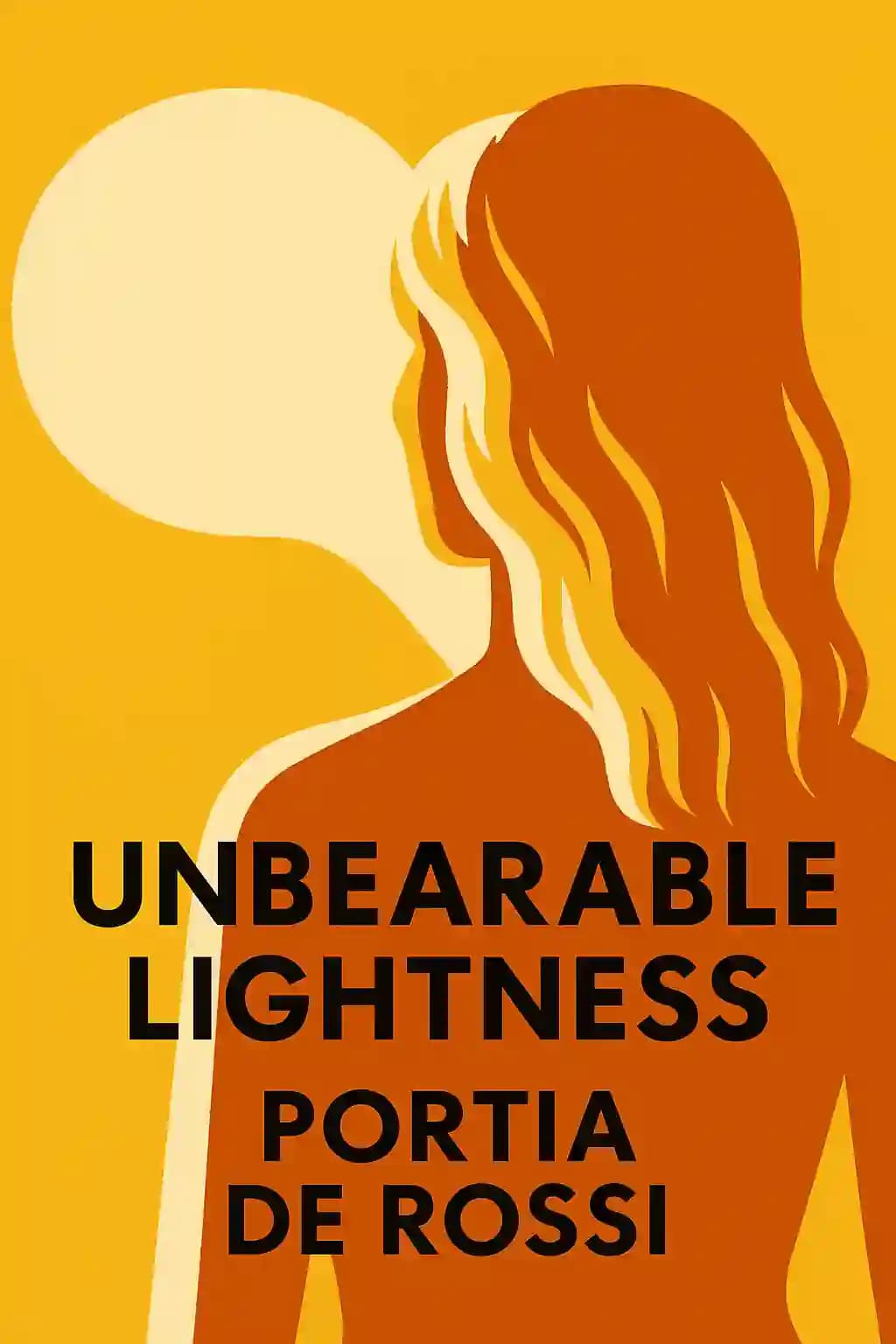
Portia de Rossi's raw memoir exposes her battle with anorexia and sexuality struggles that resonated with Ellen DeGeneres and countless others. How did weighing just 82 pounds while filming Ally McBeal reveal Hollywood's darkest secrets about body image and identity?
Portia de Rossi, bestselling author of Unbearable Lightness: A Story of Loss and Gain, is an Australian-American actress, LGBTQ+ advocate, and art entrepreneur renowned for her candid storytelling.
Her memoir, a raw exploration of identity, eating disorders, and self-acceptance, draws from her highly publicized struggles with anorexia and bulimia during her rise to fame on Ally McBeal and Arrested Development. Born Amanda Lee Rogers in rural Australia, de Rossi’s early career as a model and actor underpin her unflinching examination of body image and sexuality in Hollywood.
A Screen Actors Guild Award winner, she retired from acting in 2019 to focus on General Public, her art-technology platform revolutionizing 3D-printed reproductions in collaboration with Restoration Hardware. The memoir, a New York Times bestseller, solidified her voice in mental health advocacy and LGBTQ+ visibility, amplified by her marriage to Ellen DeGeneres. Translated into 12 languages, it remains a touchstone for discussions on recovery and authenticity.
Unbearable Lightness is Portia de Rossi’s raw memoir detailing her decades-long battle with anorexia and bulimia during her rise to fame on Ally McBeal. It explores her obsession with calorie restriction (as low as 300/day), secret binges, and the physical toll of osteoporosis and lupus, while revealing her struggle to hide her sexuality. The book culminates in her recovery, self-acceptance, and marriage to Ellen DeGeneres.
This memoir is essential for those interested in eating disorder recovery, LGBTQ+ narratives, or celebrity mental health journeys. It resonates with readers seeking insights into societal beauty standards, identity struggles, and the psychology of control. Fans of de Rossi’s acting career or candid autobiographies like Brave by Rose McGowan will find it compelling.
Yes—critics praise its unflinching honesty about body dysmorphia and the entertainment industry’s toxic pressures. De Rossi’s vivid accounts, like running in heels to burn gum calories or collapsing on set at 82 pounds, offer a harrowing yet hopeful perspective on resilience. The Los Angeles Times calls it “unusually fresh and engrossing.”
De Rossi details rituals like avoiding lip balm (for fear of calories) and dividing food into microscopic portions. She recounts binging on 20 packs of gum, followed by frantic exercise. Her disorder stems from childhood modeling trauma and a desire to “disappear” as she hid her sexuality, culminating in near-fatal organ failure.
The book critiques Western beauty ideals that glorify thinness, linking them to de Rossi’s fixation on fitting sample-size costumes. A pivotal scene involves a L’Oreal photoshoot where stylists shame her for needing a size 8 skirt, intensifying her self-loathing. De Rossi argues such standards perpetuate systemic harm.
De Rossi describes paralyzing fear that coming out would end her career, leading to deeper isolation. She credits Ellen DeGeneres for helping her embrace authenticity, culminating in their 2008 marriage. The memoir frames her sexuality as intertwined with her eating disorder—both rooted in shame and secrecy.
Lambda Literary hailed its “eerie” portrayal of self-destruction, while Bookreporter praised its “compelling objectivity.” Readers on Goodreads note its “brutal, shocking honesty,” particularly about relapse triggers. Critics highlight its value for mental health advocacy and LGBTQ+ representation.
At her lowest weight (82 lbs), de Rossi developed:
Her memoir emphasizes these physical costs to underscore eating disorders’ lethality.
The “lightness” symbolizes de Rossi’s pursuit of weight loss as a metaphor for escaping emotional burdens. Yet this quest becomes “unbearable” as starvation isolates her, mirroring philosopher Milan Kundera’s exploration of existential weightlessness in The Unbearable Lightness of Being.
Unlike superficial autobiographies, de Rossi avoids glamorizing fame—instead dissecting Hollywood’s role in her self-destruction. It shares parallels with Demi Lovato’s Staying Strong but stands out for linking eating disorders to LGBTQ+ stigma, offering a unique intersectional lens.
As she writes, “My body wasn’t the enemy—my mind was”.
通过作者的声音感受这本书
将知识转化为引人入胜、富含实例的见解
快速捕捉核心观点,高效学习
以有趣互动的方式享受这本书
You're nothing. You're average.
Average was the most disgusting word she knew.
Nobody's business.
Famous actresses were special people.
Food was her eraser.
将《Unbearable Lightness》的核心观点拆解为易于理解的要点,了解创新团队如何创造、协作和成长。
将《Unbearable Lightness》提炼为快速记忆要点,突出坦诚、团队合作和创造力的关键原则。

通过生动的故事体验《Unbearable Lightness》,将创新经验转化为令人难忘且可应用的精彩时刻。
随心提问,选择声音,共同创造真正与你产生共鸣的见解。

"Instead of endless scrolling, I just hit play on BeFreed. It saves me so much time."
"I never knew where to start with nonfiction—BeFreed’s book lists turned into podcasts gave me a clear path."
"Perfect balance between learning and entertainment. Finished ‘Thinking, Fast and Slow’ on my commute this week."
"Crazy how much I learned while walking the dog. BeFreed = small habits → big gains."
"Reading used to feel like a chore. Now it’s just part of my lifestyle."
"Feels effortless compared to reading. I’ve finished 6 books this month already."
"BeFreed turned my guilty doomscrolling into something that feels productive and inspiring."
"BeFreed turned my commute into learning time. 20-min podcasts are perfect for finishing books I never had time for."
"BeFreed replaced my podcast queue. Imagine Spotify for books — that’s it. 🙌"
"It is great for me to learn something from the book without reading it."
"The themed book list podcasts help me connect ideas across authors—like a guided audio journey."
"Makes me feel smarter every time before going to work"

免费获取《Unbearable Lightness》摘要的 PDF 或 EPUB 版本。可打印或随时离线阅读。
At 4:15 a.m., the alarm sounds. Before opening her eyes, a young actress performs her morning ritual-grabbing at her breasts, ribs, stomach, hip bones with rough, punishing hands. "What did you eat last night?" a voice inside her head demands. She's gained weight, she's certain of it. The punishment? One hundred fifty calories for the entire day and twenty laxatives to erase last night's yogurt. "You're nothing. You're average," she whispers through tears. This was Portia de Rossi's reality during her years on *Ally McBeal*, when the world saw a rising star and she saw only failure staring back from every reflective surface. Her memoir pulls back the curtain on a brutal truth: sometimes the price of appearing perfect is losing yourself entirely. This fear of being average had haunted her since childhood. At twelve, transferring to Geelong Grammar School, she discovered her family wasn't wealthy like classmates who arrived in helicopters. "We're not poor, stupid. We're average," her brother explained. That word-average-became the most disgusting in her vocabulary. Average people don't cure cancer or win Oscars. At twelve, she'd renamed herself from Amanda Rogers to Portia de Rossi because ordinary girls don't become stars. And Portia de Rossi, whoever she was becoming, would not be average.