Ancient Indian wisdom meets modern business crisis in "Two Birds in a Tree." Endorsed by thought leaders like Margaret Wheatley, this guide replaces profit-obsession with "Being-centered leadership." Can the same wisdom that inspired The Body Shop's success transform your business into a force for good?
Ram Nidumolu is the acclaimed author of Two Birds in a Tree: Timeless Indian Wisdom for Business Leaders and a pioneering thought leader in sustainable business strategy and innovation.
A business consultant, entrepreneur, and scholar with over 25 years of experience, Nidumolu blends insights from ancient Indian philosophy with modern management practices to redefine leadership in the corporate world.
His expertise stems from a distinguished career as the founder of InnovaStrat, advising Fortune 500 companies like FedEx and Puma, and serving as COO of Blu Skye. Nidumolu’s influential Harvard Business Review article, “Why Sustainability Is Now the Key Driver of Innovation,” has shaped global executive strategies.
Currently an affiliated scholar at Stanford University’s Kozmetsky Global Collaboratory, he holds a PhD in Management from UCLA and an executive education background from IIM Calcutta. Two Birds in a Tree, praised by CEOs of Unilever and Patagonia, remains a seminal work in dharma capitalism and beingful leadership, offering transformative approaches to sustainable business growth.
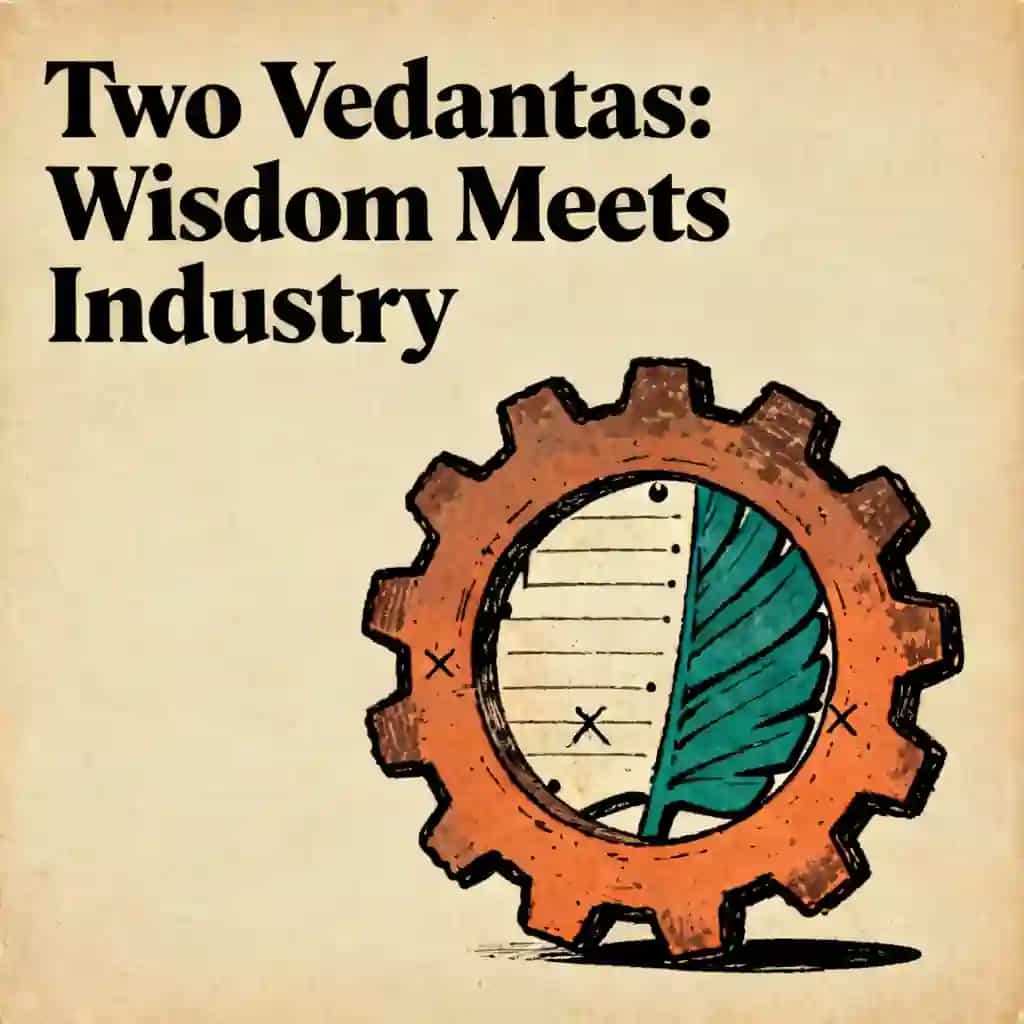
Two Birds in a Tree by Ram Nidumolu reimagines business leadership through ancient Indian wisdom from the Upanishads. It introduces Being-centered leadership, emphasizing interconnection between business, humanity, and nature. The book offers a four-stage roadmap to align profit with purpose, using parables and case studies from CEOs at Unilever, Patagonia, and others.
This book is ideal for executives, sustainability professionals, and leaders seeking ethical frameworks that balance profit with planetary health. It’s also valuable for readers interested in Eastern philosophy’s application to modern business challenges.
The metaphor, drawn from the Upanishads, symbolizes human duality: one bird (ego) obsesses over short-term gains, while the other (true self) observes holistically. Nidumolu uses this to critique profit-driven models and advocate for leadership rooted in interconnectedness.
Being-centered leadership prioritizes long-term well-being of all stakeholders over quarterly profits. It’s anchored in dharma (ethical duty) and emphasizes serving the collective, as demonstrated by CEOs who reduced environmental impact while boosting innovation.
Nidumolu argues sustainability isn’t optional but a competitive advantage. Case studies show companies like Patagonia thrived by embedding environmental care into core strategy, mirroring Gandhi’s principle of minimal harm.
While praised for innovation, some note its reliance on abstract philosophy over concrete tactics. Critics suggest pairing it with operational guides to bridge theory and practice.
His tech entrepreneurship and academic research inform real-world examples, like using CRM systems to foster stakeholder relationships, blending Eastern wisdom with Western business rigor.
These lines encapsulate the call for holistic, compassionate leadership.
Unlike Atomic Habits (tactical change) or Lean In (individual growth), Nidumolu’s work focuses on systemic ethical transformation, making it unique in linking ancient wisdom to stakeholder capitalism.
Yes. Its emphasis on servant leadership and empathy provides frameworks for resolving conflicts, reducing burnout, and fostering inclusive teams—key for modern remote/hybrid work environments.
Amid AI disruption and climate crises, its timeless principles help leaders navigate complexity ethically. The Upanishadic focus on interconnection aligns with rising ESG (Environmental, Social, Governance) priorities.
通过作者的声音感受这本书
将知识转化为引人入胜、富含实例的见解
快速捕捉核心观点,高效学习
以有趣互动的方式享受这本书
Companies focused solely on short-term gains have become disconnected from humanity.
Being-centered leadership means leading from a place of seeking to realize this fundamental reality.
A subsystem cannot flourish if its containing system is unhealthy.
When guided by this quest, there is little to fear in this world.
Both internal imagination and external work are necessary sources of knowledge.
将《Two Birds in a Tree》的核心观点拆解为易于理解的要点,了解创新团队如何创造、协作和成长。
将《Two Birds in a Tree》提炼为快速记忆要点,突出坦诚、团队合作和创造力的关键原则。

通过生动的故事体验《Two Birds in a Tree》,将创新经验转化为令人难忘且可应用的精彩时刻。
随心提问,选择声音,共同创造真正与你产生共鸣的见解。

"Instead of endless scrolling, I just hit play on BeFreed. It saves me so much time."
"I never knew where to start with nonfiction—BeFreed’s book lists turned into podcasts gave me a clear path."
"Perfect balance between learning and entertainment. Finished ‘Thinking, Fast and Slow’ on my commute this week."
"Crazy how much I learned while walking the dog. BeFreed = small habits → big gains."
"Reading used to feel like a chore. Now it’s just part of my lifestyle."
"Feels effortless compared to reading. I’ve finished 6 books this month already."
"BeFreed turned my guilty doomscrolling into something that feels productive and inspiring."
"BeFreed turned my commute into learning time. 20-min podcasts are perfect for finishing books I never had time for."
"BeFreed replaced my podcast queue. Imagine Spotify for books — that’s it. 🙌"
"It is great for me to learn something from the book without reading it."
"The themed book list podcasts help me connect ideas across authors—like a guided audio journey."
"Makes me feel smarter every time before going to work"

免费获取《Two Birds in a Tree》摘要的 PDF 或 EPUB 版本。可打印或随时离线阅读。
Two birds sit in the same tree. One frantically hops from branch to branch, tasting fruits both sweet and bitter, never satisfied. The other rests calmly at the top, simply watching. This 3,000-year-old image from India's Upanishads captures our modern crisis perfectly: businesses chasing quarterly returns have severed their connections to humanity and nature, leaving behind environmental collapse, social fracture, and institutional distrust. What if the solution to our most pressing challenges-climate change, inequality, workplace burnout-lies not in the latest management framework but in reconnecting with something far older and more fundamental?