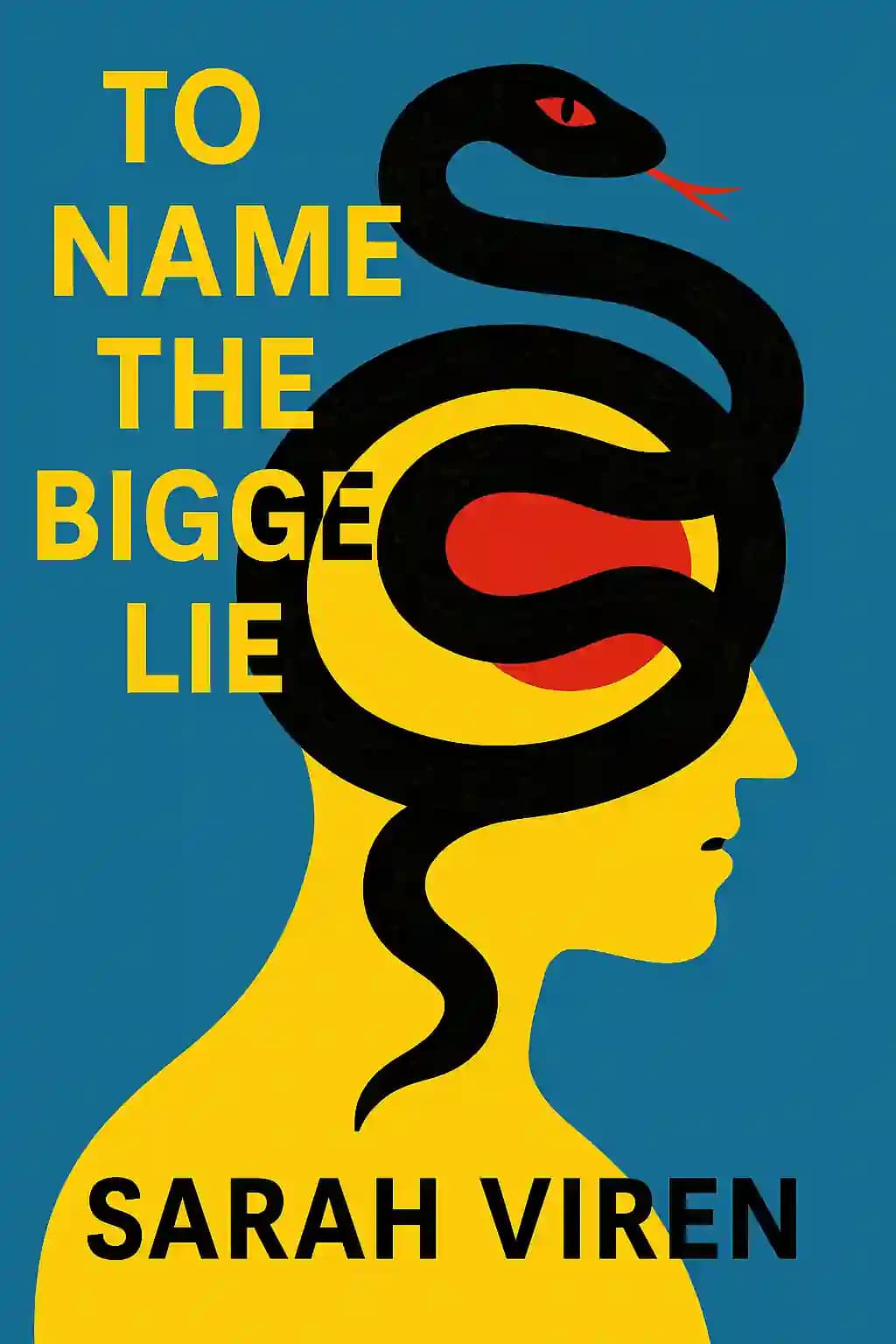
Sarah Viren's riveting memoir unravels two deceptions that shaped her life - from a Holocaust-denying teacher to false allegations against her spouse. This philosophical detective story, praised as "a mesmerizing page-turner," exposes how weaponized falsehoods corrupt our understanding of truth itself.
Sarah Viren, author of To Name the Bigger Lie, is an award-winning essayist and New York Times Magazine contributor renowned for probing themes of truth, identity, and conspiracy. A creative writing professor at Arizona State University, Viren interweaves memoir and investigative journalism in this genre-blurring exploration of personal and societal deception.
Her debut essay collection, Mine—longlisted for the PEN/Diamonstein-Spielvogel Award and a Lambda Literary Award finalist—established her as a master of narrative nonfiction.
Viren’s work frequently grapples with real-world ethical quandaries, informed by her experiences as a journalist and academic. Her viral New York Times essay about being falsely accused of misconduct, later adapted for The Daily podcast, became a 2021 National Magazine Award finalist.
The Los Angeles Times hails To Name the Bigger Lie as “a vital text for our post-truth era,” while her Lambda Literary Award-shortlisted memoir has been celebrated for its unflinching examination of gaslighting and epistemological uncertainty. A Fulbright grant recipient, Viren continues bridging literary craft and urgent cultural analysis through her writing and pedagogy.
To Name the Bigger Lie by Sarah Viren intertwines two narratives: a memoir about her charismatic high school philosophy teacher who propagated conspiracy theories, and a personal account of false sexual misconduct accusations against her wife. The book examines truth, betrayal, and the allure of dangerous narratives in a world grappling with misinformation.
This memoir appeals to readers interested in investigative nonfiction, LGBTQ+ narratives, and critiques of conspiracy theories. It’s ideal for fans of memoirs that blend personal crisis with broader cultural analysis, particularly those exploring academic life, truth-seeking, and resilience.
Yes. The book is a New York Times Editors’ Choice, praised for its gripping exploration of truth and deception. Its dual narrative structure offers both a personal saga and a philosophical inquiry, making it a compelling read for those interested in memoir and social commentary.
Viren dissects how conspiracy thinking infiltrates education and personal lives, using her teacher’s Holocaust denial lessons and the false accusations against her wife. The memoir questions why people embrace harmful falsehoods and how they distort reality.
The dual narratives—high school philosophy classes and the investigation into her wife—reflect how past and present truths collide. This structure highlights the pervasive impact of lies, whether in shaping young minds or threatening adult lives.
Viren draws parallels between her teacher’s manipulative lessons and the false accusations, illustrating how both episodes force her to confront the malleability of truth and the consequences of believing dangerous narratives.
The book was shortlisted for the 2024 Lambda Literary Award, named an NPR and LitHub book of the year, and lauded as a New York Times Editors’ Choice. Viren’s essay on the accusations was a 2021 National Magazine Award finalist.
Viren explores how betrayal—by a mentor, a colleague, or systemic institutions—erodes trust. She interrogates the emotional and societal costs of lies while advocating for vigilance in discerning truth.
Dr. Whiles, Viren’s high school teacher, serves as a catalyst for her skepticism. His promotion of conspiracy theories, including Holocaust denial, challenges students to question reality, leaving lasting psychological impacts.
Viren details the emotional and professional toll of the accusations against her wife, revealing how easily careers and relationships can unravel. The ordeal underscores systemic vulnerabilities to malicious narratives.
While Mine focuses on personal essays about identity and belonging, To Name the Bigger Lie adopts a memoir format to dissect broader societal lies. Both showcase Viren’s skill in blending narrative storytelling with critical analysis.
The book’s examination of misinformation, conspiracy theories, and their real-world consequences resonates in an era of "fake news" and polarized discourse. It offers a roadmap for navigating truth in personal and public spheres.
通过作者的声音感受这本书
将知识转化为引人入胜、富含实例的见解
快速捕捉核心观点,高效学习
以有趣互动的方式享受这本书
Facts mattered less than narratives.
Nuance is extraordinary.
What is the metaphor of the cave?
The lake became its own philosophical space.
Philosophy offered permission to question everything.
将《To Name the Bigger Lie》的核心观点拆解为易于理解的要点,了解创新团队如何创造、协作和成长。
将《To Name the Bigger Lie》提炼为快速记忆要点,突出坦诚、团队合作和创造力的关键原则。

通过生动的故事体验《To Name the Bigger Lie》,将创新经验转化为令人难忘且可应用的精彩时刻。
随心提问,选择声音,共同创造真正与你产生共鸣的见解。

"Instead of endless scrolling, I just hit play on BeFreed. It saves me so much time."
"I never knew where to start with nonfiction—BeFreed’s book lists turned into podcasts gave me a clear path."
"Perfect balance between learning and entertainment. Finished ‘Thinking, Fast and Slow’ on my commute this week."
"Crazy how much I learned while walking the dog. BeFreed = small habits → big gains."
"Reading used to feel like a chore. Now it’s just part of my lifestyle."
"Feels effortless compared to reading. I’ve finished 6 books this month already."
"BeFreed turned my guilty doomscrolling into something that feels productive and inspiring."
"BeFreed turned my commute into learning time. 20-min podcasts are perfect for finishing books I never had time for."
"BeFreed replaced my podcast queue. Imagine Spotify for books — that’s it. 🙌"
"It is great for me to learn something from the book without reading it."
"The themed book list podcasts help me connect ideas across authors—like a guided audio journey."
"Makes me feel smarter every time before going to work"

免费获取《To Name the Bigger Lie》摘要的 PDF 或 EPUB 版本。可打印或随时离线阅读。
In a world increasingly divided by competing narratives, Sarah Viren's experience offers a chilling glimpse into what happens when accusations trump facts. Imagine receiving an email containing false sexual harassment allegations against your spouse while celebrating at a graduation party. The contrast is jarring-joy and accomplishment instantly overshadowed by a threatening intrusion that arrives without warning. This isn't just a personal nightmare; it's a microcosm of our larger cultural struggle with truth, evidence, and justice. The accusations against Viren's wife Marta appeared strategically timed-just as professional opportunities were opening up, this shadow emerged, threatening to undermine everything they had worked for. What makes such situations particularly devastating is how quickly they transform your perception of the world. Suddenly, every interaction becomes suspect, every colleague a potential threat. The safe, rational environment you thought you inhabited reveals itself as potentially hostile territory where anonymous attacks can come without warning or justification. What's most unsettling about false accusations is how they force you to question connections you previously took for granted. Every past conversation gets reexamined for hidden meanings or motivations. The boundaries between paranoia and reasonable caution blur when you know someone is actively working to undermine you. And in our digital age, anonymous online posts somehow gain the power to affect physical reality, professional standing, and future prospects.