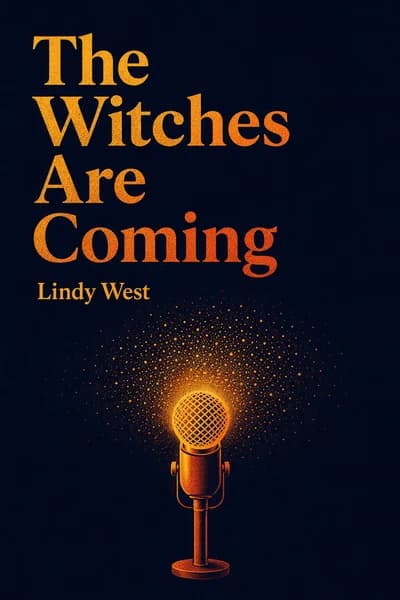
The Witches Are Coming
《The Witches Are Coming》概述
In "The Witches Are Coming," NYT writer Lindy West brilliantly dismantles misogyny in American culture with razor-sharp essays that redefined post-#MeToo feminist discourse. Nominated for Goodreads Choice Award, this collection turns "witch hunt" accusations into a battle cry for truth-tellers everywhere.

《The Witches Are Coming》核心主题
- male mediocrity
- cultural gaslighting
- accountability culture
- gendered media tropes
- institutional benefit of doubt
《The Witches Are Coming》经典语录
White men failing upward has become so normal it distorts our perception of quality.
Institutional benefit of the doubt is monstrously powerful, turning lies into truth through incantation.
If someone is universally likable, I don't trust them.
A witch has power, and power in women isn't likable.
From romantic comedies I learned stalking means he loves you.
《The Witches Are Coming》主要人物
- Lindy WestThe author and narrator of the essays
- Adam SandlerComedian used as a case study for male mediocrity
- Ted BundySerial killer discussed regarding male charisma
- Billy McFarlandFyre Festival con artist discussed as a case study
关于作者
《The Witches Are Coming》作者介绍
Lindy West, New York Times bestselling author and feminist cultural critic, explores systemic injustice, pop culture, and gender politics in her incendiary essay collection The Witches Are Coming. A defining voice in modern feminism, West merges sharp wit with unflinching social critique, drawing from her experience as a Guardian columnist, This American Life contributor, and co-founder of the reproductive rights movement #ShoutYourAbortion.
Her debut memoir, Shrill: Notes from a Loud Woman, a New York Times bestseller adapted into a Hulu series, cemented her reputation for dismantling fatphobia and misogyny in media. West’s work has been featured in Jezebel, GQ, and her Butt News newsletter, where she critiques film and culture.
A Stranger Genius Award winner and Esquire Best Book honoree, she co-hosts the comedy podcast Text Me Back and lives on Washington’s Olympic Peninsula. Shrill has been translated into 12 languages and streamed globally via Hulu’s acclaimed adaptation.
下载《The Witches Are Coming》摘要
免费获取《The Witches Are Coming》摘要的 PDF 或 EPUB 版本。可打印或随时离线阅读。
关于本书的常见问题
The Witches Are Coming is a sharp, humorous essay collection critiquing modern societal norms through a feminist lens. West tackles post-2016 political backlash, misogyny, toxic masculinity, and pop culture’s role in normalizing oppression, using references from Ghostbusters to Donald Trump. The title metaphor challenges patriarchal fearmongering, declaring, “Yes, we are witches—and we’re hunting you.”
This book appeals to feminists, social justice advocates, and readers seeking incisive cultural criticism blended with humor. Fans of West’s prior work (Shrill) or writers like Rebecca Solnit will appreciate her unapologetic analysis of gender, power dynamics, and media. It’s ideal for those exploring intersectional feminism or disillusioned by post-Trump political rhetoric.
Yes—readers praise its quotable prose, laugh-out-loud snark, and timely insights. Goodreads reviewers highlight its “biting wit” and “scholarly rhetoric,” calling it a standout in feminist literature. West balances levity with urgent critiques, making complex topics accessible while offering actionable optimism.
- Accountability: Examines systemic complicity in oppression, from #MeToo to racist media narratives.
- Pop culture critique: Analyzes films, TV, and public figures (e.g., Adam Sandler, Forrest Gump) as vectors for harmful ideologies.
- Witch symbolism: Reclaims “witch” as a label for women resisting patriarchal control.
West argues that 2016’s political shifts exposed existing societal fractures, particularly misogyny and white supremacy. She critiques both conservative policies and liberal complacency, urging collective action over “individual fixes” to systemic issues. Essays dissect abortion rights, rape culture, and media’s role in shaping public perception.
While direct quotes are restricted in reviews, readers highlight lines like:
- “We’re not melting—we’re burning shit down.”
- “The truth is not an algorithm; the truth is a searchlight”.
These encapsulate West’s blend of defiance and clarity, often cited for social media shares.
While Shrill focuses on personal essays about body positivity and identity, The Witches Are Coming adopts a broader sociopolitical scope. Both use humor, but the latter emphasizes systemic critique over memoir, reflecting West’s evolution from individual to collective advocacy.
Some readers note West’s sarcastic tone may alienate those unfamiliar with her style, and her focus on U.S.-centric issues limits global applicability. However, most praise her ability to 平衡 wit with substantive analysis.
West dissects films like The Lion King and public figures (e.g., Bill Cosby) to reveal embedded sexism and racism. For example, she critiques Forrest Gump as a vehicle for romanticizing ignorance, linking it to anti-intellectual political trends.
Yes—West advocates for collective activism, urging readers to reject apathy and confront systemic inequities. She emphasizes storytelling as a tool for change, exemplified by her #ShoutYourAbortion campaign co-founded in 2015.
The witch symbolizes marginalized people (especially women) persecuted for challenging power structures. West subverts the trope, framing witches not as villains but as truth-tellers dismantling oppressive systems.
Though published in 2019, its themes resonate with 2025 debates about reproductive rights, LGBTQ+ discrimination, and media disinformation. West’s critique of “both-sides-ism” remains relevant amid polarized political discourse.