第 1 章
Triumph Over Darkness: Helen Keller's Extraordinary Journey
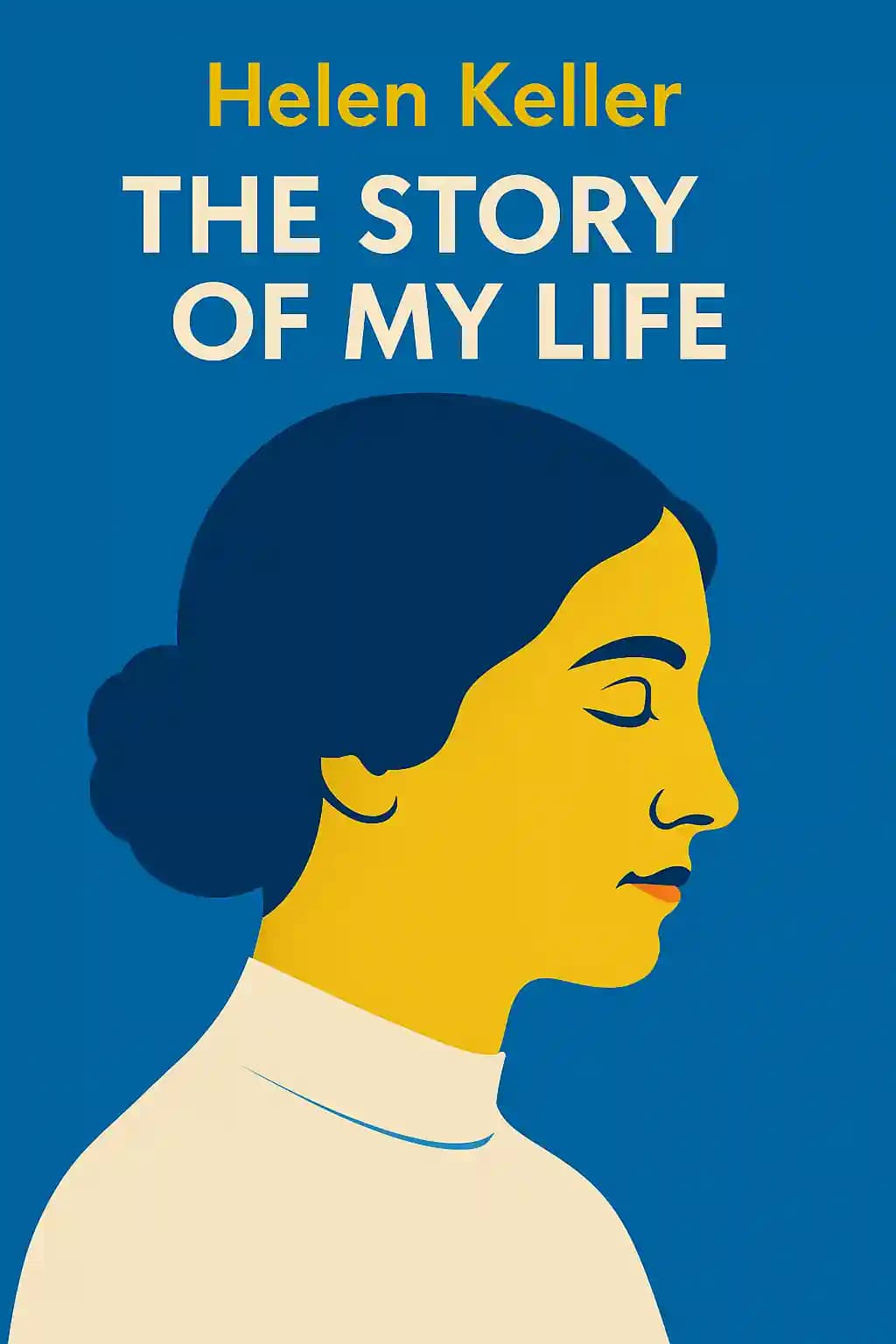
Helen Keller's "The Story of My Life" stands as one of the most remarkable personal accounts ever written. Published in 1903 when Keller was just 22 years old, this memoir has inspired millions across generations with its testament to human resilience. Oprah Winfrey once cited it as the book that most influenced her perspective on overcoming adversity, while Stephen Hawking referenced Keller as proof that physical limitations need not constrain the mind's potential. The book has been translated into over 50 languages and remains required reading in educational systems worldwide. Beyond its literary significance, Keller's story revolutionized attitudes toward disability and sparked educational reforms that continue to benefit millions today. What makes this narrative so compelling is not just what Keller accomplished, but how she transformed what many would consider insurmountable obstacles into the very foundation of an extraordinary life.
第 2 章
The Silent World Awakens
Before the age of two, illness plunged Helen Keller into a world of darkness and silence. That pivotal moment stripped away her sight and hearing, leaving her isolated in a sensory void that few can comprehend. Those early years were marked by frustration and rage as she struggled to communicate with the world around her. Without language or structure, Helen existed in a state of primitive awareness, her intelligence trapped within her like a bird in a cage with no door.
Everything changed on March 3, 1887, when Anne Sullivan arrived at the Keller home in Alabama. Twenty-year-old Sullivan, herself visually impaired, became the key that would unlock Helen's mind. Their first month together was a battle of wills-Helen, wild and undisciplined; Anne, determined and patient. The breakthrough came at the water pump, a moment so profound it has become legendary in educational history. As water flowed over one hand, Anne spelled "w-a-t-e-r" into Helen's other palm. Suddenly, the connection between the cool liquid and these finger movements ignited understanding.
"That living word awakened my soul," Helen writes, describing this epiphany with breathtaking clarity. In that moment, everything changed-the mystery of language revealed itself, and with it, the possibility of connection to the wider world. Within hours, Helen had learned thirty words. Within days, she was forming simple sentences. The thirst for knowledge that would define her life had been unleashed, never to be contained again.
What makes this awakening so remarkable isn't just the pedagogical technique but the profound philosophical transformation it represents. Helen moved from a state of sensory isolation to intellectual engagement not through sight or sound, but through touch-proving that the human mind can find pathways to understanding even when conventional routes are blocked.
第 3 章
Education Against All Odds
Following her breakthrough with Anne Sullivan, Helen's education accelerated at a pace that astonished everyone around her. Within months, she had mastered the manual alphabet and begun to read raised letters. Within a year, she was writing simple sentences. Her hunger for knowledge was insatiable, driving her to overcome obstacles that would have defeated most people with far fewer challenges.
Learning to speak became one of Helen's most determined pursuits. Without the ability to hear her own voice or observe others' lip movements, she learned to feel the vibrations in speakers' throats and faces, placing her fingers on their lips and larynx to understand how sounds were formed. Through sheer persistence and with Sarah Fuller's specialized instruction at the Horace Mann School, Helen achieved what many experts had deemed impossible-she learned to speak intelligibly despite never having heard a human voice.
Her academic journey continued at the Cambridge School for Young Ladies and later at Radcliffe College, where Anne Sullivan accompanied her to every lecture, spelling the content into her hand. Helen's notes were taken in Braille, and she completed examinations using a typewriter. The physical demands of this education were extraordinary-every book had to be spelled into her hand or read in Braille, a painfully slow process compared to visual reading.
What's particularly striking about Helen's educational journey is how she refused to accept modified standards. She insisted on taking the same courses and examinations as her sighted and hearing peers, often achieving higher marks despite the additional challenges. When she graduated cum laude from Radcliffe in 1904, she became the first deafblind person to earn a Bachelor of Arts degree.
This section of her memoir reveals not just intellectual achievement but a profound philosophy about education itself. Helen writes, "Knowledge is love and light and vision," expressing her belief that education is not merely the accumulation of facts but a transformative process that brings meaning and connection to human existence.
第 4 章
The World Through Helen's Fingers
How does one perceive the world without sight or sound? Helen's descriptions of her sensory experiences offer a masterclass in perception that challenges our assumptions about how we understand reality. Her world was constructed through touch, smell, taste, and vibration-senses that most people relegate to secondary importance.
The garden at her childhood home becomes a tapestry of textures and fragrances in Helen's telling. She distinguishes roses not by their color but by their velvety petals and distinctive scent. Trees are known by the feel of their bark and the way their branches sway in winds she can feel but not hear. She experiences thunderstorms through vibrations in the floorboards and the electric quality of the air against her skin.
Helen's relationship with nature reveals how richly detailed a world constructed through non-visual, non-auditory senses can be. She writes about wading into the ocean, feeling the rhythmic pulse of waves against her body, sensing the vastness of the water through its movements. Her descriptions of forests focus on the spongy moss underfoot, the rough texture of pine bark, and the cool mist that settles on her face beneath the canopy.
Perhaps most remarkable is her ability to appreciate beauty without conventional access to it. She describes statues by exploring their contours with her hands, building a mental image through touch that captures both form and emotion. Museums accommodate her unusual method of appreciation, allowing her to trace her fingers over sculptures that others can only observe from a distance.
Helen's sensory world extends beyond the tangible. She describes "hearing" music through vibrations by placing her hands on a piano while it's being played, feeling the different qualities of notes as they resonate through the instrument. She develops the ability to identify people by the vibrations of their footsteps and the distinctive feel of their handshakes.
This section of her memoir challenges readers to reconsider their own sensory hierarchies and appreciate the richness available through senses we often take for granted. Helen's world isn't diminished by the absence of sight and sound-it's differently textured, uniquely perceived, and in some ways more intimately experienced than the world most people inhabit.
第 5 章
The Miracle Worker: Anne Sullivan's Transformative Influence
The relationship between Helen Keller and Anne Sullivan transcends the traditional teacher-student dynamic, evolving into one of the most remarkable partnerships in educational history. When Sullivan arrived at the Keller home in 1887, she encountered a child living in near-animal conditions-untamed, unstructured, and unreached by conventional attempts at discipline or education.
Sullivan's approach was revolutionary for its time. Rather than viewing Helen's disabilities as deficiencies to be managed, she saw untapped potential waiting for the right key. "My heart is singing with joy this morning," Sullivan wrote after their breakthrough at the water pump. "It seems as if a beautiful nature were unfolding leaf by leaf." This perspective-seeing Helen as a complete person whose development had been interrupted rather than permanently limited-formed the foundation of their work together.
The teaching methods Sullivan developed were both innovative and intuitive. She spelled words into Helen's palm while connecting them directly to objects and experiences, creating immediate associations between language and reality. She insisted on complete sentences rather than simplified vocabulary, believing that language structure itself would help organize Helen's thinking. Most importantly, she balanced firm boundaries with profound respect, treating Helen as an intelligent being capable of understanding consequences and making choices.
Their relationship wasn't without conflict. Sullivan's letters reveal frustrating days when Helen's stubbornness seemed impenetrable. There were power struggles, tears, and moments of despair on both sides. Yet Sullivan persisted with what she called "obstinate patience," refusing to lower her expectations or accept less than Helen's full potential.
As Helen grew, their relationship evolved. Sullivan became Helen's interpreter to the world and the world's interpreter to Helen. She spelled books, lectures, and conversations into Helen's hand for hours each day, often until her own fingers cramped with exhaustion. She described visual scenes, translated abstract concepts, and provided the contextual information that Helen couldn't access directly.
What makes this relationship particularly remarkable is how it transformed both women. Sullivan, who had endured a traumatic childhood in poverty and institutional care, found purpose and recognition through her work with Helen. Helen, who might have remained isolated in her sensory deprivation, gained access to education, literature, and eventually public influence. Their interdependence created something greater than either might have achieved alone.
第 6 章
Finding Her Voice: Communication and Expression
For Helen Keller, language wasn't just a tool for communication-it was the bridge between isolation and connection, between internal chaos and structured thought. Her memoir offers profound insights into the nature of language itself and its fundamental role in human consciousness.
Before language, Helen describes her early childhood as "a dark, soundless prison," where her thoughts existed as formless, disconnected impressions. Without words to structure her experiences, memories blurred together without clear boundaries or meaning. The acquisition of language didn't just give her a way to communicate; it provided the architecture for thought itself.
Helen's journey to expression took multiple forms. The manual alphabet-finger spellings pressed into her palm-became her primary means of receiving information. She learned to read Braille with remarkable speed, running her sensitive fingertips over the raised dots to devour books at a pace that amazed her teachers. She mastered the typewriter to produce written work, and eventually, through extraordinary effort, learned to speak audibly.
Speech was perhaps Helen's most hard-won achievement. Without being able to hear her own voice or observe others speaking, she learned articulation through touch-feeling the vibrations in teachers' throats, the positions of their lips, the movement of air from their mouths. "I am not dumb now," she writes with palpable pride after her first successful attempts at verbal communication.
Her relationship with books deserves special attention. Reading opened worlds otherwise inaccessible to her, and Helen became a voracious consumer of literature in multiple languages. She describes the transcendent experience of connecting with authors across time and space through their words: "Literature is my Utopia. Here I am not disenfranchised. No barrier of the senses shuts me out from the sweet, gracious discourse of my book-friends."
Helen's own writing developed a distinctive voice-lyrical, precise, and often philosophical. Her descriptions of sensory experiences are paradoxically some of the most vivid in literature, perhaps because she had to construct them so carefully from non-visual, non-auditory information. When she describes the ocean as having "a tang, a smell, a feel unlike anything else in my experience," readers gain insight into a uniquely constructed sensory world.
第 7 章
Intellectual Awakening and Philosophical Growth
Helen Keller's intellectual development followed an extraordinary trajectory, moving from basic language acquisition to sophisticated philosophical engagement with the leading thinkers of her time. Her memoir traces this evolution, revealing how a mind once trapped in sensory isolation came to grapple with complex ideas about existence, perception, and social justice.
The breadth of Helen's reading was remarkable by any standard, but particularly given the effort required to access texts. Every book had to be read to her through finger spelling or obtained in Braille-a format with limited availability. Despite these obstacles, she immersed herself in literature ranging from Shakespeare and Milton to contemporary philosophers and scientists.
Her intellectual influences were diverse and eclectic. She found spiritual resonance in Emanuel Swedenborg's mystical writings, analytical frameworks in the philosophy of Kant, and social consciousness in the works of Charles Dickens. Mark Twain became not just an author she admired but a personal friend and mentor who recognized her intellectual gifts.
Helen's philosophical thinking centered particularly on questions of perception and reality. Having constructed her understanding of the world through non-traditional sensory channels, she developed unique insights into how knowledge is formed. "The best and most beautiful things in the world cannot be seen or even touched," she writes. "They must be felt with the heart." This wasn't mere sentiment but a considered epistemological position born from her lived experience.
Her intellectual journey led her to increasingly progressive political views. Through her reading of political economy and sociology, combined with her own experiences of marginalization, Helen developed a critical perspective on social inequality. She became an advocate for women's suffrage, labor rights, and socialism-positions that sometimes made her controversial despite the public's admiration for her personal achievements.
What's particularly striking about Helen's intellectual development is how she refused to be defined or limited by others' expectations. When critics suggested her ideas must have been borrowed from her teachers, she responded with articulate defenses of her intellectual autonomy. When her political views drew criticism, she stood firm in her convictions rather than retreating to safer territory.
第 8 章
Beyond Personal Triumph: Advocacy and Impact
Helen Keller's life extended far beyond personal achievement to encompass decades of tireless advocacy for multiple causes. Her memoir, written when she was just 22, only hints at the public role she would grow into, but it establishes the foundational experiences and values that would guide her activism.
After completing her education, Helen devoted herself to improving conditions for the blind and deaf. She joined the American Foundation for the Blind in 1924 and traveled to more than 40 countries to advocate for improved educational methods, social integration, and employment opportunities for people with disabilities. Her presence was powerful testimony to what was possible when society invested in those traditionally marginalized.
Helen's advocacy wasn't limited to disability rights. She became an outspoken suffragist, arguing that women's perspectives were essential to creating a more just society. She supported labor movements, recognizing that economic justice was fundamental to true equality. Perhaps most controversially, she embraced socialism and pacifism, positions that sometimes cost her public support but reflected her deep commitment to addressing systemic inequalities.
Her impact on education for the deafblind cannot be overstated. Before Helen, many with dual sensory impairments were considered uneducable and often institutionalized. Her visible success challenged these assumptions and inspired the development of specialized teaching methods. Schools and programs for deafblind children were established worldwide, many directly influenced by the techniques Anne Sullivan had pioneered with Helen.
The technological innovations Helen championed continue to shape accessibility today. She advocated for standardized Braille, supported the development of listening devices for the hard of hearing, and later in life, embraced emerging technologies that could bridge communication gaps. Her insistence that people with disabilities deserved full access to information and expression established principles that guide modern accessibility standards.
Perhaps most significantly, Helen changed public perception about disability. Through her writings, lectures, and personal example, she shifted the narrative from one of pity and limitation to one of potential and dignity. "I am only one," she wrote, "but still I am one. I cannot do everything, but still I can do something; and because I cannot do everything, I will not refuse to do something that I can do."
第 9 章
The Inner Landscape of Resilience
What internal resources allowed Helen Keller to transform multiple disadvantages into a life of extraordinary achievement? Her memoir offers glimpses into the psychological foundations of her resilience-qualities that enabled her to persist through frustrations that might have defeated someone with less determination.
Optimism emerges as a cornerstone of Helen's psychological approach. This wasn't naive positivity but a deliberate orientation toward possibility rather than limitation. "Keep your face to the sunshine and you cannot see the shadow," she writes, articulating a philosophy that guided her through countless challenges. This optimism wasn't innate-it was cultivated through conscious effort and reinforced through the supportive relationship with Anne Sullivan.
Curiosity drove Helen's intellectual development and sustained her through the laborious process of education. Her questions were insatiable, her interests boundless. This natural inquisitiveness created internal motivation that pushed her beyond externally imposed expectations. When conventional wisdom suggested certain knowledge was inaccessible to someone without sight or hearing, Helen's curiosity propelled her to find alternative pathways to understanding.
Patience and persistence feature prominently in Helen's character. Learning to speak required thousands of hours of practice with minimal feedback, since she couldn't hear her own progress. Mastering abstract concepts without visual references demanded repeated approaches from different angles. Helen's willingness to attempt the same task hundreds of times without guaranteed success reveals an uncommon tolerance for frustration and delayed gratification.
Perhaps most striking is Helen's capacity for joy and gratitude despite circumstances that might have justified bitterness. She writes eloquently about finding pleasure in small sensory experiences-the scent of flowers after rain, the texture of tree bark beneath her fingers, the vibrations of music through the floor. This ability to derive satisfaction from accessible experiences rather than dwelling on what was unavailable protected her from resentment and despair.
Helen's resilience was also supported by strong relationships. Beyond Anne Sullivan's crucial role, Helen benefited from a network of supporters who believed in her potential. Alexander Graham Bell took personal interest in her education. Mark Twain championed her writing. These connections provided both practical assistance and the emotional sustenance of being valued for her mind rather than defined by her disabilities.
第 10 章
The Sensory World Reimagined
One of the most fascinating aspects of Helen Keller's memoir is how it challenges conventional understanding of sensory experience. Through her detailed descriptions of how she perceives the world, Helen invites readers to reconsider assumptions about the hierarchy and integration of senses.
Touch becomes elevated from a supplementary sense to a primary mode of knowing in Helen's account. Her fingertips develop extraordinary sensitivity, able to distinguish subtle variations in texture, temperature, and vibration that most people never notice. She describes "seeing" faces by tracing their features with her hands, building mental images through touch that contain emotional as well as physical information. The boundaries between touch and vision blur in her experience, suggesting these senses may be more interconnected than commonly recognized.
Smell similarly takes on enhanced significance in Helen's perceptual world. She identifies people by their distinctive scents, navigates familiar environments using olfactory landmarks, and constructs rich associations between smells and experiences. "Smell is a potent wizard that transports us across thousands of miles and all the years we have lived," she writes, describing how the scent of violets can instantly recall specific childhood memories with a vividness that rivals visual recall.
Perhaps most intriguing is Helen's perception of vibration-a sensory channel that exists at the intersection of touch and hearing. She describes "listening" to music by placing her hands on a piano or her feet on a wooden floor, feeling the different qualities of notes as they resonate through solid surfaces. She detects approaching footsteps, distinguishes between different vehicles, and even senses changes in weather through vibrations imperceptible to most people.
Helen's account suggests that sensory compensation involves not just heightened acuity in remaining senses but the development of integrated perceptual systems that process information differently. She doesn't simply substitute touch for vision or smell for hearing; she constructs a coherent experiential world using different informational channels than those typically prioritized.
This reimagining of sensory experience has profound implications for understanding human perception more broadly. Helen's lived experience demonstrates that the brain's remarkable plasticity allows for alternative pathways to knowledge when conventional routes are unavailable. Her descriptions challenge the notion that certain experiences-like appreciation of beauty, spatial understanding, or emotional connection-are dependent on specific sensory channels.
第 11 章
Legacy of Light in Darkness
Helen Keller's memoir concludes while she was still a young woman, but her influence has continued to expand in the century since its publication. The enduring impact of her story speaks to how profoundly it addresses fundamental human questions about communication, connection, and the triumph of will over circumstance.
Educational approaches to deafblindness have been revolutionized by Helen's example. The "hand-over-hand" teaching method that Anne Sullivan pioneered has evolved into sophisticated tactile sign languages and structured pedagogical approaches used worldwide. The Helen Keller National Center, established in 1967, continues to develop and disseminate best practices for educating individuals with combined vision and hearing loss.
Literary analysis of Helen's writing has deepened over time, with scholars recognizing the unique perspective she brings to questions of perception and language. Her work is now studied not just as an inspirational story but as a significant contribution to understanding how consciousness is structured through sensory experience and linguistic framing. Her descriptions of perceiving the world through non-visual, non-auditory channels offer insights into the flexibility of human cognition that remain relevant to contemporary neuroscience.
Technological innovations continue to build on Helen's legacy. Modern assistive devices-from braille displays that connect to computers to tactile sign language gloves-extend the principles of alternative communication that Helen and Anne developed. Each advancement in accessibility technology represents another step toward the full participation in society that Helen envisioned for people with disabilities.
Perhaps most importantly, Helen's story continues to challenge assumptions about human potential. When faced with someone who transcended what were thought to be insurmountable barriers, we are forced to reconsider our understanding of what determines capability. Her life poses uncomfortable questions about how many others might achieve remarkable things if given appropriate support and education rather than being defined by their limitations.
"The Story of My Life" endures not just as a personal account of triumph over adversity but as a philosophical exploration of what it means to be human. Helen's journey from isolation to connection, from darkness to intellectual light, reminds us that the essence of humanity lies not in any particular sensory capacity but in the drive to understand, to communicate, and to contribute meaningfully to the world. Her legacy continues to illuminate possibilities for those who might otherwise remain in darkness.