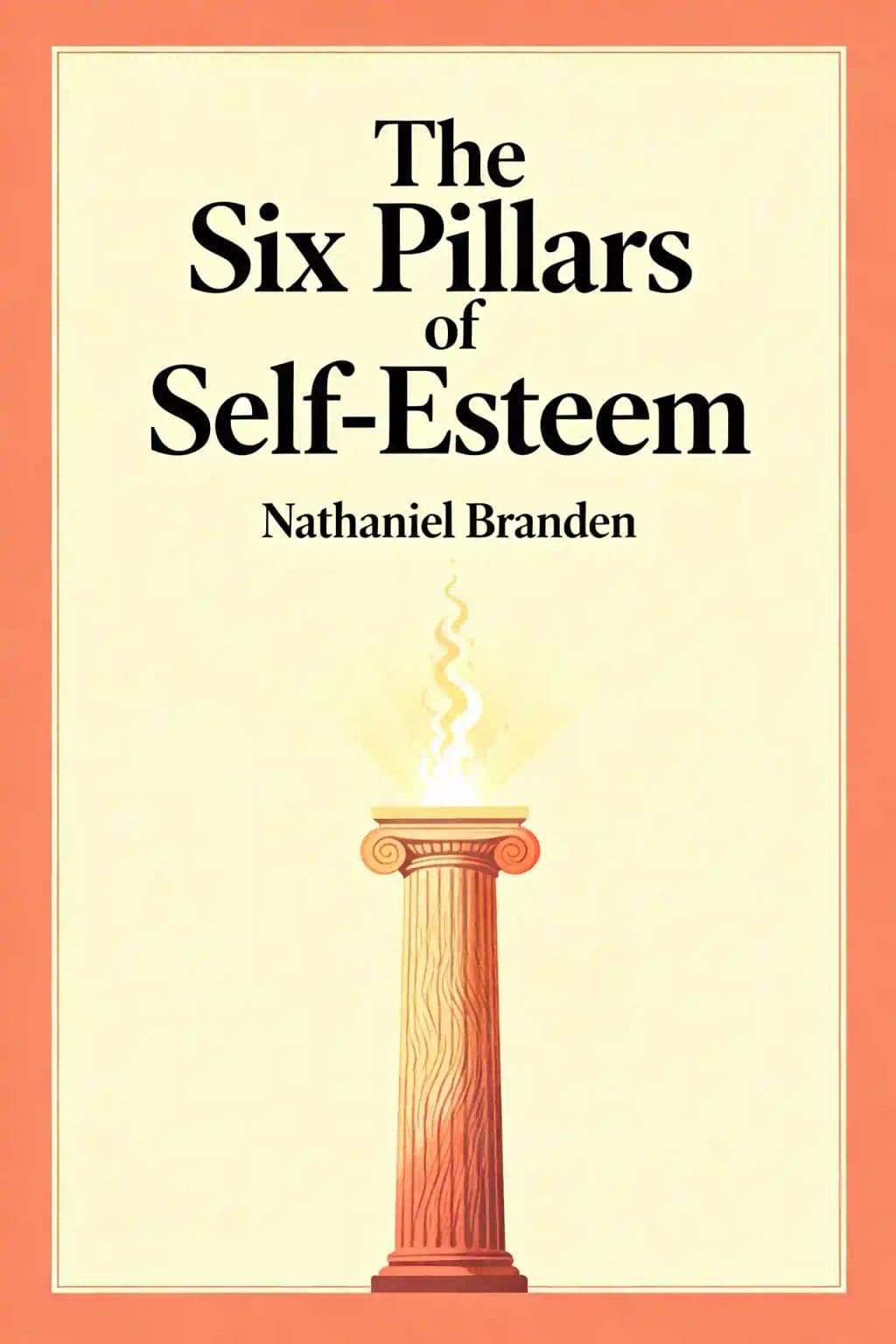
Discover why "The Six Pillars of Self-Esteem" is hailed as "the most significant book ever written on self-esteem." Endorsed by AT&T executives and bestselling authors alike, Branden's practical framework has transformed organizations and individuals. What self-limiting belief is holding you back?
Nathaniel Branden (1930–2014) was a pioneering psychotherapist, bestselling author, and leading authority on self-esteem psychology, best known for his seminal work The Six Pillars of Self-Esteem. A clinical psychologist and philosopher, Branden dedicated his career to exploring the intersection of self-worth, personal responsibility, and conscious living.
His groundbreaking research and therapeutic frameworks, developed through decades of clinical practice and corporate consulting, established him as the foremost expert in the field. Branden’s influential bibliography includes The Psychology of Self-Esteem and How to Raise Your Self-Esteem, which complement Six Pillars in offering actionable strategies for cultivating self-respect.
Founder of The Branden Institute for Self-Esteem, he advised individuals and organizations worldwide while publishing nearly 20 books translated into 18 languages. His work remains foundational in psychology curricula and professional development programs. The Six Pillars of Self-Esteem alone has sold millions of copies globally, cementing its status as a landmark text in personal growth literature.
The Six Pillars of Self-Esteem by Nathaniel Branden outlines six foundational practices for building healthy self-esteem: living consciously, self-acceptance, self-responsibility, self-assertiveness, living purposefully, and personal integrity. The book combines psychological theory with practical exercises to help readers cultivate confidence, overcome self-doubt, and align their actions with their values.
This book is ideal for individuals seeking to improve their mental health, professionals in coaching or therapy, and anyone interested in personal growth. It’s particularly valuable for those struggling with self-worth or navigating life transitions, offering actionable strategies for fostering resilience and emotional well-being.
Nathaniel Branden’s six pillars are:
Unlike generalized advice, Branden’s work combines decades of clinical research with structured frameworks, focusing on actionable exercises rather than abstract concepts. It emphasizes daily practices to reinforce self-trust, making it a manual for long-term psychological growth rather than quick fixes.
Yes. Branden argues that self-esteem enhances decision-making, leadership, and adaptability—critical skills in workplaces. The book includes insights for organizations to foster accountability and innovation by applying these principles.
Nathaniel Branden (1930–2014) was a psychotherapist and pioneer of the self-esteem movement. A former collaborator of Ayn Rand, he later developed his own theories, authoring 20+ books and founding the Branden Institute for Self-Esteem. His work bridges philosophical and practical psychology.
Some critics argue Branden’s approach oversimplifies complex emotional issues or lacks empirical rigor. However, its enduring popularity stems from its accessible, structured guidance for personal accountability and mindset shifts.
Branden recommends practices like journaling, affirmations, and mindfulness. For example, “living consciously” involves daily reflection on decisions, while “self-assertiveness” encourages expressing needs respectfully. Exercises in the book provide step-by-step guidance.
Key quotes include:
Absolutely. In an era of rapid change and mental health challenges, its focus on self-trust, adaptability, and purpose remains critical. The principles align with modern needs for emotional agility and intentional living.
The Six Pillars is a more practical, exercise-driven successor to his earlier theoretical work. While Psychology of Self-Esteem lays the foundation, Six Pillars offers tools for direct application, making it more accessible to general readers.
Branden frames self-esteem as a “feedback loop” where actions and self-perception reinforce each other. He also uses architectural metaphors, likening the six pillars to a structure requiring daily maintenance.
通过作者的声音感受这本书
将知识转化为引人入胜、富含实例的见解
快速捕捉核心观点,高效学习
以有趣互动的方式享受这本书
Self-esteem is the experience of being competent to cope with the basic challenges of life and of being worthy of happiness.
The first step toward change is awareness. The second step is acceptance.
Self-esteem isn't some optional psychological luxury.
Mental health can be measured by confidence versus fear.
The tragedy is that many look for self-esteem everywhere except within.
将《The Six Pillars of Self-Esteem》的核心观点拆解为易于理解的要点,了解创新团队如何创造、协作和成长。
将《The Six Pillars of Self-Esteem》提炼为快速记忆要点,突出坦诚、团队合作和创造力的关键原则。

通过生动的故事体验《The Six Pillars of Self-Esteem》,将创新经验转化为令人难忘且可应用的精彩时刻。
随心提问,选择声音,共同创造真正与你产生共鸣的见解。

"Instead of endless scrolling, I just hit play on BeFreed. It saves me so much time."
"I never knew where to start with nonfiction—BeFreed’s book lists turned into podcasts gave me a clear path."
"Perfect balance between learning and entertainment. Finished ‘Thinking, Fast and Slow’ on my commute this week."
"Crazy how much I learned while walking the dog. BeFreed = small habits → big gains."
"Reading used to feel like a chore. Now it’s just part of my lifestyle."
"Feels effortless compared to reading. I’ve finished 6 books this month already."
"BeFreed turned my guilty doomscrolling into something that feels productive and inspiring."
"BeFreed turned my commute into learning time. 20-min podcasts are perfect for finishing books I never had time for."
"BeFreed replaced my podcast queue. Imagine Spotify for books — that’s it. 🙌"
"It is great for me to learn something from the book without reading it."
"The themed book list podcasts help me connect ideas across authors—like a guided audio journey."
"Makes me feel smarter every time before going to work"

免费获取《The Six Pillars of Self-Esteem》摘要的 PDF 或 EPUB 版本。可打印或随时离线阅读。
What if the single most important factor determining your success and happiness wasn't your upbringing or circumstances-but how you see yourself? This groundbreaking insight forms the core of Nathaniel Branden's transformative work on self-esteem. Self-esteem isn't just feeling good about yourself-it's the experience that you are appropriate to life and its requirements. It consists of two essential components: self-efficacy (confidence in your ability to think and navigate challenges) and self-respect (the conviction that you deserve happiness). This isn't something you're born with-it's earned through choices and actions. When you trust your mind and know you deserve happiness, this conviction becomes a self-fulfilling prophecy. Those with healthy self-esteem persist longer when facing obstacles and respond more resourcefully to challenges. Have you ever pushed away someone who treated you well, almost as if their kindness made you uncomfortable? That's low self-esteem speaking. Our self-esteem generates expectations about what's possible for us, which then drive actions that make these beliefs reality. In today's rapidly changing world, self-esteem has become not just a psychological need but an economic one. With the shift to mind work, we face unprecedented demands for innovation and self-management. Without self-esteem, the abundance of choice becomes frightening rather than liberating.