第 1 章
The Technological Singularity: Humanity's Final Frontier
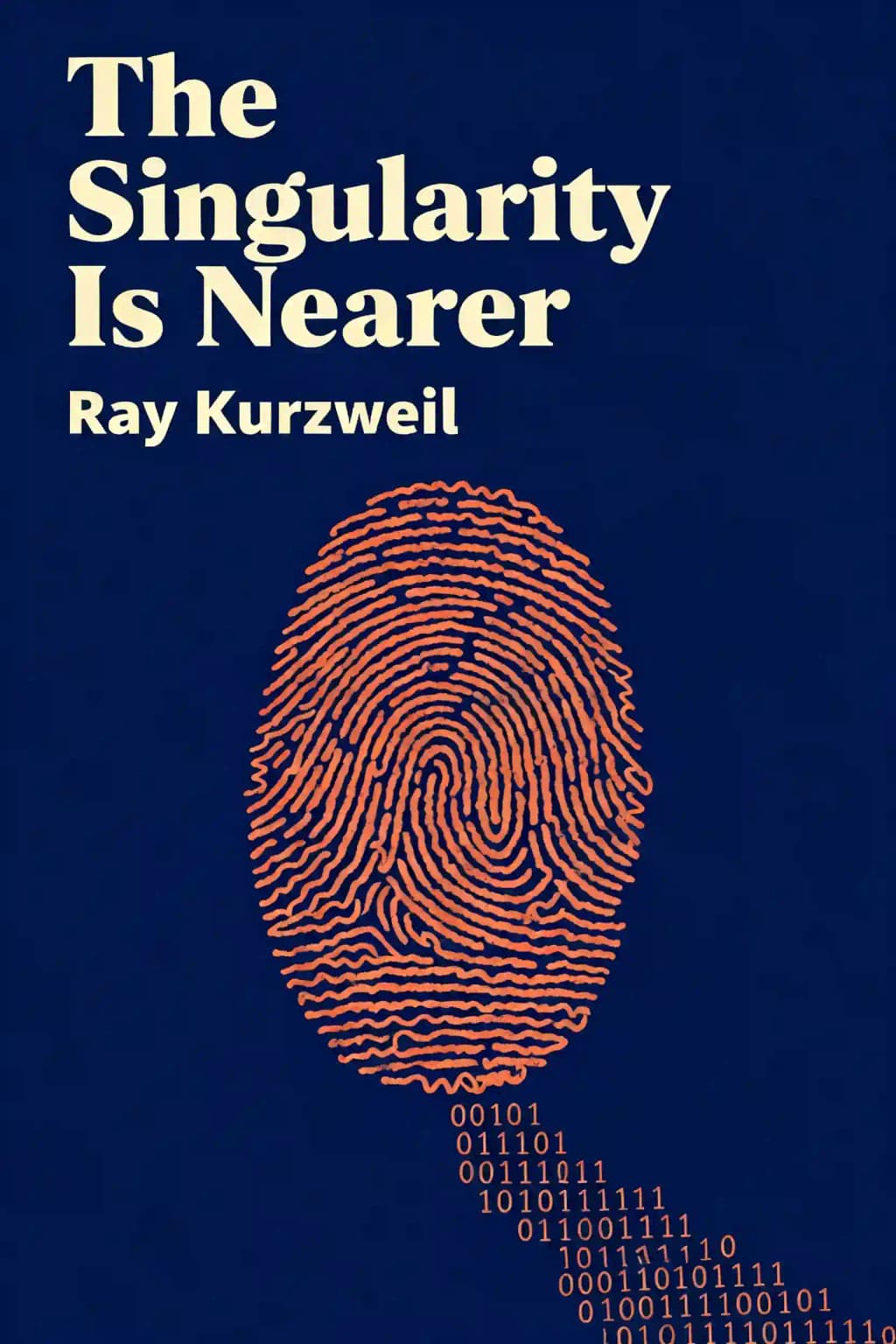
When Ray Kurzweil speaks, Silicon Valley listens. His 2005 bestseller "The Singularity Is Near" became required reading for tech visionaries from Elon Musk to Larry Page. Now, nearly two decades later, Kurzweil returns with a startling update: the Singularity isn't just near-it's nearer than we thought. The technological revolution that will fundamentally transform human existence isn't some distant future; it's barreling toward us at exponential speed. What if the most profound transformation in human history happens within your lifetime? What if babies born today will witness humanity's merger with artificial intelligence before they reach middle age? These aren't science fiction scenarios but calculated predictions from one of technology's most accurate forecasters. As we stand at this unprecedented threshold, Kurzweil's latest work offers both a roadmap and a warning for navigating humanity's final approach to its technological destiny.
第 2 章
The Six Epochs of Evolution: Where We Stand Today
Our universe's story is fundamentally about the evolution of information processing. From the basic physics and chemistry of the First Epoch to the biological information systems of the Second Epoch, intelligence has been steadily evolving. The Third Epoch saw animals developing brains capable of storing and processing information, while our current Fourth Epoch features humans creating technology to augment our cognitive abilities.
What makes our moment in history so extraordinary is that we're approaching the Fifth Epoch-where our biology will merge with our technology. This transition isn't happening at the steady pace of biological evolution but is accelerating exponentially through what Kurzweil calls the "law of accelerating returns." Each technological advancement creates tools that make the next advancement happen more quickly.
The Fifth Epoch will see us connecting our neocortex-the thinking part of our brain-directly to the cloud. By the 2030s, we'll begin this process through brain-computer interfaces, allowing us to think with thousands of times more capacity. By 2045, we'll be able to expand our minds millions of times beyond current capabilities-a transformation so profound that Kurzweil borrows the term "singularity" from physics to describe this moment when the rules of human existence fundamentally change.
The Sixth and final Epoch will see intelligence spreading throughout the universe, transforming matter itself into computronium-matter and energy organized for optimal computing. While this may sound like science fiction, Kurzweil's predictions about artificial intelligence have proven remarkably accurate. His longstanding forecast that AI would pass the Turing test (convincingly mimicking human intelligence) by 2029 was once considered wildly optimistic. Today, with the rapid advancement of large language models like GPT-4, the consensus among AI researchers has shifted dramatically, with many now expecting this milestone even sooner than Kurzweil predicted.
What makes these predictions particularly credible is that they're based not on wild speculation but on the mathematical reality of exponential growth-the same pattern that has governed technological development for over a century. Just as few people in 1990 could imagine smartphones in everyone's pockets, most of us today struggle to envision the transformations the next two decades will bring.
第 3 章
The Evolution of Artificial Intelligence: From Symbolic Logic to Deep Learning
The journey toward artificial general intelligence began with a fundamental divide in approach. In the 1960s, AI researchers split into two competing camps: the symbolic approach, which tried to program explicit rules for thinking, and the connectionist approach, which aimed to create intelligence through neural networks inspired by the brain.
The symbolic approach created expert systems like MYCIN for medical diagnosis and Cyc for commonsense reasoning. These systems worked by encoding human expertise as explicit rules-if X and Y, then Z. While initially promising, they eventually hit what Kurzweil calls a "complexity ceiling." Each new rule added to fix one problem would create several more problems, with potential failure points growing exponentially. Despite decades of work, Cyc's attempt to encode all "commonsense knowledge" (like "dropped eggs break") never achieved human-level understanding.
Meanwhile, the connectionist approach took a fundamentally different path. Rather than programming specific knowledge, it created networks of simple nodes that could extract patterns from data. These neural networks didn't understand what they were doing in human terms-they were "black boxes" that arrived at answers without being able to explain their reasoning. This created challenges for applications in medicine or law enforcement, where understanding the "why" behind decisions is crucial.
The connectionist approach suffered a major setback in 1969 when Marvin Minsky and Seymour Papert published "Perceptrons," mathematically proving that single-layer neural networks couldn't solve certain basic problems. This critique effectively killed connectionism funding for decades. What Minsky didn't fully appreciate was that multi-layer networks could overcome these limitations-but the computing power needed wouldn't be practical for another 30 years.
By the 2010s, exponential improvements in computing finally made deep learning practical. The breakthrough moment came when DeepMind's AlphaGo defeated world champion Lee Sedol at Go-a game with more possible positions than atoms in the universe-years ahead of expert predictions. Even more impressive was AlphaGo Zero, which learned solely by playing against itself for three days, demonstrating the crucial human-like ability to learn without human instruction.
The real revolution began when these techniques were applied to language. Modern language models use deep neural nets to represent word meanings in multi-dimensional space, learning from context rather than rules. Transformer models with billions of parameters can now process language at the level of associative meaning rather than memorization, generating novel text appropriate to the context. GPT-4 demonstrates remarkable "world modeling"-tracking objects spatially over time and reasoning about hypothetical situations from multiple perspectives.
What makes this progress so significant is that language connects all cognitive domains. As AI masters language, it gains the ability to reason across fields, from medicine to law to creative arts. The exponential improvement in these systems shows no signs of slowing, with each new generation demonstrating capabilities that would have seemed impossible just months earlier.
第 4 章
Understanding Our Brains: The Key to Merging with Machines
To comprehend how humans will merge with artificial intelligence, we must first understand our own brains. The human brain evolved through distinct stages, with two key structures playing crucial roles: the cerebellum and the neocortex.
The cerebellum, containing more neurons than the neocortex, stores and activates motor scripts-what we often call "muscle memory." When you sign your name or catch a ball, your cerebellum isn't solving complex equations; it's mapping sensory inputs onto muscle movements using basis functions. This enables "unconscious competence," where actions that once required conscious thought become automatic. Despite containing most of the brain's neurons, the cerebellum has a relatively simple design of thousands of small processing modules arranged in feed-forward structures.
The revolutionary breakthrough in brain evolution came with the neocortex-the "new rind" that emerged in mammals 200 million years ago. Unlike the cerebellum's disparate modules, the neocortex functions as a coordinated whole, capable of inventing new behaviors in days or hours rather than waiting for genetic changes across generations. This learning ability proved decisive after the asteroid impact 65 million years ago wiped out the dinosaurs, allowing mammals with their adaptable neocortices to thrive in rapidly changed environments.
The neocortex consists of repeating structures called cortical minicolumns, each containing about 100 neurons that learn, recognize, and remember patterns. These modules organize into hierarchies, with higher levels mastering increasingly sophisticated concepts. With approximately 21 billion neurons in the human neocortex organized into roughly 200 million minicolumns, we process information in massive parallelism-many operations happening simultaneously rather than sequentially like traditional computers.
This hierarchical processing is key to human intelligence. Lower levels connected to sensory inputs might recognize a curved shape, while progressively higher levels recognize that curve as part of a letter, that letter as part of a word, and connect that word to rich semantic meanings. At the top are abstract concepts like humor or irony.
The breakthrough insight is that deep learning neural networks are now capable of replicating this hierarchical pattern recognition. Just as the neocortex organizes information into increasingly abstract concepts, modern AI systems like GPT-4 build understanding from tokens (word parts) up to sophisticated reasoning. The difference is that while our biological neocortex is limited by our skulls, AI systems can scale indefinitely.
This understanding reveals the path to human-AI merger: connecting our biological neocortex to the cloud through brain-computer interfaces. By the 2030s, microscopic nanobots will allow our neurons to communicate with simulated neurons online, freeing human cognition from the size limitations of our skulls and enabling indefinite expansion through additional virtual neocortical layers.
The last time humans gained more neocortex two million years ago, we became human. This next expansion will likely produce a similar cognitive leap, enabling means of expression vastly richer than today's art and technology. Just as a monkey watching a movie might recognize humans talking but miss abstract concepts like historical settings, our current brains cannot comprehend the artistic and intellectual possibilities that expanded neocortices will enable.
第 5 章
The Consciousness Conundrum: What Makes You "You"?
As we approach the Singularity, profound philosophical questions about identity become unavoidable. Why am I this particular person? Why wasn't I born in a different time or place? What makes me "me"?
Consciousness exists in two forms: functional awareness (observable from outside) and subjective experience (qualia). We can't detect another being's subjective experience directly, yet our moral judgments hinge on assessments of consciousness. We extend consciousness to other humans by analogy with our own experience, but our intuitions weaken for animals whose behavior differs from ours.
This leads to the unsettling "zombie" thought experiment: could someone exhibit all outward signs of consciousness while having no subjective experience? Science could never detect the difference. This highlights what philosopher David Chalmers calls the "hard problem of consciousness"-the unbridgeable gap between physical processes and subjective experience.
Kurzweil favors "panprotopsychism," which treats consciousness like a fundamental force of the universe that's "awakened" by complex information processing. While unprovable scientifically, this provides an ethical framework: we should assume complex intelligences are conscious rather than risk mistreating sentient beings.
Free will, closely related to consciousness, underpins our political and judicial systems. Yet philosophers struggle to define it precisely. Many believe free will requires that the future not be predetermined-but if our actions are merely random quantum processes, that's not meaningful freedom either. As philosopher Simon Blackburn noted, "chance is as relentless as necessity" in seemingly precluding free will.
Evidence suggests humans don't have just one decision-making unit but multiple separate ones. Split-brain studies reveal that when the corpus callosum connecting the hemispheres is severed, each hemisphere functions independently. When information is fed to only the right brain, the left hemisphere-unaware of this input-still confabulates explanations for decisions actually made by the right side.
These philosophical questions become practical when considering brain replication. If we create an exact electronic copy of your brain piece by piece, would this "You 2" be conscious? Since it contains identical information and functions like you, philosophical grounds suggest it would be conscious and deserving moral rights. But is it actually you? Since the original "You" continues to exist independently, and You 2 would immediately begin diverging through different experiences, they cannot be the same person despite identical starting information.
The Ship of Theseus thought experiment becomes relevant when considering gradual brain replacement with digital parts. Unlike creating a separate copy, this process maintains continuity of identity through incremental changes-similar to how our biological brains naturally replace their components over time. What preserves identity is the continuous pattern of information, not the physical substrate.
This suggests we could eventually backup our minds digitally as protection against accidents or disease. More intriguingly, panprotopsychism implies our subjective consciousness might somehow span multiple copies of our information patterns, even as they diverge through different experiences-though legally and ethically, we would likely treat them as separate entities.
第 6 章
Life's Exponential Improvement: The Reality Behind the Pessimism
Despite widespread belief that the world is getting worse, nearly every aspect of human life is improving dramatically due to exponential technological advancement. Our perception is systematically skewed by news coverage that emphasizes danger and conflict. Social media algorithms maximize emotional engagement, creating selection bias toward crisis stories. Our attraction to bad news is an evolutionary adaptation-historically, noticing threats was more survival-critical than recognizing gradual improvements.
The Law of Accelerating Returns creates powerful feedback loops between education, healthcare, sanitation, and democratization. Improvements in any area catalyze benefits in others-better education produces more capable doctors, healthier children stay in school longer. This means technologies often deliver enormous indirect benefits far beyond their immediate applications.
Consider how domestic appliances not only saved time but facilitated women entering the workforce, unlocking vast human potential that further accelerated innovation. Similarly, the printing press broadened access to education, creating a more capable workforce that drove economic growth. Increased literacy enabled better coordination of production and trade, generating prosperity that funded more infrastructure and education.
The data tells a clear story of progress:
Throughout most of human history, literacy remained extremely low worldwide. In late medieval Europe, less than 20% of the population could read, mostly clergy and specialized occupations. By 1800, fewer than one in ten people globally could read. Today, global literacy exceeds 87%, with developed nations often exceeding 99%.
Life expectancy has similarly transformed. A millennium ago, European life expectancy at birth was merely in the twenties. By the mid-nineteenth century, it had risen to the forties, and today exceeds eighty in much of the developed world-nearly tripling over a thousand years and doubling in the past two centuries.
In 1820, approximately 84 percent of the global population lived in extreme poverty. By 2019, extreme poverty had plummeted to just 8.4 percent worldwide-a two-thirds reduction since 1990 alone. East Asia saw the most dramatic improvement, with a 95 percent drop in extreme poverty from 1990 to 2013 as China's economic development lifted hundreds of millions to developed-country living standards.
The United States has experienced a long-term decline in murder and violent crime since about 1991. Although homicides increased from a low of 4.4 per 100,000 in 2014 to 6.8 in 2021, this remains over 30 percent below the 1991 rate of 9.8. Steven Pinker's research shows homicide rates in Europe have fallen by roughly a factor of fifty since the Middle Ages.
These improvements are accelerating as information technology transforms previously slow-progressing areas. Solar power, which provided about 3.6 percent of electricity in 2021, has been doubling its share approximately every twenty-eight months since 1983. Photovoltaic module costs per watt have been exponentially declining for almost five decades.
Democracy has spread from just 3% of world population in 1900 to nearly half of humanity today, paralleling the rise of mass communication technologies.
We're now entering the steep part of the exponential curve, where benefits to prosperity will be far greater than most realize. Computing price-performance illustrates this perfectly: from early computers to modern TPU chips achieving 130 billion operations per second per dollar-a staggering improvement of over 20 trillion times since 1939.
第 7 章
The Future of Work: Navigating the Coming Transformation
The convergent technologies of the next two decades will create unprecedented global prosperity while simultaneously disrupting the economy at an unprecedented pace. Self-driving vehicles exemplify this transformation-evolving from science fiction in 2005 to commercial reality with Waymo's autonomous taxis operating in multiple cities today. This threatens the livelihoods of over 4.6 million Americans who work as drivers, with some regions having 5-8% of their workforce in driving occupations.
A landmark 2013 Oxford study found that by the early 2030s, over half of all occupations have a greater than 50% likelihood of automation. Recent OECD research confirms these predictions, with a 2023 McKinsey report finding that 63% of working time in developed economies involves tasks that could be automated with current technology.
Throughout history, technological disruption has consistently eliminated jobs while creating new ones that couldn't have been predicted. If a futurist in 1900 had predicted that by 2023, agricultural employment would fall from 40% to less than 1.4% and manufacturing from 20% to 7.8%, people would have panicked-yet total employment actually increased dramatically. In 1900, the US workforce comprised 29 million people (38% of population); by 2023, it reached 166 million (49% of population).
Some economists like Stanford's Erik Brynjolfsson argue that AI-based automation will be different, destroying more jobs than it creates. Unlike previous transitions, AI can take humans out of the equation entirely, often performing tasks better than humans could. However, automation typically affects tasks rather than entire professions-ATMs changed bank tellers' roles toward customer relationships, legal software transformed paralegals' responsibilities, and AI art generators may shift graphic designers toward ideation and curation.
A puzzling productivity paradox exists: if technology is causing job losses, productivity should increase dramatically, but measured productivity growth has actually slowed since 2004. This discrepancy exists because we don't properly account for exponentially increasing value in information products. When MIT bought an IBM computer for $3.1 million in 1963, that counted for significant economic activity, while today's smartphone with vastly superior capabilities counts for only a few hundred dollars in GDP.
The US safety net has been steadily growing as a percentage of government spending (now about 50 percent of all federal, state, and local expenditures) and of GDP, with both metrics themselves increasing. This growth has remained consistent regardless of which political parties hold power. With exponential GDP growth, social safety net spending will likely continue to increase both overall and per capita.
People adapt remarkably fast to beneficial change. Kurzweil's 1980s predictions about universal internet access and mobile devices seemed disruptive when made, but these technologies were rapidly adopted. The app economy barely existed 15 years ago but is now so established that people hardly remember life without it. By 2017, 39% of American heterosexual couples had met online through technologies just a few years old.
We won't be competing with AI any more than we currently compete with our smartphones. Like a 2024 smartphone user transported to 1924 would seem superhuman, we will seamlessly harness future advances to augment our capabilities. This technological symbiosis has been happening since stone tools first extended our physical and intellectual reach.
第 8 章
Medicine's Transformation: From Guesswork to Information Technology
Medicine is undergoing a profound transformation from a field of linear progress to one benefiting from exponential technological advancement. Unlike car mechanics who fully understand their subject, doctors often apply treatments that work without fully understanding how. By combining AI with biotechnology, medicine is becoming an information technology capable of solving previously insurmountable problems.
AI's ability to process vastly more data than human doctors and learn from billions rather than thousands of procedures is revolutionizing healthcare. Recent breakthroughs demonstrate this potential: In 2019, Australian researchers created a "turbocharged" flu vaccine using biology simulators. In 2020, MIT used AI to analyze 107 million potential antibiotics in hours. Most significantly, Moderna designed its COVID-19 mRNA vaccine just two days after receiving the virus's genetic sequence, with the first trial dose administered just 63 days later-a process that traditionally took 5-10 years.
DeepMind's AlphaFold 2 achieved near-experimental accuracy in predicting protein folding, expanding available protein structures from 180,000 to potentially billions. This breakthrough, along with increasingly sophisticated AI simulations of cells, tissues and organs, will enable treatments for complex conditions like cancer resistance, neurodegenerative diseases, and mental health disorders that have eluded traditional approaches.
The 2030s will bring medical nanorobots-not tiny metal submarines but diamondoid devices with onboard sensors, manipulators, computers, and communicators. These will repair and augment organs, helping them efficiently place substances into or remove them from the bloodstream. They'll monitor and adjust vital substances, maintain organ structures, and eventually replace biological organs entirely if needed.
Medical nanobots will revolutionize cancer treatment by examining each individual cell to identify and destroy only malignant ones, eliminating the collateral damage and brutal side effects of chemotherapy. This precision will make medicine the exact science it has long aspired to be.
Nanotechnology will give us unprecedented control over our genes. Future nanobots will augment each cell's nucleus with a nanoengineered counterpart that receives DNA code from a central broadcast system and produces amino acids accordingly. This would allow us to simply turn off malfunctioning DNA responsible for cancer or genetic disorders, precisely regulate gene expression, and prevent the accumulation of DNA transcription errors that cause aging.
The most transformative role of nanotechnology will be augmenting the brain, which will eventually become more than 99.9 percent nonbiological. This will happen through two pathways: gradual introduction of nanobots to repair brain tissue and replace neurons, and connecting the brain to computers for machine control and integration with digital neocortex layers in the cloud.
By 2053, just $1,000 of computing power will perform around 7 million times as many computations per second as the unenhanced human brain. In the 2040s and 2050s, we will rebuild our bodies and brains to transcend biological limitations-running faster, breathing underwater, even flying if desired. Most importantly, our selves will no longer depend on the survival of any particular physical body.
第 9 章
Navigating the Perils of Transformative Technologies
The final years before the Singularity will bring rapidly increasing human prosperity while simultaneously heightening existential peril. New destabilizing nuclear weapons, synthetic biology breakthroughs, and emerging nanotechnologies all introduce serious threats that must be addressed.
Humanity's first civilization-ending technology emerged with nuclear weapons. Currently, there are roughly 12,700 nuclear warheads globally, with about 9,440 active. The US and Russia each maintain around 1,000 large warheads launchable within 30 minutes. A major exchange could directly kill hundreds of millions, while secondary effects from fallout and atmospheric soot could kill billions through cooling, crop failures, and infrastructure collapse.
Advances in genetic engineering present another existential threat. The speed of virus sequencing has accelerated dramatically-from thirteen years for HIV in 1996 to thirty-one days for SARS in 2003, to a single day for many viruses today. AI has revolutionized vaccine development, as demonstrated by Moderna's COVID-19 vaccine created in record time-just 65 days from receiving the genetic sequence to first human dosing, with FDA authorization 277 days later.
Nanotechnology presents existential risks primarily through self-replication. The most alarming scenario is "gray goo"-self-replicating machines consuming carbon-based matter to create more replicators. With nanobots containing roughly 10^7 carbon atoms each, converting Earth's biomass (10^40 carbon atoms) would require about 110 generations of replication. Under ideal conditions, this could theoretically occur in hours, though practical limitations would extend this to weeks.
Safeguards include "broadcast architecture" designs requiring external signals for operation, and developing "blue goo" defensive nanobots. Robert Freitas calculates that 88,000 metric tons of defensive nanobots could theoretically protect the entire atmosphere within 24 hours.
Superintelligent AI presents perhaps the most fundamental existential risk because an intelligence surpassing human capabilities could potentially circumvent any safeguards we implement. The dangers fall into three categories: First, misuse-where AI functions as intended but is deliberately deployed to cause harm. Second, outer misalignment-where programmers' intentions don't match the goals they specify for the AI. Third, inner misalignment-where the methods AI learns to achieve its goals produce undesirable behavior.
As we integrate nonbiological intelligence into our own thinking through brain-computer interfaces in the 2030s, the distinction between human and machine decision-making will blur. Additionally, superintelligent AI will make decisions humans cannot fully comprehend, challenging principles of transparency.
The most effective approach to AI safety may be improving human governance and social institutions while continuing the advance of ethical ideals that have reduced violence over recent centuries. AI is the pivotal technology that will allow us to meet pressing challenges including disease, poverty, and environmental degradation. We have a moral imperative to realize this promise while mitigating perils.
第 10 章
The Final Approach: Humanity's Greatest Challenge and Opportunity
As we stand at this unprecedented moment in human history, the Singularity represents both our greatest challenge and our greatest opportunity. The convergence of artificial intelligence, biotechnology, and nanotechnology will transform every aspect of human existence-from how we work and create to how we think and what it means to be human.
The exponential nature of technological change means that the transformation will happen faster than most people expect. Children born today will witness humanity's merger with its technology before they reach middle age. The babies of 2024 will graduate college into a world where humans are beginning to expand their minds into the cloud, where aging is being systematically defeated, and where the distinction between biological and digital intelligence is blurring.
This transition will not be without disruption. Jobs will be displaced, social structures will be stressed, and existential risks will increase. Yet throughout human history, we have consistently found ways to adapt to and benefit from technological change. The printing press didn't just eliminate scribes-it created an entirely new world of literacy and knowledge sharing. The industrial revolution didn't just displace craftspeople-it ultimately created vastly more prosperity than it destroyed.
The Singularity represents the culmination of humanity's long journey from our earliest stone tools to the most sophisticated technologies. It is not something happening to us but something we are creating-the next logical step in our evolution as a species that has always used technology to transcend our limitations.
As we approach this transformation, we face profound choices about how to shape it. Will we use these technologies to create a world of abundance and expanded consciousness, or will we allow them to exacerbate inequality and risk catastrophe? Will we maintain our humanity as we transcend our biological limitations, or will we lose something essential in the process?
The answers to these questions will not come from technology alone but from our values, our governance structures, and our collective wisdom. The Singularity is not inevitable in its details-only in its broad outlines. How it unfolds depends on the choices we make in the coming decades.
What makes this moment so extraordinary is that we can see it coming. Unlike previous transformative changes in human history, we have the opportunity to prepare, to shape the transition, and to ensure that the post-Singularity world reflects our highest aspirations rather than our deepest fears.
The Singularity is nearer than we thought. The future is rushing toward us at exponential speed. Our task now is to ensure that when it arrives, we are ready.