《西西里遗产》概述
根据乔·皮亚扎(Jo Piazza)真实的家族谋杀悬案改编,《西西里遗产》(The Sicilian Inheritance)编织了三代反叛女性在阳光明媚的西西里岛挑战男权制度的故事。该书被《美国周刊》(US Weekly)评为“海滩必读惊悚小说”,并被简·格林(Jane Green)赞誉为“极具原创性”——书中还附有正宗的里科塔奶酪食谱。
下载《西西里遗产》摘要
免费获取《西西里遗产》摘要的 PDF 或 EPUB 版本。可打印或随时离线阅读。
根据乔·皮亚扎(Jo Piazza)真实的家族谋杀悬案改编,《西西里遗产》(The Sicilian Inheritance)编织了三代反叛女性在阳光明媚的西西里岛挑战男权制度的故事。该书被《美国周刊》(US Weekly)评为“海滩必读惊悚小说”,并被简·格林(Jane Green)赞誉为“极具原创性”——书中还附有正宗的里科塔奶酪食谱。
免费获取《西西里遗产》摘要的 PDF 或 EPUB 版本。可打印或随时离线阅读。
由哥伦比亚大学校友在旧金山创建
"Instead of endless scrolling, I just hit play on BeFreed. It saves me so much time."


"I never knew where to start with nonfiction—BeFreed’s book lists turned into podcasts gave me a clear path."


"Perfect balance between learning and entertainment. Finished ‘Thinking, Fast and Slow’ on my commute this week."
"Crazy how much I learned while walking the dog. BeFreed = small habits → big gains."
"Reading used to feel like a chore. Now it’s just part of my lifestyle."

"Feels effortless compared to reading. I’ve finished 6 books this month already."
"BeFreed turned my guilty doomscrolling into something that feels productive and inspiring."

"BeFreed turned my commute into learning time. 20-min podcasts are perfect for finishing books I never had time for."
"BeFreed replaced my podcast queue. Imagine Spotify for books — that’s it. 🙌"

"It is great for me to learn something from the book without reading it."
"The themed book list podcasts help me connect ideas across authors—like a guided audio journey."
"Makes me feel smarter every time before going to work"
由哥伦比亚大学校友在旧金山创建
"Instead of endless scrolling, I just hit play on BeFreed. It saves me so much time."
"I never knew where to start with nonfiction—BeFreed’s book lists turned into podcasts gave me a clear path."
"Perfect balance between learning and entertainment. Finished ‘Thinking, Fast and Slow’ on my commute this week."
"Crazy how much I learned while walking the dog. BeFreed = small habits → big gains."
"Reading used to feel like a chore. Now it’s just part of my lifestyle."
"Feels effortless compared to reading. I’ve finished 6 books this month already."
"BeFreed turned my guilty doomscrolling into something that feels productive and inspiring."
"BeFreed turned my commute into learning time. 20-min podcasts are perfect for finishing books I never had time for."
"BeFreed replaced my podcast queue. Imagine Spotify for books — that’s it. 🙌"
"It is great for me to learn something from the book without reading it."
"The themed book list podcasts help me connect ideas across authors—like a guided audio journey."
"Makes me feel smarter every time before going to work"
"Instead of endless scrolling, I just hit play on BeFreed. It saves me so much time."
"I never knew where to start with nonfiction—BeFreed’s book lists turned into podcasts gave me a clear path."
"Perfect balance between learning and entertainment. Finished ‘Thinking, Fast and Slow’ on my commute this week."
"Crazy how much I learned while walking the dog. BeFreed = small habits → big gains."
"Reading used to feel like a chore. Now it’s just part of my lifestyle."
"Feels effortless compared to reading. I’ve finished 6 books this month already."
"BeFreed turned my guilty doomscrolling into something that feels productive and inspiring."
"BeFreed turned my commute into learning time. 20-min podcasts are perfect for finishing books I never had time for."
"BeFreed replaced my podcast queue. Imagine Spotify for books — that’s it. 🙌"
"It is great for me to learn something from the book without reading it."
"The themed book list podcasts help me connect ideas across authors—like a guided audio journey."
"Makes me feel smarter every time before going to work"
"Instead of endless scrolling, I just hit play on BeFreed. It saves me so much time."
"I never knew where to start with nonfiction—BeFreed’s book lists turned into podcasts gave me a clear path."
"Perfect balance between learning and entertainment. Finished ‘Thinking, Fast and Slow’ on my commute this week."
"Crazy how much I learned while walking the dog. BeFreed = small habits → big gains."
"Reading used to feel like a chore. Now it’s just part of my lifestyle."
"Feels effortless compared to reading. I’ve finished 6 books this month already."
"BeFreed turned my guilty doomscrolling into something that feels productive and inspiring."
"BeFreed turned my commute into learning time. 20-min podcasts are perfect for finishing books I never had time for."
"BeFreed replaced my podcast queue. Imagine Spotify for books — that’s it. 🙌"
"It is great for me to learn something from the book without reading it."
"The themed book list podcasts help me connect ideas across authors—like a guided audio journey."
"Makes me feel smarter every time before going to work"


来自《西西里遗产》的相同理念。选择适合你的声音、深度和节奏,随时切换。
When Jo Piazza's novel "The Sicilian Inheritance" hit shelves, it didn't just captivate readers-it ignited conversations about female power in patriarchal systems. Patti Callahan Henry called Piazza "a master storyteller with a voice of deep wisdom," while Forbes hailed it as "a MasterClass in Leadership" for underestimated women. The book's exploration of resilience across generations resonated deeply with readers seeking stories of women who defy expectations. What makes this novel particularly compelling is how it weaves together contemporary feminist themes with historical Sicilian culture, creating a narrative that feels both timeless and urgently relevant. As Reese Witherspoon noted after featuring it in her book club, "This is the kind of story that stays with you long after the final page."
Sara stands in her failed restaurant, La Macellaia, contemplating the ruins of her dreams amid the empty dining room where food critics once raved about her innovative nose-to-tail cooking. Once Philadelphia's celebrated "queen of meat" - known for transforming humble cuts into culinary masterpieces - she now faces bankruptcy, a pending divorce, and a custody battle for her daughter Sophie. The industrial kitchen, previously alive with the sounds of sizzling pans and staff banter, sits silent and cold. When her beloved Aunt Rosie dies, Sara receives an unexpected inheritance: a deed to family land in Sicily and a mission to scatter Rosie's ashes there. The timing couldn't be more desperate; with mounting debt approaching $300,000 and an eviction notice on her apartment, Sara clings to this potential lifeline. The restaurant's remnants include only a flying plaster pig - once the proud symbol of her ambition that greeted guests at the entrance, now a painful reminder of her downfall. Male competitors had systematically undermined her success, spreading vicious rumors about food safety and her personal life on social media. Health inspectors, seemingly appearing with suspicious frequency, found minor code violations that her male counterparts routinely got away with. One by one, investors pulled out, citing "concerns about leadership" that seemed more about her gender than her capabilities. Meanwhile, her marriage to Jack crumbled under the weight of her professional dedication, with his passive-aggressive comments about missed family dinners and school events growing into full-blown resentment. As she embraces her daughter one last time before leaving for Sicily, breathing in Sophie's familiar scent of strawberry shampoo, Sara feels the full weight of what she stands to lose. What makes Sara's struggle so relatable is how it reflects modern women's impossible balancing act in the culinary world and beyond. She pursued her passion with remarkable skill - she's a talented chef and butcher whose hands can break down a whole animal with the precision of a surgeon, skills honed through years of apprenticeships in Italy and France. Yet society punished her ambition at every turn. Her restaurant failed not because of her culinary abilities - her bone marrow risotto and house-cured salumi had earned three stars from the city's toughest critic - but because the system was rigged against her. Her marriage collapsed not from lack of love but from the unequal expectations placed on working mothers, where Jack's late nights at his law firm were accepted without question, while her restaurant hours were treated as selfish abandonment. When Aunt Rosie's letter reveals the possibility of selling valuable Sicilian land in a region recently designated for luxury resort development, Sara sees more than money - she sees a chance to reclaim her identity and fight for her daughter. The property, passed down through generations of strong-willed women in her family, represents both her heritage and her future. With nothing left to lose except the custody of Sophie, she boards a plane to Sicily, carrying her aunt's ashes in an ornate urn and the fragile hope that this journey might save her from complete ruin. In her carry-on, she packs her favorite chef's knife - a symbol of the skills that no failure can take from her.
轻松跟读,《西西里遗产》中的每个词都会随音频实时高亮。
In 1908 Sicily, fifteen-year-old Serafina Forte faces a profound challenge that threatens her aspirations. As the most accomplished student in her class, she demonstrates remarkable talent in mathematics and literature, earning recognition from educators who see her potential as a future teacher. Her notebooks, filled with poetry and mathematical solutions, reflect her intellectual ambitions beyond her village's boundaries. During the feast of San Giuseppe, when traditional social constraints temporarily ease, Serafina encounters a sophisticated woman from Naples - an independent traveler who speaks of cosmopolitan cities and personal freedom. Elegantly dressed and self-assured, this woman represents a different model of feminine identity that deeply influences Serafina's perspective on life's possibilities. That evening, moved by these new ideas about personal autonomy, Serafina shares a meaningful moment with Gio, a young worker from the sulfur mines. Their brief encounter during the festival celebrations leads to unexpected consequences that reshape both their futures. Seeking guidance, Serafina consults Donna Rosa, a traditional healer known for her wisdom and confidentiality. In the herbalist's kitchen, surrounded by medicinal plants and remedies, she receives life-changing news that limits her options. Her friend Cettina suggests a conventional solution through marriage, but Serafina recognizes this as another form of constraint. The community's response reveals the rigid social expectations of early 20th century Sicilian society. Her academic achievements, including success in regional competitions, become overshadowed by traditional values. Her relationships with teachers, peers, and family members grow strained, reflecting the period's strict social codes. Marriage to Gio brings new challenges. They establish their home in modest circumstances, where environmental hardships test their resilience. Gio, inexperienced in domestic partnership, struggles to adapt to their new relationship dynamic. The harsh realities of industrial labor take their toll on Gio. His health deteriorates from working in the sulfur mines, leading him to seek alternative employment in Calabria's coastal region - a common choice for miners seeking safer work. His departure coincides with significant changes in Serafina's life, leaving her to navigate societal expectations independently. This circumstance, though difficult, becomes a catalyst for her personal growth and eventual self-determination. Through these experiences, Serafina discovers inner resources she never knew she possessed, setting the stage for her journey toward genuine independence and self-realization.
As Sara's plane descends toward Sicily, she watches the island's distinctive triangular coastline emerge between the Mediterranean and Tyrrhenian Seas. The ancient landscape unfolds below - a patchwork of olive groves, vineyards, and sun-bleached hills dotted with stone villages. Her driver Pippo - a cheerful "meatball-shaped man" who knew Aunt Rosie through their regular WhatsApp conversations - greets her with immediate warmth and a fresh ciambella pastry. The sweet, citrus-scented pastry becomes the first food Sara has truly enjoyed since her restaurant began its slow descent into failure back in Boston. Sicily reveals itself as a land of stark contradictions that somehow coexist in peculiar harmony. The chaotic traffic and crumbling infrastructure exist alongside breathtaking baroque architecture and pristine beaches. Street vendors sell arancini beneath Norman castles, while Ferraris navigate narrow medieval streets never designed for cars. Pippo proudly shares the island's rich heritage with animated gestures - settled by the mysterious Sicani tribes in 1000 BC, the island was considered sacred ground, home to ancient ritual caves where priestesses once communed with the gods. According to legend, the legendary craftsman Daedalus built the village like a labyrinth after his dramatic escape from Crete and the Minotaur's maze. The village changed hands through successive waves of conquest - Roman legions, Byzantine monks, Arab scholars, and Norman warriors - each leaving indelible marks on the culture, cuisine, and architecture. What makes Sicily particularly fascinating is how it exists outside normal rules and logic. "All of Sicily is a dimension of the imagination," wrote Leonardo Sciascia in the book's epigraph - a sentiment that captures the island's dreamlike quality where fact and folklore intertwine. This otherworldliness extends to gender dynamics too, captured in Mario Puzo's observation that "In Sicily, women are more dangerous than shotguns." The island operates on an ancient code of honor where women, though officially subordinate, wield tremendous behind-the-scenes power. Sara's introduction to the island comes with unexpected revelations that challenge her preconceptions. Before arriving at her ancestral village of Caltabellessa - perched like an eagle's nest on a limestone cliff - Pippo gives her another envelope from Rosie containing a laminated photograph from 1925. The image shows Rosie's mother Serafina with her husband and sons, taken just before her death. Sara sees Serafina with new eyes - not as the matronly figure she'd imagined, but as a striking young woman with sharp Mediterranean features, high cheekbones, and a hard, timeworn stare that seems to hold untold secrets. The accompanying letter reveals Rosie's final request: while Sara should use any proceeds from the inherited land to resolve her financial troubles, Rosie also wants her to investigate the true circumstances of Serafina's death. The official story of a flu epidemic never satisfied Rosie, who hints at darker possibilities in her letter. This mystery - wrapped in family secrets and village whispers - will drive Sara deeper into Sicily's labyrinthine heart and her own family's hidden past, where she'll discover that truth on this island is as layered as its ancient streets.
"The men kept leaving Sicily. Thousands of them, hundreds of thousands, maybe even a million." This mass exodus created an unexpected phenomenon-women suddenly found themselves with unprecedented independence. In Serafina's village of Caltabellessa, women took over jobs men had abandoned. Paola ran her husband's bakery, and others similarly stepped into roles previously forbidden to them. For Serafina, Gio's departure to America brought a strange liberation. With her husband gone and sending money monthly, she had freedom to read, care for her mother, and help her friend Cettina with her child's medical treatments. More significantly, she began apprenticing with the local witch, learning healing arts that would become her calling. The witch, whose name was Rosalia (after Serafina's favorite saint), taught her about herbs, treatments, and remedies-ergot fungus for labor complications, leeks dissolved in water to speed delivery, pennyroyal mixtures for women who didn't want to become pregnant. "Someone will need to take my place when I am gone," Rosalia told her. "I think you can be of service to the women in the village, and unlike me, you can do it in the light of day because you are a wife here and a mother, a woman with honor." This knowledge transformed Serafina from a disappointed girl into a woman of purpose and power. When the doctor from Sciacca stopped visiting their village, she began handling small medical tasks-applying salves to burns, bandaging wounds, mixing tonics for stomach ailments. Her reputation grew when she saved Accursio Romano's prized mare by performing an emergency C-section in the town square. Yet this same knowledge made her dangerous in the eyes of the community. Men began whispering about her: "Witch." Her growing independence and medical practice threatened the established order, especially as her relationship with the town's mayor Marco Domenico deepened into something more than friendship. What makes this historical thread so compelling is how it mirrors contemporary women's experiences. When constraints are temporarily lifted-whether through men's absence or societal changes-women often discover capabilities they never knew they possessed. Yet society rarely rewards such discoveries, instead finding ways to punish women who step outside prescribed boundaries. For both Serafina and Sara, their greatest strengths become the very things that put them in danger.
Sara's investigation into her great-grandmother's life takes a dramatic turn when she meets Giusy, the hotel owner, and Fina, a young female police officer. During dinner, Giusy suddenly reveals she knows why Sara is really in Sicily: "Who else are you going to ask about your great-grandmother Serafina's murder?" This shocking revelation-that Serafina was murdered rather than dying from flu-propels Sara deeper into the mystery. The next morning, she discovers her passport has been stolen, tethering her to Sicily until she can obtain replacement documents. When she visits the notaio (notary) about her land claim, she learns the property could be worth $300,000-enough to pay off her debts and fight for custody of Sophie. However, the notaio warns of complications: the land's abandonment, questions about a woman's right to own property in that era, and local suspicions about how Serafina acquired it. Meanwhile, in 1914, Serafina's medical knowledge continues growing. She travels with Marco to the port where children are suffering from mysterious sores. In filthy dwellings near the sea, she identifies the problem as scabies and organizes treatment. While Marco praises her abilities, saying "You are a doctor," she modestly replies, "I am just a woman." This exchange captures the central tension of her existence-her intelligence and skill constantly butting against societal limitations. Both women face similar challenges across different eras. Sara's culinary expertise made her a target for male competitors who couldn't accept a woman's success in the traditionally masculine realm of butchery. Serafina's medical knowledge threatens the established order where women weren't supposed to possess such power. Both women's abilities are simultaneously their greatest strengths and what puts them in danger. The parallel intensifies when Sara discovers Serafina's diary hidden in Giusy's room. Reading Serafina's words reveals a woman nothing like the saint her family described-passionate about her healing work and writing longingly of Marco, her best friend's husband. Though the diary shows no proof of actual adultery, several pages have been violently torn out-pages that might contain crucial information about the land Sara has inherited and the circumstances of Serafina's supposed murder.
轻松跟读,《西西里遗产》中的每个词都会随音频实时高亮。
Serafina's relationship with Marco Domenico-her best friend's husband and the town's mayor-forms the emotional core of her story. Their affair begins after he tends to her injuries following an attack, their physical intimacy emerging from his gentle care. Despite promising themselves each time would be the last, they continue meeting in secret. Serafina justifies it by telling herself that Marco and Cettina aren't intimate, that her friend finds all her joy in raising children. But this rationalization crumbles when Cettina discovers them together during Marco's illness. The moment is devastating-their eyes meet in a silent exchange that says everything, destroying a lifelong friendship. What makes their relationship particularly complex is that it's not merely physical attraction but intellectual companionship. Marco values Serafina's intelligence and medical abilities in a way no one else does. He proposes giving her land near the abandoned abbey for a proper clinic, telling her, "I love you" and "I can't give you everything, but I can give you this." These are words she'd never heard from any man before. Meanwhile, Sara finds herself drawn to Luca, a local chef who helps her navigate Sicily's complexities. Their connection is complicated by threatening notes suggesting a romantic involvement-"Does your wife know about you and the American whore?"-though Luca's marriage to Agata turns out to be one of convenience rather than romance. Through Agata, a university professor researching female activists in Sicilian history, Sara gains crucial insights. In the Capuchin Catacombs beneath Palermo, Agata reveals drawings depicting Sicily's forgotten women's history, including worship of Astarte, an ancient goddess whose followers protected each other through generations. Most importantly, Agata gives Sara the missing diary pages that confirm Marco legally gave Serafina the land, naming her on the deed and confirming she could sell it if she wished. Both storylines explore how women's choices are constrained by social expectations. Serafina's love for Marco is genuine but impossible within their society's strictures. Sara's attraction to Luca remains unconsummated as she prioritizes resolving her inheritance and returning to her daughter. Both women ultimately choose their own paths rather than being defined by relationships with men-a radical choice in any era.
The novel's climax brings shocking revelations about both women's stories. After being kidnapped by Nino, a local mafioso who wants her land, Sara fights back and escapes-though the official story becomes that she killed him in self-defense. When her sister Carla arrives from America, Sara realizes fighting this sanitized narrative would only risk imprisonment and separation from her daughter. More shocking still is Giusy's confession that she orchestrated Nino's death to prove herself worthy of taking over his Mafia operations. Giusy admits stealing Sara's passport to make her dependent and reveals that Aunt Rosie found her through a DNA website-they were related because Rosie wasn't actually Sara's great-grandfather's daughter but Marco Domenico's child. As Sara prepares to leave Sicily, she discovers the fountain sculpture in town bears a striking resemblance to her great-grandmother. The elderly sculptor Nicolo reveals the astonishing truth: Serafina wasn't murdered but staged her death and escaped to America. She traveled through Rome to Baltimore, eventually settling in the South where she built a new life as a nurse. In Serafina's own words: "It was Cettina who reported my murder to the police, but we planned my staged death together after Rosalia was born. I couldn't join Gio in America with the children, as questions about Rosalia's paternity would arise, but without me there, Gio would accept her as his own." This brilliant deception allowed Serafina to escape an impossible situation while ensuring her daughter's security. Though she never saw her sons again, Serafina fulfilled old Rosalia's prophecy, becoming a licensed nurse who assisted in open-heart surgeries and earning her degree at fifty-five. She made one final journey before her death to secretly see her daughter Rosalia, now fifty-four, living independently in the Poconos. Watching her dance alone in her convertible, Serafina realized that through her sacrifice, she'd given her daughter the freedom to be her own person, unbeholden to any man. This revelation transforms the entire narrative. What seemed like a story about a woman's murder becomes instead a tale of ingenious escape and reinvention. Serafina wasn't a victim but an architect of her own destiny who found a way to pursue her calling despite seemingly insurmountable obstacles.
As Sara prepares to return to America with her sister Carla, she scatters Aunt Rose's ashes in the fountain and on the mountain peak where Serafina supposedly died. With the truth revealed and her land claim secured, Sara has found more than financial salvation-she's discovered a legacy of female resilience that spans generations. The "Sicilian inheritance" of the title refers not just to the valuable land but to this lineage of women who refused to be limited by their circumstances. From Serafina faking her death to pursue her medical calling, to Rose preserving the family history and land deed for decades, to Sara fighting for her restaurant and daughter, these women share a determination to chart their own paths despite societal constraints. Sara's journey through Sicily has transformed her. No longer defined by her failed restaurant or crumbling marriage, she has connected with a deeper strength-the same resilience that allowed her great-grandmother to reinvent herself in America. As she whispers into the dragon's ear rock, "I've fucking got this," we believe her completely. The novel's power lies in how it reframes traditional narratives about women's lives. What appears to be a story about victimhood becomes one of agency. What seems like a tale of forbidden love reveals itself as a chronicle of female friendship and mutual protection. What begins as an inheritance dispute transforms into a reclamation of personal and familial history. In her author's note, Jo Piazza explains that the novel was inspired by fragments of her own family history-stories about her great-great-grandmother Lorenza Marsala's murder in Sicily over a century ago. Though Serafina's story is fiction, it captures a historical reality: when men emigrated from Sicily, the women left behind often became empowered for the first time-learning to read, write, and take on men's jobs. This empowerment could be dangerous in a patriarchal society, but it also created opportunities for women to discover their own capabilities. By weaving together Sara's contemporary struggle with Serafina's historical one, Piazza creates a powerful meditation on how women's challenges evolve yet remain fundamentally similar across generations. Both women face systems designed to limit their potential, yet both find ways to assert their agency and pursue their passions. The true inheritance they share isn't land or money but the determination to define themselves on their own terms-a legacy more valuable than any material possession.
深受 100 万+ 学习者喜爱
“坚持使用 23 天了,我每天都会打开它。它现在已经成为我的日常习惯。”
jayallen


The World of Three Pines
This plan is essential for readers and literary enthusiasts who want to look beyond the mystery and understand the profound human themes of Louise Penny’s work. It is ideal for aspiring writers, book club members, or fans of the series seeking a deeper analysis of Armand Gamache’s character and the healing power of community.

Mafia romance
Mafia romance has exploded in popularity as readers seek the thrill of forbidden love mixed with danger and power. This learning plan guides writers through the psychological appeal, character dynamics, and storytelling techniques needed to craft compelling narratives in this lucrative subgenre.

The Anatomy of a Murderous Idea
This plan is essential for students of literature and philosophy seeking to understand the psychological depths of Crime and Punishment. It is ideal for anyone interested in the intersection of morality, criminal psychology, and the arduous path toward spiritual atonement.

The Hidden Psychology of Female Serial Killers
This course provides a deep dive into the unique behavioral patterns and psychological frameworks of female offenders. It is essential for criminology students, true crime enthusiasts, and legal professionals seeking to move beyond gender stereotypes in criminal profiling.

Mastering the Gothic Castle Romance
This plan is essential for novelists looking to elevate their romance writing with atmospheric depth and psychological complexity. It is specifically designed for authors who want to move beyond cliches to create immersive, haunting worlds and compellingly flawed leads.
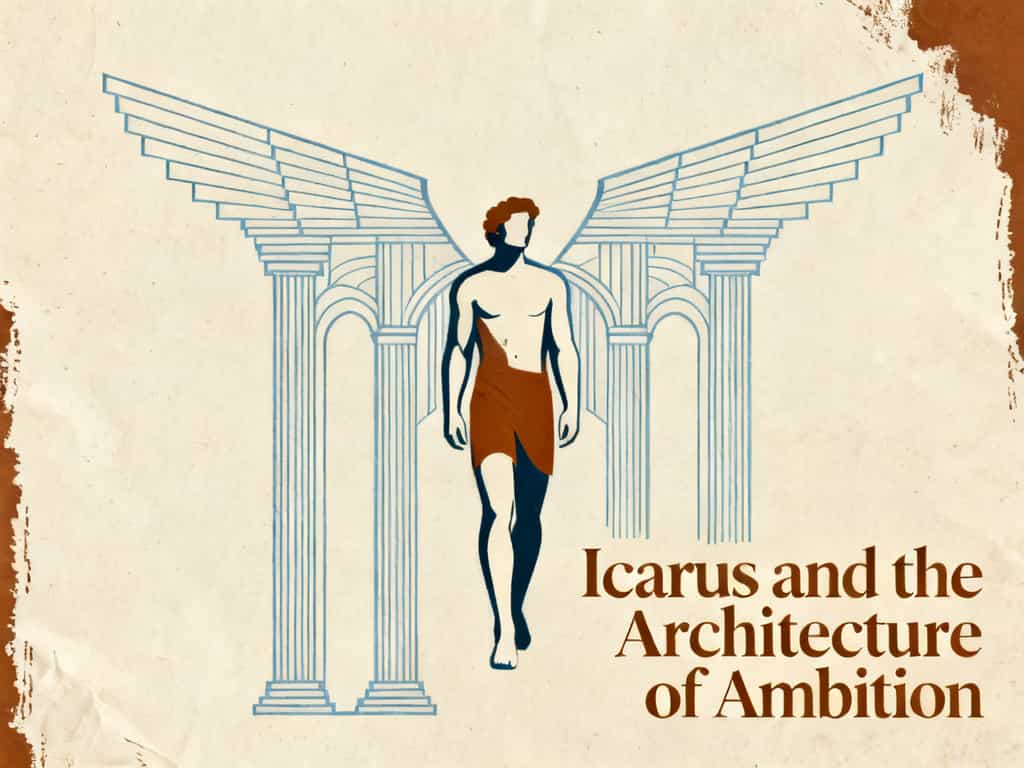
Icarus and the Architecture of Ambition
This plan bridges classical mythology with psychological and artistic analysis to explore the limits of human ingenuity. It is ideal for students of humanities, psychology, or creative arts seeking to understand the intersection of technical skill and existential tragedy.

Female authors
This learning plan provides essential knowledge for anyone seeking to understand the vital contributions of women to world literature and feminist thought. It's particularly valuable for students of literature, gender studies, and cultural history, as well as readers who want to broaden their literary perspectives beyond traditionally male-dominated canons. By exploring both historical pioneers and contemporary voices, learners gain insight into how women writers have shaped—and continue to shape—our cultural conversations about identity, equality, and human experience.

Reclaiming You After Motherhood
This plan is designed for mothers feeling lost in the demands of parenthood and seeking to rediscover their individual spark. It provides a roadmap to move from survival mode to a life where personal passions and maternal duties coexist harmoniously.