第 1 章
Diving into History: A Tale of Friendship, Survival, and Forgiveness
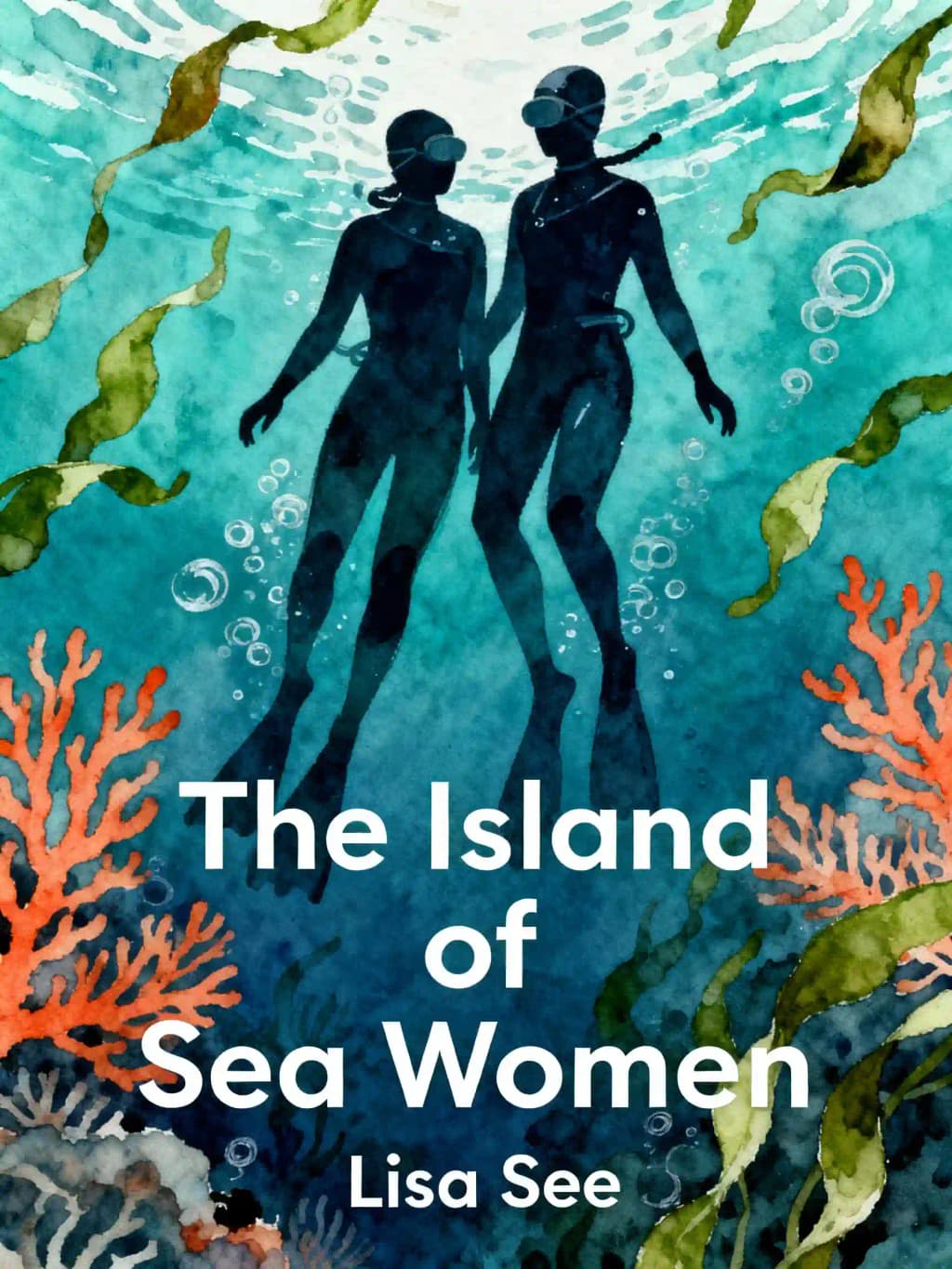
When Lisa See's "The Island of Sea Women" was published in 2019, it quickly became a cultural phenomenon. Oprah Winfrey called it "stupendous" and featured it in her book club, while former President Barack Obama included it on his summer reading list. The novel's portrayal of the haenyeo-female free divers of Jeju Island who can hold their breath for minutes while harvesting seafood in frigid waters-captivated readers worldwide. What makes this story so compelling is how it weaves together the extraordinary resilience of these women with the brutal historical events that shaped their lives. Imagine spending your days plunging into icy depths without oxygen tanks, supporting your family while men remain at home-then returning to face occupation, war, and massacre. This is the world See invites us into, a world where women's strength is both celebrated and tested beyond imagination.
第 2 章
The Unbreakable Bond: Young-sook and Mi-ja
The novel opens in 2008 with elderly haenyeo Young-sook sorting algae on a Jeju Island beach. When approached by Korean-American tourists claiming connection to someone named Mi-ja, Young-sook firmly denies knowing her despite photographic evidence suggesting otherwise. This denial hints at a profound wound that forms the emotional core of the story.
Flashing back to 1938, we meet Young-sook and Mi-ja as teenage girls with dramatically different backgrounds. Young-sook comes from a respected haenyeo family, her mother being the chief of their diving collective. Mi-ja is an orphan living with uncaring relatives, bearing the shameful legacy of her father's collaboration with the Japanese colonizers. Despite these differences, they form an unbreakable bond-"as close as a pair of chopsticks."
Their friendship develops through shared experiences: learning to dive together under Young-sook's mother's strict guidance, protecting each other from Japanese soldiers, and dreaming about their futures. Young-sook describes herself as resembling Jeju's volcanic rocks-practical and enduring-while Mi-ja is like the clouds and sea-beautiful but sometimes tempestuous. This contrast strengthens rather than weakens their connection.
The depth of their bond is tested when tragedy strikes during a diving expedition. Yu-ri, another young diver, suffers a near-fatal accident after the girls disobey orders. As Yu-ri lies suspended between life and death, Young-sook and Mi-ja keep secret their role in the incident, creating a shared burden that further cements their friendship. They visit Yu-ri regularly, helping care for her after she awakens permanently changed-unable to speak, moving with difficulty, her engagement canceled.
What makes this friendship so compelling is how See portrays its development not through grand gestures but through small, intimate moments: making rubbings of meaningful objects in Mi-ja's father's book, sharing stories while climbing volcanic cones, protecting each other during dangerous encounters with Japanese soldiers. When Young-sook's mother dies in a diving accident, Mi-ja becomes her emotional anchor, promising "Every year you will mourn a little less." Their relationship exemplifies how friendship forms not through obligation but through choice-a voluntary binding of hearts that can sometimes prove stronger than family ties.
第 3 章
Women of the Sea: The Haenyeo Culture
The haenyeo culture forms the fascinating backdrop against which the story unfolds. These remarkable women developed diving practices that defied conventional gender roles and physiological limitations. Young-sook explains how Korean kings historically barred men from extensive fishing, and under Japanese rule, local fishermen were limited to small rafts. Women became the primary providers, their bodies better suited for cold-water diving with higher body fat percentages and greater tolerance for pain.
See vividly depicts the haenyeo's daily rituals: gathering in the bulteok (diving collective's heated shelter) before dawn, sharing meals, singing songs to build courage before entering the frigid water, and developing specialized breathing techniques. The collective operates as a matrifocal society with strict hierarchies based on skill and experience. The chief diver makes critical decisions about when and where to dive, settles disputes, and ensures everyone's safety.
The haenyeo's economic independence gives them unusual power in a traditionally patriarchal Korean society. They control household finances, make major family decisions, and often view their husbands as "guests" in their homes. As one diver bluntly states, "Men are not as reliable as the sea." Yet this independence comes at tremendous physical cost. The women suffer from chronic ailments-damaged eardrums, arthritic joints, and "sea-woman sickness" (decompression sickness)-resulting from decades of diving without modern equipment.
Perhaps most striking is the haenyeo's spiritual relationship with the sea. They view it as both provider and potential killer, referring to it as "our mother" while acknowledging its dangers. Traditional sayings like "The ocean is better than your natal mother" and "The sea is forever" reflect this complex relationship. Their diving practices incorporate spiritual rituals led by local shamans, who perform ceremonies to ensure safety and bountiful harvests.
Through Young-sook's eyes, we witness this culture's gradual transformation under external pressures. Japanese colonization, the Korean War, and later government-driven modernization all threaten traditional haenyeo practices. By the 1960s, younger women increasingly choose education over diving, leading to a shortage of new recruits. The Village Fishery Association begins regulating diving activities, and tourists start viewing haenyeo as exotic attractions rather than skilled workers. This cultural erosion parallels the novel's exploration of how traditions adapt-or disappear-in the face of historical change.
第 4 章
The Weight of History: Jeju's Tragic Past
While the haenyeo culture provides a fascinating window into Jeju's unique society, See doesn't shy away from depicting the island's traumatic historical experiences. The novel spans multiple periods of occupation and violence, showing how ordinary lives become entangled in larger political conflicts.
Japanese colonization (1910-1945) forms the backdrop of Young-sook and Mi-ja's youth. We witness Japanese soldiers stealing crops from fields, beating villagers, and implementing increasingly oppressive policies. The girls participate in an island-wide demonstration organized by haenyeo women fighting against unfair Japanese practices. Though some concessions are won, thirty-four haenyeo leaders are later arrested in a crackdown, showing the limits of resistance.
The most devastating historical event portrayed is the Jeju April 3 Incident (known as "4.3"), which began in 1948 and continued until 1954. Following Korea's liberation from Japan, the island fell under American military occupation. Tensions between left-leaning local committees and the American-backed right-wing South Korean government erupted into violence after police fired on demonstrators. What followed was a brutal counterinsurgency campaign that claimed between 30,000-80,000 lives-up to a quarter of Jeju's population.
See portrays this tragedy through Young-sook's personal experience of the Bukchon massacre. In one of the novel's most harrowing scenes, soldiers round up villagers, separating men from women and children. Young-sook watches helplessly as her husband Jun-bu is shot in the head, her son Sung-soo killed by being swung against a wall, and her sister-in-law Yu-ri mutilated before being murdered. Most devastatingly, Mi-ja-who has married a government collaborator-fails to intervene despite Young-sook's desperate pleas for help.
The aftermath of this massacre shapes the remainder of Young-sook's life. She joins other survivors in what becomes known as the "Village of Widows," where women rebuild their lives while carrying immense trauma. The government's "guilt-by-association" system further punishes victims' families, restricting their children's educational and employment opportunities. Young-sook must hide her family's past to protect her surviving children's futures.
What makes See's historical portrayal particularly effective is how she shows ordinary people caught between opposing forces. Neither purely victims nor heroes, characters make complex choices under impossible circumstances. The novel explores how historical trauma reverberates through generations, creating wounds that remain raw decades later. When the Jeju April 3 Peace Park opens in 2008, Young-sook rejects calls for forgiveness without accountability: "Why should victims be expected to forgive perpetrators who've never been forced to admit or atone for what they did?"
第 5 章
Motherhood: Sacrifice and Survival
Motherhood emerges as one of the novel's central themes, explored through multiple generations of women who make extraordinary sacrifices for their children while navigating dangerous historical circumstances.
Young-sook's mother, Sun-sil, embodies the traditional haenyeo approach to motherhood-stern, practical, and focused on survival. She trains her daughter rigorously in diving techniques, sometimes appearing harsh but ultimately preparing Young-sook for independence. When Sun-sil dies in a diving accident, Young-sook must step into her role as provider for her siblings while still grieving. This pattern of mothers putting survival before sentiment recurs throughout the novel.
Young-sook's own journey as a mother reveals both continuity with and departure from tradition. Like generations before her, she dives while pregnant, gives birth with minimal medical intervention, and returns to work shortly afterward. During the Vladivostok expedition, we see babies secured in cradles on deck while their mothers dive below-a striking image of how haenyeo integrate motherhood with dangerous work.
The most wrenching maternal moment comes during the Bukchon massacre when Mi-ja tells Young-sook she can only save one child. Forced to choose, Young-sook selects her son Sung-soo to perform ancestor worship after their deaths-a decision that haunts her relationship with her surviving daughter Min-lee, who knows her mother was willing to sacrifice her. This impossible choice illustrates how historical violence forces mothers into unthinkable decisions.
Mi-ja's motherhood follows a different path. Married to an abusive collaborator, she must navigate between protecting her son Yo-chan and maintaining connections to her former community. Her decision not to help Young-sook's children during the massacre becomes the novel's central betrayal, though we later learn the complex reasons behind this choice. Mi-ja later sacrifices herself by returning to her abusive husband to secure Young-sook's daughter Joon-lee's removal from the "guilt-by-association" list-an act of atonement Young-sook doesn't discover until decades later.
The novel also explores how motherhood extends beyond biological relationships. The haenyeo collective functions as a maternal community where experienced divers teach and protect younger ones. When tragedy strikes, the women support each other's children, creating networks of care that transcend individual families. This communal approach to mothering provides resilience during periods of extreme hardship.
第 6 章
Marriage and Gender Roles: Challenging Traditions
In contrast to many historical novels set in Korea, "The Island of Sea Women" presents an unusual gender dynamic where women hold significant economic power while men play supporting roles. This inversion of traditional Confucian gender norms creates fascinating tensions throughout the narrative.
The haenyeo view marriage pragmatically rather than romantically. Young-sook and Mi-ja discuss their hopes for future husbands with surprising frankness, prioritizing work ethic and character over physical appearance or wealth. Young-sook specifically wants to marry within her village to maintain her diving rights, showing how economic considerations shape marital choices. When their marriages are arranged, both women accept this as normal, though Mi-ja's reluctance foreshadows her difficult future.
Young-sook's marriage to Jun-bu evolves into a genuine partnership based on mutual respect. Though initially uncertain about marrying the brother of disabled Yu-ri, Young-sook grows to love Jun-bu deeply. Their relationship challenges traditional gender roles-he's an educated teacher who values her practical knowledge, while she's the primary breadwinner who appreciates his intellectual pursuits. Their physical relationship improves as they grow more comfortable with each other, suggesting that arranged marriages can develop into loving unions given time and compatibility.
Mi-ja's marriage to Sang-mun represents the darker possibilities within arranged marriages. We eventually learn their union began with rape, orchestrated by Mi-ja's grandmother to avoid scandal. Sang-mun proves controlling and abusive, treating Mi-ja as property rather than partner. His position as a government collaborator further isolates Mi-ja from her community. Their marriage illustrates how women without family protection remain vulnerable despite the haenyeo's economic independence.
The novel repeatedly shows haenyeo women discussing men with a mixture of affection and exasperation. In one memorable bulteok conversation, they debate whether "It's better to be born a cow than a woman" despite their economic independence. They note that men have fewer responsibilities yet own all property due to ancestral traditions. Some view husbands merely as "guests" in their homes, while others defend men's contributions. This nuanced portrayal avoids simplistic gender reversals, instead showing how traditional patriarchal structures persist even within this matrifocal community.
As modernization transforms Jeju in the 1960s-70s, traditional gender arrangements begin shifting. Young-sook's son marries a mainland woman who isn't a haenyeo, while her daughter Joon-lee pursues university education rather than following her mother into diving. These changes reflect broader societal transformations that ultimately threaten the haenyeo way of life. By the novel's end in 2008, the haenyeo culture has become a tourist attraction rather than an economic necessity, with elderly women like Young-sook representing a vanishing tradition.
第 7 章
Betrayal and Forgiveness: The Heart's Journey
At its emotional core, "The Island of Sea Women" explores how betrayal shatters trust and whether forgiveness is possible after devastating loss. The central betrayal occurs during the Bukchon massacre when Mi-ja fails to help Young-sook's family despite their lifelong friendship.
This moment permanently transforms Young-sook, who spends decades nurturing her hatred for Mi-ja. She interprets all Mi-ja's previous actions through this lens of betrayal, even reframing Mi-ja's childhood act of protecting her mother from Japanese soldiers as self-preservation rather than friendship. Young-sook deliberately arranges her life to avoid Mi-ja, sending her daughter on errands and having her mother-in-law fetch water to prevent encounters.
The betrayal extends to the next generation when Young-sook's daughter Joon-lee falls in love with Mi-ja's son Yo-chan. Young-sook sees this relationship as another violation, telling Joon-lee: "You have joined the family of a collaborator and perpetrator. You have married the son of the woman who could have saved your father, your brother, and your aunt but chose not to." She refuses to attend their wedding or meet her granddaughter, maintaining this estrangement for decades despite receiving letters from America.
What makes the novel's exploration of betrayal particularly nuanced is how it gradually reveals the complex circumstances behind Mi-ja's actions. We eventually learn that Mi-ja was herself a victim of sexual violence by her husband, that she was trapped in an abusive marriage arranged to hide her shame, and that she feared what her husband might do to Young-sook's children if she tried to save them. Mi-ja attempts atonement by moving back to Hado after the massacre, by arranging for Young-sook's daughter to be removed from the "guilt-by-association" list (at great personal cost), and by maintaining connection through letters and mementos even when Young-sook refuses contact.
The path toward possible forgiveness begins only in the novel's final pages, when Young-sook finally opens the decades of letters Mi-ja sent from America. Each envelope contains not just a letter but also a page from Mi-ja's father's book with rubbings they had made together as children-tangible memories of their friendship. Later letters include photographs documenting the life of their shared granddaughter Janet and great-granddaughter Clara. Through these mementos, Young-sook realizes Mi-ja had been trying to share everything she missed.
The novel's climactic moment comes when Young-sook listens to Mi-ja's recorded testimony, learning the full truth about her friend's life. Young-sook's heart "cracks open" as she realizes Mi-ja, too, was trying to be a good mother under impossible circumstances. When Clara asks if the beach has food-an ancient haenyeo question-Young-sook smiles and agrees to teach Mi-ja's descendants to dive, beginning to heal as she connects with them.
See doesn't offer easy answers about forgiveness. Young-sook's decades of anger weren't misplaced-she suffered genuine, horrific loss. Yet the novel suggests that understanding can create space for healing, even if complete forgiveness remains elusive. As Shaman Kim tells Young-sook: "You are not being punished for your anger. You're being punished by your anger." This distinction-between justified feelings and the cost of nurturing them-forms the emotional heart of this remarkable novel.
第 8 章
The Transformative Power of Time and Memory
Throughout "The Island of Sea Women," time operates as both healer and destroyer. The novel's structure-moving between 2008 and various historical periods-creates a dialogue between past and present, showing how memories shape identity while also changing with perspective.
Young-sook's memories initially appear fixed and reliable. She recounts her childhood friendship with Mi-ja in vivid detail, describing their adventures diving and exploring Jeju's landscape. The trauma of the Bukchon massacre is similarly preserved with terrible clarity-the sounds of trucks and gunfire, the sight of her husband's execution, her desperate pleas to Mi-ja. These memories form the foundation of Young-sook's identity as both a skilled haenyeo and a betrayed friend.
Yet the novel subtly questions memory's reliability. When Young-sook finally hears Mi-ja's version of events, we realize how perspective shapes recollection. Mi-ja remembers the same friendship and trauma but interprets them differently based on her own experiences of abuse and powerlessness. Neither woman's memory is entirely wrong, but neither captures the complete truth. This suggests memory serves emotional needs as much as historical accuracy.
Time also transforms Jeju itself. The island Young-sook knew as a child-with its traditional thatch-roofed houses, communal living arrangements, and spiritual practices-gradually disappears under waves of modernization. Japanese occupation gives way to American military government, then South Korean development policies. By 2008, Jeju has become a tourist destination with paved roads, indoor plumbing, and souvenir shops selling postcards of young "mermaids of Asia" that bear little resemblance to actual haenyeo.
The novel's most poignant exploration of time involves the haenyeo culture's decline. Young women increasingly choose education over diving, leading to a shortage of new recruits. Do-saeng resumes diving at 73-something "unimaginable" in earlier generations-because so few young women join the collective. By the novel's end, elderly haenyeo like Young-sook have become living museums, their skills and knowledge preserved primarily for tourists rather than economic necessity.
Yet amidst this change, certain elements endure. The sea remains constant-"A breath, a breath, a breath, then down..." The physical act of diving still brings Young-sook peace, allowing her "above-sea concerns" to melt away. Traditional sayings passed through generations continue offering wisdom: "Parents exist in children," "The sea is forever." These continuities suggest that while specific cultural practices may fade, the human experiences they express-love, loss, work, community-remain recognizable across time.
The novel's conclusion offers a tentative hope that memory, while potentially imprisoning, can also liberate. By finally engaging with Mi-ja's letters and memories, Young-sook begins freeing herself from decades of bitterness. Her decision to teach Mi-ja's great-granddaughter Clara to dive suggests that certain connections-to the sea, to family, to tradition-can transcend even the deepest historical wounds. This doesn't erase the past but offers a way of carrying it forward that allows for new possibilities.
第 9 章
Tradition and Modernity: An Island in Transition
Throughout "The Island of Sea Women," Jeju Island undergoes dramatic transformation as traditional practices confront modernizing forces. This tension between old and new ways creates both conflict and adaptation across generations.
The haenyeo culture represents Jeju's traditional way of life-women diving without modern equipment, relying on knowledge passed orally between generations, and maintaining spiritual practices despite official disapproval. Young-sook takes pride in these traditions, becoming chief diver and teaching younger women. She resists government mandates to remove traditional pigsty latrines and maintains ancestor worship rituals despite her daughter's conversion to Christianity.
Yet modernization proves unstoppable. The Japanese occupation introduces new economic systems and educational requirements. American military government brings different political structures. The South Korean government's "New Village Movement" (Saemaul Undong) mandates indoor plumbing, electricity, telephones, and paved roads to promote tourism. By the 1970s, Young-sook sells seafood to American soldiers on leave from Vietnam, while postcards market haenyeo as exotic "Sirens of the Deep" for tourists.
Education becomes a key battleground between tradition and modernity. Young-sook initially believes girls should become haenyeo to support their brothers' education, following centuries of practice. Her husband Jun-bu challenges this view, insisting all children deserve equal educational opportunities. Their daughter Joon-lee embodies this transition-studying at Seoul National University rather than diving, observing haenyeo culture as a sociology student rather than participant. When Joon-lee helps with the sweet potato harvest but lasts only an hour before retreating to write letters, Young-sook witnesses tradition literally slipping through her fingers.
Religion similarly evolves throughout the narrative. Traditional Shamanism, with its female-centered rituals and connection to natural forces, faces increasing pressure from both Japanese authorities and later Christian missionaries. President Park Chung-hee's ban on Shamanism forces practitioners like Shaman Kim to continue their work secretly with confiscated or destroyed ritual instruments. When Young-sook discovers her daughter has converted to Christianity and plans a Catholic wedding, she sees this as abandoning their haenyeo traditions.
Technology transforms daily life and work practices. Young-sook's acquisition of modern diving goggles called "big eyes" improves her underwater vision while symbolically changing her relationship with the sea. Her television-one of the first in the village-brings neighbors to her courtyard, creating new forms of community around modern entertainment. Her daughter Joon-lee returns from university on a motorcycle, physically embodying speed and mobility unknown to previous generations.
What makes See's portrayal of this transition particularly effective is her refusal to romanticize either tradition or modernity. Traditional practices offered community support and connection to place but also involved tremendous physical hardship and limited individual choices. Modern developments bring greater comfort and opportunity but erode cultural knowledge and community bonds. Characters navigate this changing landscape with varying degrees of resistance and adaptation, creating a nuanced portrait of cultural transformation.
By the novel's end in 2008, the haenyeo culture exists primarily as heritage rather than economic necessity. Young-sook proudly tells tourists "I was the best haenyeo!" while recognizing her skills represent a vanishing way of life. Yet her final decision to teach Mi-ja's great-granddaughter Clara to dive suggests tradition can find new expressions even as its original context disappears-perhaps the most realistic form of cultural preservation in a rapidly changing world.