第 1 章
A Day in the Life: Where Compassion Meets Chaos
The buzz of the alarm at 6 a.m. catches me by surprise as I reluctantly leave the warmth of my bed. There's a flutter of fear in my stomach-memories of a patient who coughed up blood and died despite our best efforts. I dress in riding tights and my "Ride Like a Girl" sweater, putting on the silver heart necklace from my husband. Biking the two miles to the hospital through the cold November morning, I worry about the constant nursing dilemma: sounding alarms too soon or too late.
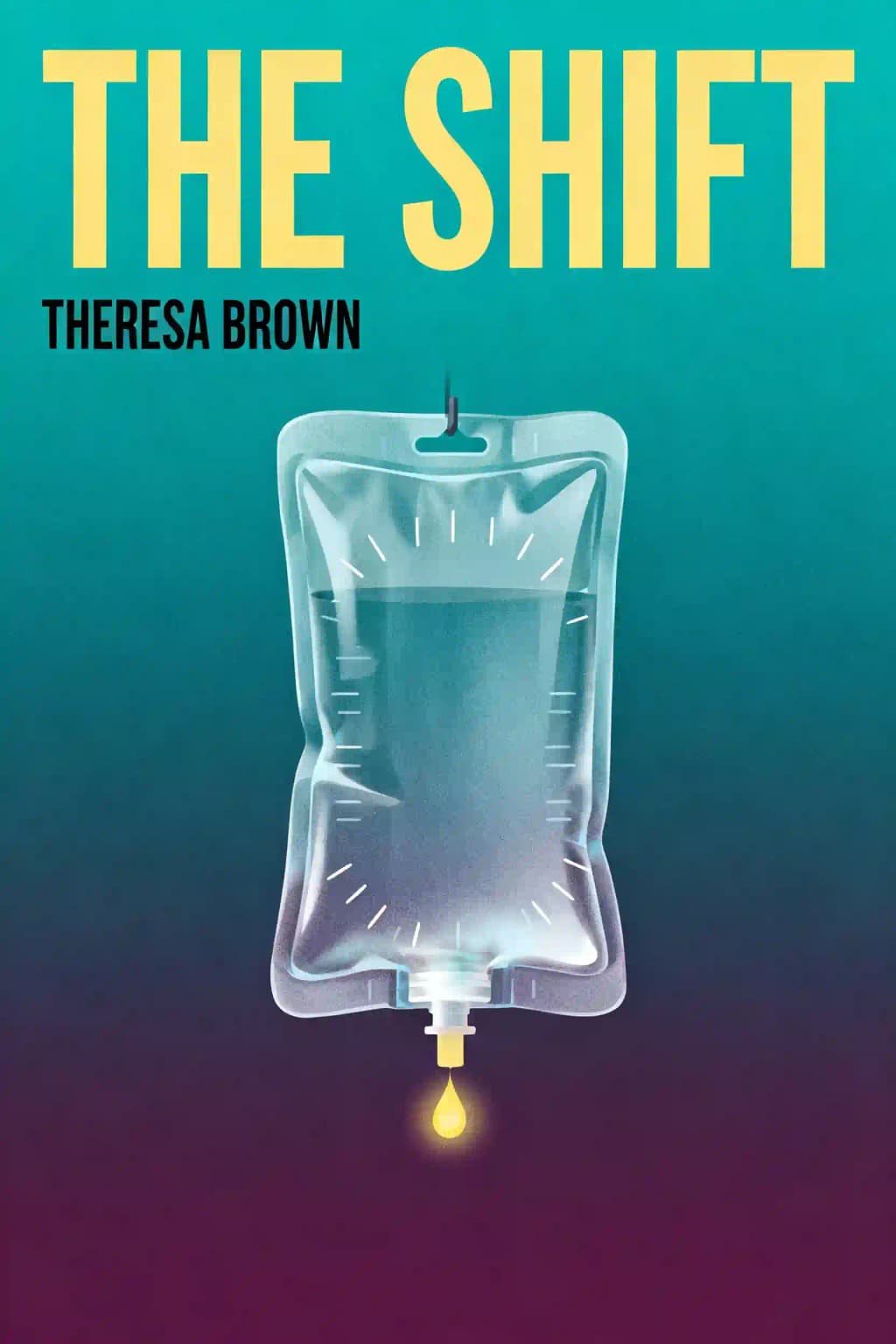
"The Shift" by Theresa Brown has become something of a modern classic in healthcare literature, offering readers an unfiltered window into the high-stakes world of oncology nursing. Since its publication, it has been embraced by medical professionals and laypeople alike, with numerous healthcare programs adopting it as required reading. The book's unflinching portrayal of hospital life has earned praise from The New York Times and The Washington Post, with the latter calling it "an eye-opening account from the front lines of hospital care." What makes this work particularly compelling is Brown's unusual career trajectory-she transitioned from being an English professor to becoming a clinical nurse, bringing her storytelling gifts to the medical frontlines. Like the middle-aged waiter in Hemingway's story who keeps a cafe open for those who need sanctuary, the hospital is "a clean, well-lighted place" offering shelter from life's storms.
第 2 章
The Morning Rush: When Minutes Matter and Lives Hang in Balance
I arrive at the hospital three minutes late, my small act of rebellion against my first clinical instructor's mantra that "if you're early, you're on time, and if you're on time, you're late." The floor is quiet as I enter, my shoes squeaking slightly. Night-shift nurses cluster at the station, exhausted but alert. I learn about an ICU transfer overnight - a visitor from Ohio whose blood pressure crashed. Then I hear devastating news: Ray Mason, a 25-year-old firefighter and musician I'd had coffee with just last month, has relapsed with leukemia.
Today I'm assigned three patients instead of the usual four: Richard Hampton, an elderly lymphoma patient; Dorothy Sooth, a cheerful leukemia patient nearing the end of her six-week stay; and Sheila Field, a woman with a blood clotting disorder. Having only three patients means I can provide proper care rather than treating them as "human to-do lists." The hospital administration's drive to maximize nurse-patient ratios ignores the research showing that overloaded nurses lead to preventable deaths.
I clean my assigned portable phone - our lifeline for the shift - and begin organizing my day, already feeling behind schedule at 7:15. I fold a blank sheet into fourths, creating a square for each patient where I'll record lab values, IV lines, and critical information. This personal system of documentation has evolved from full sheets to these compact quarters - just enough space for the variables of each shift, unless it's a bad day when that small square won't be enough for everything I need to track.
The ritual of morning report follows a pattern: name, age, diagnosis, then each nurse's unique style of delivery. Some are concise like Katherine's haiku-like reports, others verbose like Beth's epics. Our hospital lingo includes acronyms and clinical narratives that efficiently communicate patient status. But nuances get lost on tape - the grimaces and raised eyebrows that communicate the feel of caring for someone.
Have you ever wondered how healthcare professionals manage to keep track of dozens of critical details while maintaining their humanity? This delicate balance defines the nursing profession, where technical precision meets compassionate care in a high-stakes environment where mistakes can be fatal.
第 3 章
The Weight of Responsibility: Balancing Life and Death Decisions
The announcement of a "rapid response team" to Medical Oncology sends me rushing to Mr. King's room, where I find him unresponsive with blood streaming from his mouth. Working alongside Nora, Susie, and Randy, we quickly assess his vitals - oxygen saturation at 75%, heart rate 50, blood pressure 100/80. The code team arrives, led by Matt, an intensivist I know well. Despite our efforts to stabilize him with oxygen, his situation is dire with platelets at only 10 and multiple complications.
When I return to my regular duties, I'm preparing to administer Rituxan to Mr. Hampton - a biological response modifier with a Black Box warning that includes death as a potential side effect. Though effective against lymphoma, I worry about giving this toxic drug to such a frail patient. When I check on him, he's barely responsive. I wonder if I'll kill or heal him today, wishing I could discuss the risk with the attending physician who never explains his decisions.
As the escort takes Sheila to her CT scan, I notice how she moves slowly and painfully. After placing her on the stretcher, I grab her pillow for comfort, telling her I'll be there when she returns. It's 10:10 a.m., and I need to check on Mr. Hampton, who takes his pills but seems oddly detached.
Before I can process this, radiology calls with alarming news about Sheila-they've found free air in her abdomen, indicating a perforation. This surgical emergency means bacteria from her intestines are leaking into her abdominal cavity, potentially causing deadly peritonitis and sepsis. I blame myself for missing the signs, realizing I'd mistakenly associated perforations with more dramatic symptoms based on past experience.
The human clotting mechanism is an impressively complex cascade where every step must work correctly. Sheila's clotting disorder represents the opposite problem from many patients - her blood clots too easily rather than struggling to clot at all. This complication means surgery must wait hours for her blood-thinning medication to clear her system, putting her at greater risk with each passing hour.
What would you do if you knew a patient needed immediate surgery but the surgeon wanted to delay until morning? This ethical dilemma highlights the impossible calculations healthcare providers make daily, weighing different types of risk against one another with no clear algorithm to guide decisions.
第 4 章
The Doctor-Nurse Dance: Navigating Professional Hierarchies
When I chase after surgeon Peter Coyne to advocate for Sheila's immediate surgery, our secretary loudly comments that I "can't stop bothering Dr. Coyne," exposing the complex power dynamics between nurses and doctors. This interaction reminds me of Leonard Stein's articles on "The Doctor-Nurse Game," which described how nurses historically had to make their recommendations appear to be the doctor's ideas.
Despite our professional independence, doctors remain our "shadow bosses" - we execute their orders without explicit supervision, creating an intricate relationship dance that persists even as gender dynamics in medicine evolve. Peter's reluctance to operate tonight creates an impossible calculus: his potential fatigue versus Sheila's worsening infection. I understand that exhaustion impairs judgment - Shakespeare knew "sleep knits up the raveled sleeve of care" - but overnight delay means bacteria multiplying in Sheila's abdomen, potentially killing more tissue.
No clinical algorithm can determine the perfect timing; for one patient waiting won't matter, for another it could mean life or death. This judgment call reveals medicine's fundamental uncertainty, where neither crystal balls nor protocols can predict which patient and surgeon we have today.
The hospital corridors buzz with rounding medical teams. I miss Mr. Hampton's rounds while celebrating with Dorothy, losing my chance to understand the Rituxan risk-benefit discussion. With Sheila's team, I listen carefully as the intern presents her case. The attending physician, Dr. Martin, grimaces and complains, "I'm an oncologist, not a hematologist," revealing his discomfort with Sheila's rare condition.
Just as they're about to examine Sheila, the team gets an emergency call about a deteriorating patient elsewhere and rushes away, leaving me disappointed and hungry, standing alone with my crackers and unanswered questions about Sheila's condition.
Have you noticed how often professional hierarchies affect patient care in subtle ways? The traditional power dynamics between doctors and nurses create a complex choreography that patients rarely see but that significantly impacts their treatment journey.
第 5 章
Moments of Connection: Finding Humanity Amid Clinical Chaos
Despite needing to check on my patients, I respond when Susie asks for help transferring a sedated patient. Randy, a former EMT, joins us for the transfer. We position ourselves strategically around the patient, with me at the feet, and on Susie's count of three, we smoothly slide the sedated man onto his bed.
When Dorothy's call light chimes, I find her uncharacteristically upset about her Prilosec. Despite her six-week hospitalization for acute myelogenous leukemia (AML), her biggest concern today is getting her heartburn medication on time. Later, while rounding with her medical team, we discover Dorothy's absolute neutrophil count has reached 850 - high enough for her to go home. The attending physician playfully demands I perform the "neutrophil dance," and despite feeling ridiculous, I wave my arms and shimmy my hips, making Dorothy clap with childlike delight.
This crystalline moment of earned success brightens our ordinary day. Dorothy can finally go home, where she'll be able to take her Prilosec whenever she wants. I reschedule her medication for 6:30 a.m. in the system, hoping it helps during her final days in the hospital.
I spot Ray Mason on a stretcher - a former patient likely facing leukemia relapse. He maintains his signature "It's cool" attitude despite needing a bone marrow transplant from his conservative brother. Ray jokes he might end up politically transformed by his brother's cells. I remember when Ray, a firefighter and punk rocker, brought his guitar during his initial treatment, creating a rare peaceful moment on our floor. After treatment, he returned to firefighting, proving his strength to doubtful colleagues - a rare bearer of hope showing patients can confront death and move on.
For transplant patients, we say "Happy Birthday" as they begin anew - some even changing blood types after receiving donated cells. Touch connects nurse and patient, reminding us we're two people with a shared mission: healing, if we can.
Isn't it fascinating how the smallest human connections often matter most in healthcare settings? A joke shared during a painful procedure, a hand held during difficult news, or a dance celebrating good results - these moments of genuine connection sustain both patients and providers through the clinical wilderness.
第 6 章
The Unpaid Labor of Care: When Systems Prioritize Efficiency Over Humanity
I'm dizzy at 1:45 p.m. from hunger, having only eaten saltines and Dorothy's candy all morning. Though nurses don't get paid for our supposed thirty-minute lunch breaks, we rarely have coverage for our patients, meaning we work through lunch unpaid. Even with official systems to claim this time, hospitals subtly discourage it, saving money while our brains suffer without glucose.
The time I spend comforting patients with life-threatening diagnoses doesn't show up on electronic to-do lists. Our documentation is largely CYA-Cover Your Ass-recording assessments and medications in cumbersome computer systems. For pain medications, I must chart precise details from numerous options. Charting pulls nurses away from bedside care more each day.
When verifying chemotherapy orders for Mr. Hampton, I meticulously check his body surface area calculations, double-checking the math by multiplying height by weight, dividing by 3,600, and taking the square root. Even small errors with these biohazardous drugs could be dangerous. Fellows sometimes make mistakes - rounding incorrectly, using old weights, or applying wrong formulas - which nurses catch during verification.
After confirming the Rituxan dose matches Mr. Hampton's specific lymphoma regimen on chemoregimens.com, I need another nurse to verify my work. Beth helps despite worrying about her daughter in Kandahar. Nurses and doctors often remain unaware of each other's verification processes.
As I finish Dorothy's discharge paperwork, Nancy the charge nurse informs me I'll be getting another admission - Irving Mooney. Despite my already heavy patient load with Candace, a Rituxan infusion, and a patient with a perforation, I don't protest. Pride keeps me from appearing vulnerable.
While juggling multiple demands - Dorothy's discharge, pharmacy calling about the Rituxan timing, and Candace's escort issues - I reflect on how patient flow equals income for hospitals. Throughout the chaos, I remember what matters most: everyone being alive at the end of the day.
Have you considered how much invisible labor goes into healthcare that never appears in the billing codes? The emotional support, the extra time spent explaining procedures, the advocacy for patient needs - these essential aspects of care remain largely unrecognized by healthcare systems focused on efficiency metrics.
第 7 章
Creating Time Bubbles: When Patients Need Undivided Attention
I recall creating a "time-free bubble" to properly discharge a young leukemia patient named Jenn. She was in her early twenties, newly married and alone in Pittsburgh except for her husband when diagnosed. Despite her circumstances, she maintained remarkable goodwill. That day, I gathered supplies she needed - saline flushes, alcohol wipes, and gloves - technically "stealing" from the hospital, but necessary since her insurance issues meant home supplies wouldn't arrive in time.
I committed to giving her my undivided attention, putting aside other tasks and silencing my phone to focus completely on her care. I taught Jenn how to care for her Hickman catheter with its three color-coded lumens. I demonstrated the process with the red lumen, had her practice with the blue one, and wrote down detailed instructions. For those twenty-five minutes, I created a bubble where nothing else mattered but her discharge.
As William Blake's poem suggests, we find wisdom in acknowledging both joy and woe - Jenn embodied this duality as a joyful person struck with a woeful disease, sustained by her husband's love.
Remembering my time with Jenn, I try to give Dorothy the same focused attention during her discharge. She's ready to go, wearing a Mary Poppins-like hat with her coat beside her. The room is cleared of personal items, with two suitcases, a purple comforter, and a boxed jigsaw puzzle ready for transport.
Dorothy insists on sharing her candy stash with the staff before leaving, carefully arranging her belongings on the wheelchairs. As her husband rises from his chair and adjusts his glasses, Dorothy waves goodbye like a queen, blowing kisses down the hallway. I make a mental note to remember this moment of pure satisfaction - when we've made someone better, there's nothing as gratifying as seeing them leave the hospital.
When was the last time you gave someone your complete, undivided attention? In our notification-filled world, creating these "time bubbles" becomes increasingly difficult yet increasingly valuable - especially in healthcare where the human connection often determines whether patients feel truly cared for regardless of medical outcomes.
第 8 章
The Revolving Door: When Healthcare Becomes an Assembly Line
The hospital's constant demands create a revolving door of tasks that never allows me to fully focus on one patient's needs. As I administer Dilaudid to Sheila, I realize I've misjudged her pain level - her stoicism fooled me into thinking she needed less medication than she truly did. While helping her to the bathroom, the OR calls unexpectedly early, creating yet another time pressure.
Though good news for Sheila, it means rushing through preparations while still attending to her pain and dignity. Between completing paperwork and managing other patients, I reflect on how hospitals often prioritize efficiency over personal connection - like the time two daughters were distraught over their dying mother's misplaced dentures, a seemingly small detail that represented their larger grief and frustration with hospital care.
When the escort arrives for Sheila, I make the conscious choice to have her walk to the stretcher rather than bringing it into her room - not just for convenience, but hoping this small act of normalcy might set a tone of strength that carries her through surgery and recovery. Though I question whether I've inadvertently caused her unnecessary pain, I believe in the power of maintaining normalcy in difficult situations.
As Sheila leaves my care, our goodbye includes an unexpected request for a kiss, reminding me of other rare moments of human connection in the clinical environment - like when a grateful widow kissed me after I'd advocated to keep her dying husband in our familiar unit rather than transferring him to hospice. I had fought against reimbursement rules that prioritized money over compassion, arguing that moving him to an unfamiliar place would be cruel when he was already suffering.
Irving arrives on a stretcher pushed by EMTs who clearly know him well, treating him with friendly familiarity. After they help him settle into a chair, he expresses simple contentment, his whispered voice and placid demeanor suggesting someone for whom life has lost its ability to disappoint. When the medical team arrives, confusion ensues about his diagnosis - what was charted as a "rectal abscess" turns out to be a sore on his back, demonstrating how easily medical information gets distorted as it passes between providers.
Have you noticed how systems designed for efficiency often sacrifice the human elements that matter most to people in vulnerable situations? The revolving door of modern healthcare creates an assembly-line approach that can leave both patients and providers feeling processed rather than connected.
第 9 章
Knowing the Future: The Uncertainty That Defines Medical Care
In the locker room, I transform from nurse back to ordinary person, changing into my biking clothes. Walking through the nearly empty hallway, I feel the bracing cold air hit me as I exit the hospital's hermetically sealed environment. I unlock my bike, don my helmet and gloves, and pedal away from the parking lot.
The rhythmic pedaling soothes me as I reflect on how nurses are taught to leave patients at shift's end - not from indifference but practicality. We're the hospital's mechanics, providing a seamless blanket of care from one shift to another. Often we never know how patients' stories end, as they're "lost to follow up."
I fantasize about Mr. Hampton's recovery, imagining him starting a new life somewhere warm with his son Trace - my own vision of a clean, well-lighted place. Finally reaching home, I'm greeted by my dog, the sounds of family life, and dinner waiting. Despite the comfort of home, my mind still dwells on my patients.
Peter didn't finish operating on Sheila until 2 a.m., finding her abdomen full of stool from a perforated colon. She received a colostomy that might be permanent. Though I visited the surgical ICU twice after her operation, I never spoke directly with Sheila. After recovering from my own illness, I went to see her only to discover she'd been discharged just hours earlier after a month-long hospital stay.
I share the outcomes of my other patients: Beth's daughter returned safely from Afghanistan; Ray, Candace, and Irving all left the hospital cancer-free. Irving found contentment in his simple life at the group home. Ray recovered from his stem cell transplant despite infections and complications, and returned to firefighting, playing in his band, and family life - appreciating these basics after nearly losing them.
Dorothy eventually returned to the hospital and died, surrounded by her husband and daughter who resembled her physically. Life continues through her family, following the inevitable pattern we all face. And Mr. Hampton, contrary to my rainforest fantasy, returned to the hospital weeks later, his son showing new stress lines around his eyes.
Years later, I encountered the owlish intern at a coffee shop. He didn't remember telling me "If we could know the future our jobs would be a lot easier" - a comment that had profoundly shaped my thinking about this book - but I remembered feeling the weight of that entire shift, for all my patients, infinity compressed into twelve busy hours.
What would healthcare look like if we could predict outcomes with certainty? The fundamental uncertainty of medicine - the not knowing which intervention will help which patient - creates both its greatest challenge and its most profound humanity. We proceed with hope despite incomplete knowledge, doing our best with the information available in each moment.
第 10 章
The Shift That Never Ends: How Healthcare Changes Those Who Provide It
As I drift toward sleep after my shift, I accept that I'll continue living in the eternal present of illness and uncertainty alongside my patients, ever hopeful. This willingness to enter the unknown day after day defines healthcare work - we show up knowing we'll face suffering, uncertainty, and occasional triumph, never fully knowing which we'll encounter on any given day.
The shift described in this book represents thousands of similar days experienced by healthcare workers worldwide - days filled with impossible ethical dilemmas, moments of profound human connection, bureaucratic frustrations, and the constant awareness that lives hang in the balance of our decisions.
What makes healthcare workers continue despite the emotional and physical toll? Perhaps it's the privilege of being present at life's most significant moments - births and deaths, diagnoses and recoveries, the full spectrum of human experience concentrated into hospital rooms and clinic visits. Or maybe it's the knowledge that in a world of increasing automation and artificial intelligence, the human connection at the heart of healthcare remains irreplaceable.
Before my career change from English professor to nurse, I couldn't have imagined the weight of responsibility that comes with holding someone's life in your hands. Now I understand that the most important skill in healthcare isn't technical knowledge but the ability to remain present and compassionate while making hundreds of consequential decisions under pressure.
The shift described in these pages ended years ago, but its lessons continue to resonate. In healthcare, we learn that control is largely an illusion, that systems often prioritize efficiency over humanity, that professional hierarchies can help or harm patients, and that creating moments of genuine human connection amid clinical chaos may be our most important work.
When was the last time you thanked a healthcare worker not just for their technical skill but for their humanity? The next time you encounter someone wearing scrubs or a white coat, remember they likely carry the weight of dozens of patient stories like these - stories of lives they've touched, some saved, some lost, all remembered.