第 1 章
When Philosophy Meets Mortality: A Journey Through Darkness and Light
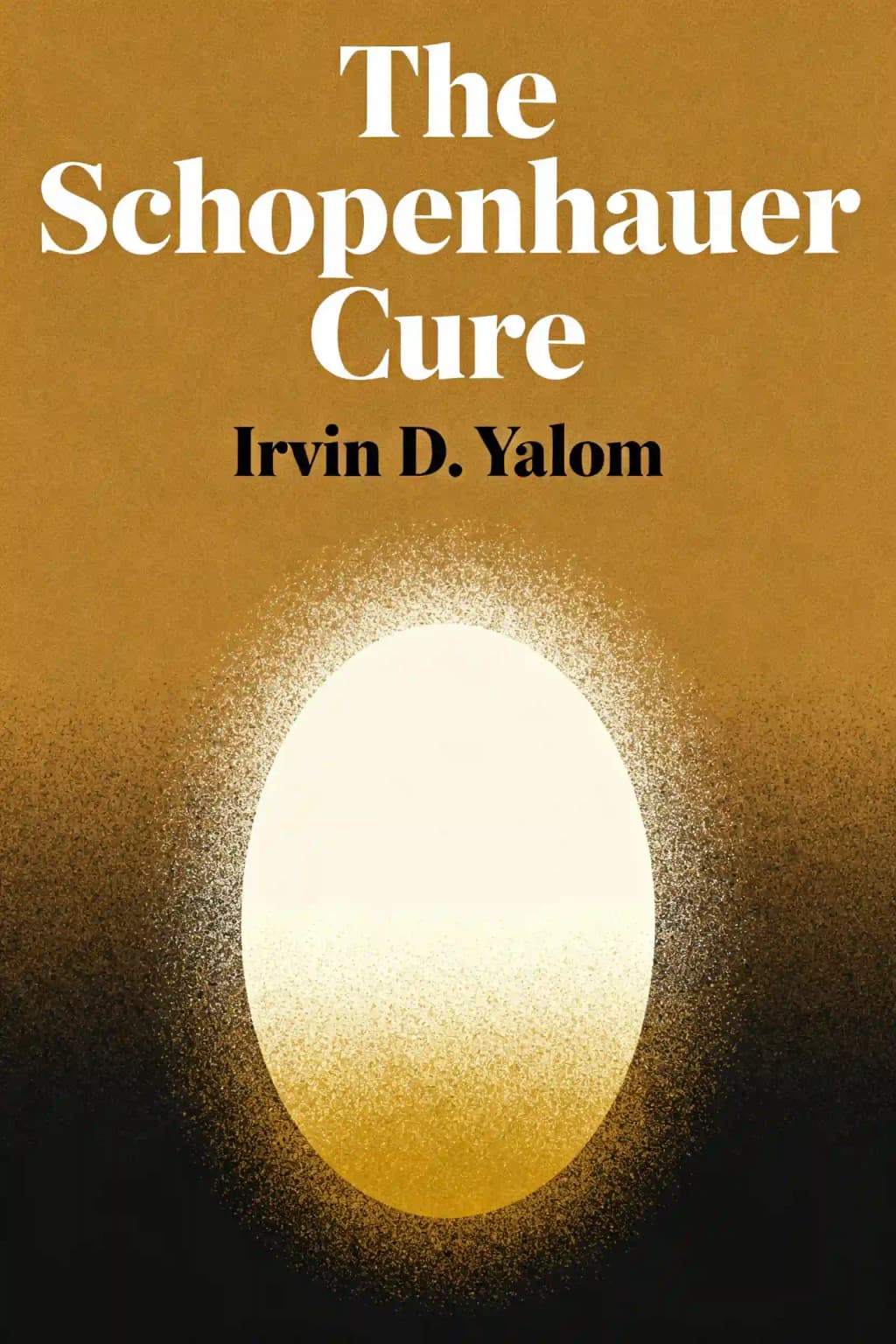
What happens when a renowned therapist discovers he has terminal cancer? For Julius Hertzfeld, this devastating diagnosis becomes the catalyst for a profound journey of redemption, reconnection, and philosophical inquiry. In "The Schopenhauer Cure," Irvin D. Yalom masterfully weaves together the story of Julius's confrontation with mortality, his reunion with a former patient who found salvation in philosophy rather than therapy, and the life of Arthur Schopenhauer, the pessimistic 19th-century philosopher whose ideas form the intellectual backbone of the narrative. This compelling novel has earned praise from mental health professionals and philosophy enthusiasts alike, with The New York Times calling it "a thoughtful examination of the human condition." The book's exploration of existential themes has made it required reading in many psychology and philosophy programs, offering readers both intellectual stimulation and emotional resonance in equal measure.
第 2 章
The Diagnosis That Changed Everything
Julius Hertzfeld, a 65-year-old psychotherapist at the peak of his career, receives devastating news that shatters his world: he has malignant melanoma with less than a 25% five-year survival rate. Despite maintaining an enviably youthful appearance - with penetrating green eyes, unruly black hair, and a rigorous exercise routine that keeps him fit - his body harbors an invisible killer. The diagnosis arrives on an ordinary Tuesday afternoon, transforming a routine medical check-up into a moment that divides his life into "before" and "after."
After the initial shock, Julius descends into a week of profound emotional turmoil. He wakes in cold sweats at 3 AM, haunted by vivid mortality dreams. His carefully maintained schedule crumbles as he cancels patient sessions for the first time in decades. Each morning brings a fresh wave of existential dread as he confronts his mortality with unprecedented intensity. Simple activities - brewing coffee, checking email, walking through his neighborhood - take on new meaning as he wonders how many more times he'll perform these routine tasks.
In the sterile quiet of the medical library, Julius immerses himself in oncology journals and survival statistics. Reading about melanoma's particularly aggressive nature terrifies him as he visualizes rogue cancer cells silently colonizing his vital organs. The medical terminology - metastasis, lymphatic spread, tumor staging - becomes a dark poetry of his potential demise. Though previously skeptical of religious and spiritual practices, Julius finds himself drawn to contemplating the value of personal ceremony and ritual. He begins marking each sunrise with a moment of quiet reflection, creating his own private liturgy of survival.
During his weekly therapist support group, an unexpected moment of transcendence occurs. A twenty-minute silence descends upon the room, and Julius experiences a profound connection with his colleagues that feels almost sacred. This collective meditation becomes a turning point in his emotional processing of the diagnosis.
Finding solace and direction in Nietzsche's Thus Spoke Zarathustra, particularly the imperatives to "Consummate your life" and "Die at the right time," Julius makes a conscious decision not to waste his remaining time in grief or self-pity. Instead, he resolves to continue his therapeutic work, which has given his life its deepest meaning. However, this decision brings uncomfortable questions about his legacy: Has he truly made lasting differences in his patients' lives? What mark will he leave on the world?
This existential crisis catalyzes a pivotal decision: to contact Philip Slate, a former patient Julius considers his greatest professional failure. Philip had spent three years in therapy, struggling with sexual compulsion and a complete inability to form meaningful relationships, seemingly immune to Julius's most skilled therapeutic interventions. When Julius discovers that Philip has become a therapist himself, practicing something called "Philosophical Counseling," his curiosity is piqued. Their unexpected reunion sets in motion a complex relationship that will challenge both men's fundamental beliefs about healing, human connection, and the very meaning of life itself.
第 3 章
The Philosopher and His Demons
Arthur Schopenhauer's life began in turbulence-even as a four-inch fetus, he experienced the chemical storms of his mother's anger and despair. These early lessons would never leave him. His father, Heinrich, chose the name "Arthur" deliberately for his unborn son, believing it would serve perfectly for the future head of the great Schopenhauer mercantile house, especially as it remained unchanged across major European languages.
The Schopenhauer household provided little affection for Arthur or his sister Adele. Heinrich was tough, dour, and unyielding-a man who once refused a Prussian officer's offer of horse fodder during a blockade, declaring he would sooner put down his horses than accept help. Johanna was his opposite: romantic, vivacious, and flirtatious. Their marriage was a tragic mismatch from the start, with seventeen-year-old Johanna acquiescing to her parents' wishes in marrying the thirty-eight-year-old Heinrich.
Years later, Johanna warned other young women about such arrangements, calling them "a false step for which they must suffer the hardest punishment the rest of their lives." This love-bereft childhood profoundly shaped Arthur's worldview. Children deprived of maternal bonds often fail to develop basic trust, becoming estranged adults who withdraw into themselves and maintain adversarial relationships with others-a pattern clearly evident in Schopenhauer's later life.
When Arthur was nine, he experienced perhaps his only period of genuine happiness when sent to live with his father's business partner, the Blesimaire family in Le Havre. For two years, Arthur felt nurtured and formed one of his few lifetime friendships with Anthime, the Blesimaire son. This brief respite from his cold family environment showed him what warmth and connection might feel like, making his return to the emotional wasteland of the Schopenhauer household all the more painful.
At sixteen, Arthur's life changed dramatically when his father committed suicide by jumping from his warehouse into the Hamburg Canal. Despite Heinrich's harsh criticism and lack of affection, Arthur maintained profound filial devotion. Meanwhile, his mother Johanna swiftly transformed her life-selling the family mansion, liquidating the business, and moving to Weimar, where she established a popular salon and befriended Goethe. She became Germany's first professional female writer, achieving such fame that Arthur was initially known merely as "Johanna Schopenhauer's son."
第 4 章
The Therapy Group: A Microcosm of Human Connection
Julius's therapy group serves as the novel's emotional center-a place where human connection in all its messy complexity unfolds. When Philip joins the group as part of Julius's condition for providing him supervision hours, the dynamic shifts dramatically. Philip's detached, analytical style creates immediate tension, especially with Pam, who returns from an Indian meditation retreat to discover this new member has taken her place as the group's intellectual voice.
The group consists of richly drawn characters, each struggling with their own demons: Tony, working to overcome his limited education and history of womanizing; Bonnie, battling feelings of inadequacy and unattractiveness; Stuart, a physician carrying guilt over a past ethical violation; Rebecca, preoccupied with her physical appearance and hiding secrets about her past; and Gill, concealing his alcoholism while his marriage crumbles.
When Julius finally reveals his terminal diagnosis to the group, their reactions reflect the various ways humans confront mortality. Bonnie shares a disturbing dream about a train station that symbolizes her fears about Julius's illness and the group's uncertain future. Julius admits being "in love with this group," explaining his decision to continue working despite his condition, noting that isolation is often the worst part of terminal illness.
The group's dynamics shift dramatically when Pam recognizes Philip as someone from her past-the teaching assistant who had seduced both her and her best friend Molly fifteen years earlier, destroying their friendship in the process. This revelation creates a powerful crucible for transformation, as Philip must confront his past behavior while Pam struggles with her unresolved rage.
In one particularly powerful session, Stuart and Rebecca reveal their "darkest secrets"-Stuart confessing to having sex with an intoxicated, delusional patient years ago, and Rebecca sharing how she had worked as a prostitute for three nights just before her wedding while pregnant. The group's supportive response demonstrates the healing power of acceptance and shared vulnerability, though Philip remains unable to participate fully in this emotional exchange.
第 5 章
Schopenhauer's Philosophy: A Pessimist's Guide to Life
Schopenhauer's masterpiece, "The World as Will and Representation," published in 1818 with a second volume in 1844, examines the human condition in its bleakest aspects. Central to his philosophy is the concept of "will"-a relentless, insatiable life force driving all existence. Life consists of endless cycles of wanting, brief satisfaction, boredom, and wanting again. Suffering occurs when obstacles block this striving; happiness is merely temporary goal attainment.
Using myths like Ixion's wheel and Tantalus's punishment, Schopenhauer portrayed human existence as an eternal cycle of need and fleeting satiation, with boredom revealing uncomfortable truths about our meaningless existence and inevitable death. He concluded that as intelligence increases, so does suffering, making true happiness impossible.
For Schopenhauer, life is a tragic downward slope, both brutal and capricious. He likens humans to lambs playing while the butcher selects them one by one, unaware of what calamities await-sickness, persecution, impoverishment, madness, death.
His famous porcupine fable perfectly encapsulates his frigid view of human relationships: creatures driven together by need for warmth but separated by the pain of their quills, forever seeking the optimal distance for minimal suffering. Unlike most psychotherapists who would view such extreme social avoidance as pathological, Schopenhauer celebrated his misanthropy as virtue, believing that a man of internal strength requires nothing from others.
Schopenhauer pioneered concepts later central to psychoanalysis: the unconscious, repression, and self-deception. He believed these unconscious forces could be communicated through art, particularly music. He was the first major philosopher to emphasize the importance of sexuality and to build his philosophy on explicitly atheistic foundations.
Despite his bleak worldview, Schopenhauer developed numerous self-therapy strategies to manage his psychological distress. His unwavering belief in his own genius provided life meaning, casting himself as "a missionary of truth to the human race." To combat loneliness, he developed the defense that he had chosen isolation rather than being rejected, finding companionship in "his own circle of close friends: the great thinkers of the world," particularly the Stoics.
第 6 章
The Schopenhauer Cure: Philip's Path to Healing
Philip's story reveals how philosophy can function as therapy-what he calls his "Schopenhauer cure." After three unsuccessful years with Julius, Philip inherited money that allowed him to leave chemistry and study philosophy, eventually finding salvation through Schopenhauer's teachings.
In a pivotal group session, Philip finally explains how Schopenhauer helped him overcome his sexual compulsion when therapy failed. Schopenhauer's philosophy normalized his sexuality by recognizing the ubiquitous power of the sex drive as "the most fundamental force within us." Philip explains that Schopenhauer taught him we are "doomed to turn endlessly on the wheel of will"-desiring something, briefly enjoying it, then falling into boredom before the next desire arises.
Philip's solution was "leaping off the wheel" by denying will through aesthetic contemplation and communion with great minds rather than pursuing desires. This approach allowed him to maintain twelve years of celibacy, not as moral reformation but as escape from the agony of desire: "Life is forever a torment, and desire is unquenchable. The wheel of torment would spin forever; I had to find a way to get off the wheel."
However, the group questions whether Philip has ever truly been "in life," noting his lack of loving relationships. Philip admits everyone he'd interacted with had caused him pain-his father committed suicide when he was thirteen, and he'd been estranged from his mother for twenty years before her death.
In a surprising moment of vulnerability, Philip acknowledges that Julius's therapy had actually helped him in two ways: by pointing out how boring his sexual conquests were and by challenging him with a potential epitaph-"He fucked a lot"-which influenced his decision to change his life. This admission marks a turning point in Philip's journey toward authentic connection.
第 7 章
The Journey Through Suffering: East Meets West
The novel explores different approaches to suffering through Pam's transformative journey to India for Vipassana meditation. Despite months of intensive therapy with Julius and the unwavering support of her therapy group, nothing seems to help her escape her all-consuming obsession with John, who has declared a six-month moratorium on their relationship. Her emotional turmoil manifests in sleepless nights, constant rumination, and an inability to focus on her work. Desperate for relief, she travels to India after hearing about "mind-calming" techniques from a graduate student who described profound personal transformation.
At Goenka's ashram in northern India, Pam initially struggles with the austere environment and rigid routine - 4 AM wake-up calls, hours of silent meditation, sparse vegetarian meals, and complete isolation from the outside world. The physical discomfort of sitting motionless for hours creates intense pain in her joints, while her mind rebels against the silence. Yet gradually, she adapts to the rhythm of ashram life. By the seventh day, she experiences what practitioners call "sweeping" - a pleasurable sensation like warm honey flowing down her body, accompanied by a profound sense of peace. Most significantly, she realizes John has vanished from her thoughts, replaced by an unprecedented meditative pleasure.
This success, however, brings unexpected ambivalence when a vivid dream reminds her of Nietzsche's quote about chaos giving birth to "dancing stars." She begins to question the relationship between suffering and creativity, wondering if great art - from Van Gogh's tortured masterpieces to Beethoven's passionate symphonies - could exist without chaos and suffering. Buddhism's remedy for suffering through detachment starts to seem potentially destructive to the very essence of human experience. Looking at the extreme practices around her, particularly the Jainist monks with their masks and brooms to avoid harming even the smallest insects, she questions whether such complete renunciation might be a form of death-in-life rather than true liberation.
This exploration of Eastern and Western approaches to suffering creates a philosophical tension that runs throughout the novel. Julius, deeply influenced by Nietzsche, advocates for a life-affirming approach to facing mortality - embracing passion, creativity, and even suffering as essential components of a fully lived life. Philip, in contrast, follows Schopenhauer's path of detachment and will-denial, seeking peace through acceptance rather than resistance. Pam's experience with Buddhist meditation offers a nuanced third perspective, suggesting that mindfulness might provide temporary relief from suffering without requiring complete detachment from life's passions. Her journey becomes a metaphor for the broader human struggle to find balance between engagement and detachment, passion and peace, Western individualism and Eastern dissolution of the self.
第 8 章
Confronting Mortality: Julius's Final Journey
As Julius's "one good year" gradually diminishes, he experiences time with an unprecedented intensity and clarity. Each moment takes on crystalline significance - from morning coffee to evening conversations with colleagues. His previous preoccupation with melanoma recurrence gives way to a deeper embodiment of Zarathustra's philosophy: sharing one's ripeness and wisdom with others. He embraces what Nietzsche termed amor fati - the profound love of one's fate, living each day in a way he would willingly repeat for eternity.
The group's impending conclusion catalyzes remarkable transformations in all members. Stuart, after decades of avoidance, finally confronts the deep-seated shame of his childhood poverty and acknowledges his complex resentment toward his privileged son - a breakthrough that allows him to begin rebuilding their relationship. Bonnie works through her conflicted feelings about her ex-husband, recognizing both her anger and lingering attachment while forging a path toward genuine acceptance. Gill maintains her hard-won sobriety while navigating serious marital difficulties, drawing strength from the group's unwavering support. Tony, previously defensive about his intellectual capabilities, finds courage to enroll in community college courses - a step toward his long-buried academic dreams.
Julius's primary focus remains fixed on Philip and Pam's evolving relationship, which has become emblematic of his life's work. Their journey takes on sacred significance, embodying the Talmudic wisdom that "to redeem one person is to save the whole world." He frequently reflects on his work with Carlos, a formerly antagonistic lymphoma patient whose profound transformation before death offered Julius a powerful lesson in redemption. Carlos's parting words - "Thank you for saving my life" - now resonate with deeper meaning as Julius contemplates his own mortality and legacy.
His cancer diagnosis fundamentally reshapes Julius's therapeutic approach. He becomes more transparent about his own struggles, sharing stories of his failed marriages, professional doubts, and personal regrets. When group members initially resist seeing their therapist's vulnerabilities, their responses reveal remarkable insight - particularly Tony, who displays natural therapeutic instincts in supporting Julius. This role reversal fascinates Julius, who observes how his willingness to expose his own wounds seems to activate healing capacities within the group members.
In what becomes a defining moment, Julius shares a profound truth with the group: "There's only one way you can hurt me - and that is to cut yourself off from me." This declaration distills the existential insight Julius has gained through confronting his mortality: that genuine human connection serves as the ultimate buffer against death anxiety. The statement transforms the group's dynamic, deepening their commitment to authentic engagement and mutual support during Julius's final months.
Through his journey toward death, Julius demonstrates how facing mortality can lead to life's greatest teachings - about connection, vulnerability, and the enduring impact we have on others. His experience shows that even in life's final chapter, meaningful change and profound human connections remain possible.
第 9 章
Redemption and Legacy: The Cycle Continues
Three years after Julius's death, Pam, Philip, and Tony maintain their weekly coffee meetings-the only remaining members of Julius's group who still gather regularly. As they sit at their usual window table with arias from The Barber of Seville playing in the background, they share updates on their lives. Tony proudly displays his community college diploma, Philip announces he's playing face-to-face chess for the first time since his father's death, and Pam speaks of her relationship with a Milton scholar and her Buddhist practice.
An hour later, Philip and Tony welcome seven new members to their first group therapy session. The participants sit in Julius's chairs-which Philip had inherited and wept over, one of only two times he had cried as an adult. Their complementary approach combines Philip's philosophical expertise with Tony's "emotional accessibility."
When tension erupts between two new members, Tony intervenes with wisdom learned from Julius: "I've got a hunch, a very strong hunch, that by the end of this group, each of you are going to prove very valuable to the other." Philip affirms, "Right you are, partner."
This beautiful conclusion demonstrates how Julius's legacy lives on through his former patients, now transformed into healers themselves. The cycle of healing continues as Philip and Tony integrate their contrasting strengths-Philip's philosophical depth and Tony's emotional intelligence-to create something neither could achieve alone.
The novel ultimately suggests that while Schopenhauer's pessimism offers valuable insights into human suffering, true healing comes not from detachment but from meaningful connection. As Julius discovered in facing his mortality, it is our relationships-messy, painful, and glorious-that give life its ultimate meaning. In embracing both the tragic nature of existence and the redemptive power of human connection, we find not a cure for the human condition, but a way to make it bearable, and perhaps even beautiful.
第 10 章
The Philosopher's End: Vindication and Peace
After decades of obscurity and academic rejection, Schopenhauer finally achieved the recognition he craved in his final years. His last major work, "Parerga and Paralipomena" (meaning "Appendices and Omissions"), completed in 1851, brought him the fame he'd desperately sought throughout his career. This collection of essays and philosophical reflections offered practical wisdom on living with minimal suffering, presenting a more accessible and nuanced philosophy than his earlier stark pessimism. While maintaining his fundamental view that life is essentially suffering, he introduced the important dimension of human connection through shared suffering, suggesting we address each other as "fellow sufferers" - a perspective that helped humanize his philosophical framework.
The book became wildly successful, with Schopenhauer's fame spreading rapidly throughout Europe's intellectual circles. His apartment in Frankfurt became a destination for admirers and fellow philosophers, with visitors often finding him at his regular table at the Englischer Hof hotel, where he dined daily at precisely 1:00 PM. Richard Wagner, already a celebrated composer, sent him personally autographed scores of his operas. Universities across Germany began incorporating his philosophy into their curricula, and he received numerous academic honors - the same institutions that had once shunned him now celebrated his contributions. The once-ignored philosopher delighted in this late recognition, comparing himself to a purring cat when stroked with praise, and maintained detailed records of every mention of his work in publications.
This vindication powerfully validated Schopenhauer's unwavering faith in himself and his ideas. Years earlier, during his darkest period of rejection, he had compared himself to a young oak tree, writing: "But let him alone: he will not die. Time will come and bring those who know how to value him." His prediction of eventual influence proved remarkably prescient. His ideas would go on to profoundly shape the work of numerous influential thinkers - Nietzsche drew heavily from his concept of will, Freud's theories of the unconscious mind showed clear Schopenhauerian influence, Wittgenstein acknowledged his debt to Schopenhauer's theory of representation, and his pessimistic philosophy would resonate with modernist writers like Thomas Mann and Samuel Beckett.
Schopenhauer's journey from rejected outsider to celebrated genius offers a compelling counterpoint to Julius's end-of-life quest for meaning in the broader narrative. While Schopenhauer found validation in his eventual recognition and posthumous fame, Julius discovers a more immediate form of immortality through his direct impact on others' lives. Both men, through their distinct paths, confront the fundamental human challenge of creating meaning in the face of inevitable death - Schopenhauer through his philosophical legacy, and Julius through his personal connections and immediate influence on others.